中文简体



Previous Post
Interior design increasingly depends on surfaces that do more than cover a wall. Contemporary commercial, residential, and hospitality spaces require materials that contribute to visual identity, spatial organization, durability, and practical installation. The ZZ20 Grid Pattern 3D Wall Panel is designed to meet these requirements through a carefully controlled geometric surface, a stable engineered-board structure, and a manufacturing approach that combines decorative printing, plate-making, mould embossing, and hot pressing.
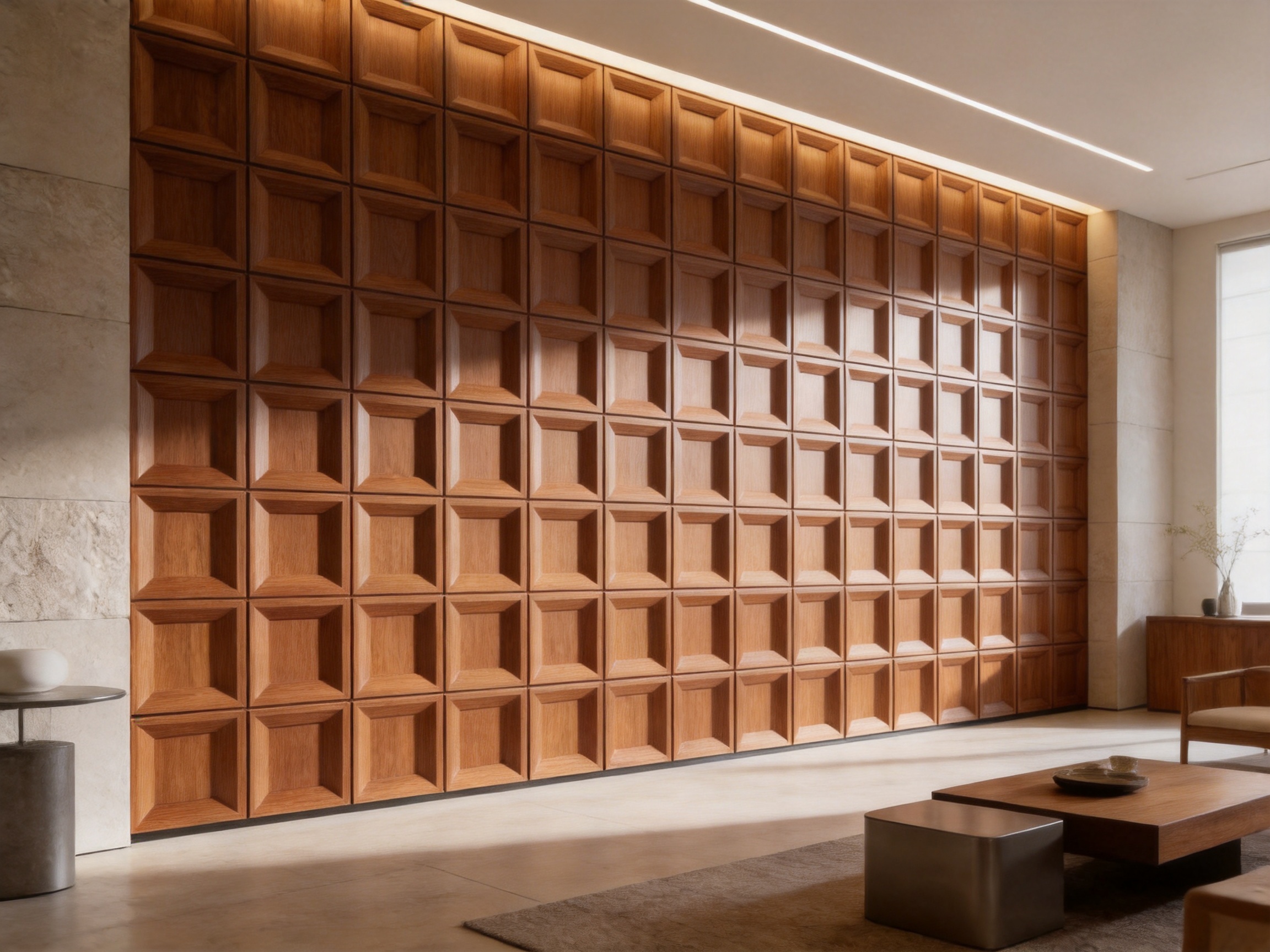
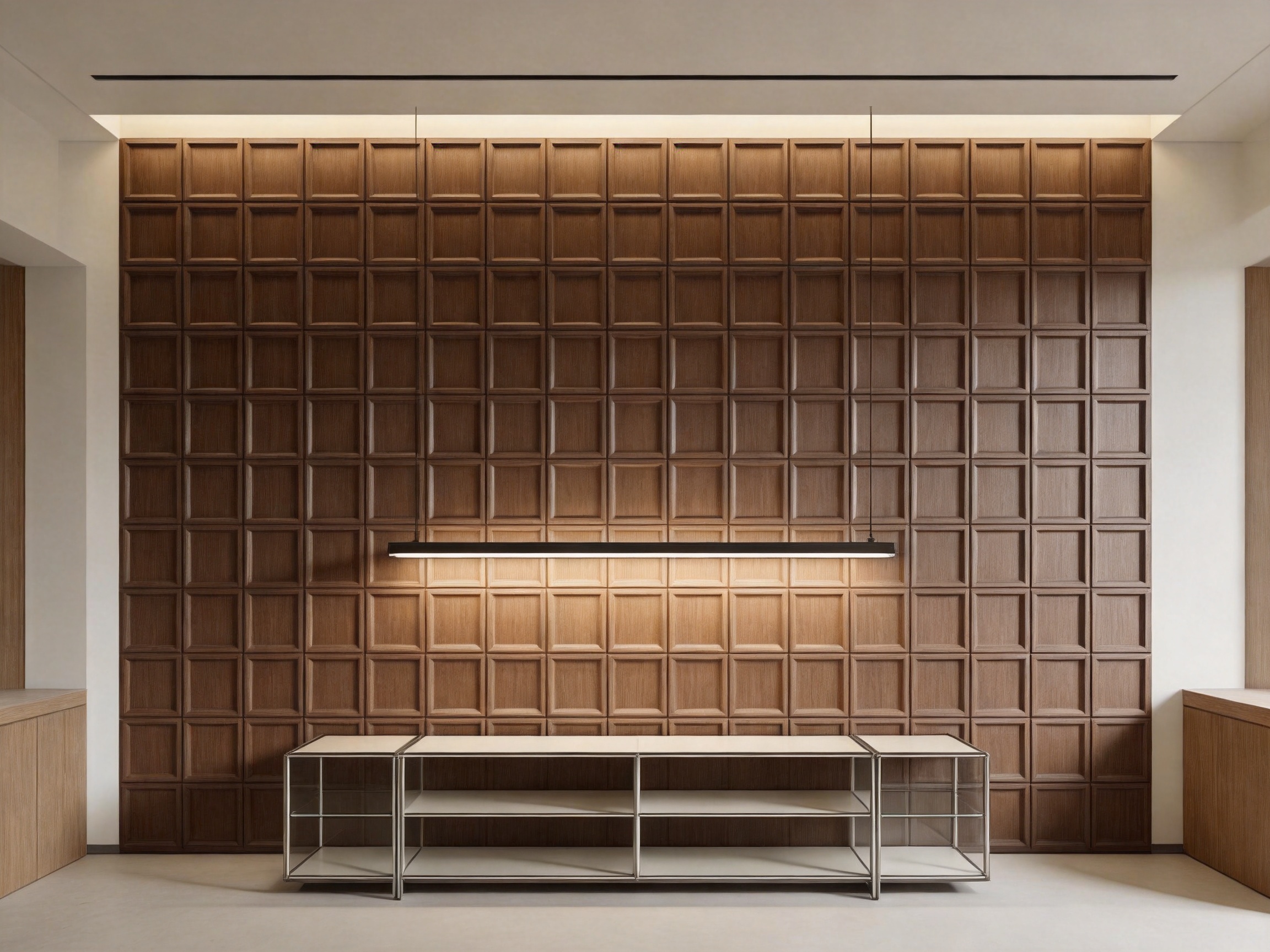
Rather than presenting a random or highly decorative texture, the ZZ20 panel uses a regular grid pattern to create order, rhythm, and visual balance. Its repeated square geometry can make a wall appear more intentional and coordinated while supporting a wide range of interior styles. The design is particularly suitable for modern minimalist, industrial, office, retail, residential, and commercial environments where a clear architectural language is required.
Produced by YAKCO New Materials (Jiangsu) Co., Ltd., the panel belongs to a broader range of decorative melamine boards and three-dimensional wall materials. The company has specialized in decorative panels and wall panels since its establishment in 2007. Its production capabilities include advanced deep-pressing technology, multiple core production processes, and MDI adhesive bonding intended to improve structural stability, surface depth, cutting performance, deformation resistance, and environmental performance.
The ZZ20 product combines the visual discipline of a grid with the functional advantages of an engineered decorative board. It can be used on walls and ceilings, as a surface material for furniture, and as a design element for dividing or strengthening the visual hierarchy of an interior. Its availability in several thicknesses allows designers, contractors, and distributors to select a suitable specification for different applications.
ZZ20 Grid Pattern 3D Wall Panel
Product Overview
The ZZ20 Grid Pattern 3D Wall Panel is a three-dimensional melamine decorative panel with a clearly defined square-grid surface. The pattern consists of straight lines and regular intersections that form a consistent visual network across the board. The result is a neat, orderly texture that provides depth without overwhelming the surrounding design.
Its principal category is Wood Design Melamine Board, although its regular relief pattern allows it to be used in applications that traditionally rely on decorative wall panels, slatted panels, fibreboard treatments, or other architectural surface products. The panel is manufactured on an engineered substrate, including OSB, MDF, or particleboard, and is available in thicknesses from 9 millimeters to 25 millimeters.
The product is suitable for projects that require a stronger visual surface than a flat decorative board but do not necessarily require a highly irregular or ornamental relief. The square-grid structure makes the product easy to coordinate with linear lighting, furniture modules, ceiling systems, metal trims, glass partitions, and other elements based on geometric alignment.
A major characteristic of the product is the relationship between its decorative pattern and its technical construction. The grid is not simply a printed image applied to a flat board. Depending on the production route, the pattern may be created through sophisticated plate-making and printing processes or through mould embossing techniques. The manufacturing method is designed to keep the lines clear, the grid dimensions consistent, and the relief firmly integrated with the panel surface.
Design Philosophy of the Grid Pattern
The ZZ20 design is based on geometric order. A grid is one of the most adaptable visual systems in architecture and interior design because it provides proportion, repetition, and alignment. When translated into a three-dimensional panel, the grid adds both visible structure and tactile variation.
Regular square forms can create a sense of stability and organization. They may also help a large uninterrupted wall feel more measured and intentionally divided. In an office, the pattern can support a disciplined professional appearance. In a retail environment, it can provide a background that gives products and signage a structured setting. In a residence, it can add texture to a feature wall without introducing excessive visual complexity.
The grid pattern also works as a transition between plain surfaces and highly expressive decorative materials. A completely flat wall can appear unfinished or visually inactive, while an irregular sculpted wall may become the dominant feature of a room. The ZZ20 panel occupies a practical middle ground: it provides shadow, relief, and texture while preserving a clean overall appearance.
Because the individual grid units are arranged in a repeated format, the panel can complement many furniture and architectural styles. Straight-line cabinetry, rectangular tables, modular shelving, recessed lighting, and metal framing can all be coordinated with the panel’s geometry. This versatility is one of its key advantages over decorative surfaces with a strongly specific theme or a non-repeatable pattern.
The regular pattern can also support visual zoning. Panels may be installed behind a reception desk, along a corridor, around a dining area, behind a bed, or on a retail display wall to distinguish one area from another. In open-plan spaces, this type of treatment can help define functional zones without requiring a full-height partition.
Three-Dimensional Texture and Surface Expression
The three-dimensional grid gives the product greater surface expression than a conventional flat melamine board. Light interacts with the raised and recessed areas, producing subtle shadows that change according to the direction and intensity of illumination. This effect can make a wall more dynamic while maintaining the restrained character of the pattern.
Under diffuse ambient lighting, the panel can present a soft textured appearance. Under directional lighting, the grid intersections and recessed lines may become more prominent. Designers can use this characteristic to strengthen a feature wall, emphasize a ceiling plane, or create a controlled backdrop for furniture and decorative objects.
The texture is intended to have clear lines and uniform grid dimensions. Consistency is important because an irregular grid can make a large installation appear visually unstable. The production approach therefore emphasizes plate precision, mould accuracy, controlled pressing, and reliable substrate preparation.
Compared with hand-applied wall treatments, a factory-produced three-dimensional board offers a more repeatable surface. Multiple panels can be ordered for a project and installed with a consistent design language. This repeatability is valuable for commercial developments, branded interiors, apartment projects, offices, and other installations where several rooms or zones require the same finish.
The panel’s relief is also useful when a project needs a tactile material without the weight, fragility, or installation complexity associated with some solid decorative materials. The engineered-board construction gives the panel a practical balance between decorative depth and manageable fabrication.
Manufacturing Technology
Plate-Making and Printing Techniques
One manufacturing route for the grid pattern involves sophisticated plate-making and printing techniques. A properly prepared plate helps transfer the intended pattern consistently across the decorative surface. Precision at this stage is essential to maintain straight lines, regular spacing, and clear intersections.
Printing technology can contribute to the visual definition of the surface and can be coordinated with the decorative melamine layer. The process must account for the interaction between the printed design, the substrate, the surface finish, temperature, pressure, and pressing time. When these factors are controlled together, the result is a decorative board with a coherent appearance rather than a surface in which the design and texture seem disconnected.
Advanced Mould Embossing
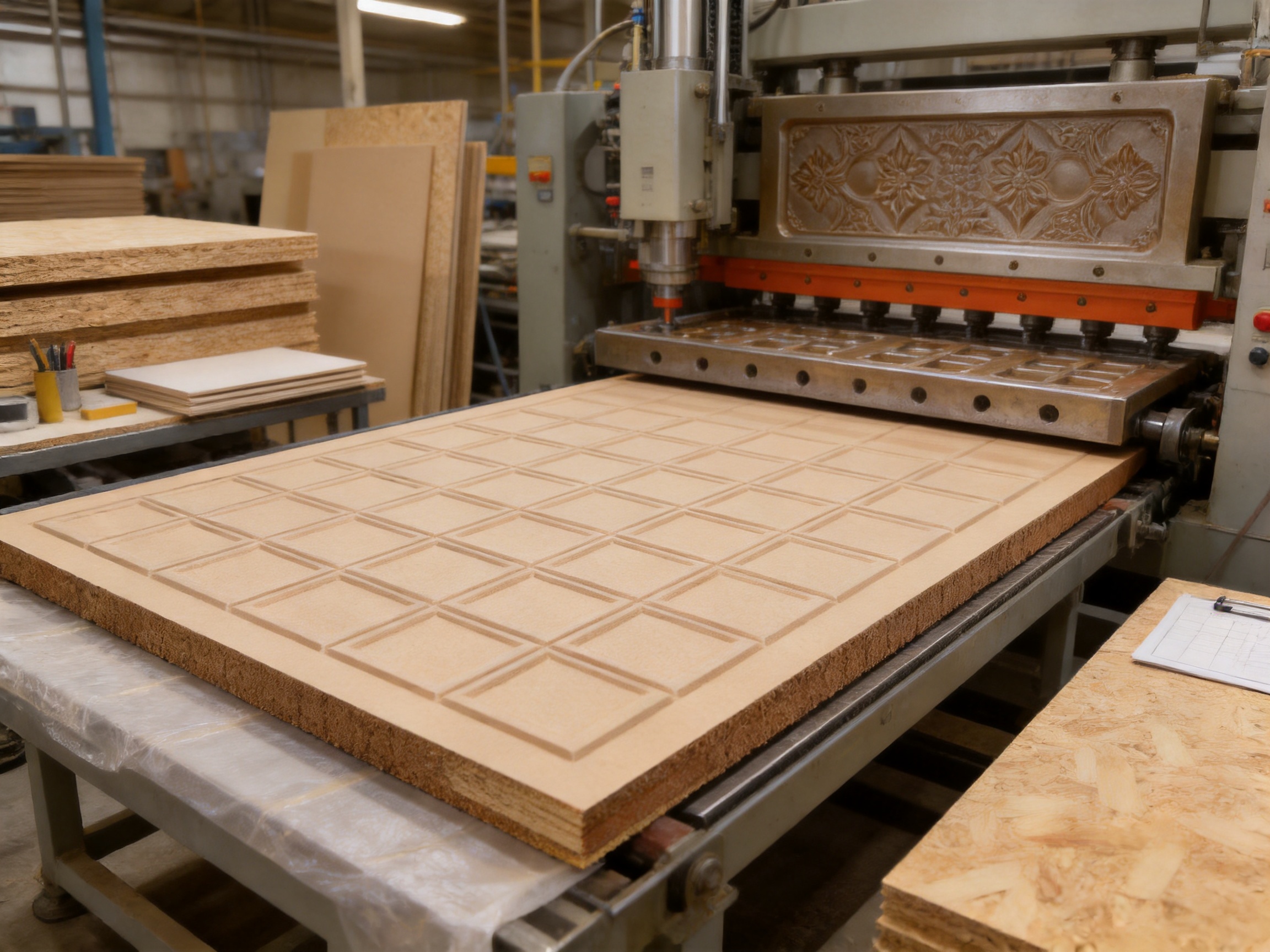
Another route involves mould embossing. In this process, a prepared mould creates the three-dimensional pattern in the panel surface. The quality of the mould influences the sharpness of the grid, the consistency of the recesses, and the repeatability of the design from one panel to the next.
Mould embossing is particularly appropriate for designs that depend on tactile relief. A square grid requires accurate control of the straight channels and the nodes where lines intersect. If the mould is not precise, the pattern may lose its rhythm or develop inconsistent depths. The use of advanced moulding technology is therefore an important part of the panel’s ability to deliver a clean architectural texture.
Controlled Hot Pressing
Hot pressing is a central stage in the production of the ZZ20 panel. Temperature and pressure are carefully controlled to ensure that the board is heated and compressed evenly. Uniform processing helps the decorative pattern become firmly integrated with the board surface while supporting flatness and strength.
Uneven heating can lead to inconsistent bonding, surface variation, or dimensional instability. Excessive pressure may affect the relief, while insufficient pressure may prevent the decorative layer from bonding properly. The hot-pressing process must therefore balance surface definition with structural performance.
Controlled pressing also contributes to a more consistent panel appearance. When the temperature, pressure, and pressing time are managed systematically, production can achieve a more stable result across a series of boards. This is especially important for projects in which adjacent panels must align visually.
Composite Board Construction
The product may use a multilayer composite structure. A composite construction can combine the strengths of the decorative surface with the stability of an engineered substrate. Depending on the selected specification, the base may be OSB, MDF, or particleboard.
MDF is often selected when a smooth and uniform surface is important. Particleboard can provide a practical and economical engineered base for many interior applications. OSB offers a distinctive structural board format and may be selected according to the requirements of the project. The appropriate substrate should be confirmed with the manufacturer or distributor based on the intended use, installation method, environment, and required performance.
Environmentally considerate adhesives are used in the manufacturing structure, and the product information identifies environmental grades of P2 and F4. These classifications should be evaluated in accordance with the applicable regional standards and project requirements. Buyers should also confirm the exact grade, test documentation, and applicable compliance information before specifying the product for a regulated project.
Material Structure and Raw Materials
The quality of a decorative panel depends not only on the visible pattern but also on the materials beneath it. A well-designed surface requires a stable base that can support pressing, handling, cutting, transportation, and installation. The ZZ20 panel is made with engineered board substrates and environmentally focused bonding materials intended to provide a balanced combination of appearance and usability.
High-quality fibreboard, chipboard, or related engineered substrates can offer a more predictable surface than untreated or poorly prepared base materials. Their controlled composition supports manufacturing consistency and helps the panel retain a level, usable format during fabrication.
The multilayer concept may also help distribute stresses within the board. Decorative surface materials, adhesives, and substrate layers respond differently to changes in temperature and humidity. A well-controlled production structure is intended to reduce the risk of separation and support long-term service performance under suitable interior conditions.
Material selection should always be matched to the installation environment. Interior wall and ceiling applications are generally different from exterior, wet-area, or continuously humid applications. The product is primarily positioned for interior decoration, so project teams should review ventilation, moisture exposure, fixing methods, edge protection, and local building requirements before installation.
Key Advantages Compared with Conventional Decorative Boards
Clear Geometric Identity
The ZZ20 panel provides a recognizable geometric identity without requiring additional framing or manually created grooves. Its grid pattern is integrated into the board, allowing the surface itself to become part of the interior composition. This can reduce the need for separate decorative features where a structured wall treatment is desired.
Visual Organization
The regular grid can help organize a wall or ceiling visually. Compared with random textures, the pattern has a predictable rhythm. Compared with a plain board, it provides more depth and character. This balance can make it suitable for spaces that require decoration but must remain orderly and professional.
Design Versatility
Many decorative surfaces are strongly associated with one design style. The ZZ20 pattern is more adaptable because it can support modern minimalist, industrial, contemporary commercial, office, residential, and selected hospitality interiors. Its restrained geometry allows surrounding materials to determine the final character of the space.
Repeatability Across Projects
Factory production supports repeatability. When a project requires many panels with the same surface language, a manufactured grid pattern can be more consistent than a site-built decorative treatment. This is particularly useful for multi-room interiors, retail chains, office floors, apartment developments, and large feature walls.
Practical Thickness Selection
The product is available in several thicknesses, including 9, 12, 18, 22, and 25 millimeters. This range gives buyers flexibility when balancing visual depth, weight, rigidity, machining requirements, and installation conditions. A thinner specification may be appropriate for some decorative applications, while a thicker board may be selected where additional body or support is needed.
Integrated Decorative and Structural Concept
Instead of treating the pattern as a separate decorative layer installed over a basic board, the production process integrates surface design with the board structure. This approach can simplify the material specification and give the finished panel a more unified appearance.
Potential for Efficient Space Enhancement
The panel can change the character of a room without requiring a complete reconstruction. A selected wall, ceiling zone, reception background, or furniture face can gain texture and visual hierarchy through a relatively focused material intervention. This makes the product useful for renovation projects as well as new construction.
Available Specifications and Product Information
The standard product dimensions are listed as 2745 millimeters by 1220 millimeters, with several thickness options. The listed prices are provided as reference values in United States dollars and may vary according to order volume, substrate selection, finish, packaging, shipping terms, and commercial agreement.
| Product Item | Specification or Information |
|---|---|
| Product name | ZZ20 Grid Pattern 3D Wall Panel |
| Design category | Wood Design Melamine Board |
| Standard length | 2745 mm |
| Standard width | 1220 mm |
| Available thicknesses | 9 mm, 12 mm, 18 mm, 22 mm, and 25 mm |
| Reference prices supplied | 9 mm: 36.5 USD; 12 mm: 40 USD; 18 mm: 46 USD; 22 mm: 51.6 USD; 25 mm: 56 USD |
| Substrate options | OSB, MDF, or particleboard |
| Manufacturing process | Three-dimensional melamine board production with plate-making, printing, mould embossing, and controlled hot pressing as applicable |
| Environmental grades listed | P2 and F4 |
The dimensional format is suitable for large-area wall and ceiling work because each board can cover a substantial surface area. However, actual material yield depends on the installation layout, pattern alignment, openings, corners, service penetrations, and cutting plan. Professional estimators should calculate waste before ordering, particularly when the grid must continue across adjacent panels.
Application in Interior Spaces
Office Interiors
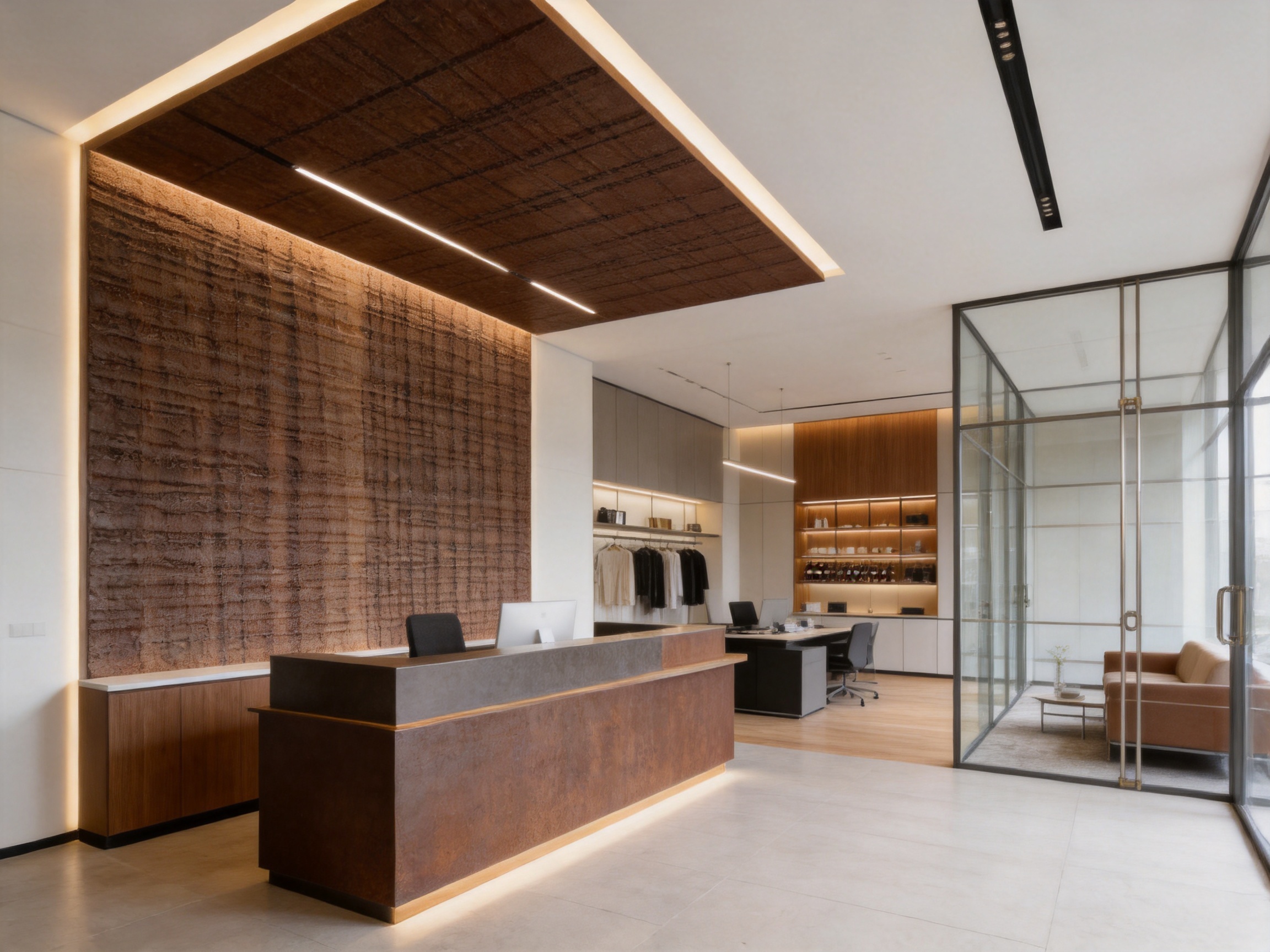
In offices, the ZZ20 panel can be used behind reception counters, in meeting rooms, on corridor walls, or as a background for company signage. The pattern conveys order and professionalism without relying on excessive decoration. It can also help create a visual distinction between collaborative zones, formal meeting spaces, and circulation areas.
The panel may be combined with neutral paint, acoustic materials, glass, metal, timber, and linear lighting. A restrained color palette can emphasize the geometry, while a contrasting finish can make the grid a stronger focal point. When used behind a reception desk, the regular pattern can create a memorable background while maintaining a clean commercial appearance.
Shopping Malls and Retail Spaces
Retail designers can use the panel for display backgrounds, cashier areas, feature walls, fitting-room corridors, and branded interior zones. The grid offers a structured setting for shelving, product displays, signage, and lighting. Its repeated arrangement can also help a large retail surface appear organized and proportioned.
Because the panel is manufactured in a consistent format, it can support repeated visual elements across several stores or departments. Retail operators should evaluate cleaning requirements, impact exposure, fixture attachment, fire regulations, and maintenance access during specification.
Residential Interiors
In residential projects, the panel can be applied to living-room feature walls, bedroom headboards, dining areas, home offices, entrance walls, and selected ceiling sections. Its geometric appearance suits interiors that seek a modern architectural character rather than a heavily ornamental finish.
The panel may be used as a full wall treatment or as a framed insert. A partial installation can reduce material consumption and make the grid function as a focused decorative feature. It can also be coordinated with wood-look flooring, plain cabinetry, soft textiles, stone surfaces, and contemporary lighting.
Ceiling Decoration
Ceilings are often underused as design surfaces. A three-dimensional grid panel can introduce visual structure overhead and help connect the ceiling design with the walls or furniture. It may be appropriate for selected ceiling zones, reception canopies, dining areas, corridors, or meeting-room features.
Ceiling installation requires careful attention to weight, suspension, fixing, access, and local construction standards. The selected thickness and substrate should be reviewed by the project team before installation, particularly where panels are installed above occupied areas.
Furniture Surface Decoration
The ZZ20 panel can also be considered for furniture surface decoration. It may be used on cabinet faces, reception counters, display structures, headboards, storage units, and other built-in elements where a textured surface is desired.
Furniture applications require accurate cutting and edge treatment. Designers should consider how the grid will meet at corners, doors, joints, and handles. A detailed shop drawing can help determine the best orientation and avoid unnecessary interruptions in the pattern.
Industrial and Minimalist Styles
The panel is especially compatible with industrial and modern minimalist design. In an industrial interior, the grid can complement exposed metal, concrete-look surfaces, dark hardware, and linear lighting. In a minimalist interior, it can add depth to an otherwise simple palette while maintaining visual restraint.
The product can also work in contemporary hospitality spaces, studios, showrooms, educational interiors, and public-facing commercial environments where designers want an identifiable surface without a complicated ornament.
Installation and Design Planning Considerations
A successful installation begins with accurate site measurement. Designers and contractors should confirm wall dimensions, floor-to-ceiling height, openings, corners, outlets, service routes, and existing irregularities. The grid alignment should be considered before panels are cut.
Pattern orientation is an important design decision. A square grid may be installed with its lines aligned to the floor and ceiling, or it may be positioned in relation to furniture, lighting, or other architectural elements. Consistent alignment generally produces the strongest visual result.
Panel joints should be planned as part of the composition. Depending on the desired appearance, joints may be minimized, aligned with the grid, or intentionally emphasized with a trim or shadow gap. Poorly planned joints can interrupt the pattern and reduce the visual continuity of the installation.
Cut edges may require suitable finishing, edging, sealing, or concealment. The correct treatment depends on the substrate, panel location, fixing system, and final design. Openings for sockets, lights, switches, brackets, and ventilation components should be measured carefully to avoid damaging the embossed surface.
Before large-scale installation, it is advisable to prepare a sample panel or mock-up. A mock-up allows the project team to evaluate color, relief, lighting, joint treatment, orientation, and compatibility with adjacent materials. It can also confirm whether the selected thickness and substrate are appropriate for the intended fixing method.
Storage and handling should protect the panels from excessive moisture, impact, contamination, and unsupported bending. Boards should be kept flat and handled according to the supplier’s recommendations. Installation should take place in an environment suitable for interior engineered-board products, with attention to acclimatization where required by local practice.
Performance and Environmental Considerations
The product information identifies P2 and F4 environmental grades. These designations indicate that environmental performance is part of the product specification, but the exact meaning and acceptance criteria can vary according to the relevant national or regional standard. Project buyers should request current technical documentation and verify that the selected product meets the requirements of the intended market.
YAKCO states that its broader product development focuses on environmentally friendly performance and includes products designed to meet the international ENF formaldehyde standard. For a specific order, customers should confirm the actual certification, test report, production batch, and applicable substrate because environmental documentation may differ by product construction and market.
The use of engineered wood substrates can support efficient material utilization and consistent board production. However, responsible specification also requires appropriate installation, maintenance, and end-of-life planning. Panels should not be exposed to conditions beyond their intended use without technical confirmation.
Environmental responsibility includes more than formaldehyde classification. It can also involve factory process control, adhesive selection, packaging, transportation, cutting waste, durability, and the service life of the installed material. A durable decorative surface that remains attractive and functional for a long period may reduce the frequency of replacement and renovation.
Company Manufacturing Strengths
YAKCO New Materials (Jiangsu) Co., Ltd. was established in 2007 and operates from Changshu City, Jiangsu, China. The company covers approximately 50 acres and has a modern standard factory building of more than 30,000 square meters. This production scale supports the development and manufacture of decorative panels for residential and commercial spaces.
The company focuses on high-end decorative panels and wall panels, with particular attention to three-dimensional decorative panel technology. Its stated capabilities include innovative deep-pressing processes, six core production processes, and MDI medical adhesive bonding. These capabilities are relevant to the ZZ20 panel because a three-dimensional board requires careful coordination between surface design, pressing, bonding, substrate preparation, and finishing.
Deep pressing can help create more noticeable surface relief and layering than a simple flat decorative treatment. When combined with suitable mould design and controlled process parameters, it can support a clear grid texture with defined lines and intersections.
MDI adhesive bonding is identified as one of the company’s production technologies. Adhesive selection and bonding control are important for the stability of a multilayer decorative board. A reliable bond can help reduce the risk of separation and support the panel during cutting, handling, and installation, provided that the product is used within its intended conditions.
The company also states that its products are designed to provide enhanced depth, layering, texture, stability, easy cutting, deformation resistance, and environmentally friendly performance. These stated strengths correspond to many of the practical concerns faced by designers and contractors when choosing a three-dimensional wall material.
The YAKCO brand was established in 2016 and represents the company’s continued focus on building materials for home and commercial spaces. For international buyers, the combination of factory scale, specialized three-dimensional technology, and a defined decorative-panel product range can provide a useful basis for wholesale sourcing and project procurement.
Why the ZZ20 Panel Is Suitable for Wholesale Projects
Wholesale buyers often require more than an attractive sample. They need a product that can be specified consistently, ordered in multiple thicknesses, integrated into different design schemes, and supported by a manufacturer with relevant production experience. The ZZ20 panel addresses these needs through its standardized format, regular pattern, material options, and established manufacturing background.
The consistent grid is useful for distributors because it has broad design appeal. A product with a highly specialized pattern may appeal to a narrow group of buyers, while a clean geometric pattern can be introduced to offices, residences, retail stores, hospitality projects, furniture manufacturers, and interior contractors.
The range of thicknesses also gives wholesalers a more flexible product offering. Different customers may require different board weights, cutting characteristics, and levels of rigidity. Offering several specifications can simplify product planning and help distributors respond to a wider range of project requirements.
Large board dimensions can support efficient coverage, although shipping, storage, and handling must be planned carefully. Wholesale customers should request information about minimum order quantities, packaging, container loading, lead time, surface options, substrate availability, color selection, and technical documentation.
For projects using multiple panels, batch consistency is particularly important. Buyers should discuss color matching, pattern alignment, thickness tolerance, substrate type, moisture conditions, and acceptance criteria with the supplier before placing a large order. A pre-production sample or approved reference panel can help establish expectations.
Maintenance and Long-Term Use
Routine maintenance generally begins with keeping the surface free from dust and loose particles. A soft cloth, microfiber duster, or suitable low-abrasion cleaning method can help preserve the decorative finish. Cleaning products should be tested on an inconspicuous area before broader use.
Harsh abrasives, aggressive solvents, excessive water, and tools that can scratch or crush the relief should be avoided unless specifically approved by the supplier. The recessed portions of the grid may collect dust over time, so periodic gentle cleaning is useful, especially in commercial interiors.
Any moisture exposure should be addressed promptly. Although the panel is intended for interior decorative use, engineered wood products should not be treated as unrestricted wet-area materials. Persistent humidity, water leakage, or condensation can affect the substrate and bonding system.
In high-traffic areas, designers should consider the possibility of impact from furniture, carts, equipment, or daily activity. Protective detailing, suitable positioning, and an appropriate substrate thickness can help reduce risk. Damaged panels should be assessed to determine whether localized repair or replacement is the best solution.
Comparison with Other Surface Solutions
Compared with Flat Melamine Boards
A flat melamine board offers a clean, practical finish but does not provide the same level of surface relief. The ZZ20 panel adds a three-dimensional grid that can create shadow and tactile interest. For projects seeking a feature wall or architectural texture, the three-dimensional option can deliver a stronger visual effect without changing to an entirely different material family.
Compared with Site-Created Grooved Walls
Site-created grooves may require several trades, accurate layout, additional tools, and more time. A pre-manufactured grid panel provides a prepared decorative pattern, which can improve repeatability and reduce the amount of pattern fabrication required on site. Installation still requires skilled planning, but the primary decorative geometry is produced under controlled factory conditions.
Compared with Random Relief Panels
Random relief panels can create a dramatic organic effect, but they may be more difficult to align across a large wall and harder to coordinate with furniture or architectural lines. The ZZ20 grid offers a more predictable visual system. Its regularity makes it easier to align with rectangular interiors, linear lights, shelves, and modular furniture.
Compared with Solid Decorative Materials
Solid stone, solid timber, metal, or ceramic surfaces can provide distinctive textures, but they may involve greater weight, cost, fabrication complexity, or installation requirements depending on the project. The engineered-board construction of the ZZ20 panel offers an alternative for interior applications where a lighter or more easily fabricated decorative board is preferred.
Specification Guidance for Designers and Buyers
When selecting the product, the first consideration should be the intended application. Wall, ceiling, furniture, and feature-panel uses may require different thicknesses, edge treatments, fixing methods, and substrate choices. The manufacturer or distributor should be consulted when the panel will be installed in an unusual environment.
The second consideration is pattern continuity. Buyers should determine whether the grid must align from panel to panel and whether the selected product dimensions support the planned layout. A cutting diagram can reduce waste and help coordinate joints with architectural features.
The third consideration is the finish and surrounding palette. A regular grid can appear understated in a low-contrast scheme or prominent in a contrasting scheme. Designers should evaluate the product under the actual project lighting because relief patterns change appearance according to light direction and intensity.
The fourth consideration is documentation. For commercial or public projects, request technical data, environmental information, substrate details, maintenance guidance, installation recommendations, and any relevant test reports. Documentation should correspond to the exact product and specification being ordered.
The fifth consideration is procurement timing. Decorative panels may require manufacturing, quality inspection, packaging, and international transportation. Early confirmation of dimensions, thickness, substrate, quantity, color, and delivery terms can help avoid delays during installation.
Frequently Asked Questions
What is the ZZ20 Grid Pattern 3D Wall Panel?
It is a three-dimensional melamine decorative panel with a regular square-grid pattern. It is designed for interior wall and ceiling decoration, visual zoning, furniture surface decoration, and feature applications in residential and commercial spaces.
What makes the pattern different from a flat printed design?
The product is designed as a three-dimensional surface rather than only a flat graphic. The pattern may be produced through plate-making and printing or through mould embossing, with controlled hot pressing used to integrate the decorative structure with the board.
Which substrates are available?
The listed substrate options are OSB, MDF, and particleboard. The most suitable substrate depends on the application, required rigidity, cutting method, surface requirements, and project conditions. Buyers should confirm the substrate for each quotation.
What sizes and thicknesses are listed?
The standard listed board size is 2745 millimeters by 1220 millimeters. Available thicknesses are 9, 12, 18, 22, and 25 millimeters.
Can the panel be used on ceilings?
It is identified for wall and ceiling decoration, but ceiling applications require careful review of weight, fixing, suspension, access, and local building requirements. The selected thickness and substrate should be approved for the specific ceiling system.
Can it be used for furniture?
Yes. The product information identifies furniture surface decoration as one possible application. Furniture designers should plan cuts, edges, corners, doors, handles, and pattern orientation before fabrication.
Which interior styles suit the product?
The panel is suitable for modern minimalist, industrial, contemporary, office, retail, residential, and other interiors that benefit from a clean geometric texture.
Is the product environmentally friendly?
The supplied product information lists P2 and F4 environmental grades, and the manufacturer describes a focus on environmentally friendly performance. Customers should request current documentation and verify that the exact product specification meets the environmental requirements of their market and project.
How should the panel be maintained?
Use gentle, low-abrasion cleaning methods and avoid excessive water, harsh solvents, and abrasive tools. The recessed grid should be kept free from accumulated dust, and prolonged moisture exposure should be avoided.
Can buyers request samples?
Sample approval is recommended for wholesale and project orders. A sample can help buyers evaluate the pattern, surface relief, color, substrate, thickness, lighting effect, and compatibility with surrounding materials before committing to a larger order.
How can customers obtain a quotation?
Customers can contact YAKCO New Materials (Jiangsu) Co., Ltd. with the required thickness, substrate, quantity, destination, application, and delivery terms. The company contact information supplied for the product includes yakco@jsix.com and +86-13358024856.
Conclusion
The ZZ20 Grid Pattern 3D Wall Panel provides a practical combination of geometric design, three-dimensional texture, engineered-board construction, and manufacturing consistency. Its clear square-grid pattern creates order and rhythm, making it suitable for interiors that require depth without visual disorder.
The product’s advantages include a versatile appearance, multiple thickness options, repeatable factory production, broad application potential, and compatibility with modern minimalist and industrial design languages. Its controlled plate-making, printing, mould embossing, and hot-pressing processes are intended to support clear pattern definition, flatness, strength, and reliable surface integration.
YAKCO New Materials (Jiangsu) Co., Ltd. strengthens the product offering through its experience in decorative panels, dedicated three-dimensional panel technology, deep-pressing processes, MDI adhesive bonding, and large-scale manufacturing facilities. These capabilities provide a foundation for wholesale supply and customized project discussions.
For designers, distributors, contractors, and property developers, the panel represents more than a decorative finish. It is a flexible interior surface system that can organize space, enhance feature areas, support furniture design, and introduce controlled texture into residential and commercial environments. Proper specification, sample approval, installation planning, and documentation review will help ensure that the product performs as intended in each project.
References
1. YAKCO New Materials (Jiangsu) Co., Ltd. Product information for the ZZ20 Grid Pattern 3D Wall Panel.
2. YAKCO New Materials (Jiangsu) Co., Ltd. Company profile and manufacturing capability information.
3. Product specification data supplied for OSB, MDF, and particleboard decorative panel substrates.
4. General principles of engineered wood panel manufacturing, hot pressing, surface embossing, and melamine decorative board production.
5. General interior design principles relating to geometric pattern, visual rhythm, spatial zoning, and three-dimensional wall surfaces.
6. Environmental classification information supplied for P2 and F4 decorative board grades.