中文简体



Previous Post
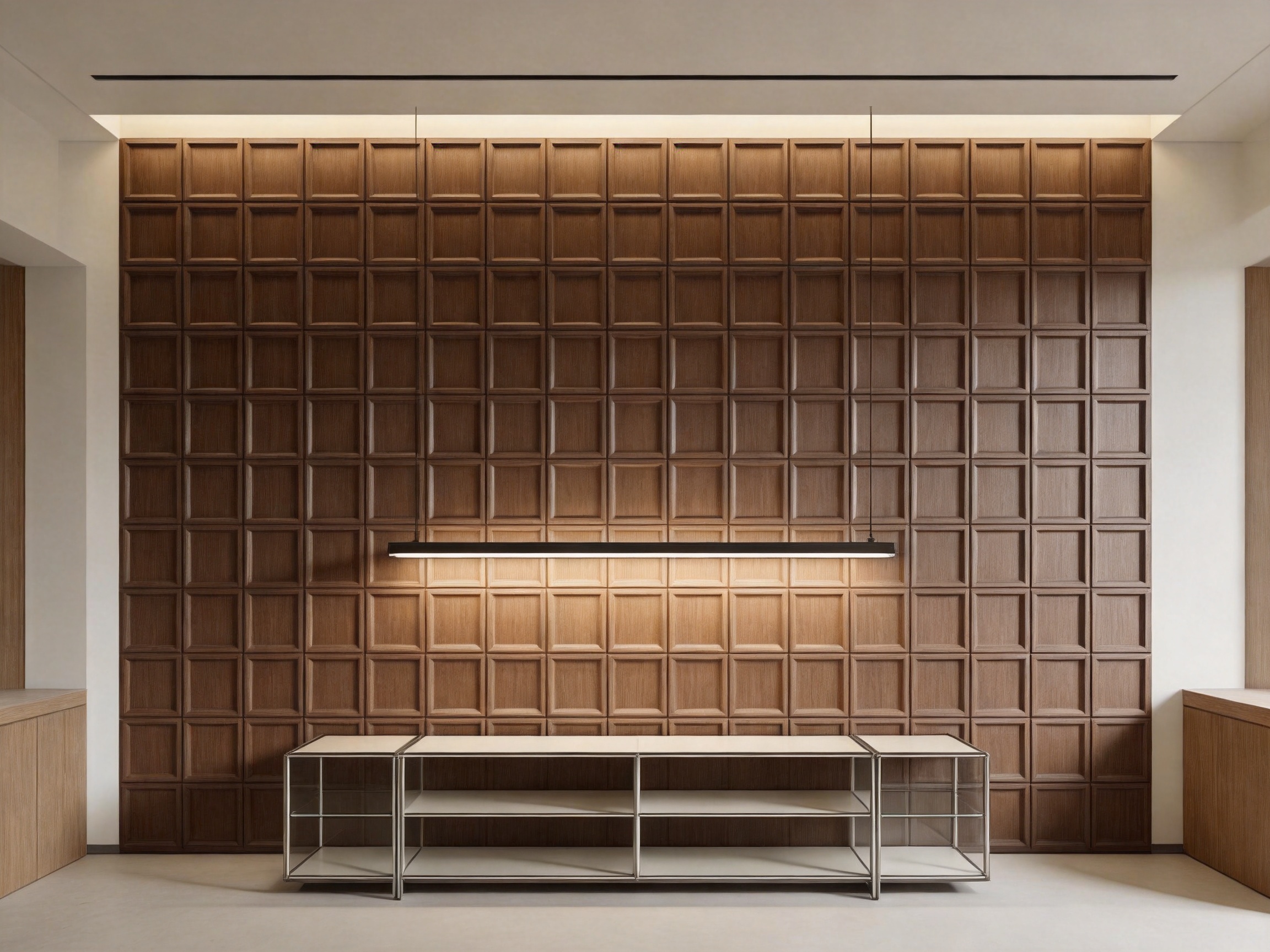
Interior design increasingly depends on surfaces that do more than cover walls. Contemporary projects require materials that create visual identity, improve spatial definition, coordinate with furniture and lighting, and maintain dependable performance throughout years of use. The ZS02 Grid Pattern 3D Wall Panel responds to these requirements with a clearly ordered geometric surface, a durable engineered-board structure, and a manufacturing process designed to combine decorative precision with practical stability.
Featuring a regular square-grid texture, the panel introduces rhythm, depth, and architectural order without overwhelming the surrounding space. Its pattern is sufficiently distinctive to become a design feature, yet sufficiently restrained to work with a wide range of colors, materials, and interior styles. This balance makes it suitable for offices, retail environments, residences, hospitality spaces, furniture applications, and selected ceiling installations.
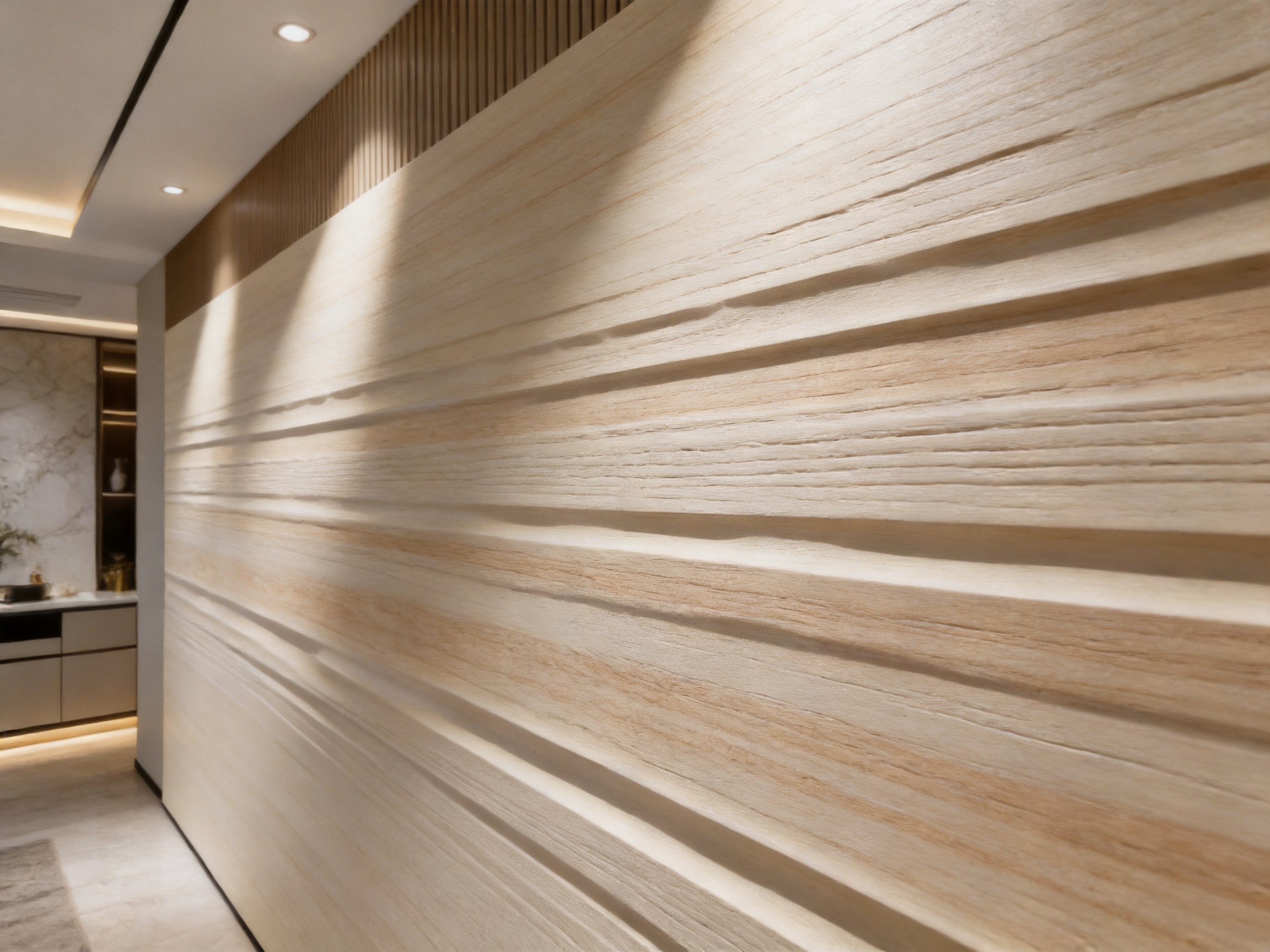
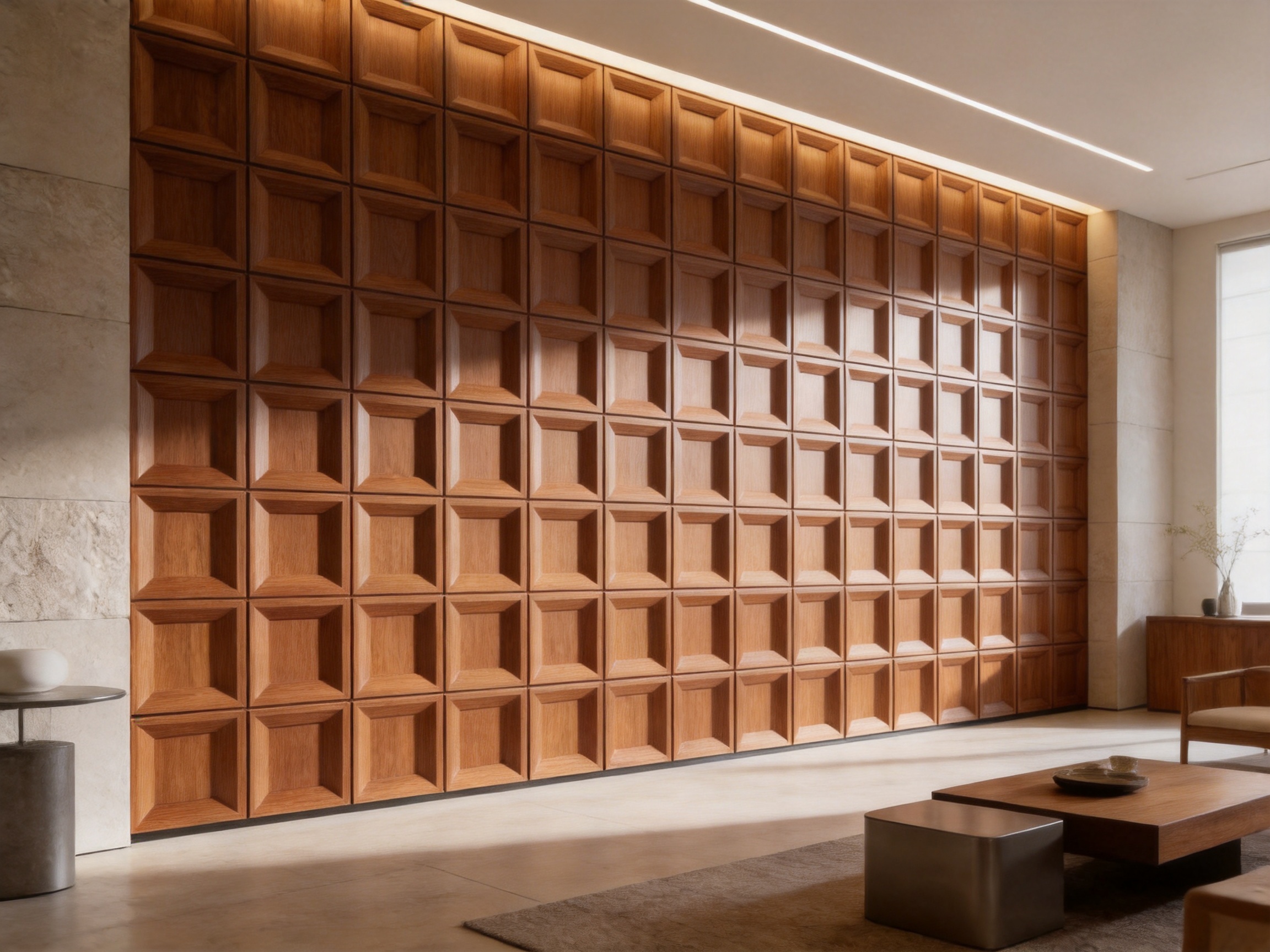
Unlike a conventional flat decorative board, the ZS02 panel uses three-dimensional surface treatment to create a stronger relationship between light and material. The raised or recessed grid catches highlights and shadows as daylight or artificial lighting changes across the surface. As a result, a single wall can appear more layered and dynamic while retaining a clean, organized appearance.
Product Overview
The ZS02 Grid Pattern 3D Wall Panel belongs to the wood design melamine board category. It is manufactured as a decorative engineered panel using a substrate such as OSB, MDF, or particleboard, combined with a melamine decorative surface and a three-dimensional grid treatment. Depending on the selected thickness and project requirements, the panel can be used for wall cladding, ceiling decoration, feature walls, furniture surfaces, partitions, and other interior applications.
The standard panel dimensions are 2745 millimeters by 1220 millimeters. Available thicknesses include 9 millimeters, 12 millimeters, 18 millimeters, 22 millimeters, and 25 millimeters. The thickness range enables designers, contractors, and distributors to select a suitable specification according to installation method, visual depth, structural expectations, and budget.
The product information identifies P2 and F4 environmental grades. These classifications provide buyers with important information when evaluating boards for interior use, especially in projects where emissions, material responsibility, and regulatory compliance are considered during specification.
| Product Item | ZS02 Grid Pattern 3D Wall Panel |
| Design Category | Wood Design Melamine Board |
| Standard Panel Size | 2745 x 1220 millimeters |
| Available Thicknesses | 9, 12, 18, 22, and 25 millimeters |
| Substrate Options | OSB, MDF, or particleboard |
| Manufacturing Process | Three-dimensional melamine board production |
| Environmental Grades | P2 and F4 |
| Primary Applications | Walls, ceilings, partitions, furniture, offices, retail, and residences |
The panel is designed to provide a consistent decorative effect across repeated installations. Regular grid dimensions and clear intersections help maintain a coherent visual field when several panels are placed together. This is particularly valuable in commercial interiors, where a surface may extend across a large wall or multiple connected areas.
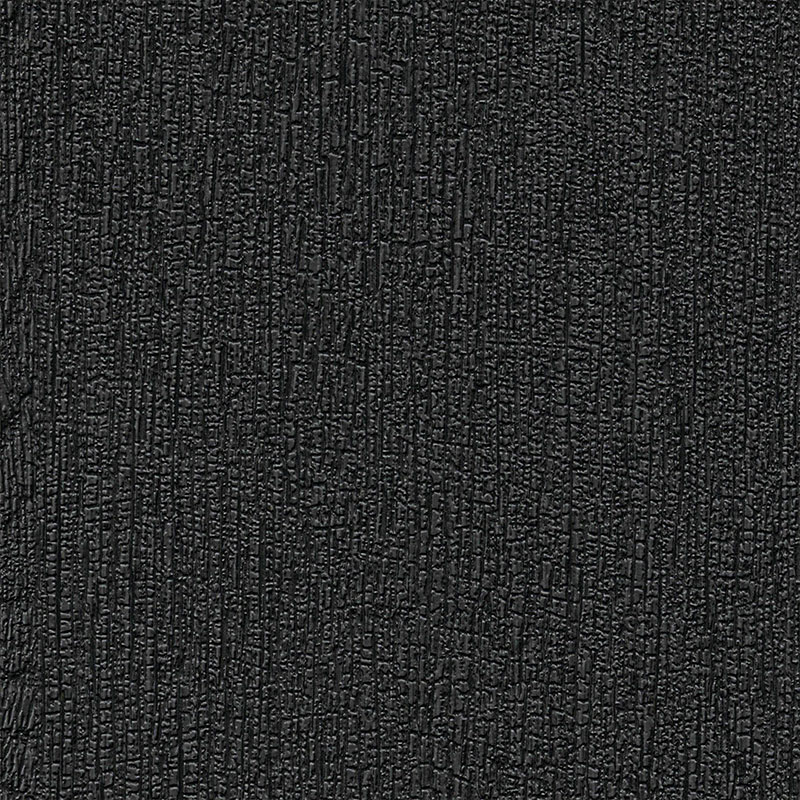
ZS02 Grid Pattern 3D Wall Panel
Geometric Design and Visual Character
The principal visual feature of the ZS02 panel is its square-grid pattern. The surface is organized into repeated horizontal and vertical lines, creating a sequence of balanced geometric units. Unlike irregular textures, natural knots, or strongly directional grain patterns, the grid offers predictable visual movement. It gives the wall a disciplined character and allows the surrounding design elements to be arranged with greater confidence.
Geometric order has a strong role in architectural interiors. Repetition can make a space feel calmer, more intentional, and easier to understand. The ZS02 grid provides this effect without relying on excessive ornamentation. It can support a minimalist environment, add structure to an industrial interior, or introduce a refined decorative layer to a residential room.
The intersections of the grid form regular nodes that reinforce the panel’s sense of organization. These nodes can appear sharper or softer depending on the lighting angle, the chosen finish, the panel thickness, and the installation direction. When installed across a broad surface, the repeated nodes create an architectural rhythm similar to a modular wall system.
Interaction with Light and Shadow
Three-dimensional panels are especially effective when designers consider lighting during the planning stage. A flat board reflects light in a relatively uniform way, while an embossed or deeply pressed panel produces different levels of brightness across its surface. The upper faces of the pattern may receive direct illumination, while the recesses form subtle shadows. This contrast helps reveal the grid and provides depth without requiring additional decorative objects.
In offices, linear ceiling lights can emphasize the regularity of the pattern. In retail spaces, directional spotlights can be aimed across the surface to make the grid more expressive. In residential interiors, warm indirect lighting can soften the geometry and create a more comfortable atmosphere. This adaptability is one of the main reasons that three-dimensional wall panels are increasingly used as alternatives to painted walls or ordinary flat laminate boards.
Compatibility with Interior Styles
The restrained character of the grid makes the panel compatible with several design languages. In an industrial-style interior, it can coordinate with exposed metal, concrete-look surfaces, dark fixtures, and functional lighting. In a modern minimalist setting, it can provide texture while preserving a simple visual vocabulary. In a contemporary residential space, it can be combined with wood furniture, neutral fabrics, stone-look materials, and soft lighting.
The pattern can also be used in hospitality and commercial spaces that require a recognizable but not overly complicated identity. A reception wall, corridor feature, retail display background, restaurant partition, or meeting-room surface can gain visual definition from the panel while remaining easy to coordinate with branding colors and furniture finishes.
Advanced Manufacturing Principles
The appearance of a regular grid depends heavily on manufacturing accuracy. Small inconsistencies in line width, pattern depth, spacing, or surface alignment can become noticeable when panels are installed side by side. For this reason, the production of the ZS02 series employs sophisticated plate-making and printing techniques or advanced mold-embossing techniques. These methods are intended to maintain clear, orderly, and repeatable surface details.
Plate-making and printing techniques are useful when the design requires precise visual reproduction and consistent decorative definition. Advanced mold embossing, meanwhile, creates physical relief in the board surface. The selection of process can depend on the desired texture, depth, production requirements, and decorative specification. In both cases, production control is essential to preserve the integrity of the grid across the panel.
Pattern Formation
During pattern formation, the grid must be transferred to the surface without losing its proportions. The horizontal and vertical elements must meet cleanly at their intersections, and the spacing must remain uniform from one area to another. A controlled production system helps reduce uneven nodes, distorted lines, and irregular transitions that may otherwise be visible after installation.
A well-defined pattern also supports more efficient project planning. When the grid modules are predictable, designers can coordinate joints with wall dimensions, doors, display units, furniture, lighting, and other architectural features. Contractors can plan cuts more accurately, and distributors can present a product with reliable repeatability to professional buyers.
Melamine Surface Integration
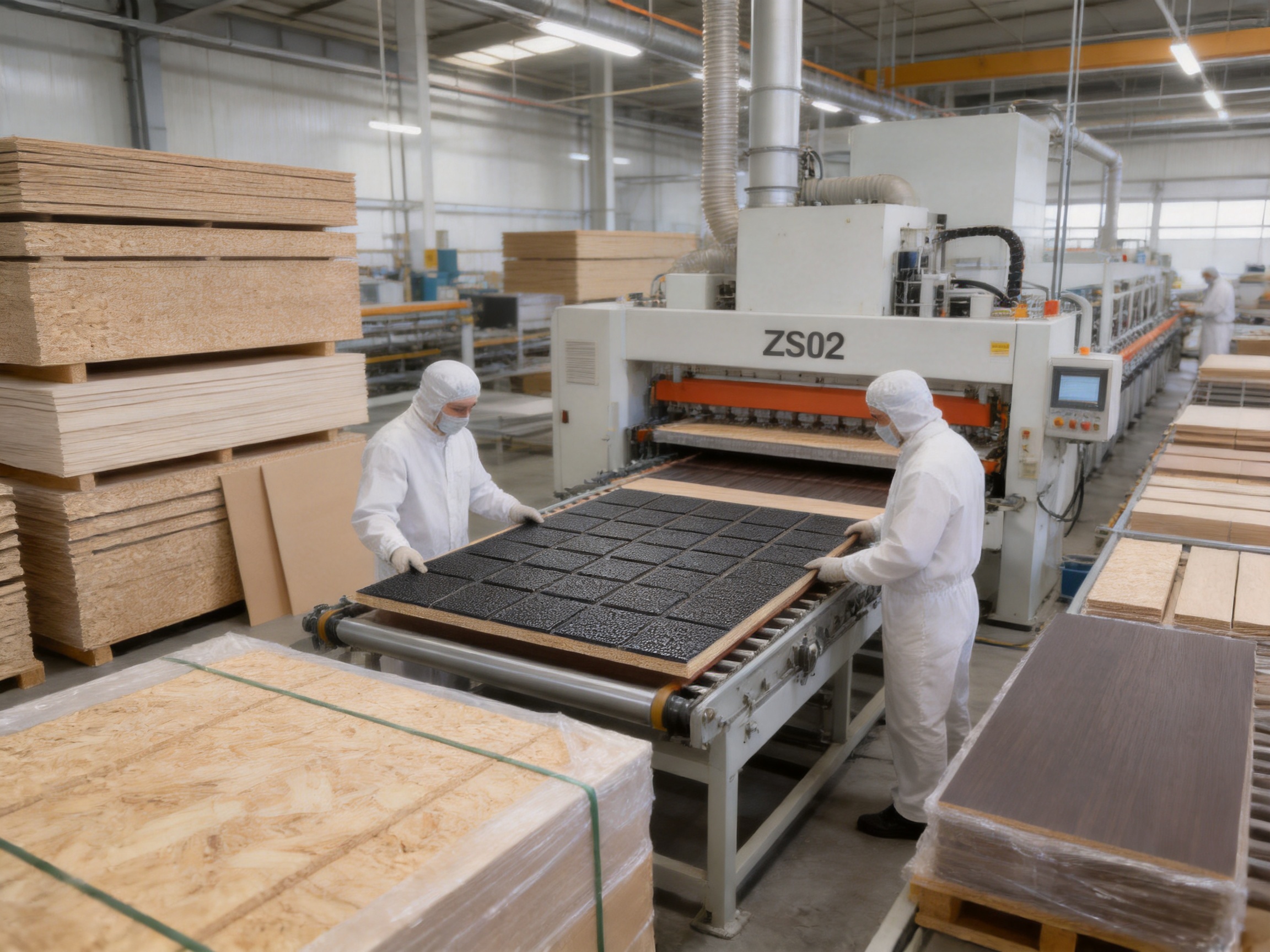
Melamine decorative technology provides the visual layer that gives the board its wood design identity and surface finish. The decorative layer is integrated with the engineered substrate under controlled heat and pressure. This process helps create a stable bond between the surface and the board while supporting the clean appearance expected from a finished decorative panel.
Melamine surfaces are widely used in furniture and interior applications because they can offer a practical balance between appearance, cleanability, and manufacturing consistency. In the ZS02 panel, the decorative layer is combined with a three-dimensional structure, allowing the product to provide both a designed visual surface and a tactile architectural effect.
Hot-Pressing Control
Hot pressing is a central stage in the manufacturing process. Temperature and pressure must be managed carefully so that the board material is heated and compressed uniformly. Consistent heat supports the bonding process, while controlled pressure helps the decorative pattern become firmly embedded or formed on the surface. Correct timing is also important because excessive or insufficient pressing can affect the appearance, flatness, bond quality, or dimensional stability of the finished board.
The purpose of hot pressing is not simply to produce a decorative impression. It also contributes to the overall integrity of the panel. A stable pressing cycle can help ensure that the grid remains clearly defined and that the panel maintains a suitable degree of flatness after production. For interior projects, this combination of decorative precision and board stability is more valuable than surface appearance alone.
Panel Structure and Raw Materials
The ZS02 panel may use a multilayer composite structure to improve stability and durability. The substrate options listed for the product include OSB, MDF, and particleboard. Each substrate offers different characteristics, allowing the product range to serve varied design and construction requirements.
OSB Substrate
Oriented strand board is formed from arranged wood strands bonded into a panel. Its strand orientation can provide a visually and structurally organized internal composition. In suitable applications, OSB can offer a strong engineered-board base for decorative treatment. It may be considered where a robust substrate and a distinct material character are important.
MDF Substrate
Medium-density fiberboard is manufactured from refined wood fibers combined with adhesive and formed under pressure. Its relatively uniform composition is useful for decorative machining, surface treatment, and precise finishing. MDF is often selected when a smooth, consistent base is needed for a refined interior panel or furniture component.
Particleboard Substrate
Particleboard is produced from wood particles bonded into a stable sheet material. It provides an economical substrate option for many furniture and interior applications. When combined with a carefully applied melamine surface and controlled three-dimensional processing, particleboard can support a practical decorative panel solution for projects that balance visual quality and cost efficiency.
The availability of different substrate options gives project buyers greater flexibility than a single-substrate product. A distributor can serve different market segments, while a designer or contractor can select the board type according to the intended use, fabrication method, budget, and performance expectations.
Environmentally Considered Adhesive Technology
The manufacturing information identifies the use of environmentally friendly glues in the product structure. Adhesive selection is important because bonding materials influence the stability, emissions profile, and long-term performance of engineered panels. The company also reports the use of MDI medical adhesive bonding within its broader production technology. This reflects an effort to develop bonding systems that support stable panel construction and responsible interior-material performance.
Buyers should always confirm the exact grade, testing documentation, and application limitations for a particular order. Nevertheless, the combination of engineered substrates, controlled bonding, and stated P2/F4 classifications provides useful information for commercial and residential specification.
Advantages Over Conventional Flat Panels
The ZS02 Grid Pattern 3D Wall Panel offers several advantages when compared with ordinary flat melamine boards, painted gypsum surfaces, wallpaper, or basic decorative sheets. The most immediate difference is dimensionality. A flat surface depends primarily on color and printed pattern, while the ZS02 panel uses physical relief to create depth and shadow.
Greater Visual Depth
Three-dimensional relief can make a wall appear more substantial and visually developed. It introduces a tactile quality that cannot be fully reproduced by a flat print. This is useful in spaces where the wall itself must become part of the interior concept, such as a reception area, retail display background, feature wall, or meeting-room frontage.
Strong Pattern Discipline
Some textured wall products rely on irregular or highly organic forms. These can be attractive, but they may be difficult to align across a large installation and can compete with other design elements. The ZS02 grid offers a more disciplined alternative. Its repeated geometry supports predictable alignment and makes it easier to coordinate with architectural dimensions.
Design Versatility
The pattern is decorative without being tied to one narrow style. It can support industrial, contemporary, modern minimalist, and selected traditional-modern interiors. The neutral logic of the grid allows the panel to work with wood tones, solid colors, textiles, metal, glass, stone-look materials, and lighting systems.
Spatial Organization
A grid can visually divide and organize a space. It can identify a feature zone, frame a reception desk, distinguish a circulation area, or give a large wall a more manageable scale. This spatial function is especially valuable in open-plan environments, where surfaces must help communicate the difference between working, meeting, displaying, dining, or relaxing areas.
Efficient Decorative Installation
Because the design and finish are integrated into the panel, the product can reduce the need for several separate decorative operations. A project may not need to combine a structural board, a separate printed finish, and an additional decorative molding system. Depending on the installation method, a finished panel can provide the substrate appearance and the three-dimensional visual effect in one coordinated product.
More Consistent Repetition
Hand-built decorative treatments can vary from one installer or production batch to another. Factory-made panels are designed to provide a more consistent surface. The regular grid is particularly suited to controlled production because its visual success depends on repetition. Consistency can improve the appearance of large projects and reduce the uncertainty associated with site-created patterns.
Advantages Over Competing Decorative Solutions
Competitive comparison should consider more than price. Decorative panels must be assessed according to appearance, manufacturing repeatability, installation efficiency, substrate selection, environmental information, durability expectations, and supplier capability. The ZS02 panel is positioned strongly in these areas because it combines a precise three-dimensional design with a selection of engineered-board substrates and an established production infrastructure.
Compared with ordinary printed wood-look boards, the ZS02 panel provides a tactile grid rather than only a visual image. Compared with individually applied battens or moldings, it can offer a more continuous and orderly surface with fewer separate components. Compared with highly irregular 3D panels, it provides easier visual coordination because the geometry is regular. Compared with purely decorative wallpaper, it offers a more substantial board-based construction suitable for applications requiring a rigid panel surface.
The product also has an advantage for wholesalers and professional buyers who need a clear product family. The range of thicknesses allows the same design concept to be adapted to different project requirements. This can simplify product presentation, procurement planning, and material coordination across multiple interior zones.
The use of advanced plate-making, printing, and mold-embossing techniques further supports the product’s competitive position. Precision is especially important in architectural materials because a small defect may be repeated many times across an installation. A manufacturing approach focused on pattern clarity and hot-pressing control can help deliver a more professional result than low-control decorative production.
Applications in Commercial Interiors
Offices
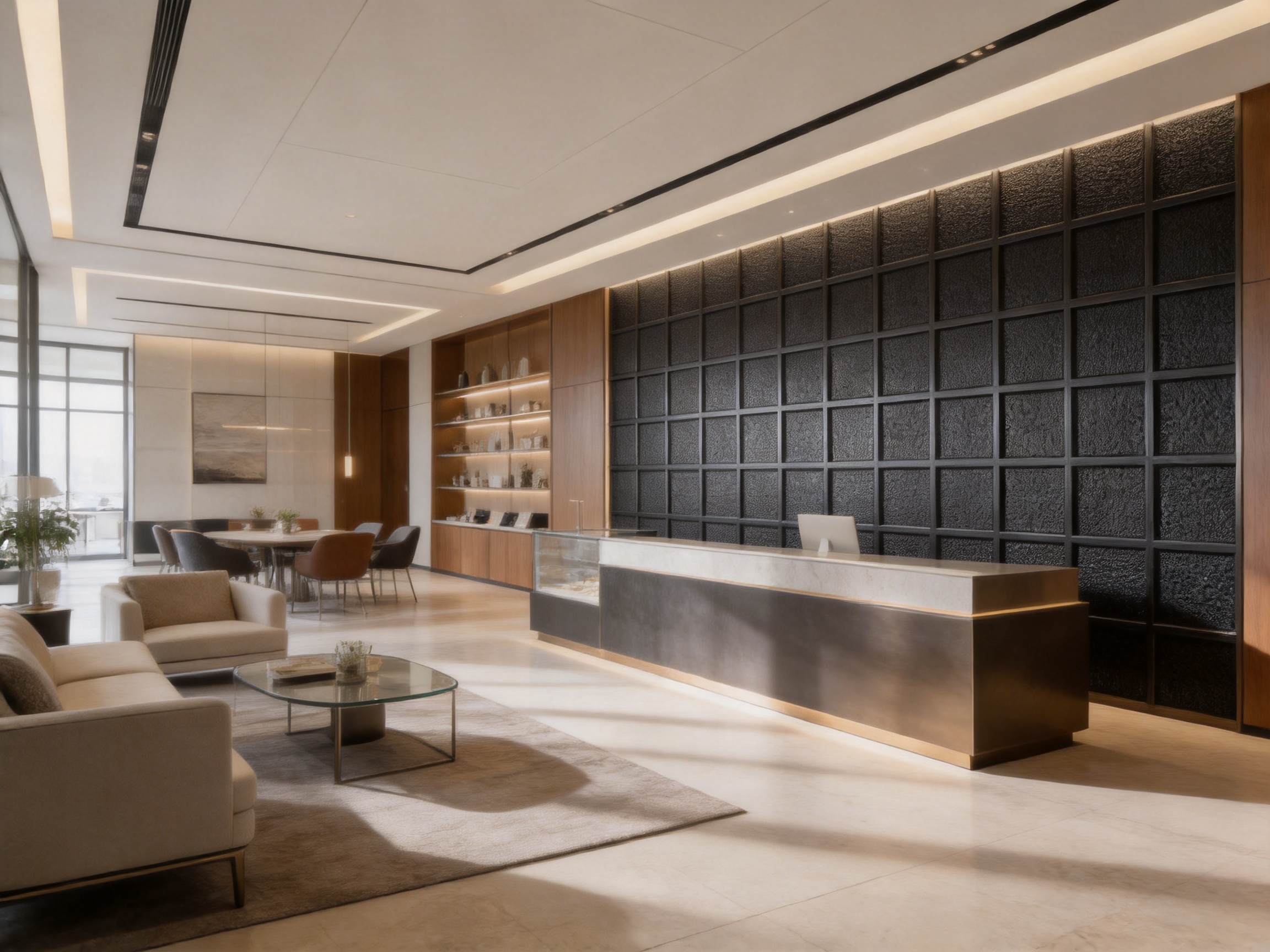
Office interiors increasingly use textured materials to create warmer and more memorable working environments. The ZS02 panel can be used behind reception desks, in meeting rooms, collaborative zones, corridors, and executive offices. Its organized grid can communicate professionalism and structure, while the wood design can soften the technical character of glass, metal, and electronic equipment.
In open-plan offices, the panel can identify a specific activity area without requiring a full-height partition. A feature wall behind a shared worktable or informal meeting zone can establish visual hierarchy while maintaining openness. In a reception area, the grid can create a branded architectural background without relying on excessive graphics or complex ornamentation.
Retail Environments
Retail spaces require surfaces that support merchandise rather than distract from it. The ZS02 panel can serve as a backdrop behind display shelving, product counters, or promotional areas. Its regular pattern can create a sense of order, helping products appear intentionally arranged. The three-dimensional surface also provides a recognizable texture that may reinforce a store’s interior identity.
When used with accent lighting, the panel can create a changing background throughout the day. Warm light may emphasize the wood character, while brighter directional light can highlight the grid and draw attention to a selected display zone.
Hospitality Spaces
Hotels, restaurants, cafés, and lounges often need durable decorative surfaces that establish atmosphere. The ZS02 panel can be used on reception walls, dining-area feature walls, corridors, bar fronts, and selected ceiling zones. Its geometric order suits hospitality concepts that seek a modern, refined, or urban character.
Designers can combine the panel with upholstery, woven fabrics, leather-look materials, metal trims, and stone finishes. The grid provides a structured background that can balance softer materials and prevent a large interior from appearing visually uncoordinated.
Residential Interiors
In homes, the product may be used for living-room feature walls, television backgrounds, bedroom headboards, study walls, entry zones, and furniture surfaces. The panel can add texture to a room without requiring a highly decorative pattern. It is particularly suitable for homeowners who prefer architectural detail and clear geometry.
A residential designer may use a single wall as a focal point or apply the panel selectively to define a niche. The range of thicknesses also allows the visual depth to be adjusted according to the scale of the room and the desired prominence of the texture.
Ceilings and Partitions
The product information identifies walls and ceilings as primary applications. On a ceiling, the grid can support a strong sense of alignment with lighting, ventilation, and architectural modules. On a partial partition, it can create visual separation while preserving a designed, continuous surface.
Before ceiling or partition installation, project teams should verify structural support, fixing systems, fire requirements, service access, moisture conditions, and local building regulations. The appropriate thickness and substrate should be selected according to the actual construction system rather than appearance alone.
Furniture and Joinery Applications
The ZS02 panel can also be used for furniture surface decoration. Applied to cabinet faces, reception counters, display units, wall-mounted storage, or custom joinery, the grid introduces continuity between architectural surfaces and furniture. This can help create a coordinated design language across an interior.
For furniture use, fabricators should assess cutting direction, edge treatment, corner details, hardware placement, and the relationship between the grid and the component dimensions. The regular pattern can be visually striking on doors and drawer fronts, but alignment should be planned carefully to maintain continuity from one component to the next.
Three-dimensional panels may require more attention during cutting than flat boards because careless handling can damage raised details or create visible interruptions. Professional fabrication equipment and accurate drawings are recommended for high-visibility furniture applications. When correctly planned, the finished result can provide a distinctive alternative to plain cabinet panels or ordinary wood-grain boards.
Installation and Project Planning
Successful use of the ZS02 panel depends on appropriate preparation and installation. The receiving wall should be reasonably flat, clean, dry, and capable of supporting the selected fixing method. Any moisture, structural movement, or unevenness should be addressed before the decorative panels are installed.
Panel orientation should be determined before cutting. A square grid may appear similar in multiple directions, but the alignment of joints, surrounding architecture, and lighting can affect the final appearance. The installer should establish a reference line and plan the layout from a visible starting point. This reduces the chance that narrow or irregular pieces will appear in prominent locations.
Joint Coordination
Because the design is based on repeated geometry, joints should be considered part of the visual composition. The layout should aim to preserve the rhythm of the grid from one panel to the next. Where possible, cuts should be positioned in less visible areas or coordinated with corners, openings, trims, and architectural breaks.
Designers may choose either a continuous-grid appearance or an intentionally segmented installation. A continuous appearance requires careful alignment and accurate site work. A segmented approach can use trims, shadow gaps, or contrasting joints to make each panel a deliberate module. Both methods can be successful when planned in advance.
Cutting and Edge Protection
Panels should be cut with suitable tools and supported properly to avoid chipping, cracking, or damage to the surface relief. Finished faces should be protected during handling and storage. Edges may require sealing, edging, trimming, or concealment depending on the installation system and the design intent.
Project teams should follow the supplier’s technical instructions for storage, acclimatization, cutting, fixing, cleaning, and maintenance. The information provided here describes the product concept and general applications; exact installation requirements can vary according to substrate, thickness, site conditions, and local regulations.
Quality Control and Production Strength
The manufacturer’s production capability is an important consideration for buyers of decorative panels. YAKCO New Materials was established in 2007 and operates a modern standard factory building covering more than 30,000 square meters on a 50-acre site. This scale provides a foundation for organized production, equipment investment, quality management, and supply support.
The company specializes in high-end decorative panels and wall panels for residential and commercial spaces. Its focus on three-dimensional decorative-panel technology has led to the development of deep-pressing processes and six core production processes. These capabilities are relevant to the ZS02 product because the panel depends on accurate surface formation, stable bonding, and repeatable finishing.
Manufacturing strength is not limited to the size of a factory. It also includes process knowledge, material control, equipment maintenance, product development, and the ability to support different specifications. The combination of multiple substrate options, several thicknesses, three-dimensional processing, and environmental-grade information indicates a product system intended for professional distribution and project use.
Deep-Pressing Technology
Deep pressing can create a stronger sense of relief than a shallow decorative print. For the ZS02 grid, controlled pressing helps define the lines and nodes that create the visual structure. The depth must be balanced carefully: sufficient relief is needed to produce meaningful light and shadow, while excessive deformation could affect flatness, edge integrity, or fabrication.
The company’s reported experience with deep-pressing processes supports the development of textured surfaces that maintain a clear decorative identity. This is a meaningful distinction from products that imitate three-dimensionality through only a printed image.
Process Integration
Six core production processes suggest an integrated approach to manufacturing. Although the specific sequence may vary by product specification, a complete decorative-board workflow commonly involves substrate preparation, decorative-layer handling, pattern formation, pressing, quality inspection, and finishing or packaging. Coordinating these stages helps reduce variation between production steps.
For professional customers, process integration can improve confidence in repeat orders. Commercial projects may require additional panels months after the first delivery, and consistent production methods are important when new material must match an existing installation.
Environmental and Indoor Material Considerations
Environmental performance is now an important part of interior material selection. Architects, contractors, developers, and homeowners increasingly consider formaldehyde emissions, adhesive technology, manufacturing responsibility, durability, and service life when comparing decorative boards.
The ZS02 product is identified with P2 and F4 environmental grades, while the company describes its broader product development as meeting the international ENF formaldehyde standard. Buyers should request current technical documents and confirm which grade applies to the exact board, substrate, and order. Documentation is especially important for projects with strict green-building requirements or formal indoor-air-quality specifications.
Durability also contributes to environmental responsibility. A surface that remains attractive and functional for a longer period may reduce the frequency of replacement, renovation waste, and new material consumption. The ZS02 panel is designed to combine a stable engineered-board structure with a durable decorative treatment, which supports the goal of creating long-lasting interior finishes.
Responsible specification should also include efficient material planning. Accurate drawings, optimized cutting layouts, proper storage, and careful handling can reduce offcuts and prevent damage before installation. When panels are selected in the correct thickness and substrate for the intended application, unnecessary material use may also be avoided.
Maintenance and Long-Term Appearance
The regular grid is visually clear, so routine maintenance should focus on preserving both the decorative surface and the recessed areas. Dust can be removed with a soft, dry cloth or a suitable vacuum attachment. If further cleaning is required, a lightly dampened cloth and a mild cleaning solution should be used according to the supplier’s instructions.
Excess water should not be allowed to collect on the panel or enter unprotected edges. Abrasive pads, aggressive solvents, and harsh chemicals may damage the decorative finish and should be avoided unless specifically approved. Spills should be addressed promptly, particularly in commercial spaces with high visitor traffic.
Periodic inspection can identify loose edges, impact damage, moisture exposure, or problems with the fixing system. Addressing minor issues early can help preserve the overall installation and prevent a small defect from becoming a larger repair.
Selection Guide for Buyers
When purchasing the ZS02 Grid Pattern 3D Wall Panel, buyers should begin by defining the application. A wall feature, furniture component, ceiling, partition, and high-traffic commercial surface may require different substrate and thickness selections. The visual design remains consistent, but the technical choice should reflect the construction environment.
The 9-millimeter and 12-millimeter options may be considered where a lighter decorative treatment is preferred and the supporting wall or furniture structure provides adequate stability. The 18-millimeter, 22-millimeter, and 25-millimeter options can provide a more substantial board profile for projects that require greater visual mass or a specific fabrication specification. Final selection should be based on technical advice and project conditions.
Buyers should also confirm the decorative finish, color, substrate type, environmental documentation, packaging method, minimum order requirements, production schedule, and available samples. A physical sample is particularly useful because three-dimensional relief, color, grain interpretation, and light response are difficult to judge from a digital image alone.
For export and wholesale purchases, packaging and transportation should receive close attention. The panels must be protected from impact, moisture, bending, and surface abrasion during storage and shipping. A distributor should ensure that warehouse conditions are appropriate and that panels remain supported and protected until installation.
Why the Product Is Suitable for Wholesale Supply
Wholesale customers often require more than an attractive product. They need a repeatable specification, reliable dimensions, clear category positioning, flexible applications, and a manufacturer capable of supporting ongoing demand. The ZS02 panel addresses these requirements through its standard 2745-by-1220-millimeter format, five listed thickness choices, multiple substrate options, and recognizable geometric design.
The grid pattern is also suitable for catalog presentation and showroom display. It can be demonstrated in a relatively small sample while still communicating depth and texture. Distributors can position it as a modern architectural panel for residential and commercial interiors, rather than limiting it to one narrow use.
The product’s broad style compatibility provides additional market potential. It can be introduced to customers seeking industrial finishes, minimalist wall treatments, contemporary furniture details, office features, or hospitality decoration. This versatility can reduce dependence on a single design trend and help wholesalers serve varied customer groups.
Supplier capability is another strength. The manufacturer’s long operating history, modern factory facilities, three-dimensional panel specialization, deep-pressing development, and stated environmental focus provide a stronger foundation than a purely trading-based supply model. For professional buyers, direct access to manufacturing expertise can support product customization, technical discussions, and long-term cooperation.
Design Recommendations
Use as a Feature Wall
For a feature wall, the panel should be given enough visual space to express its geometry. Large furniture pieces should not cover the entire surface. Lighting from above, from the side, or through concealed linear fixtures can increase the sense of depth. A restrained surrounding palette will allow the grid to remain the primary architectural detail.
Combine with Soft Materials
Textiles, upholstery, curtains, rugs, and leather-look materials can soften the discipline of the grid. This combination is useful in offices, lounges, restaurants, and bedrooms where a purely hard-surface design might feel too formal. The contrast between the precise panel and soft furnishings creates a balanced interior composition.
Coordinate with Linear Architecture
The grid can be coordinated with ceiling lines, shelving, doors, wall lights, furniture edges, and floor patterns. Repeating one or two horizontal or vertical directions elsewhere in the room can make the interior feel more integrated. However, designers should avoid excessive repetition if the room already contains many strong geometric elements.
Control the Scale
Because the grid is repetitive, scale should be considered in relation to room size. In a compact room, covering every wall may create an overly busy result. Selective application to one wall, a niche, a headboard, or a reception background may provide better balance. In a large commercial space, broader application can help reduce the apparent scale of a blank wall and establish rhythm.
Frequently Asked Questions
What is the ZS02 Grid Pattern 3D Wall Panel?
It is a three-dimensional melamine decorative panel with a regular square-grid surface. It uses an engineered-board substrate such as OSB, MDF, or particleboard and is intended for interior walls, ceilings, furniture surfaces, partitions, and feature areas.
What are the standard dimensions?
The listed standard size is 2745 millimeters by 1220 millimeters. The available thicknesses are 9, 12, 18, 22, and 25 millimeters.
What creates the three-dimensional effect?
The three-dimensional effect is created through controlled plate-making and printing techniques or advanced mold-embossing and deep-pressing techniques. These processes form or define the grid so that the surface interacts with light and shadow.
Which substrates are available?
The product information lists OSB, MDF, and particleboard as substrate options. The most suitable option depends on the intended application, fabrication method, project budget, and required technical characteristics.
Can the panel be used on ceilings?
Yes, ceiling decoration is identified as one of its applications. However, ceiling installations require careful verification of support structure, fixing systems, panel weight, service access, fire requirements, and local building regulations.
Is the product suitable for furniture?
Yes. The panel can be used for furniture surface decoration, including selected cabinet fronts, counters, display units, and custom joinery. Cutting, edge treatment, and grid alignment should be planned by an experienced fabricator.
What interior styles suit the grid pattern?
The panel is suitable for industrial, modern minimalist, contemporary, office, retail, hospitality, and many residential styles. Its regular geometry makes it adaptable to different colors, lighting schemes, furniture types, and complementary materials.
How does it compare with a flat decorative board?
A flat decorative board mainly provides color, grain, or printed imagery. The ZS02 panel adds physical relief, making it capable of producing stronger depth, texture, and shadow. It can therefore create a more architectural feature while retaining the practical format of an engineered board.
What environmental grades are listed?
The product information lists P2 and F4 environmental grades. Buyers should request current technical documentation to confirm the grade applicable to a specific substrate, thickness, and production order.
How should the panel be cleaned?
Routine dust can be removed with a soft cloth or suitable vacuum attachment. For further cleaning, use a lightly dampened cloth and mild cleaning materials approved for the finish. Avoid excess water, abrasive tools, and harsh chemicals.
How should the panels be stored?
Panels should be stored flat, supported evenly, and protected from moisture, impact, direct exposure, and surface abrasion. The manufacturer’s storage and acclimatization instructions should be followed before installation.
What should wholesalers confirm before ordering?
Wholesalers should confirm substrate, thickness, finish, dimensions, environmental documentation, samples, packaging, production lead time, minimum order quantity, delivery terms, and technical support. These details help ensure that the product is suitable for the intended market and project applications.
Conclusion
The ZS02 Grid Pattern 3D Wall Panel combines geometric clarity, three-dimensional depth, engineered-board construction, and flexible interior application. Its regular square pattern creates a controlled visual rhythm that can organize space, enhance lighting, and introduce architectural texture without relying on excessive decoration.
Its competitive advantages include a tactile surface rather than a flat printed effect, consistent grid repetition, multiple thickness options, several substrate choices, and suitability for walls, ceilings, furniture, partitions, offices, retail spaces, residences, and hospitality interiors. The product is also supported by manufacturing capabilities that include advanced plate-making, printing, mold embossing, hot pressing, deep pressing, multilayer construction, and environmentally considered adhesive technology.
For designers, the panel offers a versatile tool for developing modern interiors. For contractors, it provides a factory-produced surface that can be planned and installed as a coordinated system. For wholesalers, it presents a recognizable decorative product with broad market potential. Through careful substrate selection, accurate layout, appropriate lighting, and professional installation, the ZS02 panel can deliver a durable and distinctive surface solution for contemporary interior architecture.
References
1. Product specification sheet for the ZS02 Grid Pattern 3D Wall Panel, including dimensions, substrate options, manufacturing process, and environmental grades.
2. Technical information concerning three-dimensional melamine decorative boards and engineered wood panel construction.
3. General principles of hot pressing, mold embossing, deep pressing, and decorative surface integration in architectural panels.
4. Interior design guidelines for geometric pattern coordination, feature walls, ceiling treatments, furniture surfaces, and commercial space planning.
5. General reference materials on OSB, MDF, particleboard, adhesive bonding, and formaldehyde-emission considerations for interior building products.