中文简体



Previous Post
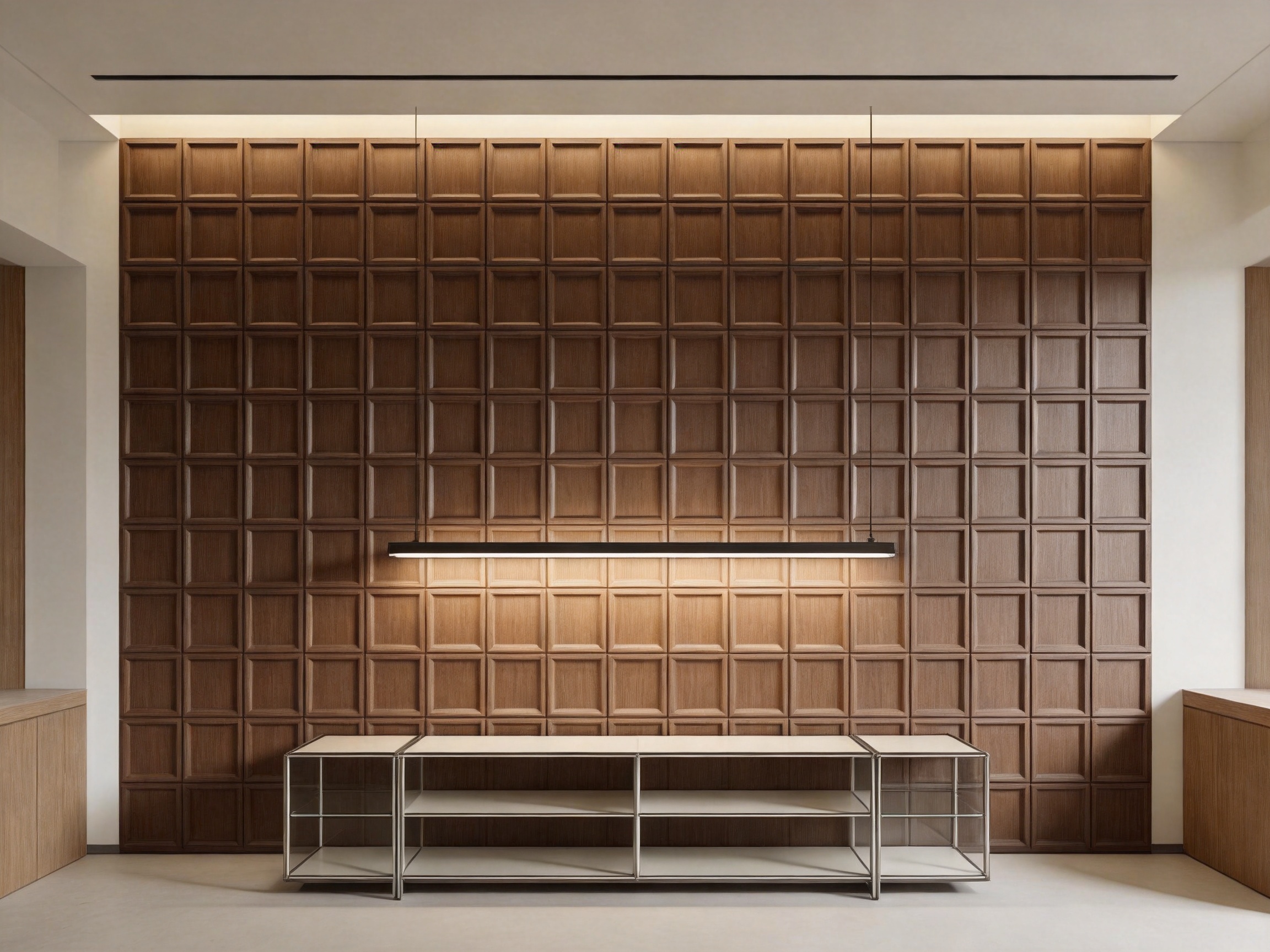
Interior designers, furniture manufacturers, and commercial-space developers increasingly seek materials that combine visual character, practical performance, manufacturing consistency, and responsible material selection. Smooth decorative boards remain widely used, but textured surfaces are becoming more important as designers look for ways to introduce warmth, tactility, and visual depth into walls, furniture, cabinetry, partitions, hospitality interiors, and retail environments. The BZ01 Natural Vintage Coarse Cloth 3D Melamine Board responds to this demand with a deeply embossed surface inspired by traditional burlap and coarse textile fabrics.
BZ01 is part of the Fabric/Textile Design Melamine Board range. Its surface is designed to resemble natural coarse cloth, with thicker lines, irregular direction, pronounced spacing, and a tactile three-dimensional profile. Rather than presenting a flat printed image alone, the panel combines decorative surface design with three-dimensional embossing. This approach gives the board a stronger sense of material authenticity and allows it to contribute to the atmosphere of an interior from both a visual and tactile perspective.
The product is manufactured by YAKCO New Materials (Jiangsu) Co., Ltd., a Chinese manufacturer specializing in decorative panels and wall panels for residential and commercial applications. Established in 2007, the company operates a modern production facility covering approximately 50 acres, including more than 30,000 square meters of standard factory buildings. Its manufacturing capabilities include 3D decorative panel technology, deep-pressing processes, multiple core production processes, and MDI adhesive bonding technology.
This article examines the design, structure, production technology, performance characteristics, applications, purchasing considerations, and competitive advantages of BZ01 Natural Vintage Coarse Cloth 3D Melamine Board. It also explains how the product can help manufacturers and designers create interiors that feel natural, comfortable, distinctive, and durable.
Understanding the BZ01 Coarse Cloth Surface
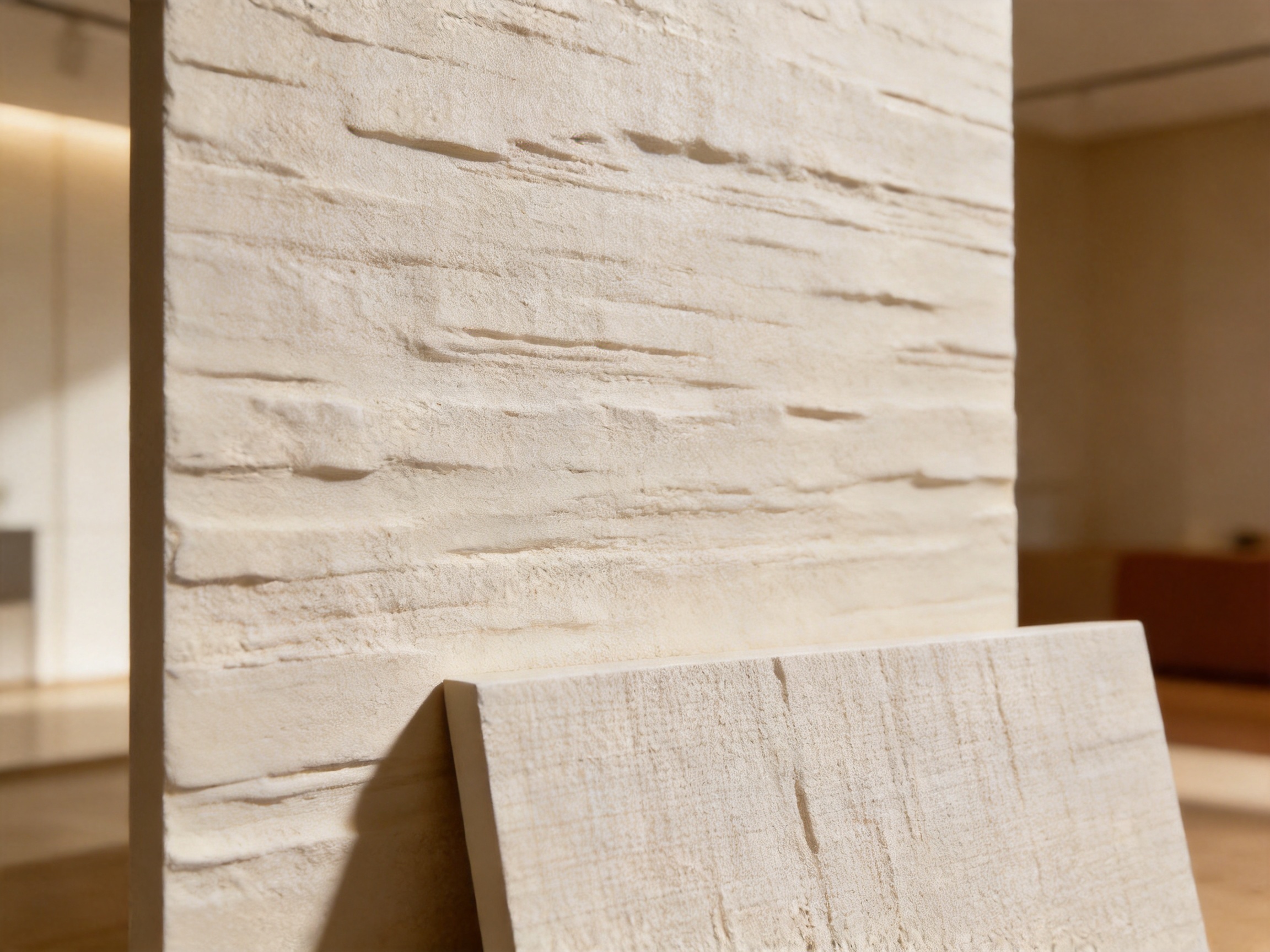
The defining feature of BZ01 is its coarse cloth grain. The texture is inspired by burlap, woven fabric, canvas, and other natural textile materials traditionally associated with rustic interiors, hand-crafted products, and relaxed living environments. The pattern does not attempt to reproduce the perfectly uniform appearance of a machine-made textile. Instead, it uses an intentionally irregular structure to create a more natural and vintage visual effect.
Compared with a fine fabric pattern, a coarse cloth design generally has thicker raised lines, wider spacing, and greater variation in direction. These characteristics make the surface easier to perceive from a distance while also creating a richer tactile experience at close range. The irregularity of the embossing gives the board a casual appearance that can complement country, rustic, vintage, industrial, farmhouse, and contemporary natural design schemes.
The surface can also help create a softer visual impression than many hard, highly polished decorative materials. Stone-effect panels may feel bold and architectural, while wood-grain boards often suggest warmth and familiarity. BZ01 offers a different design language. Its fabric-inspired structure can make a wall, cabinet, reception counter, display unit, or furniture surface appear more comfortable and handcrafted.
A major value of the design is its ability to introduce texture without requiring actual woven fabric to be installed on a rigid architectural surface. Natural fabric may require additional backing, careful tensioning, edge treatment, and maintenance. A melamine board with an embossed coarse cloth effect offers a more stable panel format that can be cut, assembled, and installed using common furniture and interior-construction methods.
Because the design is based on a textile concept rather than a literal textile installation, it can be used across a broader range of applications. It can support a decorative wall, form part of a wardrobe or cabinet, serve as a furniture fascia, or become a coordinated element within a commercial interior. This flexibility makes the product relevant to both small-scale custom projects and larger manufacturing programs.
Three-Dimensional Embossing and Surface Authenticity
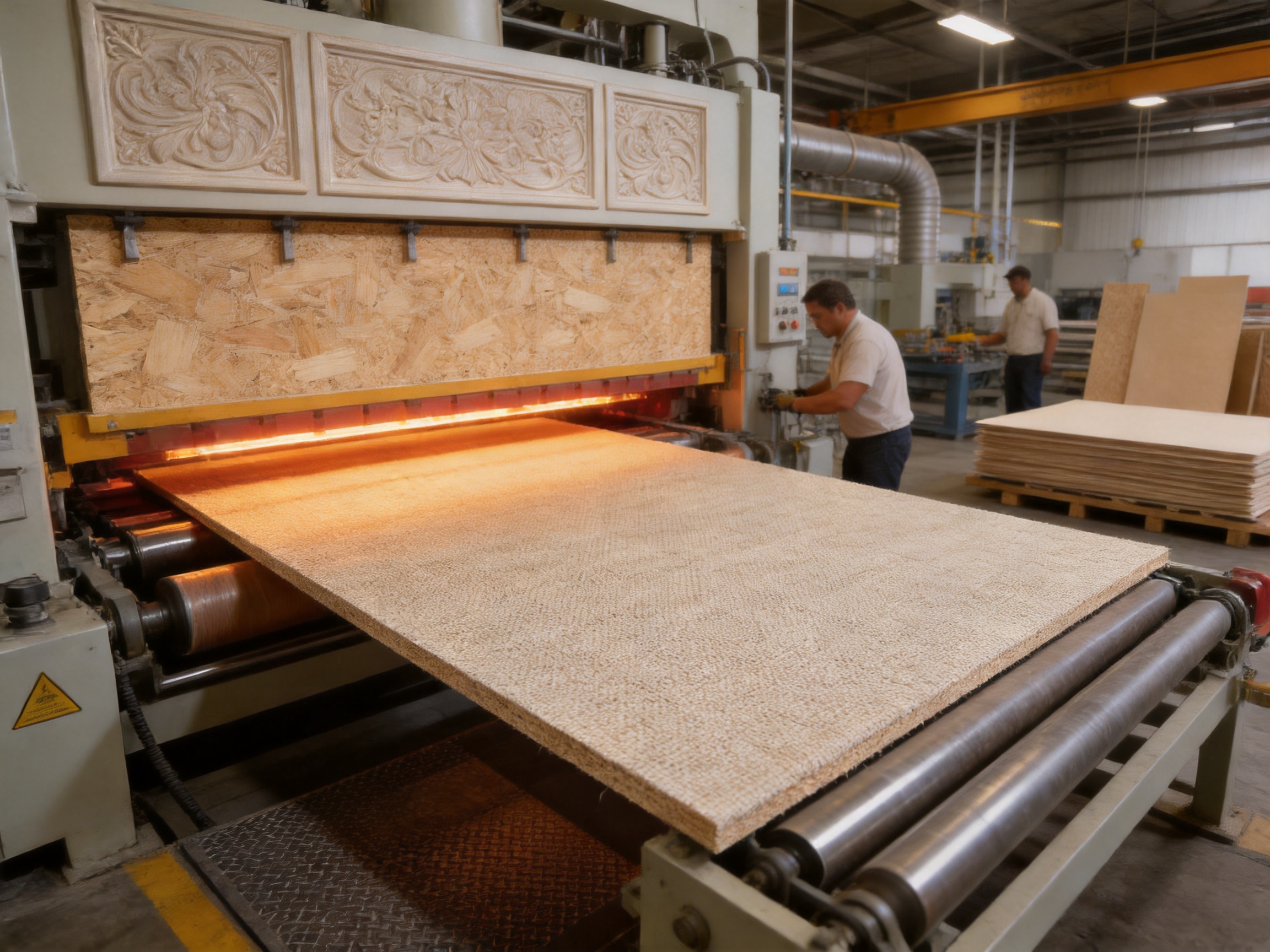
Many decorative boards depend primarily on printed patterns. Printing can reproduce color and two-dimensional imagery effectively, but a flat pattern may not provide the same depth or tactile realism as a physically embossed surface. BZ01 addresses this limitation through 3D embossing technology, in which a forming mould presses a controlled texture into the panel surface during the production process.
The embossing effect is produced by coordinating the shape of the mould, the pressure applied during pressing, the temperature of the surface, and the duration of the pressing cycle. These variables must be matched to the board structure and thickness. If the pressure is insufficient, the texture may appear weak or incomplete. If it is excessive, the surface or substrate may be damaged. If the temperature or pressing time is not properly controlled, dimensional stability and texture consistency may be affected.
Advanced 3D embossing allows the coarse cloth design to be felt as well as seen. Raised and recessed areas interact with light to create subtle shadows, highlights, and tonal variation. This can make the panel look more dimensional under natural daylight, warm interior lighting, or directional commercial lighting. The same surface may appear different at various viewing angles, helping to avoid the flatness associated with conventional decorative laminates.
The physical relief also contributes to the product’s identity. A well-designed texture is not simply an ornament placed on top of a board. It becomes part of the material experience. When used on a feature wall, the texture can establish a background layer for furniture and lighting. When used on a cabinet door or counter, it can turn a functional element into a central design feature.
YAKCO’s focus on 3D decorative panel technology and deep-pressing processes supports this type of product development. The company reports that its production system includes six core manufacturing processes, designed to improve the depth, layering, texture, stability, cutting performance, and deformation resistance of its panels. These capabilities are particularly relevant to deeply textured products, where surface quality and structural stability must be developed together.

BZ01 Natural vintage coarse cloth 3D veneer
Materials and Product Construction
BZ01 is available with different panel substrates, including OSB, MDF, and particleboard options. The substrate choice can influence the panel’s weight, machining behavior, edge characteristics, screw-holding performance, and suitability for specific construction or furniture applications. Buyers should confirm the preferred substrate when requesting a quotation because the best option may vary according to the project’s design and fabrication requirements.
OSB, or oriented strand board, is made from oriented wood strands bonded into a structural panel. It can provide a visually distinctive and mechanically robust base for applications where a stronger board character is desired. MDF, or medium-density fiberboard, offers a relatively uniform structure that is often suitable for precision cutting, routing, furniture components, and painted or laminated surfaces. Particleboard is widely used in furniture and interior manufacturing because it can provide an economical and workable base for decorative panels.
The product structure may be considered a composite system consisting of the decorative surface, the embossed layer, the substrate, and adhesive or bonding components. The quality of the finished board depends on the interaction of these elements. A strong decorative panel must maintain adequate adhesion while also preserving the relief pattern and dimensional stability of the core.
YAKCO identifies MDI medical adhesive bonding as one of its manufacturing strengths. MDI, or methylene diphenyl diisocyanate, is used in certain engineered wood and composite panel applications to create strong bonding performance. The specific adhesive formulation and construction should be confirmed for each product specification, but the stated use of MDI bonding reflects the company’s emphasis on panel stability and high-quality composite construction.
The combination of wood-based substrates, controlled bonding, and deep surface pressing allows BZ01 to function as more than a decorative image applied to a board. It is a coordinated panel product intended to offer a stable base, a recognizable surface relief, and practical processing characteristics for interior applications.
Hot-Pressing Technology
Hot pressing is central to the production of a deeply embossed melamine board. During this process, carefully controlled heat softens or activates the relevant surface layers while pressure transfers the mould pattern to the panel. The pressing cycle must be designed according to the type of substrate, the thickness of the panel, the surface material, and the depth of the desired texture.
Temperature affects how the surface responds to the mould. A properly selected temperature helps the decorative layer form accurately without causing unnecessary damage, discoloration, or instability. Pressure determines how completely the pattern enters the surface. Pressing time contributes to the development and retention of the profile, as well as the stability of the final board.
These controls are especially important for coarse cloth textures because the pattern contains both broad raised lines and recessed areas. The mould must reproduce the intended design without creating excessive stress at sharp transitions. Consistent production requires the manufacturer to monitor equipment settings, panel preparation, surface materials, pressing conditions, cooling behavior, and inspection standards.
Deep pressing can offer advantages over shallow decorative treatment. A deeper pattern generally produces stronger light-and-shadow effects and a more noticeable tactile quality. It may also make the product more visually convincing when viewed from an angle. For designers, the result is a panel that can act as a material statement rather than merely a background color.
At the same time, deep embossing must be balanced with practical manufacturing requirements. A panel intended for furniture production may need to be cut, drilled, edged, and assembled. A panel intended for wall cladding may need to be installed across large areas with controlled joints. YAKCO’s reported emphasis on easy cutting and deformation resistance is therefore relevant to customers who need both visual depth and predictable processing.
Key Product Specifications
BZ01 is supplied in a nominal length and width of 2745 by 1220 millimeters. Several thickness options are listed, allowing buyers to select a panel according to the required application, weight, stiffness, and fabrication method. The listed specifications include 9, 12, 18, 22, and 25 millimeters.
The available thickness range gives the product versatility. Thinner panels may be appropriate for selected furniture coverings, decorative inserts, or applications where weight reduction is important. Medium-thickness panels may be suitable for cabinet components, wall elements, and general interior construction. Thicker panels can provide a more substantial appearance and may be preferred where greater rigidity or visual mass is required.
Prices supplied for the listed sizes are reference figures and may vary according to substrate, order quantity, packaging, destination, surface requirements, and commercial terms. Buyers should request a current quotation and confirm all technical details before placing an order.
| Item | Available Information |
|---|---|
| Product name | BZ01 Natural Vintage Coarse Cloth 3D Melamine Board |
| Design category | Fabric/Textile Design Melamine Board |
| Nominal panel size | 2745 × 1220 millimeters |
| Available thicknesses | 9, 12, 18, 22, and 25 millimeters |
| Substrate options | OSB, MDF, and particleboard |
| Production technology | 3D embossing, hot pressing, and deep-pressing processes |
| Environmental classification listed | P2/F4 |
| Typical uses | Wall decoration, furniture surfacing, cabinets, counters, commercial interiors, restaurants, and cafés |
Project specifications should always be verified with the manufacturer because panel performance can vary with substrate selection, surface construction, thickness, edge treatment, installation method, and environmental exposure. A sample approval process is recommended for projects where color, relief depth, substrate type, or batch consistency is critical.
Advantages Compared with Conventional Decorative Boards
More tactile depth than flat printed patterns
The most obvious advantage of BZ01 is the combination of a textile-inspired appearance and a real three-dimensional relief. A flat print can imitate the visual lines of burlap, but it cannot fully reproduce the way the surface catches light or responds to touch. BZ01 adds physical depth, helping the material appear more authentic and expressive.
A warmer alternative to highly polished surfaces
Glossy boards, smooth laminates, and reflective decorative materials can create a clean and contemporary look, but they may also feel visually hard or impersonal in some environments. The irregular coarse cloth surface introduces a softer, more relaxed character. It can help restaurants, cafés, hospitality spaces, living areas, and boutique retail interiors feel more welcoming.
Better concealment of minor surface marks
Highly smooth surfaces can make small scratches, fingerprints, and minor imperfections more visible. The raised and recessed structure of BZ01 creates visual variation that may help disguise minor marks better than a plain, uniform finish. This should not be interpreted as immunity to damage, and proper handling remains important, but the textured surface can be practical in active interiors.
Potentially useful surface friction
The coarse relief provides more surface variation than a smooth board. In selected applications, this may offer a degree of additional tactile friction. The actual suitability of the panel for any safety-related application must be evaluated through project-specific testing and should not be assumed solely from the decorative texture.
Design flexibility across residential and commercial spaces
BZ01 can be incorporated into rustic, country, vintage, farmhouse, industrial, and contemporary natural interiors. It can be used as a dominant feature or combined with stone designs, wood-grain panels, metal details, plain colors, or soft furnishings. This flexibility gives designers more options than a narrowly themed decorative finish.
Practical panel format
Unlike loose fabric or some specialty wall coverings, a melamine board provides a rigid panel format that can be transported, cut, assembled, and installed using established woodworking and interior-fitout practices. This can simplify the transition from design concept to manufactured furniture or finished wall system.
Competitive Strengths of the Manufacturer
A decorative panel is only as reliable as the manufacturing system behind it. Surface design, mould precision, substrate preparation, pressing conditions, adhesive performance, quality control, packaging, and technical communication all influence the final result. YAKCO New Materials (Jiangsu) Co., Ltd. presents itself as a specialized manufacturer with a long operating history in decorative panels and wall panels.
The company was established in 2007 and has developed its production capabilities over many years. It operates a facility covering approximately 50 acres, with more than 30,000 square meters of modern standard factory buildings. This scale indicates an industrial production environment rather than a small workshop focused only on limited custom work.
YAKCO established its brand in 2016 and focuses on building-material solutions for residential and commercial spaces. Its product range includes different decorative categories, such as rock designs, fabric and textile designs, leather designs, art deco designs, wood designs, grain cloth designs, frosted 3D designs, and other melamine board products. This broad design experience can support customers who need to coordinate several surfaces within one project.
The company’s stated strengths include innovative deep-pressing processes, six core production processes, MDI adhesive bonding, improved texture depth, layered surface effects, cutting convenience, deformation resistance, and environmentally oriented product development. These strengths align closely with the needs of deeply textured panel production.
For international buyers, manufacturing specialization can be valuable because it reduces the need to coordinate decorative design, substrate selection, embossing, and panel production among multiple suppliers. A manufacturer capable of managing these elements within one production system may provide more consistent communication and easier project development.
Another advantage is the possibility of product customization or coordinated sourcing. Buyers can discuss substrate options, thickness, sample development, packaging, and intended use with a manufacturer that already works across several decorative panel categories. The final feasibility of customization depends on order volume and production conditions, but the company’s product range creates a useful foundation for such discussions.
Environmental and Indoor-Air Considerations
The supplied product information lists an environmental grade of P2/F4. These classifications should be interpreted according to the standards and testing systems applicable to the destination market. P2 commonly refers to a panel classification associated with non-structural use in dry conditions, while F4 may refer to a formaldehyde-emission or indoor-air classification used within a particular regulatory or industry framework. Because terminology can vary by market, purchasers should request the relevant test reports, certificates, and technical declarations.
YAKCO states that its products are designed to meet the international ENF formaldehyde standard. This statement reflects the company’s environmental-development direction, but project teams should verify whether the specific BZ01 configuration, including its substrate, adhesive, surface layer, and production batch, has documentation applicable to the required project standard.
Environmental performance is influenced by the complete panel construction, not just the decorative surface. Substrate composition, adhesive chemistry, pressing conditions, edge exposure, storage, and installation can all affect indoor-air performance. For schools, healthcare facilities, offices, hotels, residences, and other sensitive environments, buyers should obtain current certification and testing information before approval.
Responsible material selection also involves service life. A panel that remains visually attractive and dimensionally stable for a long period may reduce the need for frequent replacement. The textured design can help maintain a distinctive appearance even when minor daily marks occur, although cleaning and maintenance procedures should be followed carefully.
Customers should store the panels flat, protected from excessive moisture, direct weather exposure, and sudden environmental changes. Acclimatization before installation may be appropriate depending on the project conditions and substrate type. Installers should follow the manufacturer’s recommendations for cutting, edge sealing, fasteners, adhesives, ventilation, and expansion allowances.
Applications in Residential Interiors
Feature walls
BZ01 can be used as a feature wall in living rooms, bedrooms, entryways, dining areas, and home offices. The coarse cloth pattern introduces a tactile background without requiring a visually complicated motif. It can be paired with timber furniture, woven accessories, neutral upholstery, aged metal, ceramic pieces, and warm lighting.
Cabinet doors and storage systems
When applied to cabinet fronts or wardrobe panels, the texture can make large storage surfaces appear more decorative and less monotonous. It may be especially suitable for built-in furniture where a broad, uninterrupted surface needs visual interest. Designers should confirm the recommended edge treatment and hardware installation method for the selected thickness.
Headboards and bedroom furniture
The textile-inspired appearance is naturally suited to bedrooms and relaxation areas. It can be used on headboards, bedside furniture, dressing units, or decorative wall panels behind a bed. Combining it with soft textiles can reinforce the relationship between the rigid board surface and the room’s fabric elements.
Kitchen and dining furniture
BZ01 may be used selectively on cabinet ends, islands, dining-room storage, breakfast counters, and decorative panels. Because kitchens experience heat, moisture, grease, and frequent cleaning, the product should be evaluated for the specific installation conditions. It is generally preferable to use textured decorative panels in areas where they are not exposed to standing water or intense heat.
Applications in Commercial and Hospitality Spaces
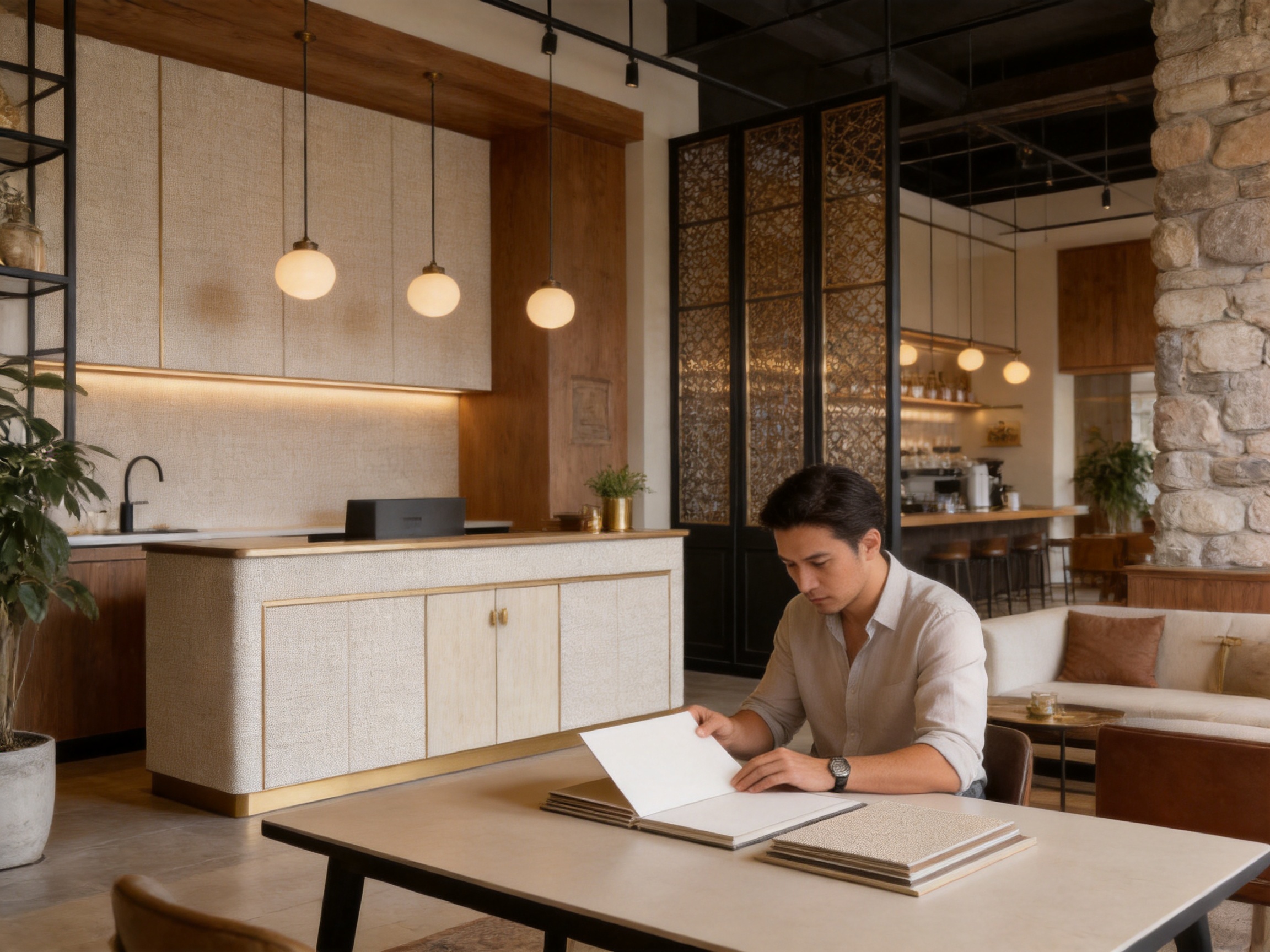
Commercial interiors often require strong visual identity. Restaurants, cafés, boutique hotels, retail stores, salons, showrooms, and specialty food spaces may use BZ01 to create a relaxed and memorable atmosphere. The fabric-inspired pattern can support concepts based on craftsmanship, natural materials, heritage, slow living, or informal hospitality.
In cafés and restaurants, the panel can be applied to reception counters, wall sections, booth surrounds, menu areas, display shelving, and decorative partitions. Its visual warmth may help soften large hard-surface areas such as concrete floors, glass partitions, metal fixtures, and stone countertops.
In hotels and guesthouses, BZ01 can be coordinated across lobby walls, room furniture, headboards, corridors, or feature areas. A consistent surface language can help create continuity between public and private spaces. Designers may combine the product with wood-grain melamine boards to create contrast between woven-inspired texture and natural timber imagery.
In retail environments, the coarse cloth effect can contribute to display backgrounds and branded interior zones. It may be suitable for fashion, lifestyle, home goods, craft, food, and natural-product stores. The design is distinctive enough to support atmosphere while remaining adaptable to different color palettes and lighting schemes.
Commercial projects should consider cleaning frequency, impact exposure, installation method, fire requirements, acoustic needs, and local building codes. A decorative texture alone does not establish compliance with fire, hygiene, acoustic, or structural regulations. These requirements must be evaluated separately for the complete wall or furniture system.
Design Coordination and Material Pairing
The visual success of BZ01 depends partly on how it is combined with other materials. Because the surface already has a strong tactile identity, it often works best when paired with calmer colors or materials that provide contrast without competing for attention.
Natural wood designs can create a warm and organic composition. Light oak, walnut, smoked wood, and weathered timber effects may complement the vintage character of the coarse cloth pattern. Stone-effect surfaces can introduce a stronger architectural contrast, particularly when used for countertops, flooring, or adjacent walls.
Metal can sharpen the design. Black steel, bronze, aged brass, and brushed stainless steel may produce different moods ranging from industrial to refined. Glass can provide visual lightness when BZ01 is used on partitions or cabinetry. Soft upholstery, linen, wool, and woven accessories can reinforce the textile concept.
Lighting is also important. Grazing light from the side can emphasize the embossed pattern through shadows, while diffuse front lighting may create a more understated appearance. Designers should review samples under the intended lighting conditions because texture, color, and gloss can appear different in daylight, warm artificial light, and cool commercial lighting.
Large installations should consider panel orientation and joint layout. The direction of the cloth grain can influence whether a wall feels wider, taller, or more dynamic. A consistent orientation may produce a calm appearance, while deliberate changes in direction may create a more expressive installation. Such decisions should be made during the design and shop-drawing stages rather than left to the installer.
Fabrication, Installation, and Maintenance
Before fabrication, the panels should be inspected for surface condition, color consistency, edge damage, and dimensional accuracy. Where the project requires multiple panels, the buyer should confirm whether the panels are from the same production batch or whether batch variation may occur.
Cutting tools and feed rates should be selected according to the substrate. A sample cut is recommended before large-scale production. Deeply embossed surfaces may require attention when positioning saws, routers, drilling templates, hinges, handles, and edge-banding equipment. The manufacturer can provide more specific processing guidance for the selected substrate and thickness.
Edges should be considered as part of the design. Depending on the application, they may be concealed, sealed, edged with a matching material, or intentionally exposed as a contrasting detail. Edge treatment can affect moisture resistance, appearance, and long-term durability.
Wall installation may use mechanical fixing, adhesive systems, subframes, or a combination of methods. The selected system should account for panel weight, wall condition, expansion, ventilation, access for maintenance, and local construction requirements. A textured panel should not be installed directly over a damp or unstable wall without appropriate preparation.
Routine cleaning generally requires a soft cloth and a suitable mild cleaning method. Abrasive pads, aggressive solvents, excessive water, and harsh chemicals may damage the decorative surface or affect the embossed finish. Cleaning instructions should be confirmed with the manufacturer, particularly for commercial applications with frequent maintenance.
Quality-Control Considerations for Buyers
Purchasers should evaluate both appearance and technical documentation. A physical sample is important because photographs cannot fully communicate texture depth, surface feel, color, gloss, edge behavior, and the interaction between the decorative layer and the substrate.
Sample approval should include an assessment of the coarse cloth pattern, embossing continuity, color uniformity, panel flatness, edge condition, and compatibility with the intended fabrication process. For a large order, buyers may also request production samples or pre-shipment inspection procedures.
Technical questions should cover the substrate type, thickness tolerance, surface construction, formaldehyde or indoor-air documentation, recommended cleaning method, allowable installation conditions, packaging, and storage requirements. If the product is intended for a regulated public project, buyers should provide the manufacturer with the relevant specifications at the quotation stage.
The following checklist can help organize a purchasing review:
| Review Area | Questions to Confirm |
|---|---|
| Surface design | Does the texture, color, relief depth, and grain direction meet the approved sample? |
| Substrate | Is the board OSB, MDF, particleboard, or another specified material? |
| Dimensions | Are length, width, thickness, and tolerances suitable for the project? |
| Fabrication | Can the board be cut, drilled, routed, edged, and assembled using the planned process? |
| Environmental documentation | Are P2/F4 and any ENF-related claims supported by current documentation? |
| Installation | What fixing, adhesive, ventilation, and expansion requirements apply? |
| Maintenance | What cleaning products and procedures are recommended? |
| Logistics | How will the panels be packed, stored, shipped, and protected from moisture? |
Why BZ01 Is Suitable for Wholesale Sourcing
Wholesale buyers typically need more than an attractive pattern. They need repeatable production, commercially useful dimensions, multiple thicknesses, substrate flexibility, technical communication, and dependable supply planning. BZ01 offers a product format that can serve furniture manufacturers, interior contractors, design studios, distributors, and architectural-material suppliers.
The product’s visual identity helps it occupy a clear position within a decorative panel portfolio. It is not simply another plain melamine board. The coarse cloth effect provides a recognizable selling point for customers seeking natural, vintage, rustic, or tactile interiors.
The range of thicknesses and substrate choices can also help wholesalers serve different market segments. Furniture manufacturers may have different requirements from wall-panel contractors, while residential projects may differ from hospitality or retail installations. A product family that can be discussed according to substrate and thickness gives buyers greater flexibility.
YAKCO’s factory experience, 3D panel specialization, and broader decorative-panel range may support long-term sourcing relationships. Buyers can communicate with a manufacturer that understands both surface design and panel construction, potentially making it easier to develop coordinated collections or future designs.
For wholesale cooperation, it is advisable to discuss minimum order quantities, lead times, sample charges, packaging, container loading, payment conditions, inspection procedures, replacement policies, and documentation requirements. These commercial details should be confirmed directly with YAKCO before an order is finalized.
Frequently Asked Questions
What is BZ01 Natural Vintage Coarse Cloth 3D Melamine Board?
BZ01 is a decorative melamine board with a three-dimensional embossed surface inspired by coarse cloth and traditional burlap. It belongs to the Fabric/Textile Design Melamine Board category and is intended for interior wall decoration, furniture surfacing, cabinets, counters, and commercial interiors.
What makes the surface different from a printed fabric pattern?
The surface uses 3D embossing rather than relying only on a flat printed image. The raised and recessed areas create tactile depth, stronger light-and-shadow effects, and a more realistic coarse-textile appearance.
Which substrates are available?
The supplied information lists OSB, MDF, and particleboard as substrate options. The appropriate substrate should be selected according to the intended application, machining method, weight, stiffness, and project requirements.
What panel sizes and thicknesses are available?
The listed nominal panel size is 2745 by 1220 millimeters. Available thicknesses include 9, 12, 18, 22, and 25 millimeters. Buyers should confirm current availability and tolerances with the manufacturer.
Where can this product be used?
Typical uses include feature walls, furniture panels, cabinet fronts, wardrobe doors, headboards, reception counters, decorative partitions, restaurants, cafés, hotels, retail interiors, and other residential or commercial applications.
Is the textured surface difficult to maintain?
The surface should be cleaned with a soft cloth and an appropriate mild cleaning method. Abrasive tools, harsh solvents, and excessive water should be avoided unless specifically approved. Commercial projects should request detailed maintenance guidance.
Can BZ01 be cut and processed like other wood-based panels?
The product is designed for practical panel processing, and YAKCO identifies easy cutting as one of its product-development strengths. However, the exact cutting, drilling, routing, and edging method should be tested for the selected substrate and thickness before mass production.
Does the product provide structural performance?
BZ01 is primarily a decorative interior panel. Its suitability for structural use depends on the substrate, thickness, construction system, and applicable standards. It should not be treated as a structural panel unless the specific configuration has been tested and approved for that purpose.
What does the P2/F4 environmental grade mean?
The product information lists P2/F4, but classifications can vary according to the market and testing system. Buyers should request the relevant technical documents and confirm that they satisfy the requirements of the destination country and project.
Does YAKCO offer other decorative panel designs?
Yes. The company’s listed categories include rock design, fabric and textile design, leather design, art deco, wood design, grain cloth, frosted 3D, melamine board substrate, and other decorative panel ranges.
How can buyers evaluate the product before ordering?
Buyers should request a physical sample, review the texture and color under project lighting, confirm the substrate and thickness, examine fabrication behavior, and obtain current technical and environmental documentation. Large orders should include clear sample-approval and inspection procedures.
Who manufactures BZ01?
BZ01 is manufactured by YAKCO New Materials (Jiangsu) Co., Ltd., located in Changshu City, Jiangsu, China. The company specializes in decorative panels and wall panels for residential and commercial spaces.
Conclusion
BZ01 Natural Vintage Coarse Cloth 3D Melamine Board combines a textile-inspired appearance with a physical embossed surface, creating a decorative material with visual warmth, tactile depth, and practical panel-format flexibility. Its irregular coarse cloth pattern can support rustic, vintage, country, farmhouse, industrial, and contemporary natural interiors.
The product’s main advantages include a realistic three-dimensional texture, a surface that can help disguise minor marks, compatibility with multiple substrate options, several available thicknesses, and suitability for both residential and commercial applications. Its appeal is strengthened by the manufacturing capabilities associated with YAKCO, including 3D decorative panel development, deep-pressing technology, controlled hot pressing, multiple production processes, and MDI adhesive bonding.
For designers, the board offers a way to introduce the visual language of natural fabric without installing loose textile materials on every surface. For furniture and interior manufacturers, it provides a rigid and workable panel format that can be integrated into established production methods. For wholesalers, it offers a distinctive product category with potential for coordinated sourcing across a broader decorative-panel collection.
Successful use requires careful attention to substrate selection, sample approval, fabrication, installation, environmental documentation, maintenance, and project-specific regulations. When these factors are properly evaluated, BZ01 can become a strong design resource for creating interiors that feel tactile, comfortable, natural, and memorable.
References
1. Product specification information for BZ01 Natural Vintage Coarse Cloth 3D Melamine Board, including listed dimensions, substrates, thicknesses, applications, and environmental classification.
2. YAKCO New Materials (Jiangsu) Co., Ltd. company information concerning factory capacity, product development, 3D decorative panel technology, deep pressing, and MDI adhesive bonding.
3. General technical principles of hot pressing and embossed-surface formation in engineered wood and decorative panel manufacturing.
4. General interior-design guidance for the selection, fabrication, installation, and maintenance of textured melamine panels.
5. General reference material concerning wood-based panel substrates, including MDF, particleboard, and OSB.