中文简体



Previous Post
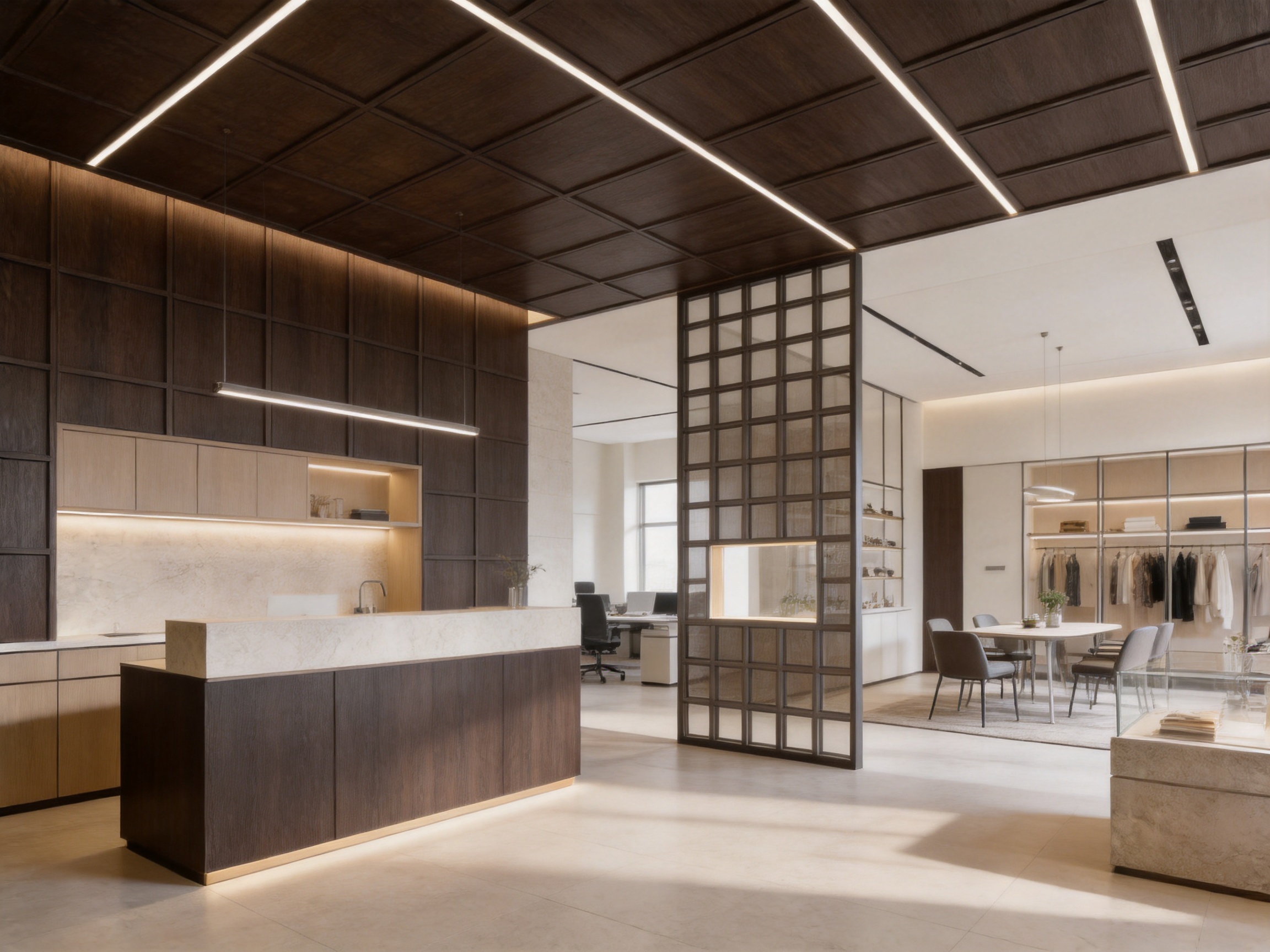
Interior design increasingly depends on surfaces that do more than provide a background. Walls, ceilings, furniture fronts, and built-in features are now expected to contribute texture, visual rhythm, acoustic character, and a recognizable design identity. The ZZ01 Grid Pattern 3D Wall Panel responds to this demand with a precise geometric surface that combines the familiar performance of melamine-based decorative boards with the depth and dimensionality of a three-dimensional embossed panel.
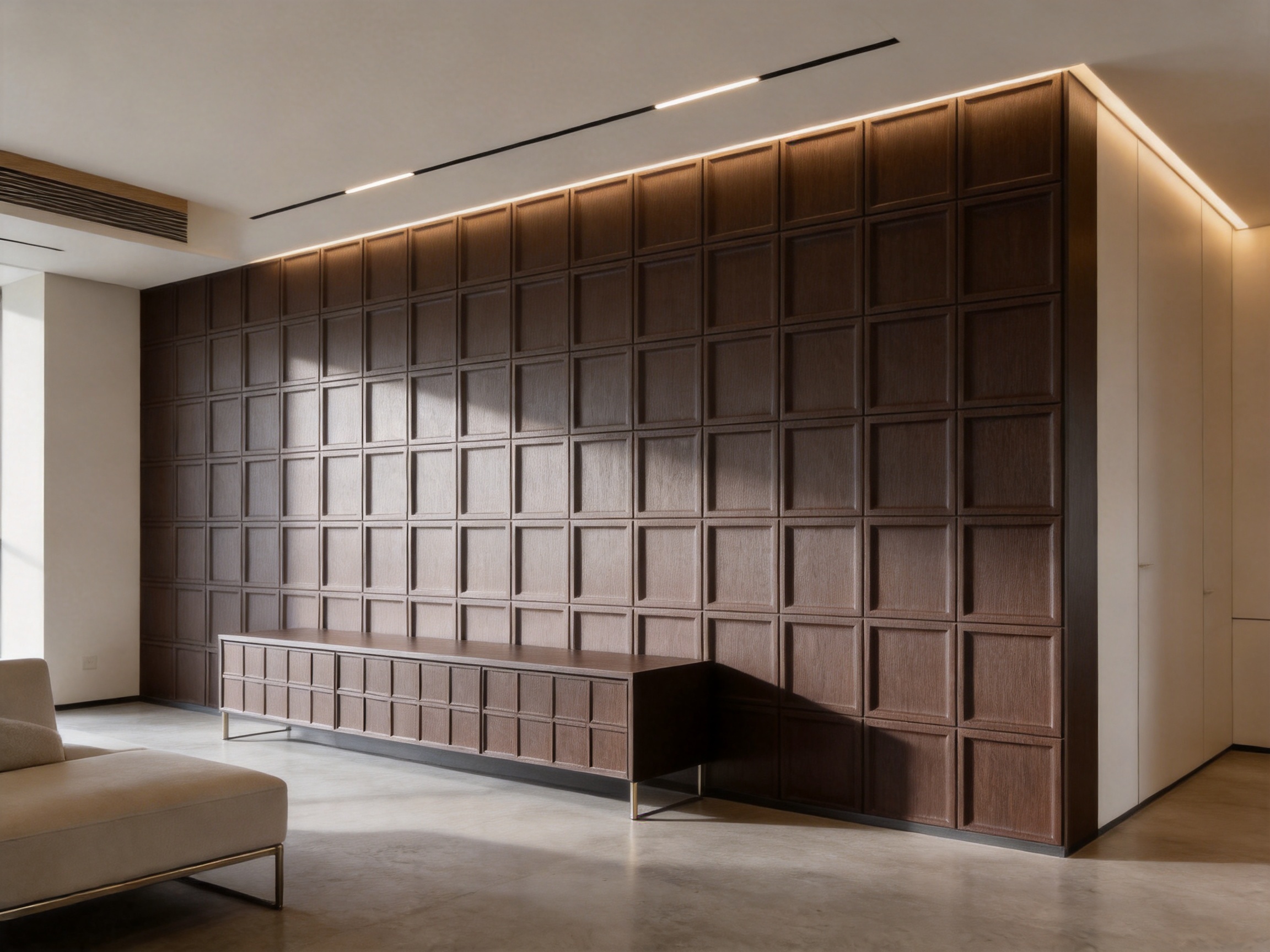
Its defining feature is a regular grid pattern formed by clear lines and evenly proportioned square recesses or raised sections. This orderly arrangement creates a balanced appearance that can support a wide range of interior styles, including modern minimalist, industrial, contemporary commercial, and carefully controlled residential environments. Rather than relying on irregular ornamentation, the panel uses repetition, proportion, and surface relief to create interest.
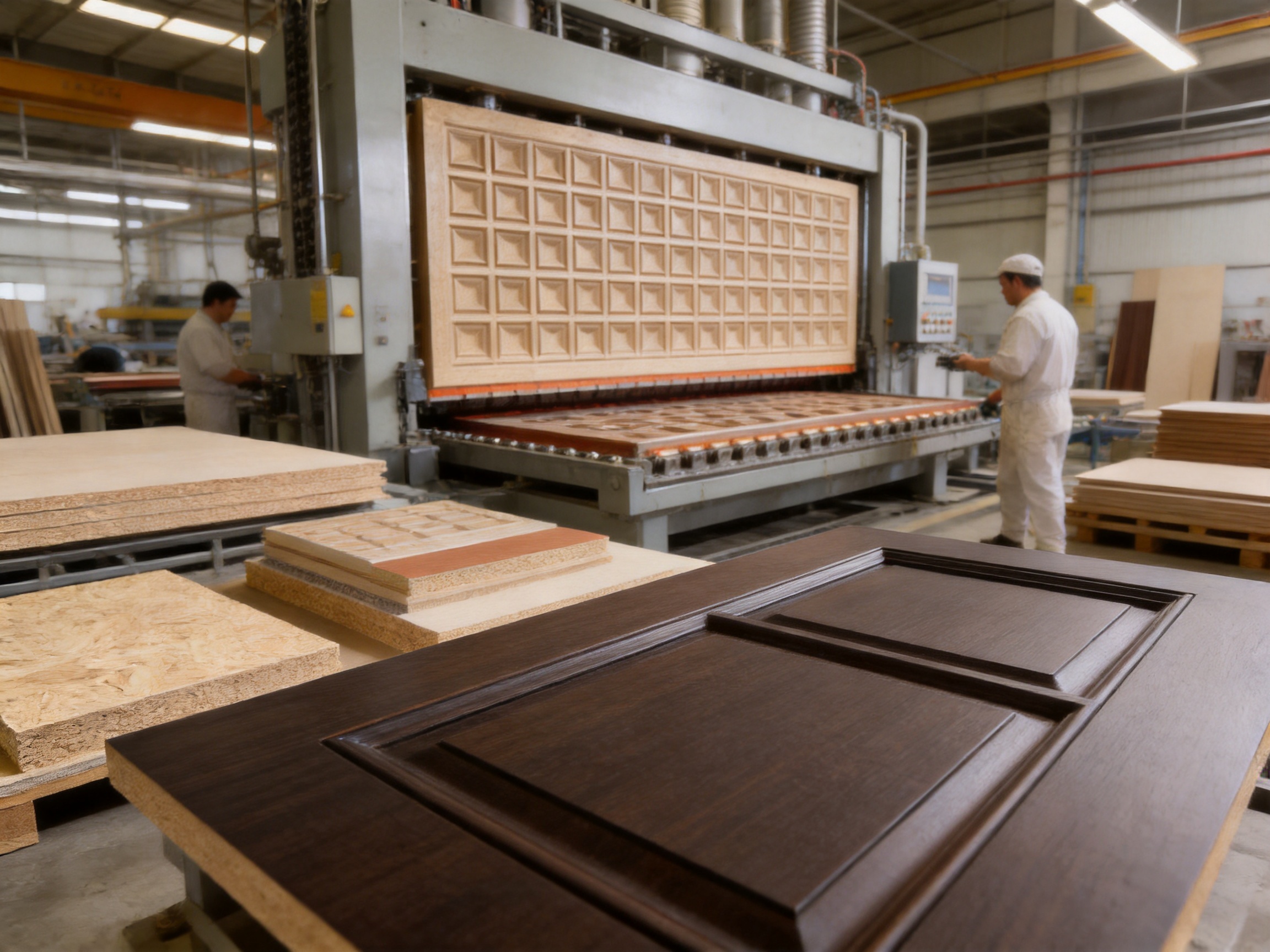
The product is manufactured as a 3D melamine board using controlled plate-making, printing, mould embossing, and hot-pressing technologies. Depending on the selected structure and specification, the board may use OSB, MDF, or particleboard as its substrate. Available thicknesses include 9 mm, 12 mm, 18 mm, 22 mm, and 25 mm, with a standard size of 2745 × 1220 mm. The combination of a large-format panel, dimensional grid texture, and stable engineered substrate allows the material to function as both a decorative finish and a practical interior construction component.
Produced by YAKCO New Materials (Jiangsu) Co., Ltd., the panel reflects the company’s specialization in high-end decorative panels and wall systems. The manufacturer has developed its production capabilities around 3D decorative panel technology, deep-pressing processes, environmentally responsible adhesives, and quality control procedures intended for residential and commercial applications.

ZZ01 Grid Pattern 3D Wall Panel
1. Product Overview
The ZZ01 Grid Pattern 3D Wall Panel is a decorative engineered board designed to add a disciplined three-dimensional pattern to interior surfaces. Its visual language is based on the grid: a series of horizontal and vertical lines that intersect to form repeated geometric units. The result is a surface with clear organization, moderate depth, and a strong sense of order.
Unlike a completely flat decorative melamine board, the ZZ01 panel introduces relief into the surface. Light moves across the embossed pattern, creating subtle highlights and shadows as the viewing angle changes. This changing light response gives the wall or ceiling a more layered appearance without requiring complex ornament or multiple finishing materials.
The product is categorized as a wood-design melamine board, but its grid texture gives it a distinctive architectural character. It can be used where a designer wants the warmth and practicality associated with wood-based panels while also introducing a more structured, graphic, or contemporary surface treatment.
The panel is suitable for wall decoration, ceiling decoration, feature walls, furniture surfaces, partitions, reception areas, retail interiors, offices, and other indoor applications. Its regular geometry makes it especially useful when a project requires visual alignment, modular planning, or a clear transition between different functional areas.
| Item | Specification |
|---|---|
| Product name | ZZ01 Grid Pattern 3D Wall Panel |
| Product category | Wood Design Melamine Board |
| Standard panel size | 2745 × 1220 mm |
| Available thicknesses | 9 mm, 12 mm, 18 mm, 22 mm, and 25 mm |
| Substrate options | OSB, MDF, or particleboard |
| Manufacturing process | 3D melamine board production with controlled embossing and hot pressing |
| Environmental grades listed | P2 and F4 |
| Primary uses | Walls, ceilings, furniture surfaces, partitions, offices, retail spaces, and residences |
2. Design Principle: Geometry, Rhythm, and Visual Order
The design of the ZZ01 panel is based on the visual power of geometric repetition. A grid is one of the most recognizable organizational systems in architecture and interior design. It can suggest stability, precision, balance, and rational planning. When translated into a three-dimensional surface, the grid becomes more than a printed image: it becomes a tactile and light-responsive design element.
The panel’s square or rectangular units are arranged in a regular pattern. The intersections of the lines form repeated nodes, while the lines themselves create a consistent framework across the board. This regularity helps the panel work as a background material because it does not compete with every other element in a room. Furniture, lighting, artwork, signage, and accessories can be placed against it without the overall composition becoming visually chaotic.
A regular grid can also help designers create a sense of scale. On a large wall, the repeated pattern provides a visual reference that prevents the surface from appearing empty or unfinished. On a smaller furniture panel, the same texture can make a simple object appear more carefully designed. The final effect depends on the installation scale, lighting arrangement, viewing distance, and selected thickness.
The design also offers a useful balance between decoration and restraint. Highly sculptural wall coverings may be visually impressive but difficult to coordinate with other materials. Completely flat boards may lack depth and character. The ZZ01 pattern occupies a middle position: it is distinctive enough to create a feature, but orderly enough to support a broad range of design concepts.
For minimalist spaces, the grid can reinforce clean lines and controlled proportions. For industrial interiors, it can complement metal, concrete, exposed services, and darker finishes. In offices, it can add structure to reception areas, meeting rooms, corridors, and collaborative zones. In retail interiors, it can frame displays or identify a branded area without relying on excessive ornamentation.
2.1 Light and Shadow on the Embossed Surface
Three-dimensional texture changes the way a surface interacts with light. On a flat board, the visual effect is mainly determined by color, print, and gloss level. On the ZZ01 panel, the grid relief creates additional variation. Direct lighting emphasizes the edges and recesses, while diffuse lighting produces a softer, more integrated effect.
Linear lighting can be used to follow the direction of the grid and strengthen its rhythm. Wall washers can highlight the relief across a broad surface. Downlights may create alternating areas of brightness and shadow, adding depth to a feature wall. In spaces where a calmer appearance is preferred, indirect lighting can reveal the texture without making the pattern dominant.
Lighting design should be considered together with installation. A strong grazing light placed too close to the panel may make small variations appear more pronounced. A carefully spaced lighting layout can instead produce a consistent shadow pattern and a more refined result. The panel’s geometric structure gives designers a predictable surface with which to coordinate lighting plans.
3. Materials and Product Structure
The ZZ01 Grid Pattern 3D Wall Panel may be manufactured using a multi-layer engineered structure. The purpose of a layered structure is to improve stability, support the embossed surface, and provide a dependable base for handling and installation. The precise construction can vary according to the selected substrate, thickness, project requirements, and production configuration.
OSB, MDF, and particleboard are listed as substrate options. Each material has different characteristics and may be selected according to the desired application. MDF generally offers a smooth and consistent surface that is well suited to decorative finishing and machining. Particleboard can provide an economical engineered-board solution for suitable interior applications. OSB is valued for its visible strand structure and engineered strength profile, especially where a more robust board character is desired.
The substrate is combined with decorative layers and environmentally responsible adhesives. The bonding system must provide adequate adhesion during hot pressing and maintain the relationship between the decorative surface and the core. Consistent bonding is important because the embossed pattern depends on the surface remaining securely integrated with the board structure.
The finished product is intended to provide a combination of appearance, dimensional character, machinability, and practical handling. Its structural performance is influenced by the chosen substrate and thickness, while its decorative effect is determined by the grid mould or surface-making process. Buyers and project designers should select the appropriate specification for the installation conditions and should confirm detailed technical requirements with the manufacturer before production or installation.
3.1 Thickness Selection
The availability of five thicknesses creates flexibility for different design and construction situations. The 9 mm and 12 mm versions may be suitable for lighter decorative applications where the panel is installed over a prepared backing or integrated into a furniture component. The 18 mm version can provide a more substantial visual and physical presence for walls, partitions, and selected joinery applications.
The 22 mm and 25 mm versions may be considered where a stronger, deeper, or more prominent panel construction is required. A thicker panel can produce a heavier architectural expression and may offer greater freedom for edge treatment, fixing design, or integration with supporting elements. However, the correct choice depends on wall structure, fixing method, panel weight, local regulations, and the specific design objective.
Thickness should not be selected only for visual reasons. It affects handling, transport, cutting, joint detailing, and installation. A professional project review should consider the span, support, environmental conditions, access route, and expected service conditions before the purchase order is finalized.
4. Manufacturing Technology
The production of the ZZ01 Grid Pattern 3D Wall Panel uses a combination of decorative surface preparation, pattern formation, and controlled hot pressing. The manufacturing objective is to create a clear, regular, and firmly integrated grid texture while maintaining board flatness and sufficient structural strength.
4.1 Plate-Making and Printing Techniques
Where the design includes a printed decorative component, plate-making and printing technologies help establish the visual base of the panel. Precision in this stage is important because the printed image must correspond correctly with the intended relief, surface direction, and panel dimensions.
Accurate plate preparation supports repeatability from one panel to the next. It also helps maintain consistent line definition, pattern scale, and registration. When printed design and embossing are properly coordinated, the surface can achieve a more integrated appearance instead of looking like a flat image placed beneath a separate texture.
Printing technology also allows the decorative board to be coordinated with wood-inspired tones, neutral shades, or other interior color schemes. The ZZ01 grid pattern is therefore capable of supporting different visual interpretations while retaining its fundamental geometric identity.
4.2 Mould Embossing
Advanced mould embossing techniques are used to create the three-dimensional grid. The mould determines the arrangement, depth, edge definition, and repeat of the pattern. A well-made mould is essential to the final appearance because the geometry must remain clear across the full panel surface.
The moulding process must apply sufficient pressure to define the texture without damaging the decorative layer or causing undesirable distortion. The production team must also account for the behavior of the substrate and surface materials under heat and pressure. Uniform mould contact helps maintain consistent pattern quality from one area of the panel to another.
For a regular grid design, precision is particularly important. Small deviations in line spacing or alignment can become noticeable when several large panels are installed next to each other. Controlled mould production and process monitoring help reduce such inconsistencies and support a more continuous visual field.
4.3 Hot Pressing
Hot pressing is a central part of the production process. Temperature and pressure must be carefully controlled so that the panel material is heated and compressed in a uniform manner. This allows the grid pattern to become firmly integrated into the surface while helping preserve the flatness and strength of the board.
If the process is not adequately controlled, several problems may occur, including uneven embossing, poor bonding, surface defects, or distortion. A stable production system therefore requires attention to pressing temperature, pressure distribution, cycle duration, material preparation, and cooling behavior.
Uniform heating is also relevant to the final appearance. Areas that receive different thermal treatment may display variations in gloss, texture definition, or dimensional stability. Controlled hot pressing supports a more consistent surface and helps the finished board perform reliably during subsequent cutting and installation.
4.4 Deep-Pressing Capability
YAKCO focuses on 3D decorative panel technology and has developed innovative deep-pressing processes. Deep pressing is valuable because it allows decorative boards to move beyond shallow visual texture and achieve a stronger sense of surface depth. When appropriately designed, the relief can create more visible highlights, shadows, and tactile variation.
Deep pressing requires coordination between the substrate, decorative layer, adhesive system, mould, and press conditions. The manufacturer’s experience in this area supports the production of panels that are intended to offer depth, layering, texture, and a more architectural appearance than ordinary flat melamine boards.
The practical value of deep pressing is not limited to aesthetics. A clearly formed pattern can make the surface easier to read from a distance, which is useful in large commercial spaces. It can also help a relatively simple geometric design function as a feature wall without the need for additional decorative components.
5. Advantages Compared with Conventional Flat Decorative Boards
The first major advantage of the ZZ01 panel is its dimensional surface. Conventional flat melamine boards depend primarily on printed grain, color, and gloss to create visual interest. The ZZ01 panel adds physical relief, allowing the surface to interact with lighting and viewing angles in a more dynamic way.
This does not mean that a three-dimensional board is automatically suitable for every application. Flat boards may remain preferable where a completely smooth surface is required, where frequent cleaning must be extremely simple, or where a minimal visual background is the main objective. However, when the design brief calls for texture and architectural identity, the embossed grid offers a clear advantage.
A second advantage is pattern discipline. Some textured wall panels use irregular forms that can dominate an interior or make accurate alignment difficult. The ZZ01 design is based on a repeated grid, which allows it to be coordinated with furniture modules, ceiling lines, lighting layouts, and partition systems.
A third advantage is versatility. The same panel can be used on a wall, ceiling, furniture front, reception desk, or decorative divider. This makes it possible to repeat a coherent surface language across multiple parts of an interior. Designers can use the material to connect separate zones without making every area identical.
A fourth advantage is the availability of multiple thicknesses and substrate options. This provides more flexibility than a single-format decorative sheet. Depending on the project, the buyer may select a lighter panel for furniture or secondary decoration, or a thicker board for a more substantial architectural application.
5.1 Advantages Compared with Irregular 3D Panels
Irregular 3D panels can create strong artistic effects, but their visual complexity may limit their use. They may also be more difficult to align across large surfaces or coordinate with linear architectural elements. The ZZ01 grid offers a more predictable alternative.
Its repeated units simplify layout planning and make it easier to establish a consistent installation direction. The pattern can be aligned with door frames, counters, wall joints, ceiling grids, or furniture divisions. This is especially valuable in commercial projects where the finished appearance must be coordinated across multiple trades.
The regular pattern can also support easier replacement planning. If a panel is damaged, the replacement must still be matched to the surrounding pattern and direction. A consistent grid does not eliminate the need for careful repair work, but it gives the installer a clear visual reference for positioning.
5.2 Advantages Compared with Traditional Wood Wall Finishes
Traditional solid wood wall finishes offer natural character, but they can require extensive material selection, finishing, maintenance, and installation coordination. Engineered melamine panels provide a more standardized decorative solution. They can deliver a wood-related visual category while incorporating a manufactured geometric texture.
The ZZ01 panel is therefore suitable for projects that want a controlled and repeatable appearance. Its industrial production process supports consistent dimensions and pattern definition. This can be beneficial for multi-room commercial installations, hospitality projects, offices, and residential developments where visual continuity is important.
Engineered boards can also support efficient fabrication. They may be cut, drilled, and integrated into joinery systems using appropriate tools and procedures. The final machining method should be selected according to the substrate, thickness, decorative surface, and project requirements.
6. Environmental and Performance Considerations
The listed environmental grades for the ZZ01 Grid Pattern 3D Wall Panel are P2 and F4. These classifications indicate that environmental and emissions considerations are part of the product positioning. In practical project planning, the applicable grade should be confirmed according to the selected substrate, production batch, destination market, and required compliance documentation.
YAKCO states that its products are designed to meet the international ENF formaldehyde standard and emphasizes environmentally responsible production materials, including MDI medical adhesive bonding. Compliance claims should always be verified through current technical documentation, test reports, declarations, and project-specific certification requirements.
Environmental performance should be evaluated as part of the complete building system. This includes the board, adhesives used during installation, edge treatments, coatings, supporting materials, ventilation conditions, and disposal or recycling considerations. Selecting a board with an appropriate emissions grade is an important step, but it should be combined with responsible installation and indoor air-quality management.
The use of engineered wood substrates may also support efficient material utilization. Manufacturing boards from processed wood fibers, strands, or particles can make use of wood resources in a controlled industrial format. The sustainability profile of a product depends on raw material sourcing, resin chemistry, factory energy use, product service life, maintenance requirements, and end-of-life handling.
Because this panel is intended for interior applications, it should be protected from unsuitable moisture exposure unless the manufacturer has specifically approved the use. Installation in wet rooms, exterior locations, or areas with unusual temperature and humidity conditions requires technical confirmation before use.
7. Functional Roles in Interior Architecture
The ZZ01 panel has several functions beyond simply covering a wall. Its grid can help divide and organize space visually. In an open-plan office, a textured wall may distinguish a reception zone from a circulation path. In a retail store, it can frame a product display or create a recognizable area for a collection. In a residence, it can define a media wall, dining area, entry zone, or headboard background.
On ceilings, the panel can add a more deliberate sense of scale and rhythm. It may be used selectively rather than across the entire ceiling, such as above a reception desk, dining table, waiting area, or circulation route. When coordinated with lighting, the texture can help draw attention to important architectural points.
On furniture surfaces, the panel can transform a plain cabinet, counter, storage wall, or reception desk into a stronger visual feature. The grid can be used as a repeating language across cabinetry and wall panels, creating a unified interior. Designers should consider the location of hinges, handles, service openings, and joints so that the pattern remains visually coherent.
As a partition or divider, the panel can provide a solid and visually structured surface. It can help define zones without relying on heavy decorative elements. Depending on the support system and panel specification, it may be integrated into a framed partition, screen, or built-in architectural element.
7.1 Office Applications
Offices often require materials that communicate organization, professionalism, and contemporary design. The regular grid directly supports these qualities. It may be used in reception areas, conference rooms, executive offices, breakout spaces, corridors, and collaborative work zones.
In a reception area, the panel can serve as a background for a desk, signage, or decorative lighting. In a meeting room, it can add depth to a feature wall without creating an overly informal appearance. In corridors, selective installation can prevent long wall surfaces from appearing monotonous.
For office projects, acoustic requirements should be considered separately. A textured hard panel may influence sound diffusion but should not automatically be treated as an acoustic absorber. Where sound control is necessary, the panel should be combined with tested acoustic systems, backing materials, or perforated assemblies designed for that purpose.
7.2 Retail and Commercial Applications
Retail and commercial environments benefit from surfaces that create identity and withstand regular use. The ZZ01 pattern can provide a recognizable background for displays, product presentations, service counters, and brand-neutral architectural zones.
Its orderly texture can be paired with metal trims, glass, stone-effect surfaces, lighting channels, and painted finishes. Because the grid has a strong visual framework, it can help organize display modules and direct attention toward selected products. The panel can also be used in restaurants, cafés, showrooms, salons, and hospitality areas where a controlled but distinctive interior atmosphere is desired.
7.3 Residential Applications
In residential spaces, the panel can be applied to living-room feature walls, television backgrounds, bedroom headboards, entry walls, dining areas, and built-in storage. Its geometric pattern may suit contemporary homes that use clean furniture forms and carefully controlled materials.
The panel can be used as a single accent surface or repeated across related areas. A restrained installation may use it only behind a sofa or bed, while a more integrated scheme may carry the same grid onto cabinetry or a ceiling detail. Color, lighting, and surrounding finishes should be selected to prevent the repeated pattern from overwhelming smaller rooms.
8. Installation and Project Planning
Successful installation begins with accurate site measurement and a clear layout plan. Because the panel contains a repeated geometric pattern, the installer should establish reference lines before fixing the boards. The layout should account for corners, openings, columns, service penetrations, lighting positions, and transitions to other materials.
Panels should be inspected before installation to confirm size, surface condition, pattern direction, thickness, and finish. They should be stored flat in a clean, dry, and protected area. Excessive moisture, direct exposure to weather, or unsupported storage may affect engineered boards and should be avoided.
The supporting wall or frame must be sufficiently stable, clean, and level for the selected fixing method. Uneven support can become more visible when a panel has a regular grid because misalignment may interrupt the visual rhythm. Any necessary leveling, backing, or framing work should be completed before the decorative panels are installed.
Cutting should be carried out with suitable equipment and a planned cutting schedule. The direction of the grid must be maintained, and visible edges should be identified in advance. Where several panels meet, the installer should coordinate the pattern so that the lines appear continuous or intentionally jointed according to the design.
Fasteners, adhesives, clips, trims, and other accessories should be selected based on the substrate, panel weight, wall construction, and local requirements. The use of an installation adhesive or mechanical fixing system should follow the manufacturer’s technical recommendations. Edges and penetrations may require treatment to maintain appearance and protect the board structure.
8.1 Joint Design
Joint design is especially important for a grid-pattern panel. A narrow, controlled joint can create a continuous modular appearance, while a contrasting joint can emphasize the panel boundaries. The correct approach depends on the interior concept and the required movement allowance.
Where the pattern is intended to continue across multiple panels, the installer should verify the repeat dimensions and panel orientation. Minor differences in positioning can become visible over a long wall. A sample layout or dry arrangement is recommended before permanent fixing.
8.2 Cutting and Edge Treatment
Cutting must be performed carefully to avoid chipping, delamination, or damage to the embossed surface. The appropriate blade and cutting direction depend on the substrate and equipment. Exposed edges may be concealed by trims, returned into a frame, covered by adjacent materials, or treated according to the project specification.
Openings for sockets, switches, lights, ventilation, and other services should be planned so that they do not unnecessarily disrupt the grid. In highly visible areas, service locations can be aligned with pattern lines or placed within selected grid units to create a more deliberate appearance.
9. Quality Control and Manufacturing Strengths
A high-quality 3D decorative panel requires control at several stages rather than relying on the final visual inspection alone. Raw materials must be checked for suitability, substrate dimensions must be controlled, decorative layers must be prepared consistently, and pressing conditions must be monitored.
Pattern clarity is a key quality factor for the ZZ01 panel. The grid lines should remain legible, the repeated units should be consistent, and the intersections should be properly formed. Surface defects, uneven embossing, printing errors, or inconsistent gloss may affect the appearance of a large installation.
Flatness is another important factor. A board with a three-dimensional surface must still maintain suitable overall stability for transport, cutting, and fixing. Controlled hot pressing helps balance the requirements of surface formation and board flatness.
Bonding strength also contributes to product reliability. The decorative layer and substrate must remain properly integrated during pressing, handling, machining, and service. YAKCO’s focus on adhesive bonding, including MDI-based bonding technology, is part of its stated approach to improving stability and environmental performance.
The company was established in 2007 and operates a facility covering approximately 50 acres, with a modern standard factory building of more than 30,000 square meters. This manufacturing base supports production scale, process organization, and the development of specialized decorative panel technologies.
YAKCO established its brand in 2016 and concentrates on high-end decorative panels and wall panels for residential and commercial spaces. Its stated technical strengths include 3D panel development, deep pressing, multiple core production processes, material stability, cutting convenience, deformation resistance, and environmentally focused performance.
10. Product Pricing and Specification Options
The provided product information lists five thickness and price combinations for the 2745 × 1220 mm format. The listed prices are presented as product reference values in United States dollars. Final commercial pricing may depend on order quantity, substrate selection, surface requirements, packaging, shipping terms, customization, and other procurement conditions.
| Panel size | Listed thickness | Listed reference price |
|---|---|---|
| 2745 × 1220 mm | 25 mm | 56 USD |
| 2745 × 1220 mm | 22 mm | 51.6 USD |
| 2745 × 1220 mm | 18 mm | 46 USD |
| 2745 × 1220 mm | 12 mm | 40 USD |
| 2745 × 1220 mm | 9 mm | 36.5 USD |
The range allows a buyer to compare the visual and structural requirements of a project against the available panel options. A thinner specification may reduce material use and handling weight, while a thicker specification may support a more substantial appearance and installation strategy. The most economical option is not always the most appropriate option; total project value should include cutting, installation, support structures, waste, maintenance, and replacement considerations.
11. Care, Maintenance, and Service Life
Routine care should follow the characteristics of the selected melamine surface and the project’s environmental conditions. Dust can generally be removed using a soft, dry, or lightly damp cloth. Abrasive cleaners, aggressive solvents, excessive water, and tools that may scratch the decorative surface should be avoided unless specifically approved.
The recessed or raised grid may collect more dust than a completely smooth panel, particularly in areas with limited cleaning access. A regular cleaning schedule can help maintain the clarity of the pattern. In commercial spaces, maintenance teams should receive instructions on suitable cleaning products and methods before the interior is put into service.
Care should also be taken to prevent repeated impact at exposed corners and edges. Although the engineered panel is designed for interior decorative use, damage can occur if heavy objects strike the surface or if fixtures are mounted without proper support. Repairs should be assessed according to the extent of the damage and the availability of matching material.
Service life depends on substrate selection, installation quality, environmental exposure, traffic level, cleaning practices, and protection from moisture. Proper design and installation can help preserve both the visual texture and the structural integrity of the panel over time.
12. Why the Grid Pattern Is a Practical Design Investment
A decorative material becomes more valuable when it can be used across different project types without losing its identity. The ZZ01 panel offers that flexibility through a simple but expressive geometric language. The grid is recognizable, easy to coordinate, and adaptable to different scales.
It can serve as a subtle background when used with soft lighting and restrained colors. It can become a stronger feature when paired with directional illumination, contrasting joints, or a prominent installation zone. This range allows designers to use the same product family in different ways rather than treating it as a single-purpose decorative item.
The panel also supports design continuity. A project can use the grid on a reception wall, carry it onto a counter front, and repeat it in a selected ceiling area. Such repetition can help unify spaces that have different functions. At the same time, selective installation prevents the pattern from becoming excessive.
From a manufacturing perspective, the product combines standardized engineered-board production with specialized three-dimensional processing. This offers a balance between industrial repeatability and architectural character. Compared with individually fabricated decorative surfaces, a manufactured embossed board may provide a more predictable route to consistent pattern quality and project scheduling.
13. Recommended Selection Checklist
Before ordering the ZZ01 Grid Pattern 3D Wall Panel, the project team should confirm the intended application, installation location, substrate, thickness, panel quantity, edge details, joint treatment, and lighting design.
The required environmental grade should be identified, particularly for projects with formal indoor-air-quality requirements. The selected substrate should be appropriate for the expected load, handling, fixing method, and environmental conditions. If the panel will be used near moisture, heat, or unusual humidity, technical approval should be obtained before purchase.
Designers should also request a physical sample when color, texture depth, gloss, or pattern scale is important. Digital images may not fully communicate the relief, tactile quality, and light response of a 3D surface. A sample can be viewed under the project’s proposed lighting conditions and compared with surrounding materials.
For large installations, the team should confirm panel tolerances, pattern repeat, production lead time, packaging, transport protection, and replacement availability. A coordinated shop drawing can help reduce cutting waste and identify locations where the grid must align with architectural elements.
14. Frequently Asked Questions
What is the ZZ01 Grid Pattern 3D Wall Panel?
It is a three-dimensional melamine decorative board with a regular grid pattern. The panel is designed for interior walls, ceilings, furniture surfaces, partitions, and other architectural or decorative applications.
What makes the surface three-dimensional?
The grid texture is created through mould embossing and controlled hot pressing. These processes form a raised or recessed geometric pattern in the surface rather than relying only on a flat printed image.
What substrates are available?
The listed substrate options are OSB, MDF, and particleboard. The most appropriate substrate depends on the application, desired performance, machining requirements, weight, and project specification.
What panel sizes and thicknesses are available?
The listed standard size is 2745 × 1220 mm. Available thicknesses are 9 mm, 12 mm, 18 mm, 22 mm, and 25 mm.
Where can the panel be used?
It can be used on interior walls and ceilings, as a feature surface, on furniture fronts, in reception areas, offices, shopping malls, residences, showrooms, and other commercial or residential interiors.
Can it be used outdoors?
The product information describes interior applications. Outdoor use or exposure to persistent moisture should not be assumed to be suitable. The manufacturer should confirm whether a particular specification is approved for any non-interior environment.
Is the panel suitable for a minimalist interior?
Yes. Its regular grid and controlled geometric appearance can support modern minimalist interiors, particularly when used selectively with neutral colors, clean lighting, and simple furniture forms.
Is it suitable for industrial-style interiors?
Yes. The grid can work with metal, concrete-effect surfaces, dark finishes, exposed structural elements, and linear lighting commonly associated with industrial design.
Does the panel provide acoustic absorption?
The embossed surface may influence visual and limited sound-diffusion characteristics, but it should not automatically be considered an acoustic absorber. Tested acoustic backing or a dedicated acoustic system should be specified where sound absorption is required.
How should the panels be installed?
Installation should be based on the substrate, panel thickness, wall construction, and project conditions. Suitable adhesive, mechanical fixing, clips, trims, or a combination of systems may be used according to the manufacturer’s technical guidance and local construction requirements.
How should the grid be aligned during installation?
The installer should establish reference lines, confirm panel direction, plan joints, and coordinate openings before fixing. A dry layout is recommended for large areas or locations where continuous pattern alignment is important.
What environmental grades are listed?
The product information lists P2 and F4. The applicable grade and supporting documentation should be confirmed for the selected substrate, production batch, destination market, and project requirements.
What is the advantage of the available thickness range?
The range allows the buyer to match the panel to different decorative, furniture, partition, and architectural requirements. Thinner panels may suit lighter applications, while thicker panels can provide a more substantial visual and physical presence.
How does the panel compare with a flat melamine board?
The main difference is the physical relief. A flat board primarily uses color and printed design, while the ZZ01 panel adds depth, shadow, and tactile texture through embossing. The grid pattern also provides a stronger architectural identity.
How should the panel be cleaned?
Routine cleaning can generally be performed with a soft dry or lightly damp cloth. Abrasive materials, harsh chemicals, excessive water, and unapproved solvents should be avoided.
Who manufactures the product?
The product is manufactured by YAKCO New Materials (Jiangsu) Co., Ltd., a Chinese manufacturer specializing in decorative panels and wall panels for residential and commercial spaces.
Where is the manufacturer located?
The company address is No. 17, Furong Road, Baimao, Guli Town, Changshu City, Jiangsu, China.
How can buyers request additional information?
Buyers can contact the manufacturer through the provided business contact information to confirm samples, substrate choices, technical documentation, current pricing, lead times, shipping arrangements, and project-specific requirements.
15. Conclusion
The ZZ01 Grid Pattern 3D Wall Panel combines geometric clarity with practical engineered-board construction. Its regular grid provides visual order, while the embossed surface introduces depth, changing shadows, and a tactile architectural quality. This makes the panel more expressive than a conventional flat decorative board without sacrificing the versatility associated with manufactured melamine panels.
Its available OSB, MDF, and particleboard substrates, along with five thickness options, allow the product to serve a broad range of interior requirements. The panel can be used for walls, ceilings, furniture, partitions, reception areas, retail displays, offices, and residences. Its design is especially compatible with modern minimalist and industrial-style interiors, but it can also be adapted to many contemporary commercial and residential concepts.
The manufacturing process is a central part of the product’s value. Precision plate-making, printing coordination, mould embossing, deep pressing, and controlled hot pressing work together to produce a clear and consistent three-dimensional grid. The manufacturer’s focus on specialized decorative panel technology, adhesive bonding, process development, and environmental performance further supports the product’s position as a professional interior material.
For the best results, specification and installation should be treated as part of the design process. The correct thickness, substrate, fixing system, joint treatment, lighting arrangement, and environmental grade should be selected for each project. When these factors are properly coordinated, the ZZ01 Grid Pattern 3D Wall Panel can provide a durable, repeatable, and visually organized surface solution for modern interior architecture.
References
1. Product specification sheet for ZZ01 Grid Pattern 3D Wall Panel, including dimensions, thickness options, substrates, manufacturing process, environmental grades, and listed reference prices.
2. Manufacturer profile for YAKCO New Materials (Jiangsu) Co., Ltd., including company history, factory scale, 3D decorative panel specialization, deep-pressing technology, and product development focus.
3. General technical literature on melamine-faced engineered wood panels, hot pressing, decorative surface bonding, and mould embossing processes.
4. General interior architecture guidance on geometric wall treatments, feature surfaces, lighting coordination, panel installation, and material maintenance.
5. General environmental and indoor-air-quality guidance concerning formaldehyde-emission classifications, engineered wood products, adhesive systems, and interior material selection.