中文简体



Previous Post
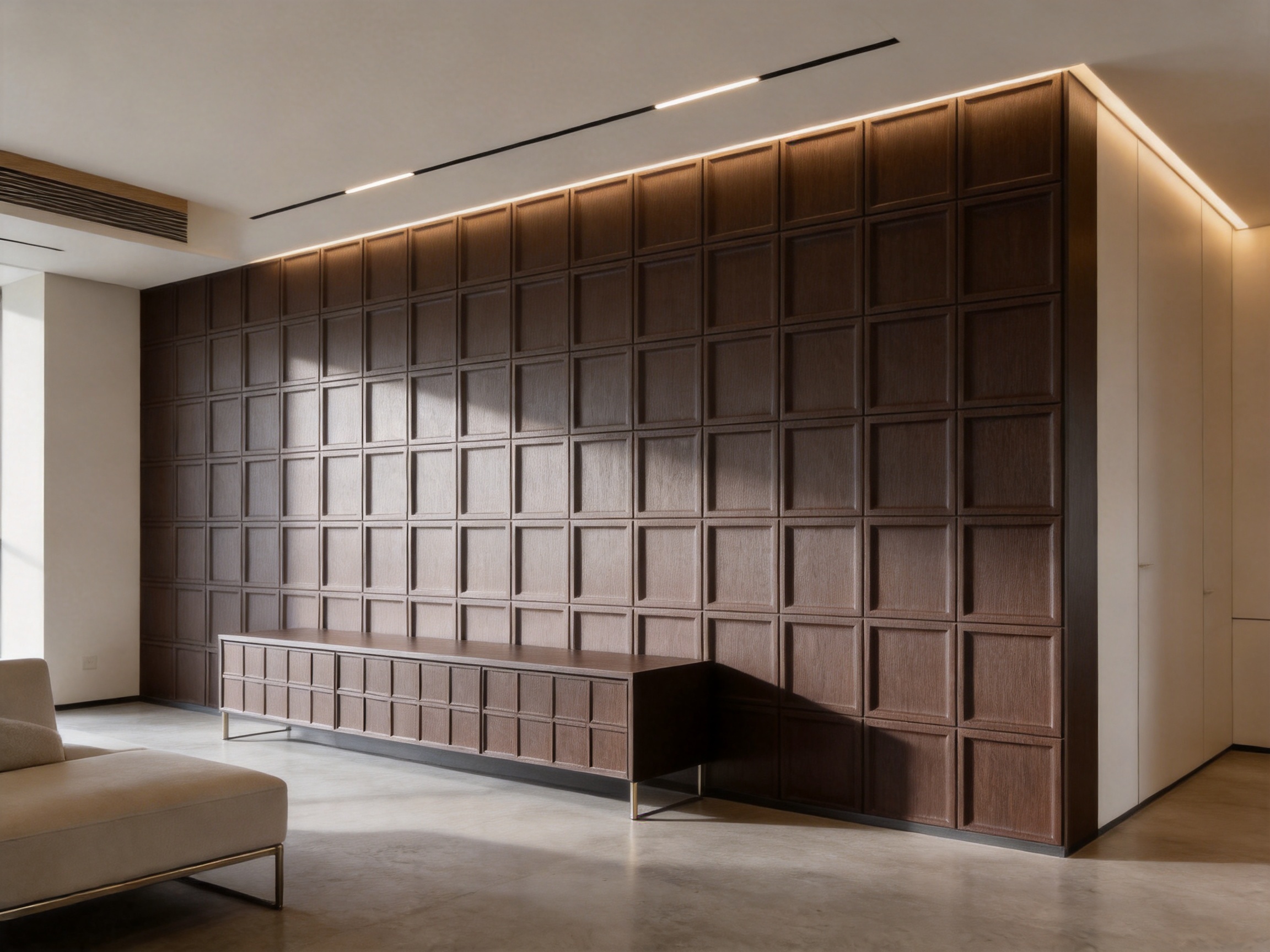
High-moisture-resistant medium-density fiberboard, commonly known as HMR MDF, is an engineered wood substrate developed for interior applications that require greater dimensional stability and moisture resistance than standard MDF. It provides a consistent, smooth, and machinable base for decorative surfaces, including melamine papers, laminates, veneers, paints, and specialty finishes. As modern residential, hospitality, office, retail, and commercial interiors increasingly demand durable and visually refined materials, HMR MDF has become an important component in contemporary panel manufacturing.
HMR MDF - Yakco/Lekco is a substrate product designed to support the production of decorative panels and furniture components. It combines the uniform structure associated with MDF with enhanced resistance to humidity and occasional moisture exposure. This balance allows manufacturers, designers, contractors, and furniture producers to use the board in a broader range of interior environments than conventional MDF while retaining the advantages of precise cutting, routing, drilling, profiling, and surface finishing.
The product belongs to the Melamine Board Substrate category. Its role is not limited to serving as a basic core. The substrate directly affects the quality, stability, appearance, and service life of the finished decorative panel. A well-manufactured HMR MDF board helps create smoother surfaces, cleaner edges, more reliable machining results, and improved resistance to the environmental conditions found in kitchens, bathrooms, utility rooms, retail fixtures, offices, and other busy spaces.

HMR MDF - Yakco/Lekco
What Is HMR MDF?
HMR MDF is a moisture-resistant version of medium-density fiberboard. MDF is produced by refining wood fibers, combining them with a resin system, forming the fibers into a uniform mat, and compressing the mat under controlled heat and pressure. Unlike solid wood, which contains natural grain direction and may have knots or internal variations, MDF is engineered to deliver a relatively homogeneous panel structure.
The term “high moisture resistant” does not mean that the board is waterproof or intended for permanent outdoor exposure. Instead, it indicates that the board is formulated and manufactured to perform more reliably in areas where humidity, condensation, splashes, or periodic moisture may be present. The product should still be protected from standing water, continuous saturation, and unsuitable exterior conditions. Correct installation, edge sealing, surface coverage, and ventilation remain important to long-term performance.
The uniform fiber structure of HMR MDF provides several practical benefits. It supports accurate panel sizing, clean sawing, consistent routing, and smooth edge profiling. It also creates a stable foundation for melamine decoration. When the board is pressed with a decorative paper, the quality of the substrate influences how evenly the surface appears and how well the finished panel maintains its flatness.
For manufacturers of decorative boards, the substrate must meet several requirements at the same time. It should be strong enough for handling and installation, stable enough to reduce movement, smooth enough for high-quality surface presentation, and machinable enough for modern production equipment. HMR MDF is designed to address these requirements more effectively than ordinary interior-grade MDF in moisture-sensitive applications.
Product Position Within Decorative Panel Manufacturing
Decorative panels are complete systems rather than simple surface coverings. Their performance depends on the interaction between the core board, bonding system, decorative paper, pressing conditions, protective finish, edging method, and installation environment. HMR MDF provides the structural foundation of this system.
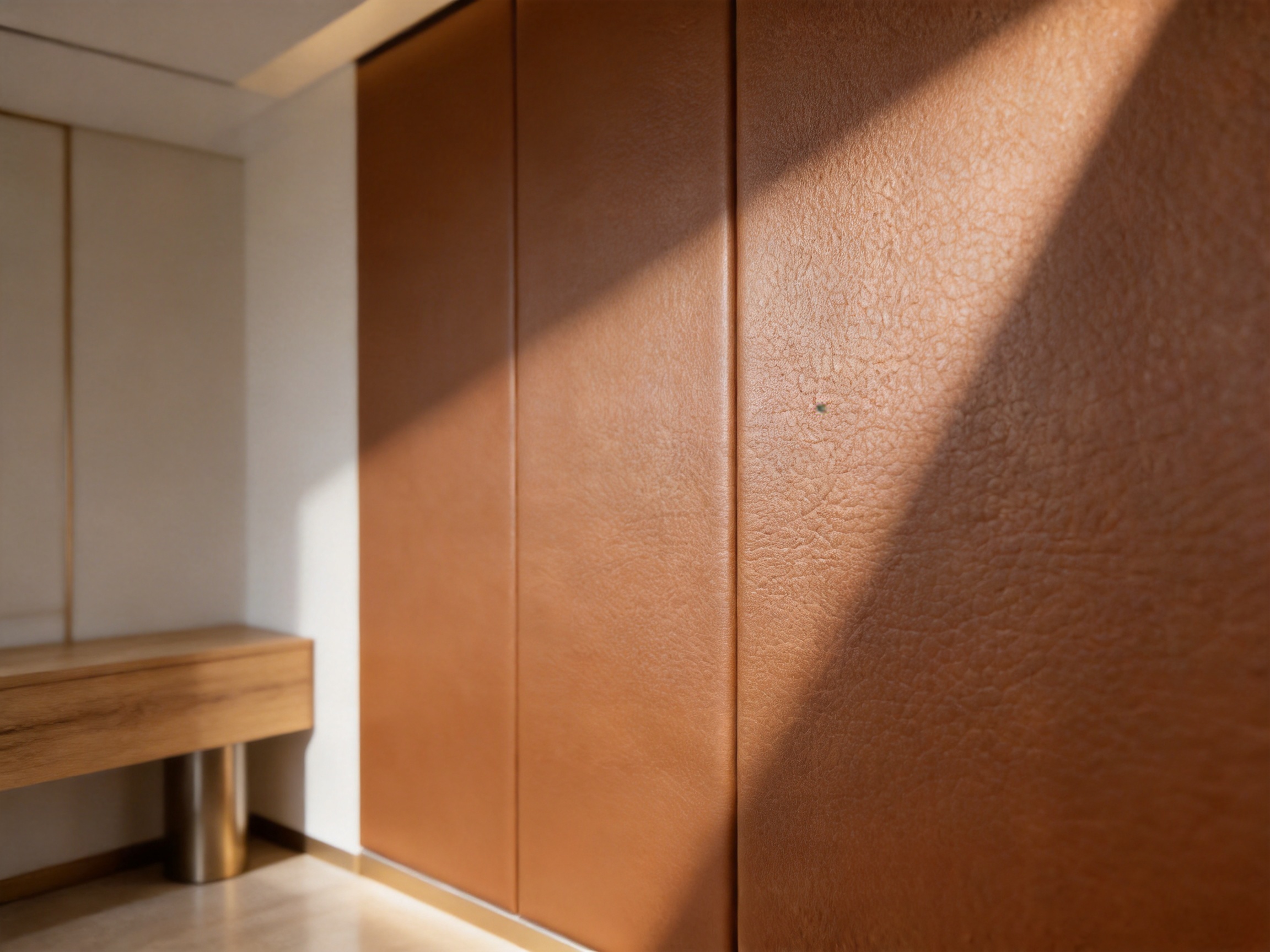
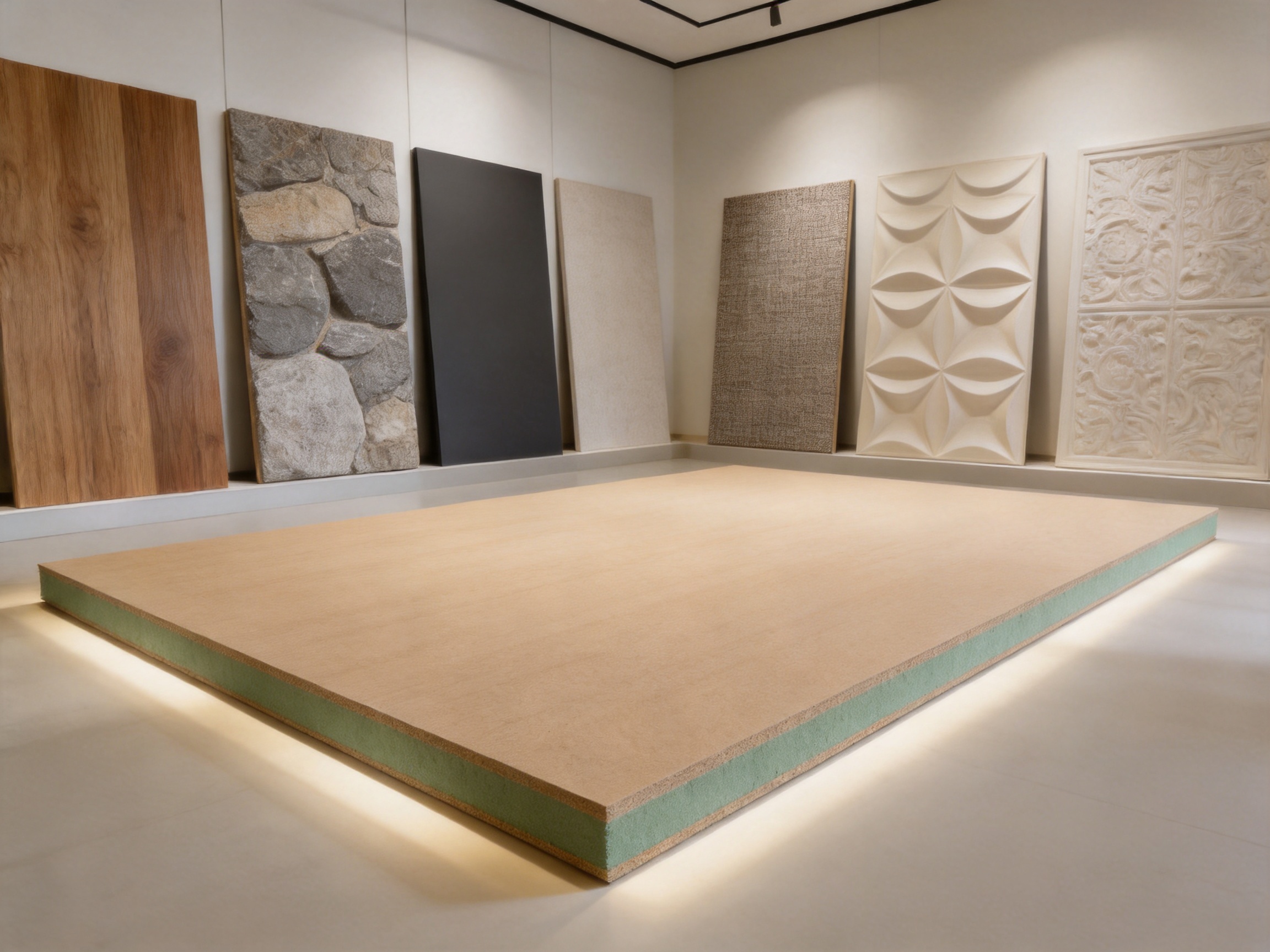
As a substrate, it can be paired with melamine papers featuring wood grain, stone, textile, leather, art deco, frosted, three-dimensional, and other visual effects. This flexibility enables panel manufacturers to develop coordinated product collections for furniture, wall cladding, cabinetry, partitions, shelving, doors, and display systems.
The substrate also contributes to design freedom. Because MDF has no pronounced natural grain direction, it can be cut and shaped in multiple orientations. Manufacturers can create straight profiles, curved visual details, routed grooves, recessed lines, perforated elements, and custom furniture components. When the decorative layer is correctly applied, these shapes can be integrated into a coherent design language.
In a melamine panel, the visible finish often receives the greatest attention. However, the substrate determines whether that finish remains attractive after cutting, installation, and continued use. A weak, uneven, or dimensionally unstable core may lead to poor edge quality, surface irregularities, delamination, or visible distortion. A carefully engineered HMR MDF core helps reduce these risks.
Key Advantages Over Conventional MDF
Improved Moisture Resistance
The primary advantage of HMR MDF over standard MDF is its enhanced performance in humid interior conditions. Conventional MDF is generally intended for dry indoor environments. When exposed to elevated humidity or occasional moisture, its fibers may absorb water, swell, soften, or lose dimensional accuracy. HMR MDF is formulated to limit these effects and retain its functional properties more effectively.
This advantage is particularly relevant in kitchens, laundry areas, bathroom furniture, entrance zones, hospitality spaces, and commercial interiors where humidity levels may fluctuate. It is also valuable during transportation, storage, and installation when panels may encounter temporary environmental changes.
Moisture resistance improves the practical service range of the panel, but it does not eliminate the need for proper protection. Cut edges should be sealed or covered when the application may expose them to moisture. Fasteners, joints, sink cutouts, ventilation gaps, and contact points should be designed to prevent water accumulation. These measures allow the board’s moisture-resistant properties to work together with good construction practice.
More Reliable Dimensional Stability
Dimensional stability is essential for fitted furniture and decorative wall systems. A panel that changes significantly in thickness, width, or flatness can create gaps, misaligned doors, uneven joints, or visible surface distortion. HMR MDF is engineered to offer more reliable stability when exposed to ordinary changes in indoor humidity.
This is a competitive advantage in projects where many components must align precisely. Cabinet doors, drawer fronts, wall panels, shelving systems, and retail displays often rely on close tolerances. A stable substrate can support more predictable assembly and reduce the need for on-site correction.
Improved stability also benefits surface appearance. Decorative melamine papers and other overlays perform best when the underlying board remains even. Reduced movement can help preserve the visual continuity of wood patterns, embossed textures, matte finishes, and other decorative effects.
Consistent Internal Structure
One of the fundamental strengths of MDF is its engineered uniformity. HMR MDF maintains this benefit while adding moisture-oriented performance characteristics. The consistent fiber distribution supports predictable machining, panel processing, and surface finishing.
Compared with natural timber, the board generally contains fewer variations caused by knots, irregular grain, resin pockets, or changes in density. This makes it suitable for automated production lines where repeatability is important. Manufacturers can program cutting, drilling, edging, and routing operations with greater confidence in the material’s response.
Consistency also helps decorative panel producers maintain stable quality across larger orders. When the board structure is uniform, differences in surface smoothness, edge behavior, and pressing response can be reduced. This supports efficient production and helps create visually coordinated batches.
Smooth Surface for Decorative Finishes
HMR MDF provides a smooth base for melamine papers, laminates, paint systems, veneers, and other decorative treatments. A refined surface reduces the risk that small substrate defects will appear through a thin decorative layer. It also supports a more even visual result when light reflects across a finished panel.
For wood-design melamine boards, a smooth substrate helps preserve the clarity of printed grain patterns. For stone and concrete effects, it contributes to a clean continuous appearance. For textile and leather designs, it supports the controlled presentation of fine visual details. When combined with embossed or three-dimensional finishes, the substrate helps maintain the accuracy of the surface structure.
Efficient Machining and Fabrication
Furniture and interior panel manufacturers require boards that can be cut and shaped efficiently. HMR MDF can be processed with common woodworking equipment, including panel saws, CNC routers, edge banders, boring machines, and drilling systems. Its fiber-based structure is well suited to precision fabrication and detailed profiles.
Clean machining can reduce waste, improve component fit, and simplify downstream assembly. It is particularly useful for designs that include recessed handles, decorative grooves, shadow gaps, curved profiles, or integrated lighting channels. The board’s machinability also supports customized project work, where small quantities and varied dimensions may be required.
Broad Design Compatibility
A major advantage of this substrate is its compatibility with many visual styles. A single board category can support natural wood appearances, contemporary neutral surfaces, dark luxury finishes, textured decorative panels, and modern three-dimensional walls. This helps suppliers and manufacturers build broad collections without requiring a completely different core material for each design direction.
The substrate can be used with decorative concepts such as oak-inspired grain, walnut-inspired tones, stone patterns, textile visuals, leather effects, brushed surfaces, matte finishes, and artistic geometric graphics. Such flexibility allows the same structural material to serve residential, commercial, hospitality, and retail applications.
Advanced Manufacturing Strengths
The manufacturer, YAKCO New Materials (Jiangsu) Co., Ltd., was established in 2007 and operates from a production base covering approximately 50 acres. The company has a modern standard factory building of more than 30,000 square meters. This scale provides a foundation for organized production, research, quality management, storage, and order coordination.
Manufacturing scale is important in the decorative panel industry because customers often require both design variety and reliable supply. A structured production environment can support repeatable processing, improved scheduling, and closer control over raw materials and finished products. It also creates space for technical development and the integration of multiple production stages.
The company specializes in high-end decorative panels and wall panels for residential and commercial spaces. Its focus on decorative materials means that the substrate is considered as part of a complete design and performance solution rather than as an isolated commodity board. This orientation supports closer attention to surface quality, texture, visual continuity, and application requirements.
YAKCO has developed expertise in 3D decorative panel technology and deep-pressing processes. These capabilities are relevant to HMR MDF because modern decorative products increasingly require more than a flat printed surface. They may include tactile relief, synchronized texture, recessed patterns, raised structures, and layered visual effects. A reliable substrate is essential for transferring and retaining such details.
Six Core Production Processes
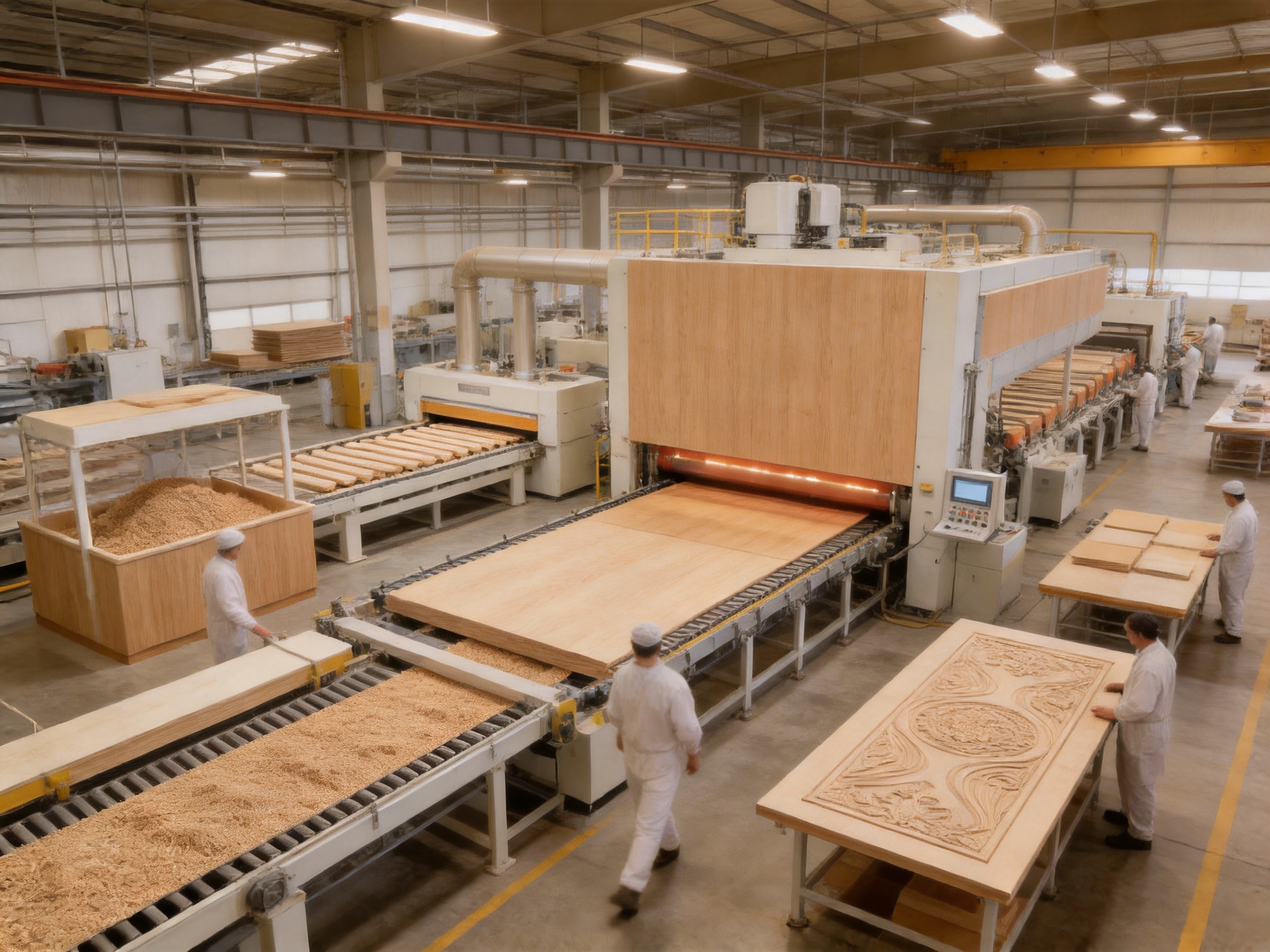
The company describes its manufacturing system as incorporating six core production processes. Although the exact operational sequence may vary according to product specification, a coordinated multi-stage process generally involves material preparation, fiber or board formation, pressing, conditioning, surface preparation, and finishing or inspection. Each stage contributes to the final board’s appearance and performance.
Material Preparation and Fiber Control
The first stage of engineered wood production is the selection and preparation of wood-based raw materials. Consistent material preparation helps control fiber quality, moisture content, and board density. These factors influence strength, surface smoothness, machining behavior, and pressing response.
Controlled preparation is especially important for moisture-resistant boards. The resin system and fiber structure must work together to achieve the intended performance. Uneven raw materials can create variations across the panel, while carefully managed inputs support a more homogeneous final product.
Forming and Density Distribution
During forming, prepared fibers are distributed into a mat. Uniform distribution is essential for obtaining a balanced panel structure. Density variation can affect screw-holding behavior, edge machining, thickness consistency, and surface quality.
A carefully controlled forming process helps establish the board’s core and surface layers. The result should provide sufficient internal integrity while maintaining a smooth, machinable exterior. This balance is important for both structural use and decorative overlay applications.
Hot Pressing and Consolidation
Hot pressing consolidates the fiber mat under carefully managed heat and pressure. The process activates the adhesive system, reduces voids, and establishes the required panel thickness and density profile. Pressing conditions must be controlled to achieve a stable and uniform board without damaging the fiber structure.
For products used with decorative surfaces, pressing accuracy is particularly important. Thickness variation can affect overlay bonding, edge banding, panel alignment, and installation. Stable pressing supports the production of panels that are easier to process and more predictable in finished applications.
Conditioning and Stabilization
After pressing, boards require controlled conditioning and stabilization. This stage allows internal stresses and moisture conditions to reach a more balanced state. Proper conditioning helps reduce later movement and supports reliable performance during cutting, storage, transportation, and installation.
Stabilization is a significant part of quality control because a board may appear acceptable immediately after pressing but behave differently if internal conditions are not adequately balanced. A disciplined production process considers the board’s condition throughout its handling cycle.
Surface Preparation
The surface preparation stage may include sanding, calibration, cleaning, and dimensional checking. A well-prepared face improves the contact between the substrate and decorative layer. It also contributes to a smoother final appearance and more consistent pressing results.
Surface preparation is particularly important for deep-embossed, three-dimensional, and high-definition decorative products. Fine surface variations can influence the sharpness of transferred patterns. A stable and smooth substrate allows the decorative process to reproduce intended textures with greater precision.
Finishing and Inspection
The final process includes finishing, packaging, and inspection according to the required product specification. Inspection may cover dimensions, flatness, surface appearance, edge quality, moisture-related performance, and general consistency. Careful checking helps identify defects before the board enters downstream production or reaches a customer.
For large-scale orders, inspection also supports batch consistency. Decorative panel customers generally need boards to remain compatible across multiple production runs. A systematic quality approach helps reduce variation and supports dependable project delivery.
MDI Bonding and Environmental Considerations
The company highlights the use of MDI adhesive bonding in its production technology. MDI, or methylene diphenyl diisocyanate, is an adhesive chemistry used in certain engineered wood products. Its application can contribute to strong bonding and moisture-related performance when properly formulated and controlled during production.
The description of MDI bonding as part of the manufacturing system reflects an emphasis on panel stability and environmental performance. Adhesive selection affects internal bonding, dimensional behavior, formaldehyde emissions, pressing conditions, and long-term service characteristics. For this reason, the bonding system is one of the most important technical elements in engineered panel production.
The company states that its products are designed to meet the international ENF formaldehyde standard. ENF is commonly associated with a very low formaldehyde emission classification under relevant Chinese engineered wood product standards. Buyers should review current technical documentation, testing reports, and applicable regional certifications for the precise product specification and intended market.
Low-emission materials are increasingly important in residential interiors, schools, offices, healthcare-related environments, hotels, and other occupied spaces. A lower-emission substrate can support healthier indoor material strategies when it is combined with suitable adhesives, coatings, ventilation, and responsible installation practices.
Environmental performance should be evaluated as a complete system. The substrate, decorative layer, adhesive, edge treatment, and installation materials all contribute to the final indoor environment. Buyers should therefore request current product documentation and confirm that the selected board complies with the regulations and certification requirements of the destination market.
Deep-Pressing and Three-Dimensional Decorative Technology
Many decorative panels are moving toward tactile surfaces that provide a stronger sensory connection with wood, stone, textile, leather, and architectural materials. Deep pressing can create more pronounced relief and layering than a flat decorative print. This enables a panel to interact with light and shadow, making the surface appear more natural or architecturally expressive.
Three-dimensional decorative technology requires a substrate that can support controlled pressure and retain its shape. If the board is too unstable, too soft, or inconsistent in density, the embossed pattern may become uneven or lose definition. HMR MDF offers a dependable base for this type of application when the decorative process is correctly matched to the board specification.
Deep-pressed surfaces can be used to create visual effects inspired by natural timber grain, fluted walls, carved patterns, woven materials, brushed finishes, and geometric relief. These effects allow designers to create feature walls, furniture fronts, reception counters, retail displays, and hospitality interiors with greater depth and identity.
The use of three-dimensional surfaces may also reduce the need for excessive additional decoration. A textured panel can become a visual focal point through its surface geometry, color, and shadow behavior. This supports minimalist designs in which material quality and tactile detail replace complicated ornamentation.
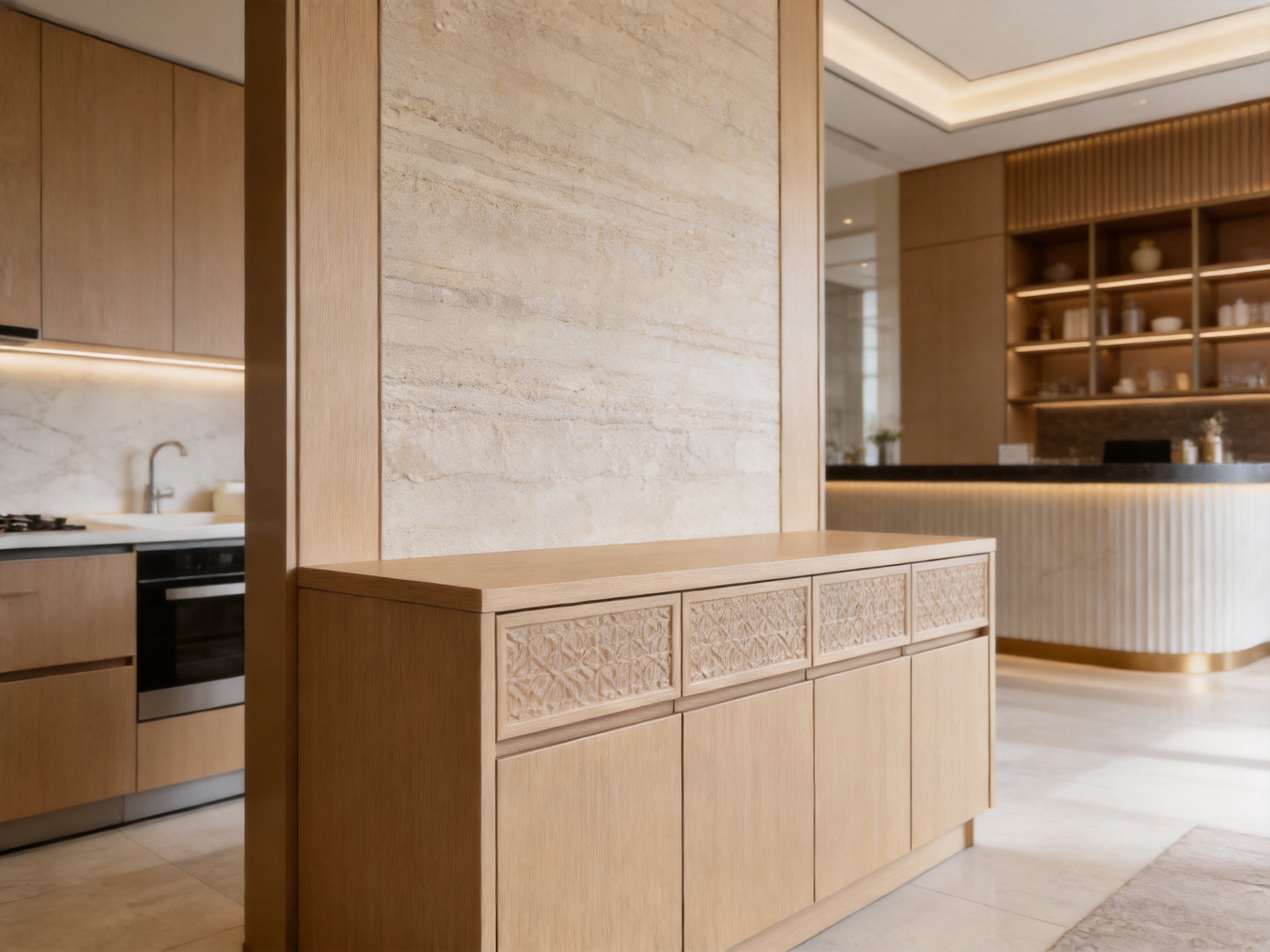
Applications in Residential Interiors
Kitchen Cabinetry
Kitchen cabinetry is one of the most suitable applications for HMR MDF because kitchens experience humidity, steam, splashes, frequent cleaning, and repeated opening and closing. The board can be used for cabinet doors, drawer fronts, side panels, end panels, and selected carcass components when the design and installation provide appropriate protection.
Melamine-faced HMR MDF can deliver the appearance of wood, stone, textile, or matte color while offering a consistent engineered core. It can be machined for concealed hinges, handles, ventilation details, and custom profiles. Edge sealing and suitable hardware remain essential around sinks, dishwashers, and other moisture sources.
Bathroom Furniture
Bathroom vanities, storage units, mirror cabinets, and wall-mounted furniture may be exposed to condensation and occasional splashing. HMR MDF provides a more suitable substrate than ordinary MDF for these conditions, particularly when all edges, joints, and penetrations are protected.
The material should not be treated as a substitute for waterproof construction. It is best used in furniture systems that keep the board away from standing water and provide adequate ventilation. Properly detailed bathroom furniture can combine moisture-conscious construction with a wide range of decorative surfaces.
Wall Panels and Feature Walls
Decorative HMR MDF wall panels can be used in living rooms, bedrooms, corridors, home offices, and entertainment areas. Wood-look and three-dimensional finishes can add warmth, rhythm, depth, and visual continuity to a space. Panels can be installed as full-height features, partial wall treatments, headboard backgrounds, or integrated storage surfaces.
For wall applications, designers should consider wall flatness, fixing systems, panel joints, expansion allowances, and ventilation. The decorative result depends not only on the panel but also on the accuracy of the supporting structure and the alignment of adjacent sheets.
Doors and Interior Partitions
HMR MDF can be used in selected interior door skins, decorative door components, and partition systems. Its smooth surface supports painted, laminated, or melamine finishes, while its machinability allows the inclusion of grooves, framed details, and integrated hardware preparations.
Door and partition applications should be engineered according to span, thickness, hardware loads, fire requirements, and acoustic objectives. The appropriate panel grade and construction method must be selected for each project rather than assuming that one board specification suits every door or partition system.
Applications in Commercial and Hospitality Spaces
Commercial environments place high demands on materials. Retail fixtures, hotel interiors, offices, restaurants, reception areas, and public-facing spaces require attractive surfaces that can be produced consistently and maintained efficiently. HMR MDF supports these requirements through its combination of visual flexibility, machinability, and moisture-conscious performance.
In retail stores, the board can be used for shelving, display walls, counters, product plinths, fitting-room elements, and branded interior features. The ability to combine printed patterns with embossed textures enables a retailer to create a distinctive visual identity without relying solely on solid wood or natural stone.
Hotels and restaurants often use decorative panels in reception desks, room furniture, corridor walls, bathroom vanities, bar fronts, and dining areas. These settings benefit from materials that maintain a refined appearance under regular use. HMR MDF can support coordinated furniture and wall treatments, allowing designers to repeat a selected texture or color throughout a project.
Office interiors can use the board for workstation components, storage fronts, acoustic feature elements, meeting-room walls, and reception areas. A consistent substrate helps fabricators produce multiple components with matching appearance and compatible machining behavior.
In public and commercial environments, maintenance should be considered during material selection. Smooth melamine surfaces are generally practical to clean, while textured finishes may require cleaning methods appropriate to their relief depth and coating. The final specification should match the expected traffic, cleaning frequency, and exposure conditions.
Comparison With Alternative Substrates
| Substrate | Main Strength | Common Limitation | Why HMR MDF May Be Preferred |
|---|---|---|---|
| Standard MDF | Smooth, uniform, and economical for dry interiors | Less suitable for humid or moisture-sensitive environments | Provides enhanced moisture resistance while retaining smooth machining characteristics |
| Particleboard | Cost efficiency and broad furniture use | Coarser internal structure and more variable edge performance | Offers a smoother, more homogeneous surface for premium decorative finishes and detailed machining |
| Plywood | Layered construction and useful structural strength | Visible layers, possible face variation, and higher processing complexity | Provides a more uniform face for melamine decoration and precision profiling |
| Solid wood | Natural appearance and strong design appeal | Natural movement, knots, grain direction, and higher material variation | Supports consistent dimensions, repeatable production, and flexible cutting orientations |
| Plastic or mineral-based boards | Specialized resistance in selected environments | Different processing requirements and potentially higher cost | Offers a wood-based solution compatible with common furniture and panel manufacturing equipment |
The comparison does not mean that HMR MDF is suitable for every project. Plywood may be preferred where structural strength or screw withdrawal performance is the primary concern. Solid wood may be selected for authentic natural character. Plastic or mineral boards may be more appropriate for direct water exposure or specialized technical applications. HMR MDF is most competitive when a project needs a smooth decorative substrate with better moisture performance than standard MDF.
Why Manufacturing Control Matters to Buyers
Customers purchasing decorative substrates need more than an attractive sample. They need confidence that the board will behave consistently during production and installation. Manufacturing control influences the board’s thickness, flatness, surface smoothness, internal bonding, moisture response, formaldehyde emission level, and compatibility with decorative processes.
Production capability also affects order fulfillment. A supplier with a substantial factory environment and experience in decorative panels may be better positioned to coordinate repeat orders, custom finishes, large panel programs, and technical communication. This is especially valuable for furniture manufacturers and interior contractors working on multi-phase projects.
Technical communication should cover board thickness, standard dimensions, density, moisture resistance classification, surface condition, formaldehyde emission data, machining recommendations, packaging, and storage requirements. Buyers should also clarify whether the board is supplied as a bare substrate or as part of a finished melamine-faced panel.
For projects involving deep embossing or three-dimensional decoration, buyers should request representative samples. A sample should be evaluated for flatness, surface uniformity, pattern definition, edge machining, color coordination, and behavior after cutting. Testing the actual production process before full-scale ordering can reduce risk and improve final consistency.
Quality and Performance Considerations
Flatness and Thickness
Flatness and thickness consistency affect panel joining, edge banding, pressing, and installation. A board with uneven thickness may create visible steps between adjacent panels or interfere with hardware alignment. These properties should be checked according to the tolerances specified for the intended application.
Edge Quality
Edges are particularly important because they are often cut, profiled, drilled, or covered with edge banding. Clean edge behavior improves the appearance of exposed details and reduces finishing work. When an edge is exposed to moisture, it should receive an appropriate sealant, coating, cap, or edge treatment.
Fastener Performance
Furniture design must account for the board’s density and internal structure when selecting screws, dowels, cam fittings, hinges, and other hardware. Pilot holes, edge distances, screw dimensions, and fastening patterns should be tested for the specific board thickness and component design.
Surface Compatibility
When HMR MDF is used as a base for melamine, veneer, laminate, or paint, the surface should be compatible with the selected bonding and finishing process. Pressing temperature, pressure, adhesive quantity, curing time, and storage conditions can all influence the final result.
Storage and Handling
Even a moisture-resistant board should be stored indoors on a level and supported surface. Panels should be protected from rain, standing water, direct ground contact, and extreme humidity changes. Stacking methods should prevent bending and allow air circulation where appropriate.
Installation Recommendations
Correct installation is essential to achieve the expected benefits of HMR MDF. Panels should be acclimatized to the interior environment before installation when practical. This allows the board and surrounding space to reach more comparable moisture conditions and reduces the possibility of movement after fitting.
Cutting should be performed with sharp, correctly selected tools. Poorly maintained blades can generate chipped edges, overheating, or unnecessary surface damage. CNC routing parameters should be adjusted according to board thickness, tool geometry, feed speed, and the complexity of the profile.
Edges and penetrations should be sealed in locations where humidity or splashing is expected. Special attention should be given to sink cutouts, floor-level components, bathroom furniture, dishwasher locations, and areas around plumbing. Joints should be designed to prevent water from collecting inside or behind the panel.
Wall panels should be installed on a suitable, dry, and stable support structure. Fixing systems must accommodate the panel weight and the condition of the wall. In larger installations, joint planning, ventilation, movement allowances, and access for maintenance should be considered before fabrication.
Finished panels should be cleaned with methods recommended for the specific surface. Abrasive tools, aggressive solvents, prolonged water contact, and excessive heat may damage decorative layers. Routine care helps preserve the appearance and service life of the panel system.
Sustainability and Responsible Material Selection
Engineered wood products can support efficient use of wood resources by converting suitable wood fiber into standardized panels. Their factory-controlled production also allows manufacturers to create large decorative surfaces with consistent dimensions and repeatable appearance. These advantages can reduce the need for extensive solid timber sections in selected interior applications.
Responsible procurement should include attention to raw material sourcing, adhesive chemistry, emissions, manufacturing efficiency, packaging, service life, and end-of-life considerations. A durable product that remains attractive and functional for many years may reduce the frequency of replacement and the associated material consumption.
The company’s stated focus on ENF formaldehyde performance reflects the growing importance of indoor air quality. Buyers should confirm the relevant test standards and documentation for the destination market. They should also consider the emissions from all components used in the finished installation, including adhesives, coatings, edge bands, backing materials, and sealants.
Sustainability claims should be assessed through verifiable technical information rather than marketing language alone. Product data sheets, third-party testing, chain-of-custody information where applicable, and factory environmental documentation can help customers make better-informed decisions.
How the Product Supports Competitive Decorative Panel Collections
In a competitive materials market, a panel supplier must combine technical reliability with design relevance. HMR MDF supports this objective by providing a stable base for multiple decorative categories. A collection can include wood designs for warmth, stone designs for architectural character, textile designs for softness, leather designs for luxury, art deco designs for statement interiors, and frosted or three-dimensional designs for contemporary projects.
This range allows distributors and manufacturers to serve different customer preferences while maintaining a familiar substrate platform. Standardized production knowledge can be applied across several decorative styles, helping simplify processing and quality control.
The substrate is also suitable for private-label and project-oriented programs when the required specifications are clearly defined. Customers may request specific thicknesses, dimensions, surface effects, embossing levels, or matching components. The manufacturer’s experience with decorative panel technology can support technical discussions around such requirements.
Competitive strength comes from the combination of product performance and manufacturing capability. A low-cost board may not deliver the same surface consistency, moisture performance, or deep-pressing suitability. Conversely, a highly decorative product may not be practical if the underlying substrate is difficult to machine or unstable during installation. HMR MDF aims to balance these factors.
Recommended Buyer Evaluation Process
Before placing a commercial order, buyers should define the intended application. Important questions include whether the board will be used in a dry room, a humid room, a kitchen, a bathroom, a commercial space, a wall system, a furniture component, or a high-traffic area. The exposure conditions will determine the required thickness, surface treatment, edge protection, and installation method.
Buyers should then review technical documentation. The documentation should identify product classification, dimensions, tolerances, moisture-related properties, formaldehyde emission performance, recommended processing methods, storage requirements, and available decorative options.
Sample processing is the next step. A sample panel should be cut, drilled, routed, edged, assembled, and cleaned in a way that represents the planned production process. If the product will be laminated or pressed with a decorative finish, the actual adhesive, paper, pressure, and temperature conditions should be evaluated.
Finally, buyers should examine supply capability. They should confirm minimum order quantities, production lead times, packaging standards, loading methods, inspection procedures, and after-sales technical support. These details are important for maintaining continuity in large residential or commercial projects.
Frequently Asked Questions
What does HMR MDF mean?
HMR MDF means high-moisture-resistant medium-density fiberboard. It is an engineered wood panel designed to perform more reliably than standard MDF in humid interior conditions and areas exposed to occasional moisture.
Is HMR MDF waterproof?
No. HMR MDF is moisture resistant, not waterproof. It should not be left in standing water or used as an unprotected exterior board. Edges, joints, cutouts, and exposed surfaces should be properly sealed and installed.
What is the main advantage of this product?
The main advantage is the combination of enhanced moisture resistance, a smooth and uniform MDF structure, reliable machining performance, and compatibility with decorative panel finishes. This makes it suitable for applications where standard MDF may have insufficient moisture performance.
Can HMR MDF be used for kitchen cabinets?
Yes, it can be used for suitable kitchen cabinet components, including doors, drawer fronts, side panels, and selected carcass parts. Areas near sinks, dishwashers, plumbing, and floors require careful edge sealing, joint design, and installation protection.
Can it be used in bathrooms?
It can be used for bathroom furniture and selected wall or storage components when the design prevents prolonged water contact. Ventilation, edge protection, sealed joints, and correct installation are essential.
Can the board be cut with ordinary woodworking equipment?
HMR MDF is generally compatible with common woodworking equipment such as panel saws, CNC routers, drills, boring machines, and edge banders. Tool selection and processing parameters should be adjusted to the board thickness and the desired finish.
Is the surface suitable for melamine decoration?
Yes. Its smooth, consistent surface provides a suitable base for melamine papers and other decorative layers, subject to the correct pressing and bonding conditions. Product samples should be tested before full-scale production.
What types of decorative effects can be produced?
The substrate can support wood, stone, textile, leather, art deco, matte, frosted, embossed, and three-dimensional decorative effects. The final appearance depends on the selected decorative layer and the manufacturing process.
What is deep pressing?
Deep pressing is a decorative forming process that creates more pronounced relief, texture, or layered surface effects than a flat print. It can reproduce visual and tactile details inspired by natural wood, architectural surfaces, textiles, and geometric patterns.
What is the importance of MDI adhesive bonding?
MDI adhesive bonding is a resin technology used in certain engineered wood products. When properly formulated and processed, it can contribute to internal bonding strength, moisture-related performance, and dimensional stability.
Does the product meet low-formaldehyde requirements?
The company states that its products are designed to meet the ENF formaldehyde standard. Buyers should request current test reports and confirm compliance with the regulations and certification requirements applicable to their market.
How should the panels be stored?
Panels should be stored indoors on a flat, level, and adequately supported surface. They should be protected from rain, standing water, direct ground contact, and extreme humidity changes. Proper stacking helps prevent bending and damage.
What should buyers request before ordering?
Buyers should request technical data, available dimensions and thicknesses, moisture-related performance information, emission documentation, surface samples, processing recommendations, packaging details, and quality inspection information. A production trial is advisable for specialized decorative applications.
Conclusion
HMR MDF - Yakco/Lekco is designed to meet the growing demand for decorative substrates that combine visual flexibility, machining efficiency, stable performance, and improved resistance to humid interior conditions. It provides a practical alternative to standard MDF in applications where moisture exposure is a concern but a smooth, uniform, wood-based panel remains desirable.
The product’s value is strengthened by the manufacturer’s experience in high-end decorative panels, 3D panel technology, deep-pressing processes, multiple core production stages, and MDI adhesive bonding. The company’s modern factory infrastructure, substantial production area, and stated focus on ENF formaldehyde performance further support its position as a supplier for residential and commercial interior materials.
For furniture producers, interior contractors, architects, distributors, and project buyers, the principal benefit is the balance between substrate performance and decorative freedom. The board can support melamine surfaces inspired by wood, stone, textiles, leather, and architectural textures while remaining suitable for accurate cutting and fabrication. When it is specified correctly, protected at vulnerable edges, stored responsibly, and installed with appropriate detailing, HMR MDF can contribute to durable and visually refined interior systems.
References
1. Company product information for HMR MDF - Yakco/Lekco and Melamine Board Substrate applications.
2. Company information regarding manufacturing history, factory scale, decorative panel specialization, and 3D panel technology.
3. General technical literature on medium-density fiberboard manufacturing, fiber preparation, hot pressing, conditioning, and surface calibration.
4. General technical literature on high-moisture-resistant engineered wood panels and interior application requirements.
5. General technical literature on MDI adhesive systems used in engineered wood products.
6. Relevant national and international standards concerning formaldehyde emissions from wood-based panels, including ENF classification requirements where applicable.
7. General professional guidance on decorative panel storage, machining, edge sealing, furniture construction, and interior installation.