中文简体



Previous Post
Interior design is moving toward materials that combine natural visual appeal with dependable industrial performance. Designers, architects, furniture manufacturers, and building-material distributors increasingly need surfaces that look authentic, remain stable in demanding environments, and support efficient large-scale production. Traditional solid wood and natural veneer continue to offer warmth and character, but they may also involve challenges related to cost, consistency, moisture response, processing efficiency, and supply stability. A carefully engineered melamine board substrate with a deep embossed wood veneer design offers a practical alternative for projects that require the appearance of timber together with the functional advantages of an advanced decorative panel.
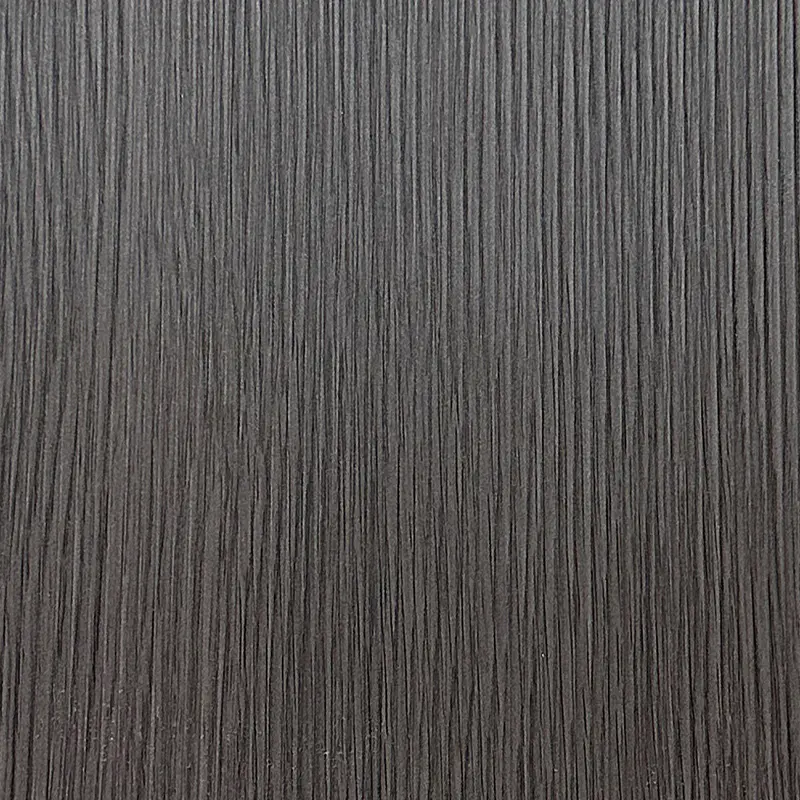
The Wood veneer - Lekco product is positioned within the melamine board substrate category and is developed for applications where wood-inspired texture, dimensional depth, and manufacturing reliability are important. Its design direction combines a realistic wood appearance with a three-dimensional embossed surface. Rather than presenting a completely flat printed pattern, the panel is intended to create a stronger relationship between visual grain and tactile texture. This approach helps wall panels, furniture components, cabinetry, commercial interiors, and residential surfaces achieve a more natural and layered appearance.
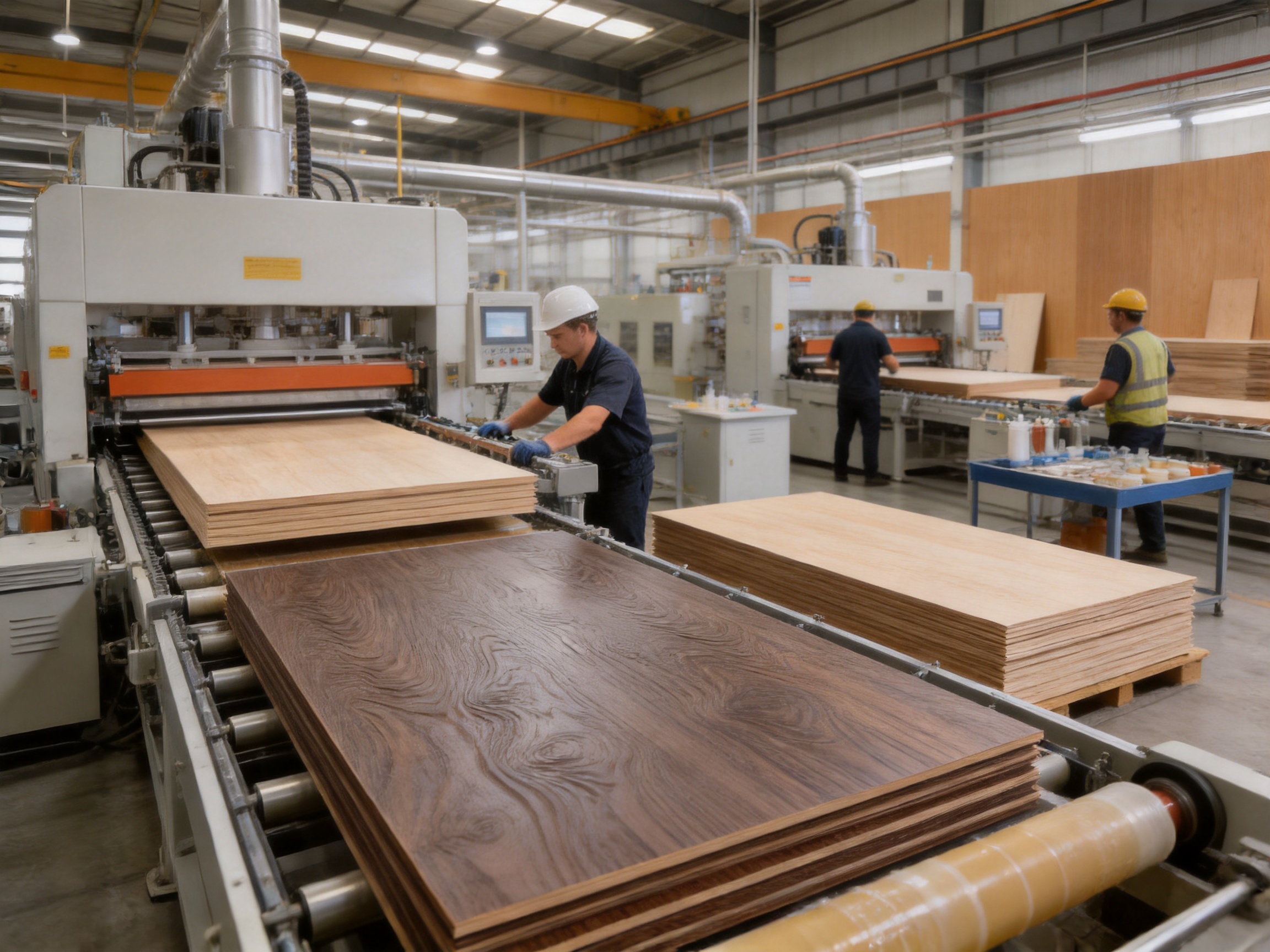
Produced by YAKCO New Materials (Jiangsu) Co., Ltd., the product benefits from a manufacturing background focused on high-end decorative panels and wall panels. The company was established in 2007 and operates a modern production facility covering more than 30,000 square meters within a 50-acre site. Its development strategy centers on 3D decorative panel technology, deep-pressing processes, multiple core production stages, and adhesive bonding technology designed to improve panel stability and environmental performance.
This article examines the product’s material concept, surface characteristics, manufacturing strengths, design value, processing benefits, application potential, and quality advantages. It also explains why a 3D deep embossed wood veneer melamine board can be more practical than conventional flat decorative boards or less controlled alternatives.
Wood veneer - Lekco
Understanding the Product Concept
A melamine board substrate is an engineered panel designed to provide a stable base for a decorative surface. Depending on the construction, the substrate can support furniture manufacturing, interior wall applications, built-in cabinetry, partitions, storage systems, and other architectural uses. The decorative layer gives the panel its visible character, while the substrate contributes to dimensional stability, machinability, structural support, and installation efficiency.
The Wood veneer - Lekco product focuses on the visual language of timber. Wood remains popular because it introduces warmth, organic variation, and a connection with nature. However, a natural wood surface may vary considerably from batch to batch, and the final material can require additional finishing, sealing, and maintenance. A melamine-based wood veneer design can provide a more controlled decorative result while retaining the visual qualities that make wood attractive.
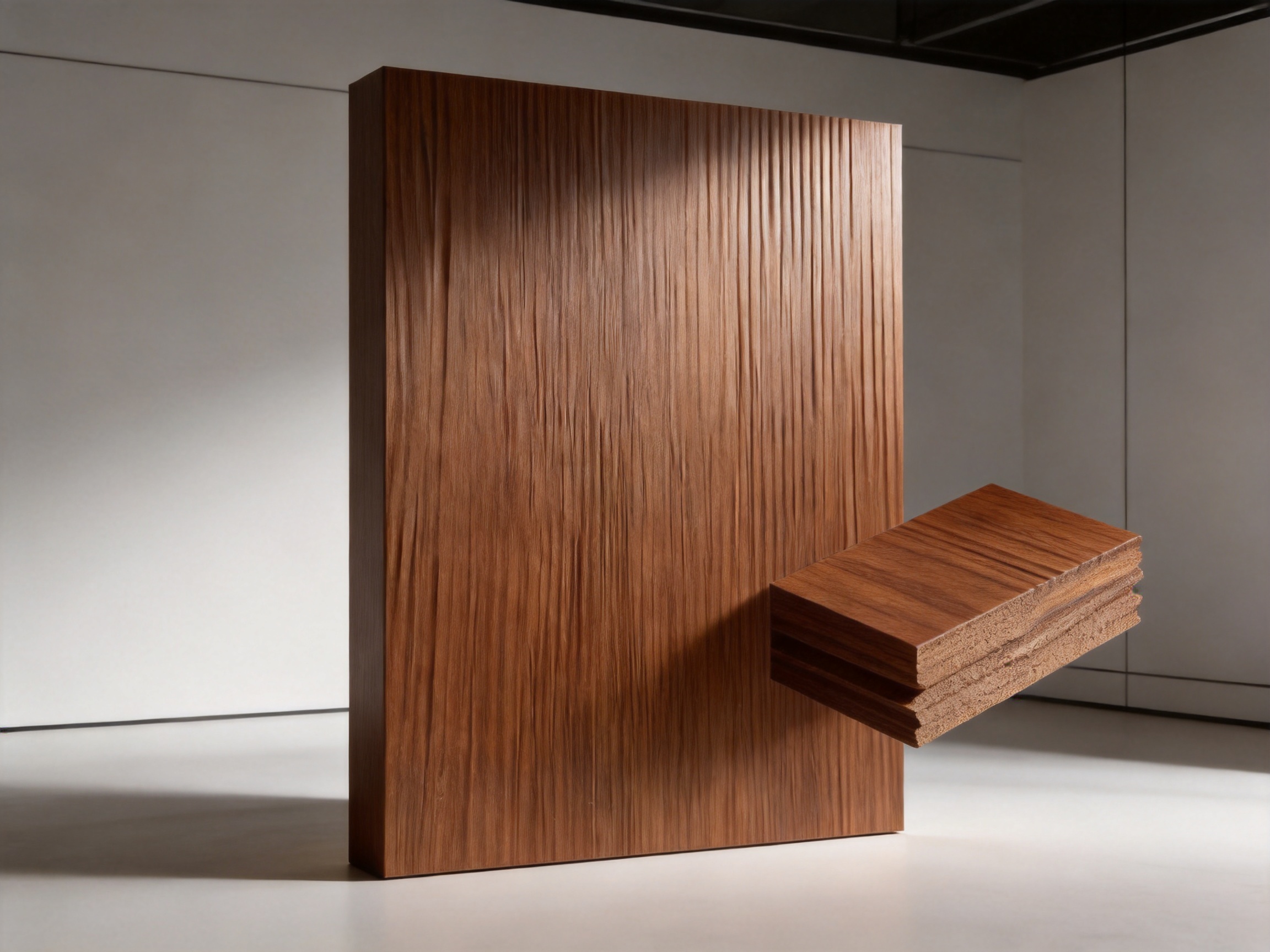
The defining feature is the relationship between printed or decorative wood imagery and physical embossing. The surface is designed to offer more than a two-dimensional grain pattern. Its deeper texture can create shadows, highlights, and touch-sensitive details that make the panel appear more substantial. In a well-designed interior, these characteristics can contribute to a premium impression without requiring the cost or maintenance associated with thick natural timber elements.
The term “deep embossed” describes a surface treatment in which the texture is pressed into the decorative panel with noticeable depth and definition. The purpose is not simply to make the surface rough. Instead, the embossing is intended to coordinate with the wood design so that grain direction, raised areas, recessed details, and tonal transitions support one another. This coordination creates a more convincing visual result than an unrelated or shallow texture.
Why Three-Dimensional Wood Surfaces Are Increasingly Popular
Flat decorative panels remain useful, but they may appear visually limited when used across large walls, doors, wardrobes, or extensive furniture surfaces. A completely smooth finish can reflect light evenly and may not provide enough visual variation. Three-dimensional surfaces respond differently to natural and artificial light. Their texture produces subtle changes in brightness across the panel, helping the installation feel more dynamic.
Deep embossed wood surfaces are particularly effective because wood grain is naturally associated with linear direction and tactile irregularity. When a decorative pattern is supported by physical relief, the eye and hand receive similar information. The grain looks textured because it also feels textured. This visual-tactile consistency can improve the perceived authenticity of the product.
Texture can also assist with design zoning. A wood-look embossed panel may be used to define a reception wall, headboard, retail display, meeting-room feature wall, cabinet front, or residential focal point. Because the material has a stronger presence than a flat print, it can create an architectural statement without requiring complex secondary decoration.
At the same time, the product can support restrained interiors. Designers do not have to use deep texture across every surface. A feature panel can be combined with solid colors, stone designs, fabric designs, metal accents, glass, or smooth wood-look boards. This flexibility allows the embossed finish to function either as the main design element or as a supporting layer within a broader material palette.
Key Product Advantages
Natural Wood-Inspired Appearance
The product is developed around a wood veneer aesthetic that can bring warmth and visual comfort to interior environments. Wood-inspired surfaces are suitable for both traditional and contemporary settings. They can support Scandinavian, minimalist, modern rustic, hospitality, office, retail, and residential design concepts.
Unlike a basic flat imitation, the three-dimensional finish creates greater surface depth. The combination of decorative wood imagery and embossing can make the panel appear more refined and realistic, especially when viewed under directional lighting. This helps designers achieve the character of wood while working with a more standardized engineered material.
Enhanced Visual Layering
Surface depth is one of the most important differences between ordinary decorative board and a deep embossed panel. Raised and recessed details can create layers that are visible from a distance and more apparent at close range. These details can make large installations less monotonous and help divide broad surfaces into visually meaningful zones.
The enhanced layering is valuable in commercial interiors where the material must communicate quality quickly. A textured reception wall, retail fixture, hotel feature panel, or restaurant partition can use the relief of the surface to create a memorable first impression. In residential applications, the same effect can give wardrobes, media walls, entryway storage, and bedroom panels a more tailored appearance.
Stable Decorative Consistency
Natural timber is valued for its individuality, but this individuality can make it difficult to maintain a consistent appearance across a large project. Engineered decorative boards can offer more predictable visual coordination between panels. This is useful when a project requires repeated doors, cabinet fronts, partitions, or wall modules.
Consistency does not mean that the surface must look artificial. A well-developed wood pattern can retain variation in tone and grain while remaining controlled enough for production planning. This balance can simplify material selection and reduce the risk of substantial differences between components that are intended to work together.
Efficient Interior Construction
Decorative panels are often selected because they can shorten the path from design concept to completed installation. A finished melamine board substrate can reduce the need for multiple on-site finishing steps. Depending on the project specification and fabrication method, manufacturers may be able to cut, edge, drill, assemble, and install components with greater efficiency than a system requiring extensive finishing after fabrication.
This efficiency is especially important for commercial projects operating under tight schedules. Retail stores, offices, hotels, and public interiors often need coordinated surfaces installed within a defined construction window. A reliable decorative board can help fabricators plan production with fewer wet finishing operations and fewer variable site conditions.
Suitable Balance Between Appearance and Performance
The primary value of the product lies in its balance. It is not designed only to look like wood, nor only to function as a basic engineered board. It is intended to combine a decorative surface, dimensional support, texture, and practical processing characteristics in one material solution.
For buyers, this balance can simplify sourcing. Instead of coordinating a structural substrate, a separate decorative treatment, and an additional surface-finishing process, they can evaluate a more integrated panel system. This may help reduce handling complexity, improve scheduling, and create clearer quality-control procedures.
Advanced Manufacturing Strengths
The performance of a decorative panel depends heavily on the quality of its production process. Surface appearance alone does not guarantee a satisfactory result. The panel must also maintain suitable adhesion, texture definition, dimensional stability, cutting behavior, and resistance to common production stresses. YAKCO’s manufacturing approach is built around specialized decorative-panel production rather than general-purpose board conversion.
Experience in Decorative Panel Development
YAKCO New Materials (Jiangsu) Co., Ltd. was established in 2007, giving the company a substantial period of experience in the development and production of decorative materials. Its product focus includes high-end decorative panels and wall panels for residential and commercial spaces. This specialization is important because decorative panels require attention to both technical construction and design trends.
The company’s experience supports the development of products that address practical market requirements. Buyers often need more than a visually attractive sample. They need repeatable production, coordinated patterns, reliable delivery planning, appropriate processing performance, and technical communication. A manufacturer that concentrates on decorative panels can better understand these connected needs.
Modern Production Facilities
The company covers approximately 50 acres and has a modern standard factory building of more than 30,000 square meters. A substantial production site can support dedicated manufacturing areas, organized material flow, quality-control stations, equipment maintenance, product development, and order coordination.
Factory scale is not automatically a guarantee of product quality, but it can provide an important foundation for systematic production. Space allows different stages of the process to be arranged more effectively and can support the separation of raw-material storage, panel processing, embossing, inspection, packaging, and finished-goods handling.
For international buyers and project customers, an organized factory environment can also improve communication and order execution. Large orders frequently require sample approval, specification confirmation, production scheduling, packaging requirements, and shipment coordination. A company with established infrastructure is better positioned to manage these activities in a structured way.
3D Decorative Panel Technology
Three-dimensional decorative panel technology is central to the product concept. The technical challenge is to create a surface with enough depth and definition to be visually convincing while maintaining suitable adhesion and panel integrity. Excessive or poorly controlled pressure can affect the substrate, decorative layer, or dimensional stability. Insufficient pressure may produce a texture that is too shallow to deliver the desired effect.
YAKCO has developed innovative deep-pressing processes intended to improve surface depth and layering. The process requires coordinated control of pressing conditions, material positioning, surface design, and bonding. The goal is to produce a texture that remains clear across the panel and supports the intended wood-grain appearance.
Six Core Production Processes
The company identifies six core production processes as part of its manufacturing system. Although individual production specifications may vary by product, a multi-stage process generally reflects the need to control the panel from substrate preparation through final inspection. Each stage can influence the final appearance and performance of the finished board.
A structured process may include substrate preparation, decorative-layer arrangement, adhesive application, pressing or embossing, surface inspection, and finishing or packaging control. The importance of such a system is that errors can be detected earlier instead of being passed to later stages. Consistent process management also helps reduce variation between production batches.
For customers, process discipline can translate into more dependable procurement. A product used in a multi-room interior or furniture program must maintain a coherent appearance from one component to the next. Controlled manufacturing helps support that expectation.
MDI Medical Adhesive Bonding
YAKCO uses MDI medical adhesive bonding technology as part of its product development and manufacturing approach. Adhesive bonding is a critical factor in a multilayer decorative panel because the relationship between the surface layer and substrate affects long-term integrity. A suitable bonding system can contribute to stronger layer connection, improved stability, and better resistance to separation under normal use conditions.
The use of MDI-based adhesive technology also reflects the company’s attention to environmental and health-related requirements. The exact performance of any finished panel depends on the complete formulation, production parameters, substrate, and testing conditions. However, the stated use of this bonding technology demonstrates an effort to develop products that meet modern expectations for indoor materials.
Environmental Performance
YAKCO states that its products are designed to meet the international ENF formaldehyde standard. Formaldehyde performance is an important consideration for residential interiors, schools, offices, hospitality spaces, healthcare-related environments, and other occupied buildings.
Low-emission materials can support healthier indoor environments, but responsible purchasing should still include verification of the relevant product documentation, test reports, and project requirements. Buyers should confirm the applicable standard, testing method, product batch, and compliance scope before placing an order for a specific construction project.
Environmental performance is increasingly connected with long-term value. A decorative panel that combines an appealing appearance with controlled emissions can be easier to specify for projects that include sustainability goals, indoor-air-quality requirements, or green-building criteria.
How the Product Compares with Conventional Alternatives
Compared with Flat Melamine Boards
Flat melamine boards can provide efficient and economical decorative coverage, but they do not always offer strong tactile depth. Their appearance may rely primarily on printed color and pattern. In contrast, the deep embossed wood veneer approach adds a physical dimension that can strengthen visual realism and improve design impact.
The advantage is especially visible on feature walls, door fronts, cabinetry, and furniture panels. Light interacts with the embossed texture, producing highlights and shadows that a completely flat surface cannot naturally reproduce. For projects where a premium appearance is important, this added dimension can justify the selection of a textured product.
Compared with Natural Wood Veneer
Natural wood veneer offers authentic material variation and is valued for its organic character. However, it may require careful selection, matching, finishing, and maintenance. It can also be affected by differences in timber source, grain direction, color, moisture, and surface treatment.
A manufactured wood-look melamine panel can provide greater decorative consistency and a more controlled production process. It may reduce the number of finishing steps required after fabrication and make it easier to coordinate large quantities. The most suitable option depends on project priorities. Where natural material authenticity is the central requirement, real veneer may be preferred. Where consistency, efficient production, texture, and controlled sourcing are more important, an engineered embossed panel can be highly competitive.
Compared with Painted or Laminated Surfaces
Painted surfaces can deliver a wide range of colors and gloss levels, but they may require multiple coating stages and careful curing. Visible marks, uneven application, or damage can become difficult to correct across a large installation. Decorative melamine panels provide a pre-developed surface that can reduce dependence on on-site coating quality.
Conventional laminates can be durable and visually versatile, but the quality of the final product depends on the relationship between the laminate and its supporting substrate. A specialized melamine board substrate can offer an integrated decorative solution in which appearance and panel construction are developed together.
Compared with Low-Quality Embossed Panels
Not all embossed products provide the same level of surface definition or structural reliability. Low-quality panels may display shallow, irregular, or poorly coordinated textures. The decorative image may not align effectively with the physical grain, reducing realism. Weak bonding can also create concerns about surface separation, edge quality, or long-term appearance.
The manufacturing strengths associated with YAKCO’s deep-pressing technology, multi-stage production system, and adhesive-bonding approach are intended to address these weaknesses. For professional buyers, the difference should be evaluated through samples, technical documentation, inspection procedures, and performance testing rather than appearance alone.
| Evaluation Factor | Flat Decorative Board | Natural Wood Veneer | 3D Deep Embossed Wood Veneer Melamine Board |
|---|---|---|---|
| Visual texture | Primarily printed or smooth | Natural surface variation | Printed wood appearance supported by physical relief |
| Appearance consistency | Generally controlled | Can vary significantly | Designed for coordinated production batches |
| Processing efficiency | Usually efficient | May require additional finishing | Designed to support streamlined panel fabrication |
| Design impact | Depends on color and pattern | High natural character | High tactile and visual layering |
| Maintenance considerations | Depends on surface type | May require finishing upkeep | Depends on specification and application conditions |
| Environmental documentation | Varies by manufacturer | Varies by finish and adhesive | Manufacturer states design for ENF formaldehyde performance |
Applications in Residential Interiors
The product is suitable for residential environments where designers want the warmth of wood without using solid timber throughout the interior. It can be considered for wardrobe doors, bedroom feature walls, media units, entryway storage, kitchen and dining furniture, study areas, shelving systems, and decorative partitions.
In bedrooms, a deep embossed wood panel can be used behind a bed to create a calm, material-rich background. The surface can help define the sleeping area without requiring complex wall construction. In living rooms, it can support a media wall or storage system by adding texture to an otherwise large built-in installation.
Entryways are another useful application. A textured wood-look panel can provide a welcoming first impression while integrating coat storage, shoe cabinets, mirrors, and display niches. In compact homes, a consistent panel design can be used across multiple functions, helping the interior feel more coordinated.
For kitchens and dining areas, wood-inspired surfaces can introduce warmth alongside stone, ceramic, metal, or solid-color components. Designers should select the appropriate panel specification for the location and consider exposure to heat, moisture, cleaning agents, and frequent contact.
Applications in Commercial and Hospitality Spaces
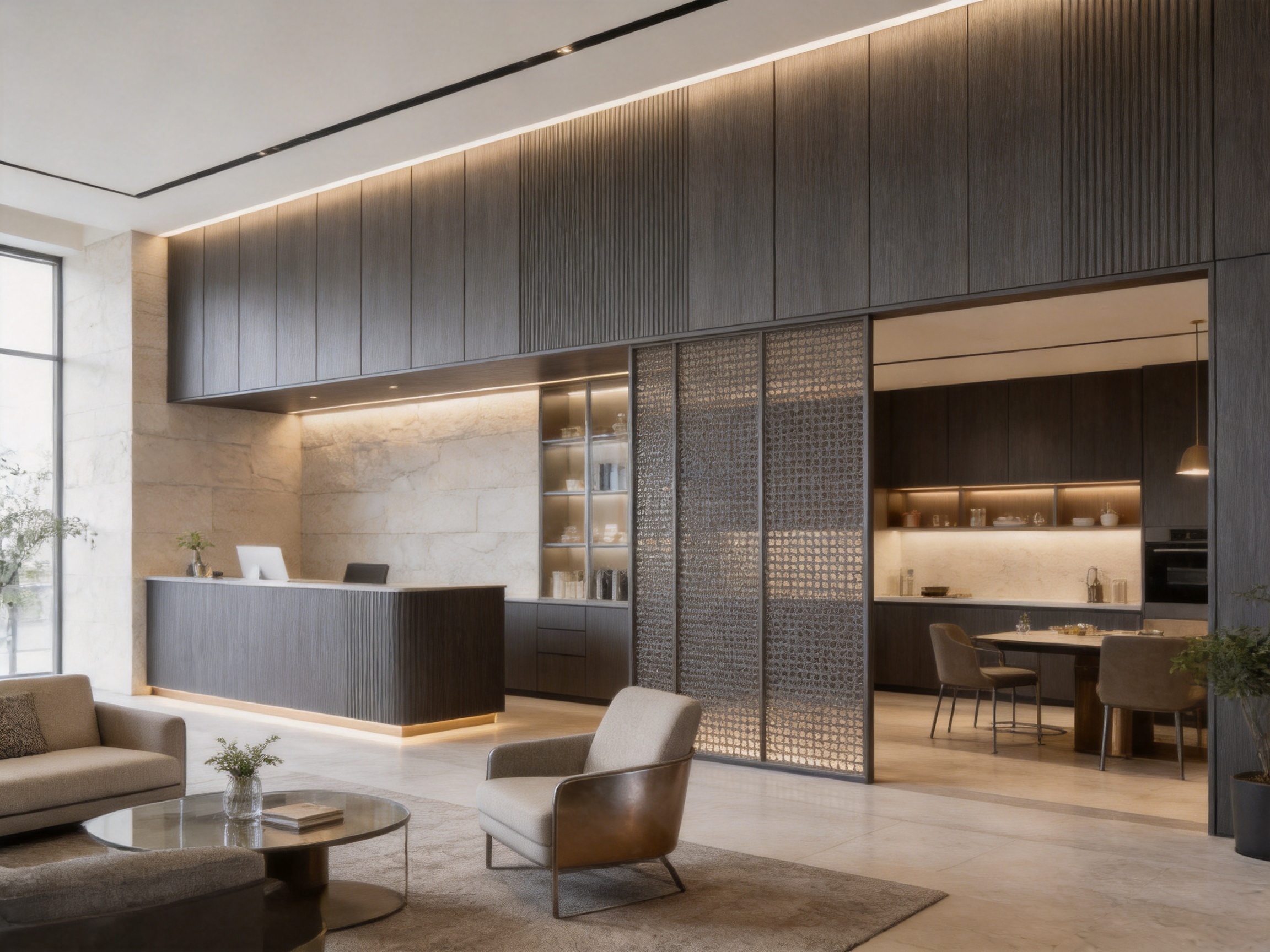
Commercial interiors often require materials that balance appearance, durability, scheduling, and repeatability. A 3D deep embossed wood veneer can contribute to a strong visual identity in reception areas, conference rooms, retail displays, restaurants, cafes, hotels, and office environments.
In an office, textured panels can be used for reception counters, meeting-room walls, acoustic feature systems, storage fronts, and collaborative-space dividers. The wood appearance can create a more welcoming atmosphere than an entirely industrial palette while retaining a modern architectural character.
Retail environments can use embossed wood panels to create display backdrops, fitting-room surrounds, checkout counters, shelving components, and branded interior zones. The texture can help products stand out by creating a visually distinct background without competing with merchandise through excessive color.
Hotels and restaurants frequently seek materials that communicate comfort and quality. Wood-look panels can be applied to lobby walls, room furniture, headboards, restaurant partitions, reception desks, and corridor features. Since hospitality projects often involve repeated room layouts, visual consistency and efficient fabrication are especially valuable.
In public and institutional settings, material selection should account for cleaning protocols, traffic, impact exposure, fire requirements, moisture, and local building regulations. The product should be specified according to the technical demands of each application rather than treated as a universal solution for every environment.
Design and Specification Considerations
Pattern Direction
Wood grain direction has a major influence on the final appearance. Vertical grain can visually emphasize height and may be suitable for wall panels, doors, and tall cabinetry. Horizontal grain can make a wall or furniture system appear wider. Mixed directions may create visual complexity, but they require careful planning during cutting and installation.
Before production, designers and fabricators should confirm panel orientation, joint positions, edge treatment, and pattern continuity. A clear cutting plan can help reduce waste and ensure that adjacent pieces create the desired relationship.
Lighting Conditions
Three-dimensional surfaces respond strongly to lighting. Direct light can emphasize relief and create dramatic shadows, while diffuse light produces a softer appearance. Designers should review samples under lighting conditions similar to the final project whenever possible.
Lighting angle can also affect perceived color. A textured surface may appear darker in recessed areas and brighter along raised details. This is a normal characteristic of embossed materials and can be used creatively, but it should be anticipated during color coordination.
Edge Treatment
Edges are important in any panel installation because they affect both appearance and durability. Fabricators should select an edge solution that is compatible with the substrate and decorative surface. Edge banding, rebating, concealed joints, frame construction, or other details may be considered depending on the product specification.
When a project includes exposed panel edges, the selected treatment should coordinate with the wood appearance. A poorly matched edge can reduce the perceived quality of an otherwise attractive surface. Early discussion between the designer, panel supplier, and fabricator can help identify the most suitable construction method.
Cleaning and Care
Routine maintenance should follow the supplier’s technical instructions. In general, decorative panels are best cleaned with soft materials and suitable neutral cleaning methods. Abrasive powders, aggressive solvents, excessive water, and sharp tools should be avoided unless specifically approved for the product.
Cleaning requirements may differ between residential and commercial spaces. High-traffic installations may require more frequent inspection of edges, joints, corners, and areas subject to repeated contact. Proper installation and appropriate use are important factors in maintaining the appearance of the embossed surface.
Quality Control and Buyer Evaluation
Professional buyers should evaluate more than a single visual sample. A sample is useful for reviewing color, grain, texture, and general workmanship, but larger projects require a broader assessment. Buyers should ask about substrate construction, decorative-layer consistency, embossing depth, adhesive system, formaldehyde performance, dimensional tolerances, packaging, and recommended processing methods.
Batch control is also important. If panels will be purchased in stages, the buyer should clarify how color and pattern consistency will be managed between production batches. The approved reference sample should be retained and used during later inspection.
Fabricators should test cutting, drilling, edge treatment, and assembly methods before beginning full production. Deep embossing may influence how the panel behaves during cutting or how components align at joints. Trial fabrication can identify potential issues early and help the production team establish suitable settings.
Packaging should protect the decorative surface from abrasion, pressure marks, moisture, and edge damage during storage and transport. Panels should be stored in a clean, dry, stable environment according to the supplier’s recommendations. Improper handling can cause damage even when the original product meets the required quality standard.
Why Manufacturer Capability Matters
The supplier is a critical part of the product equation. A decorative panel may perform well only when its design, substrate, adhesive, embossing process, and quality control are properly coordinated. Manufacturers with experience in specialized panels are more likely to understand the interaction between these factors.
YAKCO’s focus on 3D decorative panels gives the company a distinct position in the market. Its product development is not limited to copying flat wood patterns. The company has invested in deep-pressing processes intended to improve depth and layering, while its production system includes six core processes and MDI medical adhesive bonding.
The company’s factory scale also supports its role as a wholesale supplier. Its stated manufacturing base, established in 2007, and focus on residential and commercial applications provide a foundation for serving furniture producers, interior contractors, distributors, architects, and building-material sourcing teams.
YAKCO’s product portfolio includes a range of decorative panel categories, including rock designs, fabric and textile designs, leather designs, art deco designs, wood designs, frosted 3D panels, grain cloth panels, and other melamine board products. This broader capability may help customers coordinate different surface families within one project or sourcing program.
Environmental and Indoor-Health Considerations
Material choices increasingly influence both building certification and occupant expectations. Customers are paying closer attention to formaldehyde emissions, adhesive chemistry, manufacturing transparency, and the long-term environmental profile of interior products.
YAKCO states that its products are designed to meet the international ENF formaldehyde standard. This is relevant for projects where low-emission materials are requested. Buyers should obtain current product-specific evidence and confirm that the selected panel, substrate, adhesive system, and production batch correspond to the required standard.
Environmental responsibility also includes efficient use of materials. A standardized decorative panel can support organized cutting plans and repeatable fabrication, potentially reducing unnecessary rework. Long service life is another aspect of sustainability because products that retain their appearance and function for longer may reduce the need for replacement.
However, environmental claims should always be reviewed in context. Project teams should consider the complete panel composition, transport distance, packaging, installation method, maintenance requirements, and end-of-life options. Responsible specification involves both manufacturer information and independent project assessment.
Wholesale and Project-Sourcing Advantages
Wholesale buyers generally need more than a decorative concept. They need stable communication, product documentation, manufacturing capacity, sample support, packaging coordination, and delivery planning. A supplier specializing in decorative panels can offer valuable support throughout these stages.
The Wood veneer - Lekco product can be considered for furniture factories, interior contractors, architectural-material distributors, hospitality suppliers, and project procurement companies. Its wood-inspired appearance gives it broad design relevance, while its embossed construction adds differentiation within a competitive panel market.
For distributors, a three-dimensional wood-look product can expand the range beyond standard flat melamine boards. It may appeal to customers seeking premium visual effects without moving entirely to natural wood or high-cost custom finishing. For furniture manufacturers, the panel can support coordinated product lines with a stronger tactile identity.
For contractors, sourcing from a manufacturer with established production facilities may simplify project coordination. Technical details, sample approvals, order quantities, lead times, and packaging requirements should be confirmed in advance. Clear communication is particularly important when panels will be used across several rooms or buildings.
For architects and designers, the product offers an additional tool for specifying texture. It can help translate a visual concept into a manufacturable surface with predictable repetition and suitable production efficiency.
Recommended Project Workflow
Step One: Define the Application
Identify whether the panel will be used for walls, furniture, cabinet fronts, partitions, doors, ceilings, retail fixtures, or another purpose. Consider contact frequency, moisture, cleaning, temperature, impact, and expected service conditions.
Step Two: Review Samples
Examine the wood pattern, color, embossing depth, surface consistency, and edge behavior. Review samples under the intended lighting and alongside other materials in the project palette.
Step Three: Confirm Technical Requirements
Request information on substrate construction, dimensions, tolerances, processing guidance, adhesive technology, formaldehyde performance, packaging, and recommended storage conditions. Confirm whether the product is suitable for the intended environment.
Step Four: Complete a Fabrication Trial
Test cutting, drilling, edge treatment, joining, and installation methods. A trial can help identify tool requirements, potential chipping, joint alignment issues, or pattern-direction concerns before full production begins.
Step Five: Approve a Reference Standard
Retain an approved sample or sample set for comparison during manufacturing and delivery. The reference should include the agreed design, color, texture, surface quality, and any relevant technical characteristics.
Step Six: Plan Installation and Maintenance
Coordinate panel orientation, storage, handling, joint details, edge protection, cleaning, and post-installation inspection. A high-quality product can lose its visual value if it is stored improperly or installed without attention to surface protection.
Frequently Asked Questions
What is a 3D deep embossed wood veneer melamine board?
It is an engineered decorative panel with a wood-inspired surface design and a physically embossed texture. The texture gives the surface depth and tactile relief, while the melamine board substrate provides a stable base for interior and furniture applications.
How is it different from a flat wood-look melamine board?
A flat board relies primarily on printed or decorative imagery. A deep embossed board adds physical relief that can correspond with the wood-grain pattern. This can create stronger visual layering, more realistic tactile feedback, and more noticeable interaction with light.
Is the product the same as natural wood veneer?
No. Natural wood veneer is made from real timber, while this product is an engineered melamine board substrate with a wood-inspired decorative surface. The engineered product is intended to provide controlled appearance, efficient processing, and three-dimensional texture rather than reproduce every characteristic of natural timber.
Where can the Wood veneer - Lekco product be used?
Potential applications include residential wall panels, wardrobes, media units, furniture components, cabinetry, office interiors, hotel spaces, retail fixtures, reception areas, restaurant partitions, and other decorative interior installations. Final suitability should be confirmed against the technical requirements of the specific application.
What manufacturing technologies support the product?
The company identifies 3D decorative panel technology, innovative deep-pressing processes, six core production processes, and MDI medical adhesive bonding as important parts of its manufacturing approach. These technologies are intended to support surface depth, layering, bonding, stability, and environmental performance.
What is the significance of the company’s factory size?
YAKCO operates on a site of approximately 50 acres with a modern standard factory building exceeding 30,000 square meters. This provides space for organized production, material handling, inspection, product development, packaging, and order coordination. Factory size should be considered together with actual quality systems and project documentation.
Does the product meet low-formaldehyde requirements?
YAKCO states that its products are designed to meet the international ENF formaldehyde standard. Buyers should request current product-specific test reports and confirm that the selected specification satisfies the regulations and certification requirements applicable to their project.
Can the panels be processed by furniture manufacturers?
The product is intended as a melamine board substrate and may be suitable for cutting, drilling, edge treatment, and furniture fabrication when processed according to the supplier’s instructions. A trial run is recommended before mass production to verify tools, settings, joints, and edge details.
How should buyers compare suppliers?
Buyers should compare surface quality, texture definition, pattern consistency, substrate construction, bonding method, environmental documentation, manufacturing capacity, packaging, technical service, and delivery reliability. Price is important, but it should be evaluated alongside the total project cost and expected performance.
Can the product be combined with other decorative panels?
Yes. A wood-inspired embossed panel can be coordinated with smooth wood designs, stone designs, fabric or textile surfaces, leather designs, metal accents, glass, and solid-color materials. The combination should be tested under the intended lighting to confirm color and texture harmony.
Conclusion
The Wood veneer - Lekco product represents a modern approach to wood-inspired interior surfaces. By combining a melamine board substrate with deep three-dimensional embossing, it addresses several demands that conventional decorative materials may not meet simultaneously. It offers the warmth and familiarity of wood, the visual impact of tactile relief, and the production advantages associated with engineered panels.
Its competitive value is strengthened by the manufacturing capabilities of YAKCO New Materials (Jiangsu) Co., Ltd. The company’s experience since 2007, modern factory infrastructure, focus on 3D decorative panel technology, deep-pressing development, six core production processes, and MDI medical adhesive bonding provide a technical foundation for the product. The stated design goal of improved depth, layering, stability, easy cutting, deformation resistance, and ENF formaldehyde performance further aligns the panel with current professional sourcing priorities.
For residential, commercial, hospitality, retail, and furniture projects, the product can provide a practical alternative to completely flat decorative boards, labor-intensive natural veneer systems, and less controlled embossed materials. Its strongest advantage is the balance between appearance and function: a surface that looks more dimensional, feels more substantial, and can be incorporated into efficient modern fabrication workflows.
Successful use depends on correct specification, sample approval, fabrication testing, storage, installation, and maintenance. When these steps are managed carefully, a 3D deep embossed wood veneer melamine board can help designers create interiors that are warm, contemporary, consistent, and suitable for professional production.
References
1. YAKCO New Materials (Jiangsu) Co., Ltd. Company information and product materials supplied for this article.
2. YAKCO New Materials (Jiangsu) Co., Ltd. Manufacturing profile, facility information, and decorative-panel technology summary.
3. General principles of engineered wood panels, melamine decorative surfaces, and furniture-board fabrication.
4. General guidance on interior material selection, surface maintenance, and low-emission building products.
5. General principles of three-dimensional embossing, adhesive bonding, and decorative-panel quality control.