中文简体



Previous Post
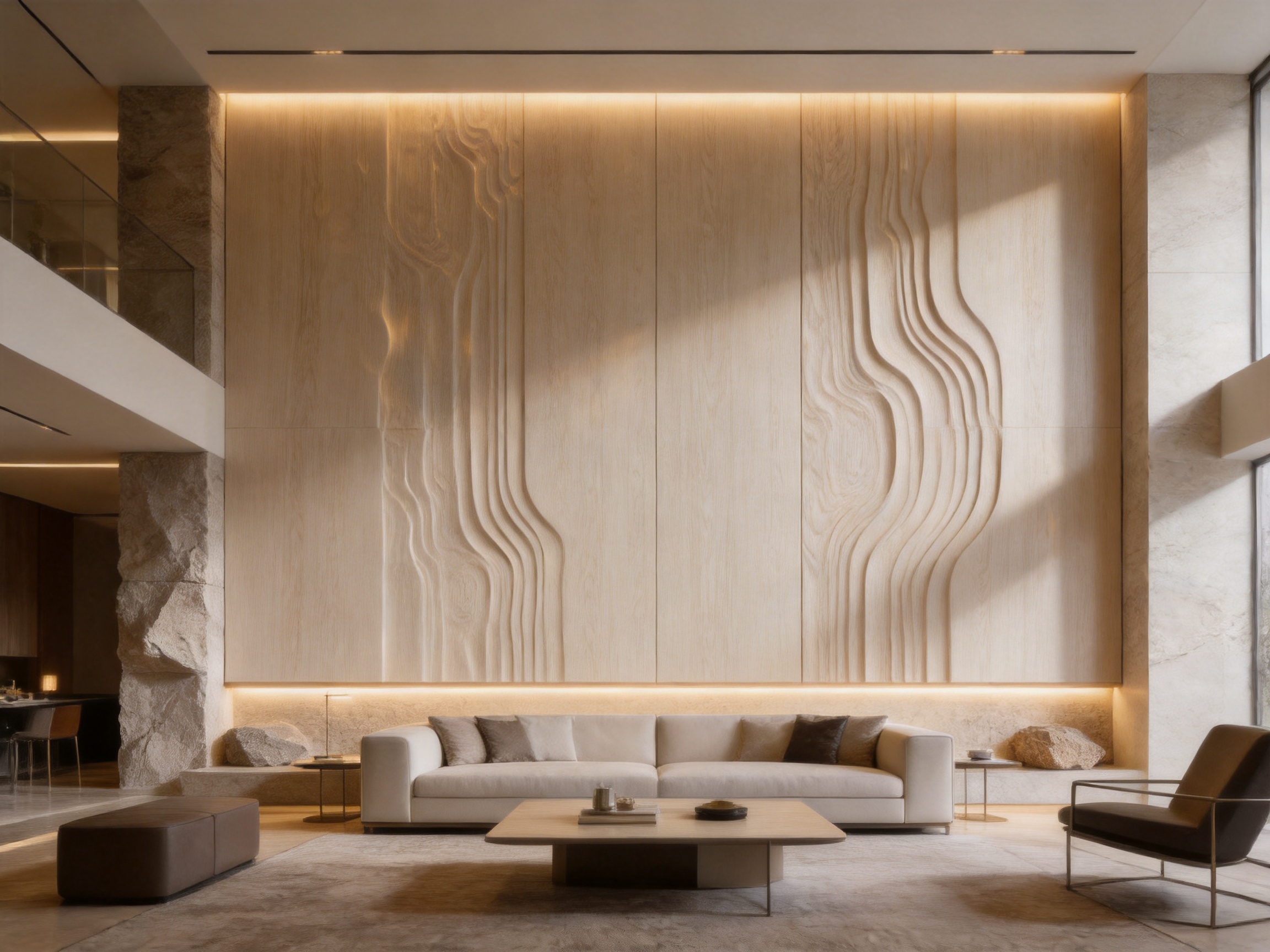
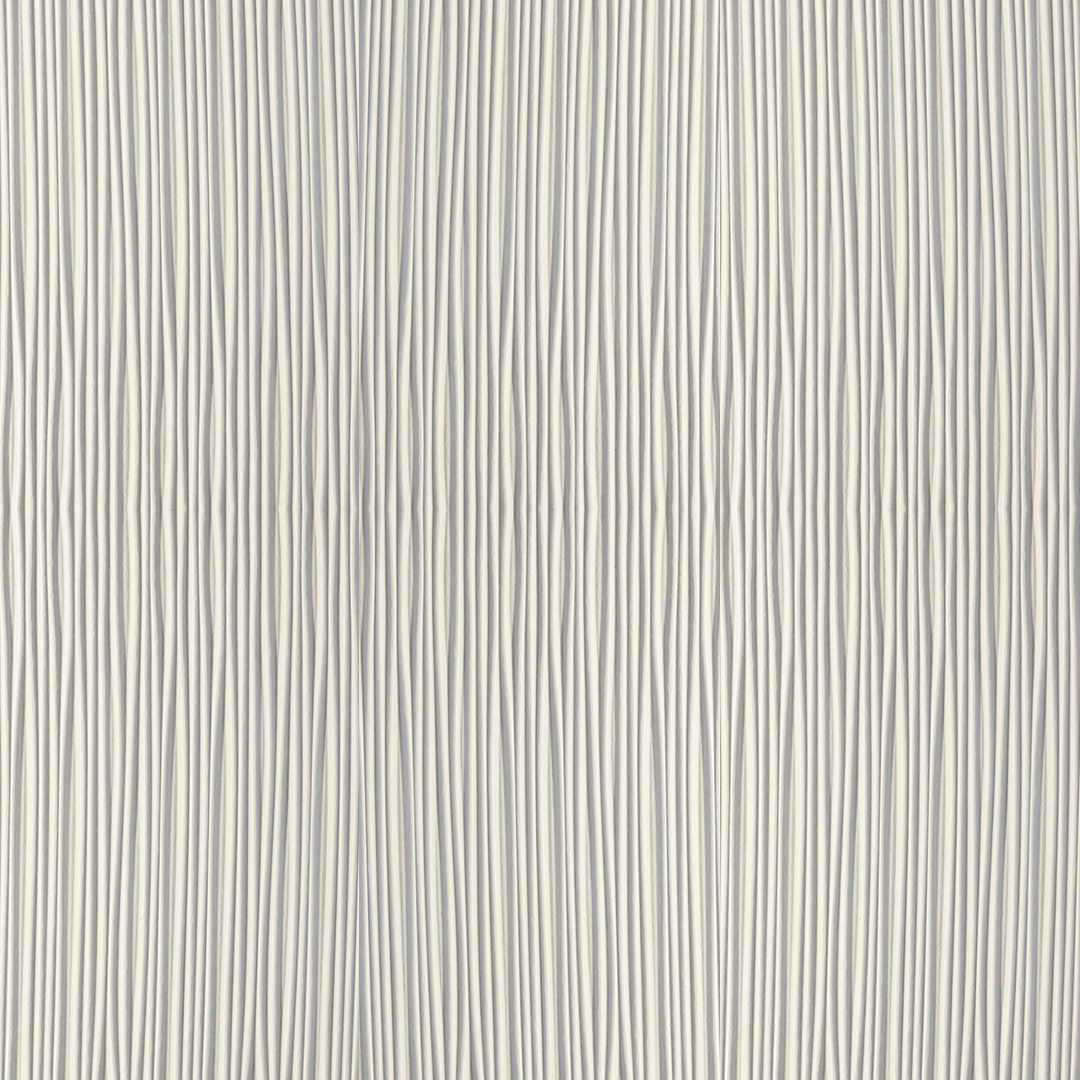
The ZS06 Nanmu Straight Grain 3D Wall Panel is a high-end decorative panel designed to bring the visual character of natural nanmu wood into residential, hospitality, commercial, and premium interior environments. Combining a carefully controlled straight-grain appearance with three-dimensional surface processing, the panel offers an alternative to conventional flat decorative boards, traditional wood veneer, and ordinary printed wall coverings.
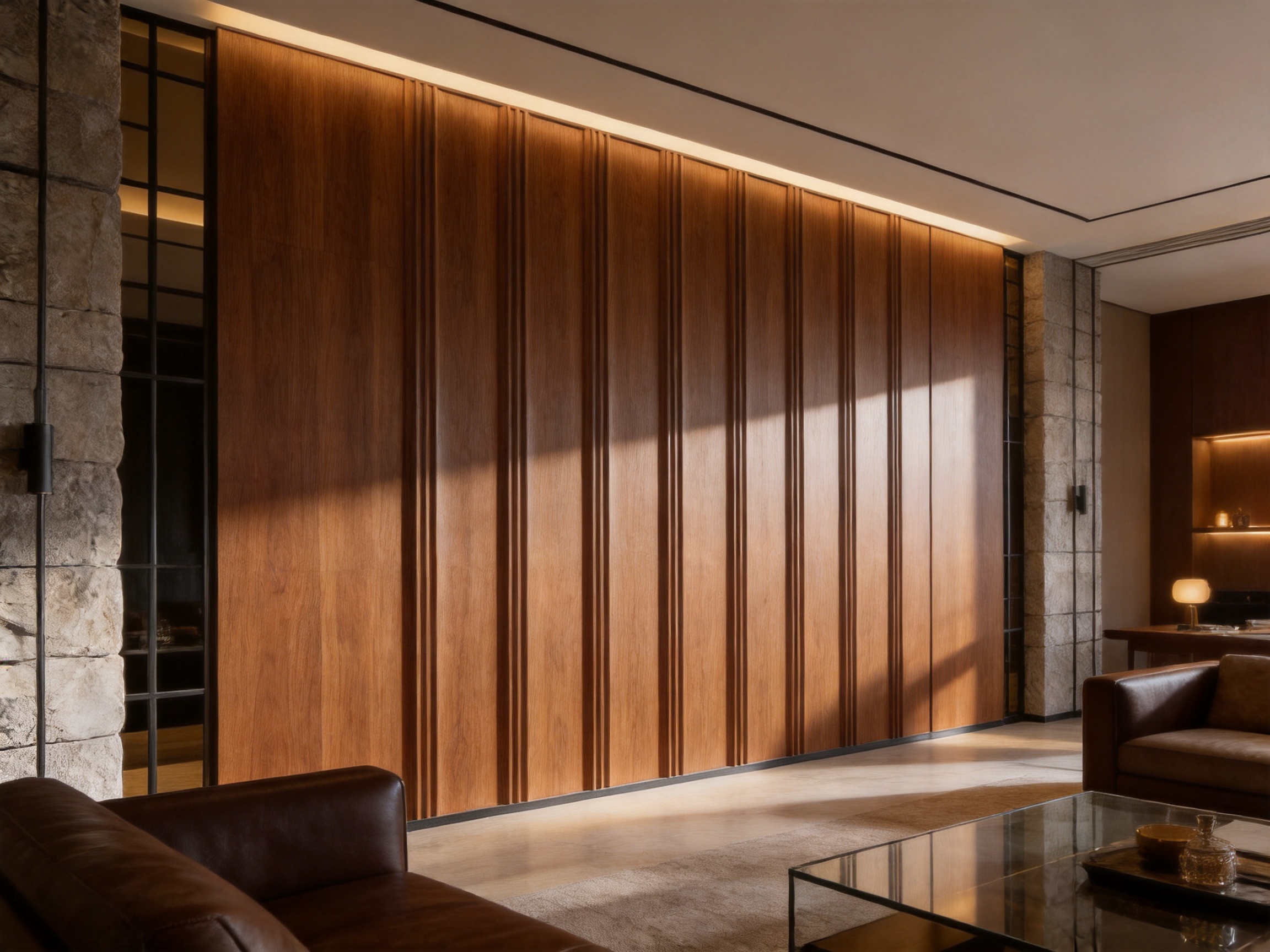
Its design is centered on the elegant appearance of nanmu straight grain. The grain is intended to look orderly, continuous, and refined rather than irregular or visually heavy. This makes the panel suitable for interiors that require a calm, sophisticated, and coordinated appearance. At the same time, the three-dimensional treatment adds depth and tactile interest, allowing the wall surface to interact with changing light and create a more layered architectural effect.
The product is manufactured using YAKCO 3D Melamine Board technology and may be produced on OSB, MDF, or particleboard substrates. Available thicknesses range from 9 mm to 25 mm, allowing designers and fabricators to select a configuration according to structural, decorative, and installation requirements. The panel is also offered with P2/F4 environmental grades, supporting its use in projects where material performance and indoor environmental considerations are important.
Rather than functioning as a simple surface covering, the ZS06 panel is developed as a coordinated decorative and building-material solution. Its production combines high-precision cutting, texture printing, controlled hot pressing, multilayer construction, and decorative surface treatment. These processes are intended to improve visual consistency, dimensional accuracy, surface smoothness, bonding strength, and resistance to deformation.
ZS06 Nanmu Straight Grain 3D Wall Panel
Product Overview
The ZS06 Nanmu Straight Grain 3D Wall Panel belongs to the category of decorative melamine boards and three-dimensional wood-look panels. Its principal visual feature is a straight grain inspired by nanmu, a wood recognized for its warm color, fine texture, and elegant natural appearance. The grain pattern is designed to appear relatively uniform and continuous, helping create a clean architectural background rather than a visually fragmented surface.
The panel can be used for wall cladding, feature walls, furniture components, cabinet surfaces, ceiling applications, decorative partitions, flooring-related interior elements, and other architectural details where a wood-inspired finish is desired. Its thickness options make it possible to use the material for both decorative overlays and more substantial panel applications.
The ZS06 design is particularly appropriate for projects influenced by Chinese, classical, contemporary luxury, natural, or refined minimalist styles. The straight-grain effect provides a sense of order and vertical or horizontal continuity, depending on the installation direction. When multiple boards are installed together, the repeated grain structure can contribute to a unified visual field.
The product is available in the following listed dimensions and indicative prices:
| Panel Size | Indicative Price | Typical Consideration |
|---|---|---|
| 2745 × 1220 × 25 mm | 56 USD | Suitable where increased thickness and body are required |
| 2745 × 1220 × 22 mm | 51.6 USD | Balanced option for substantial decorative installations |
| 2745 × 1220 × 18 mm | 46 USD | Versatile specification for wall and furniture applications |
| 2745 × 1220 × 12 mm | 40 USD | Useful for lighter decorative cladding and fitted elements |
| 2745 × 1220 × 9 mm | 36.5 USD | Appropriate for selected lightweight decorative applications |
The listed prices should be treated as reference information rather than final transaction prices. Actual quotations may depend on order volume, packaging, shipping, finishing requirements, substrate selection, project specifications, and other commercial conditions.
Nanmu Straight-Grain Design Concept
The design principle of the ZS06 panel is based on emphasizing the calm beauty of straight natural grain. Unlike heavily figured wood patterns, straight grain is visually disciplined. It can make a wall appear longer, taller, or more continuous depending on how the panels are oriented. This effect is valuable in interior design because the surface can add warmth without overwhelming furniture, lighting, artwork, or architectural details.
Nanmu-inspired color and texture can also contribute to a premium visual impression. The surface is intended to communicate the fine, warm, and delicate character associated with carefully selected timber. In a residential interior, this may support a feeling of comfort and permanence. In a hotel, restaurant, office, or villa, it can provide a refined background that complements stone, metal, leather, fabric, glass, and other materials.
The grain design is not limited to appearance alone. A successful decorative panel must also present a repeatable and controllable pattern across production batches. Natural solid wood varies considerably from piece to piece, while printed or engineered decorative panels can offer a more predictable result. This gives designers and contractors greater control over visual coordination across larger wall areas.
The three-dimensional treatment further distinguishes the ZS06 panel from a conventional flat melamine board. Subtle relief and depth can produce changing highlights and shadows as daylight or artificial lighting moves across the surface. This creates a tactile impression and gives the wall greater visual depth without requiring complicated secondary molding or elaborate installation systems.
Advanced Three-Dimensional Manufacturing Technology
The production of a high-quality three-dimensional decorative panel requires close coordination between substrate preparation, pattern development, printing, pressing, cutting, and quality control. The ZS06 product is associated with advanced 3D printing and deep-pressing processes that are intended to reproduce the straight-grain character with clarity while maintaining a stable and usable panel structure.
High-precision cutting is an important part of the manufacturing process. Accurate cutting helps control panel dimensions, edge quality, and installation alignment. When boards are placed beside one another, dimensional consistency reduces unnecessary gaps and makes the final surface easier to coordinate. Precision is also important for furniture production, where inaccurate dimensions can affect joints, doors, drawer fronts, and fitted components.
Texture printing is used to create the visual appearance of nanmu straight grain. The printing process must maintain sufficient definition so that the grain remains clear across the panel. At the same time, the pattern must be integrated with the three-dimensional surface so that the visual image and physical relief support each other rather than appearing disconnected.
The use of 3D technology allows the surface to achieve more than a flat photographic effect. It can provide a deeper visual and tactile relationship between grain lines, surface valleys, raised sections, and lighting. This is a significant advantage over ordinary printed boards that may reproduce color but lack convincing physical depth.
Manufacturing consistency is another important consideration. Decorative panels are often installed across large areas, and small differences in color, grain direction, gloss, or relief can become noticeable when multiple boards are joined. A controlled industrial process helps improve the repeatability of the finished appearance and supports larger-scale project planning.
Integration of Surface Pattern and Relief
The effectiveness of a wood-look 3D panel depends on how well its printed design is integrated with the relief structure. If the image suggests one grain direction while the physical surface follows another, the result may look artificial. The ZS06 concept is intended to coordinate the straight-grain image with the panel’s three-dimensional treatment, creating a more unified visual and tactile effect.
This integration can be especially valuable under directional lighting. Wall-mounted lighting, recessed linear lighting, sunlight, and pendant fixtures may all produce shadows across the panel. A carefully controlled relief can turn these shadows into part of the design, creating depth while retaining the clean character of the straight grain.
Controlled Hot Pressing Process
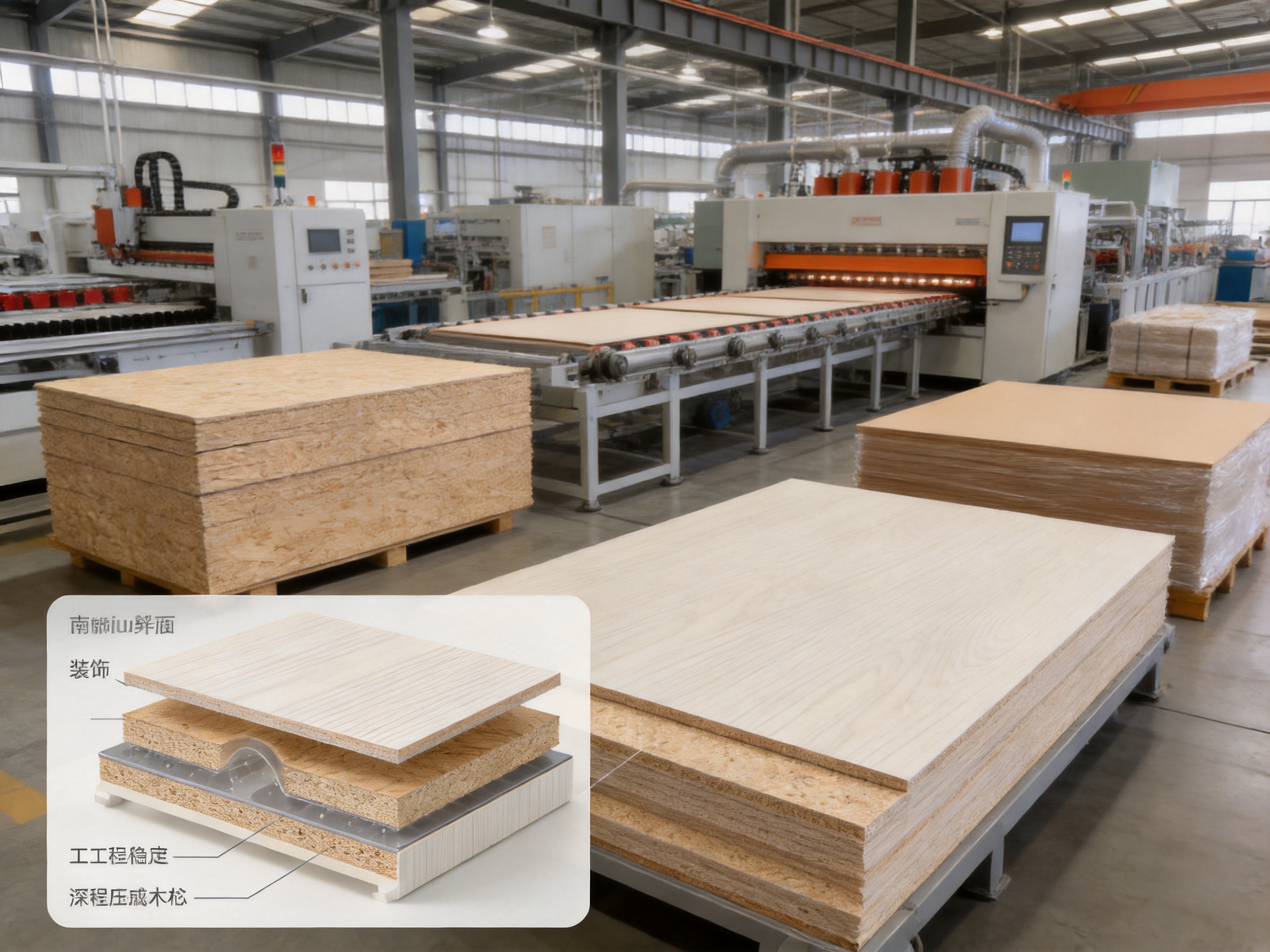
Hot pressing is a central manufacturing stage in engineered decorative boards. During this process, temperature, pressure, and pressing time must be carefully controlled so that the component layers bond closely and the decorative surface is formed accurately. The process influences the panel’s flatness, dimensional accuracy, surface definition, and overall structural performance.
Proper pressure helps consolidate the layers of the board. A panel that is insufficiently pressed may have weak bonding, uneven density, or poor surface definition. Excessive or improperly distributed pressure, however, may cause unwanted deformation or affect the intended relief. Controlled pressing is therefore necessary to balance strength, stability, and appearance.
Temperature also affects bonding and surface formation. The pressing cycle must be suitable for the selected substrate, decorative layer, adhesive system, and relief design. Consistent temperature control helps the decorative layers adhere properly and supports more uniform results across the panel.
Pressing time is equally important. The board must remain under the required conditions long enough for the layers to form a stable composite structure. A controlled cycle can improve dimensional precision and reduce the likelihood of defects associated with incomplete bonding or uneven consolidation.
For the ZS06 panel, the hot pressing process contributes to more than decorative quality. It is also intended to improve surface flatness, enhance the strength of the composite, and support resistance to deformation. These characteristics are important when the panel is transported, cut, installed, and exposed to normal interior changes in temperature and humidity.
Product Structure and Substrate Options
The ZS06 panel may use a multilayer composite structure. Multilayer construction allows different components to contribute different functions. The substrate provides body, stiffness, and machinability. The bonding system joins the layers. The decorative surface provides color, pattern, and texture. The combination can offer a more balanced result than relying on a single material layer.
The listed substrate options include OSB, MDF, and particleboard. Each substrate has different characteristics, so the most appropriate choice depends on the intended application, fabrication method, thickness, support conditions, and project requirements.
OSB Substrate
OSB, or oriented strand board, is formed from wood strands arranged in directional layers and bonded under pressure. Its engineered structure can provide useful strength and dimensional performance for selected architectural and furniture applications. An OSB-based panel may be considered where a robust substrate is desired, subject to the specific grade and technical specification supplied for the project.
MDF Substrate
MDF, or medium-density fiberboard, is manufactured from refined wood fibers bonded into a uniform board. Its relatively smooth and consistent structure makes it suitable for machining, routing, profiling, furniture components, and decorative panel applications. MDF can be particularly useful when clean edges and precise surface processing are important.
Particleboard Substrate
Particleboard is manufactured from wood particles bonded under pressure. It is widely used in furniture and interior products because it can offer an economical and workable substrate. When paired with a decorative melamine surface, it can support cost-effective wall, cabinet, and fitted furniture solutions.
Substrate selection should be made according to the project’s loading, moisture exposure, fixing system, edge treatment, machining requirements, and applicable building standards. The product information identifies several substrate possibilities, but the final technical specification should be confirmed before ordering.
Key Advantages Over Conventional Decorative Boards
The ZS06 Nanmu Straight Grain 3D Wall Panel offers several potential advantages compared with ordinary flat melamine boards, basic printed panels, thin decorative films, and some natural wood alternatives. These advantages relate to appearance, manufacturing consistency, installation flexibility, structural stability, and long-term design value.
Three-Dimensional Visual Depth
Traditional flat decorative boards can reproduce a color and printed grain, but they may not provide convincing tactile depth. The ZS06 panel uses a three-dimensional surface concept to create more pronounced light and shadow variation. This can make a wall feel more architectural and visually substantial.
Consistent Straight-Grain Appearance
Natural wood is attractive partly because of its variation, but large projects may require a more controlled appearance. The engineered nanmu straight-grain design allows a project team to coordinate the visual direction and overall mood of the installation more easily than with randomly varying solid timber boards.
Improved Dimensional Control
Engineered panels are manufactured to defined dimensions and processed through controlled pressing and cutting operations. This can make them easier to plan, cut, align, and install than irregular natural wood pieces. Dimensional control is particularly valuable for commercial interiors with strict schedules and repeated wall modules.
Resistance to Deformation
According to the supplied product information, nanmu straight-grained panels are intended to provide good stability and resistance to deformation compared with certain other wood materials. The multilayer construction and hot pressing process are designed to support this performance. Actual results will depend on substrate type, installation conditions, moisture exposure, and correct handling.
Flexible Thickness Selection
The availability of 9 mm, 12 mm, 18 mm, 22 mm, and 25 mm thicknesses allows the product to serve multiple applications. A thinner board may be useful for lightweight wall cladding or decorative elements, while a thicker board may be preferred where greater body, stiffness, or design presence is needed.
Potentially More Efficient Than Solid Timber
Solid timber can require careful selection, conditioning, machining, finishing, and ongoing maintenance. A decorative engineered panel can simplify some of these steps by combining substrate and surface appearance in one factory-produced component. This may reduce the amount of on-site finishing needed and support more predictable project costs.
Suitable for Modern and Classical Interiors
The refined straight-grain pattern is versatile. It can be used in classical interiors that require warmth and dignity, as well as contemporary spaces that favor clean lines and restrained material palettes. This flexibility helps designers use one product concept across different project types.
Surface Beauty and Decorative Performance
The visual appeal of the ZS06 panel is based on a balance between natural inspiration and engineered regularity. The warm grain effect can soften hard architectural surfaces, while the straight pattern introduces order and direction. This combination is useful in spaces where designers want wood character without excessive knots, color variation, or visual noise.
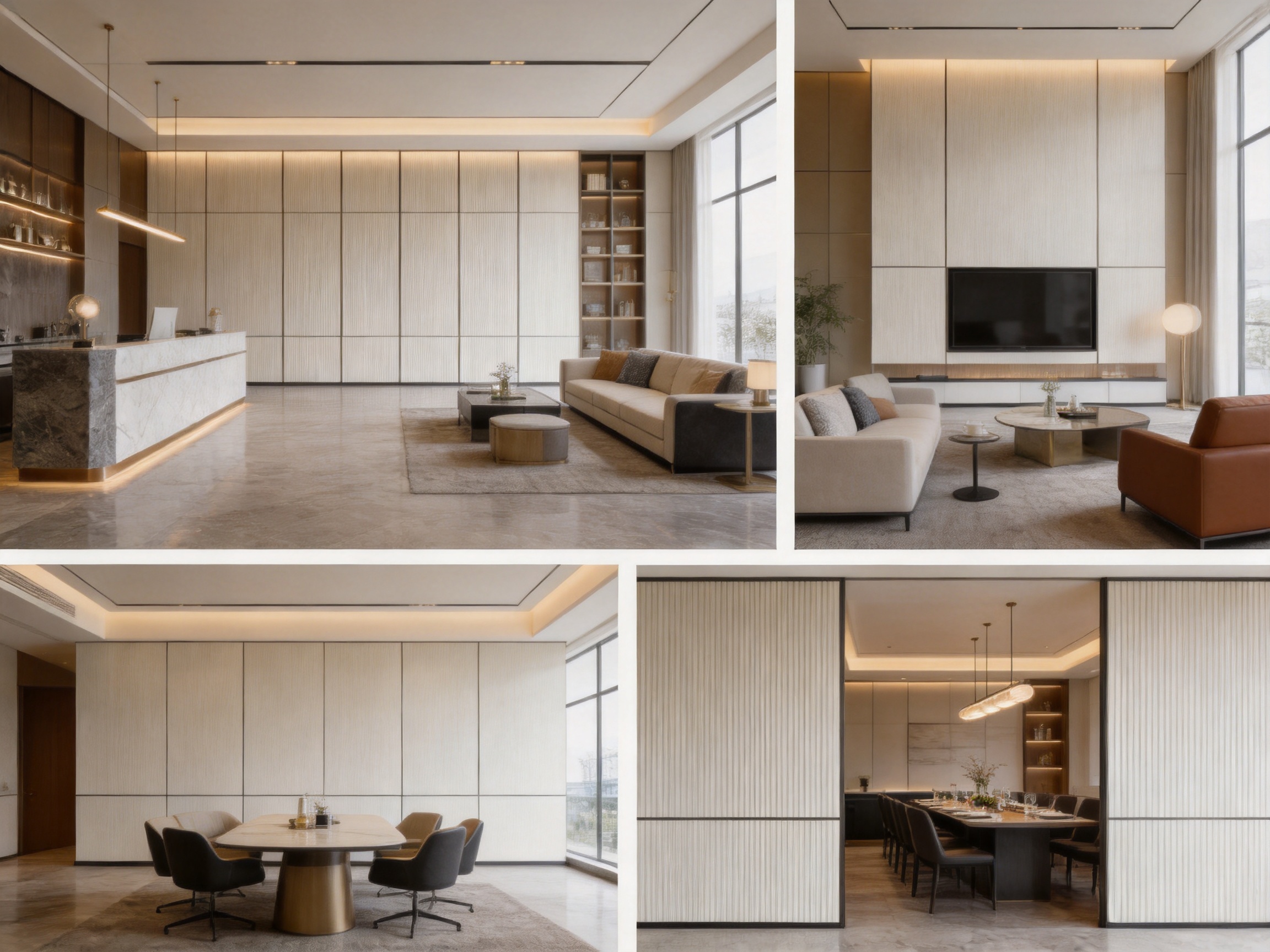
The panel can be used as a full-height feature wall, a partial accent surface, a background for furniture, or a coordinated finish across several interior elements. It may also be combined with contrasting materials such as pale stone, dark metal, textured fabric, leather, or frosted glass. The grain can act as a unifying element between these materials.
In a hotel lobby, the panel may help establish a premium arrival experience. In a villa, it can create a warm backdrop for living rooms, bedrooms, studies, and entertainment spaces. In a restaurant, it can contribute to an atmosphere of natural luxury. In an office or executive meeting room, the straight grain may communicate stability, professionalism, and understated refinement.
Because the grain is visually directional, installation planning is important. Vertical installation can emphasize ceiling height, while horizontal installation can make a wall appear broader. Selective use in recessed panels, columns, headboards, cabinet fronts, or partitions can create rhythm without covering every surface.
Applications in Residential Interiors
The ZS06 panel is suitable for high-grade residences, villas, apartments, and private homes where the owner or designer wants a wood-based decorative atmosphere. It can be used in living rooms to create an elegant feature wall behind a television, sofa, console, or artwork.
In bedrooms, the panel can serve as a headboard wall or a full-width background behind bedside furniture. The warm appearance of nanmu-inspired grain may help create a calm environment. The surface should nevertheless be selected and maintained according to the project’s indoor-air, cleaning, and fire-safety requirements.
Home studies and libraries can benefit from the visual association between straight wood grain and craftsmanship. The panel may be paired with dark shelving, brass hardware, leather seating, or warm lighting to create a traditional or transitional interior.
For dining rooms and private entertainment spaces, the three-dimensional surface can add depth behind sideboards, wine storage, display cabinets, or media units. Designers can use the panel selectively to prevent the room from appearing visually dense.
Applications in Commercial and Hospitality Spaces
Hotels, restaurants, clubs, showrooms, and offices often require materials that look distinctive while remaining repeatable across multiple areas. The ZS06 panel can support this requirement by combining a premium wood-inspired appearance with engineered panel production.
In hotel guest rooms, it may be used for headboards, corridor accents, reception backgrounds, or selected wall sections. In public areas, the relief can make long walls more visually engaging under decorative lighting.
Restaurants can use the panel for dining-area feature walls, host stands, booth backs, partitions, or ceiling accents. The straight grain can support a natural and upscale concept while leaving room for signage and brand-neutral decorative elements.
In offices, the panel may be suitable for reception areas, executive rooms, meeting rooms, collaborative spaces, and display walls. Its restrained pattern can convey a professional image without the visual complexity of strongly figured timber.
Retail stores and showrooms may use the panel as a background for products. Because the grain is elegant and relatively controlled, it can provide texture without competing excessively with merchandise, graphics, or lighting installations.
Installation and Fabrication Considerations
Successful installation begins with confirming the panel specification, substrate, thickness, quantity, and intended orientation. The installer should review the wall condition, support structure, fixing method, expansion allowances, joint layout, and access requirements before work begins.
Panels should be transported and stored in a way that protects edges, corners, and decorative surfaces. They should be kept flat on suitable supports and protected from excessive moisture, direct weather exposure, and accidental impact. Acclimatization may be appropriate depending on the project environment and local installation practice.
Before cutting, the installation team should establish a coordinated layout. Grain direction should be reviewed across adjacent panels, openings, corners, doors, windows, lighting features, and furniture. A carefully prepared layout can reduce waste and improve the continuity of the straight-grain effect.
Cutting tools and techniques should be selected according to the substrate and panel thickness. Clean cutting helps prevent chipped edges and makes joints easier to conceal. Any exposed edge may require an appropriate edging, trim, seal, or design treatment, depending on the application.
Fixing methods may include mechanical fastening, concealed systems, compatible adhesives, or a combination of methods. The appropriate method depends on the substrate, wall condition, panel weight, local regulations, and maintenance requirements. Heavy or thick panels may require additional support and should not be attached solely by an unverified adhesive system.
Although the panel is designed for interior applications, it should not automatically be assumed to be suitable for persistently wet environments, exterior exposure, or areas with direct water contact. Such uses require confirmation of the relevant technical data and project-specific suitability.
Environmental and Indoor Material Considerations
The product information identifies P2/F4 environmental grades. These classifications indicate that the panel is positioned for applications where formaldehyde emission and environmental performance are important considerations. Project teams should confirm the precise standard, test method, certificate validity, and applicable regional requirements before specification.
The supplied company information also states that the manufacturer focuses on environmentally friendly performance and products meeting the international ENF formaldehyde standard. Any project requiring ENF compliance should request current documentation for the exact product, substrate, batch, and configuration being purchased.
Environmental performance is influenced by more than the decorative surface. Substrate composition, adhesive chemistry, manufacturing conditions, storage, installation materials, and indoor ventilation can all affect the final indoor environment. For this reason, designers and contractors should evaluate the complete wall system rather than considering the decorative board in isolation.
Using engineered panels can also support more predictable material utilization. Factory production allows dimensions and surface designs to be planned before delivery, potentially reducing some of the uncertainty associated with selecting irregular natural timber. Waste reduction, however, depends on careful layout, accurate cutting, and responsible project management.
Manufacturer Manufacturing Strengths
YAKCO New Materials (Jiangsu) Co., Ltd. was established in 2007 and operates from a facility covering approximately 50 acres, with more than 30,000 square meters of modern standard factory buildings. This manufacturing base supports the company’s focus on decorative panels and wall panels for residential and commercial interiors.
The company concentrates on 3D decorative panel technology and has developed deep-pressing processes and six core production processes. This technical focus is relevant to the ZS06 product because three-dimensional decorative panels require more specialized production control than ordinary flat boards.
The company also identifies MDI medical adhesive bonding as part of its technical capabilities. Adhesive selection and bonding quality are important in multilayer panel construction because they influence the integrity, stability, and durability of the composite structure. Specific technical claims should be verified through current product documentation and test reports for the selected panel configuration.
The stated manufacturing strengths include improved surface depth, layered texture, stability, ease of cutting, resistance to deformation, and environmental performance. These characteristics directly support the needs of designers, distributors, furniture manufacturers, contractors, and building-material buyers who require a decorative product that is both visually distinctive and practical to process.
The YAKCO brand was established in 2016 and is presented as a provider of high-quality building materials for home and commercial spaces. Its combination of manufacturing experience, dedicated production facilities, and 3D panel specialization provides a foundation for serving projects that require consistent decorative surfaces at a commercial scale.
Quality Control Priorities
For a product such as the ZS06 panel, quality control should cover both appearance and structure. Visual inspection may include grain clarity, color consistency, relief uniformity, surface smoothness, edge condition, and the absence of visible defects. Structural inspection may include panel dimensions, thickness, flatness, bonding integrity, and substrate condition.
Batch consistency is important when a project requires panels from multiple production runs. Buyers should discuss color tolerance, texture tolerance, packaging, labeling, and batch identification with the supplier before placing an order. A retained reference sample can help the project team compare delivered materials with the approved design.
Packaging should protect the corners and decorative face during handling and transportation. For international shipments, buyers should also confirm pallet configuration, moisture protection, container loading, documentation, and inspection procedures. These steps can reduce the risk of damage that might otherwise be incorrectly attributed to the manufacturing process.
Comparison with Natural Nanmu and Other Wood-Look Materials
Natural nanmu offers authentic grain, organic variation, and the character of solid timber. However, natural wood can require careful sourcing, drying, conditioning, surface finishing, and maintenance. It may also show considerable differences between boards, making pattern coordination more difficult on large wall surfaces.
The ZS06 panel provides a controlled nanmu-inspired appearance through an engineered decorative surface. This does not replace the authenticity of solid wood, but it offers a different balance of repeatability, processing efficiency, dimensional control, and design coordination.
Compared with a thin printed film, the 3D melamine panel offers a more substantial board structure and a more tactile surface concept. Compared with a flat melamine board, it provides additional relief and light interaction. Compared with a basic veneer, it may offer a more standardized visual result and simplified factory finishing, depending on the selected configuration.
The best material choice depends on the project’s priorities. Solid wood may be preferred for authenticity and restoration work. Veneer may be selected for a natural timber surface over an engineered substrate. A flat melamine board may be suitable for cost-sensitive applications. The ZS06 panel is particularly compelling when the project requires a premium straight-grain appearance combined with three-dimensional depth and engineered production consistency.
Maintenance and Long-Term Use
Routine maintenance should normally begin with removing dust using a soft, dry, lint-free cloth or a suitable vacuum attachment. If cleaning is required, a lightly damp cloth and a mild cleaning solution compatible with melamine surfaces may be used, followed by drying with a clean cloth.
Harsh abrasives, strong solvents, excessive water, sharp tools, and aggressive scouring pads should be avoided unless specifically approved by the supplier. Liquids should not be allowed to remain on joints, edges, cut-outs, or damaged areas.
Furniture, equipment, and accessories should be handled carefully near the wall surface to reduce the risk of impact damage. If a panel is cut or drilled after installation, the exposed substrate should be treated according to the project’s detailing requirements.
Long-term performance also depends on maintaining a stable indoor environment. Excessive humidity, direct water exposure, large temperature fluctuations, and poor ventilation can affect engineered wood-based products. Correct installation and suitable interior conditions are therefore essential to achieving the intended service life.
Recommended Project Selection Process
Designers and buyers should begin by identifying the required application: wall panel, furniture component, partition, ceiling feature, headboard, or another interior element. The required thickness, substrate, fixing method, edge treatment, and surface orientation can then be evaluated.
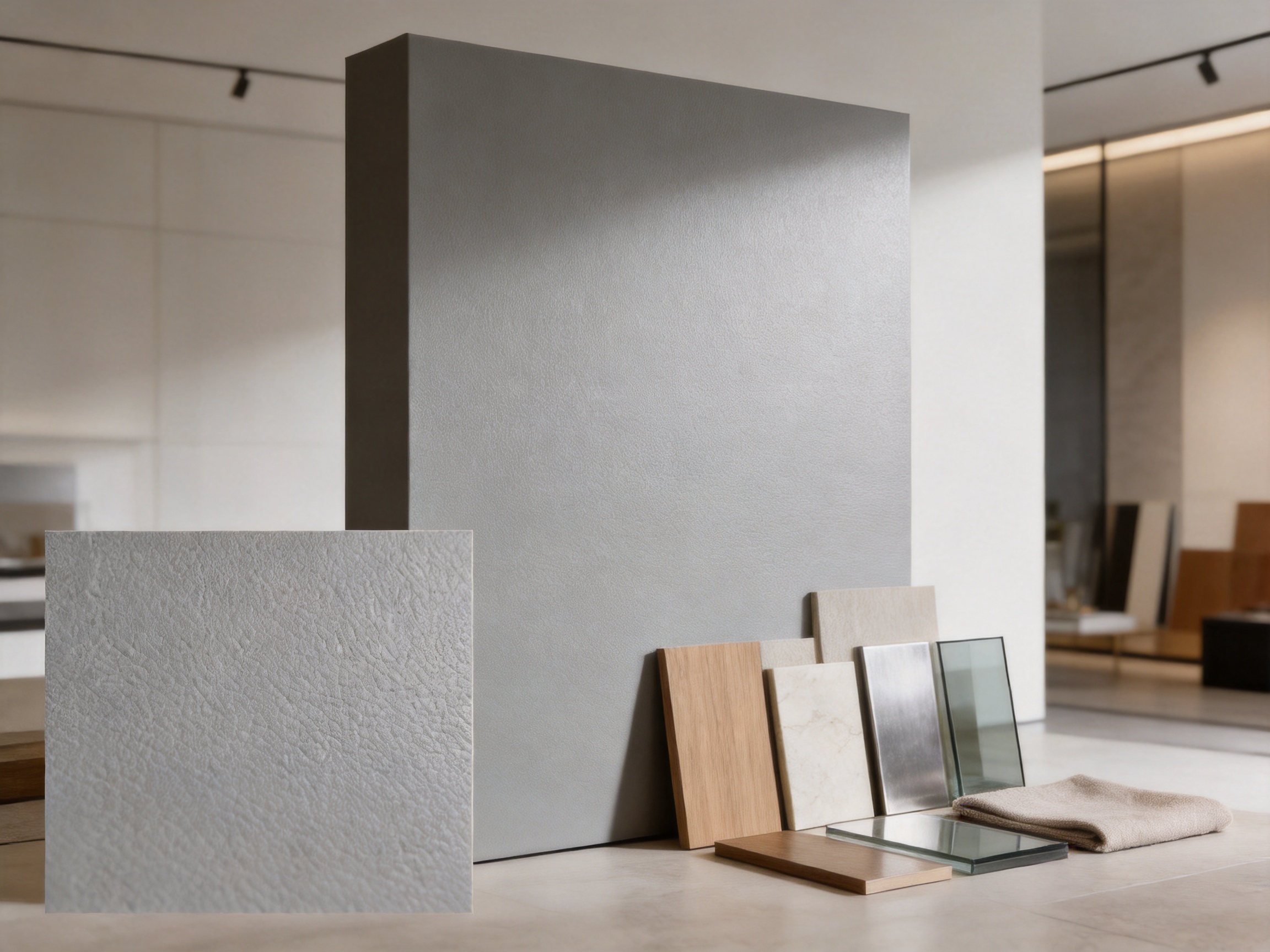
A physical sample should be reviewed under the project’s actual lighting conditions whenever possible. Three-dimensional surfaces can appear different under daylight, warm artificial lighting, cool linear lighting, and grazing illumination. A sample also allows the project team to examine color, grain scale, tactile depth, edge quality, and compatibility with surrounding materials.
Buyers should request current technical information, environmental documentation, packing details, available thicknesses, production lead times, minimum order quantities, and quality-control procedures. For large projects, a mock-up installation can help verify joint design, lighting interaction, panel direction, and overall appearance before full production.
Coordination between the manufacturer, designer, contractor, and installer is particularly important for custom or high-value work. Early coordination can prevent conflicts involving doors, outlets, access panels, sprinklers, lighting, HVAC grilles, and built-in furniture.
Frequently Asked Questions
What is the ZS06 Nanmu Straight Grain 3D Wall Panel?
It is a three-dimensional decorative melamine panel designed with a nanmu-inspired straight-grain appearance. It is intended for wall decoration, furniture, interior architectural features, and other high-end applications.
What makes the panel different from a flat wood-look board?
The panel combines a printed straight-grain design with a three-dimensional relief surface. This creates greater tactile depth and more visible interaction between the surface and lighting than a conventional flat decorative board.
What substrate options are available?
The supplied information lists OSB, MDF, and particleboard as possible substrates. The appropriate substrate should be confirmed according to the order specification and intended application.
What thicknesses are available?
The listed thicknesses are 9 mm, 12 mm, 18 mm, 22 mm, and 25 mm. Availability should be confirmed before ordering, particularly for large projects or special production requirements.
What are the standard panel dimensions?
The listed panel length and width are 2745 mm by 1220 mm. Thickness varies according to the selected specification.
Is the product suitable for exterior use?
The product is described primarily for interior decoration. Exterior use, direct water exposure, or persistently wet environments should not be assumed suitable without specific technical confirmation from the manufacturer.
Can the panel be used for furniture?
Yes. The product information identifies furniture as one of its potential applications. MDF or particleboard configurations may be suitable for selected furniture components, subject to the design, edge, load, and machining requirements.
Can the grain direction be installed vertically or horizontally?
The installation direction can generally be selected according to the design concept and panel layout. Vertical installation may emphasize height, while horizontal installation may visually broaden a wall. The final direction should be confirmed during project coordination.
How does hot pressing contribute to product performance?
Hot pressing helps closely combine the material layers and can improve bonding, strength, flatness, and dimensional accuracy. It also supports the formation of the intended three-dimensional surface.
Is the listed price final?
No. The listed prices are reference figures associated with the stated thicknesses. Final pricing may vary according to quantity, substrate, packaging, shipping, finishing, and commercial terms.
What environmental grades are listed?
The product information lists P2/F4 environmental grades. Buyers should request current certificates and test reports for the exact product configuration required for their project.
How should the surface be cleaned?
Use a soft cloth for dust and a lightly damp cloth with a mild compatible cleaner when necessary. Avoid abrasive materials, harsh solvents, standing water, and excessive scrubbing.
What should be checked before installation?
The wall condition, panel dimensions, substrate, thickness, grain direction, support system, fixing method, joint layout, storage conditions, and coordination with lighting and services should all be reviewed before installation.
Conclusion
The ZS06 Nanmu Straight Grain 3D Wall Panel combines the visual warmth of nanmu-inspired wood design with the repeatability and processing advantages of an engineered decorative board. Its orderly straight grain, three-dimensional relief, available thickness range, and multilayer construction make it suitable for premium residential, hospitality, commercial, and furniture-related applications.
Its principal advantages over ordinary flat boards include stronger visual depth, tactile surface interest, controlled pattern consistency, dimensional options, and compatibility with contemporary manufacturing methods. The hot pressing process, precision cutting, texture printing, and multilayer structure are intended to support surface quality, stability, strength, and resistance to deformation.
Manufactured by a company specializing in 3D decorative panel technology, the product benefits from a production platform focused on deep pressing, decorative surface development, engineered bonding, and high-end interior materials. With appropriate substrate selection, installation planning, environmental verification, and maintenance, the ZS06 panel can provide a refined and durable design solution for spaces seeking natural character with modern manufacturing control.
References
1. Product specification information for the ZS06 Nanmu Straight Grain 3D Wall Panel, including dimensions, thickness options, substrate choices, indicative prices, and environmental grades.
2. Manufacturer-provided description of nanmu straight-grain design principles, multilayer structure, hot pressing, 3D printing, and decorative applications.
3. Manufacturer company information concerning production facilities, 3D decorative panel technology, deep-pressing processes, adhesive bonding, and product development.
4. General technical principles for engineered wood panels, MDF, particleboard, OSB, melamine surfaces, and hot-pressed composite board production.
5. General interior architectural practice for decorative wall panel storage, installation, cleaning, maintenance, and environmental performance verification.