中文简体



Previous Post
Interior design increasingly depends on materials that combine visual character, structural reliability, environmental responsibility, and efficient installation. Decorative panels are no longer selected only for their color or basic surface finish. Architects, furniture manufacturers, interior contractors, developers, and homeowners now expect a panel to contribute to the overall performance of a space while also delivering a refined and distinctive appearance.
The LSB Panel - Yakco/Lekco is a melamine board substrate developed for applications that require a balance between decorative expression and dependable panel performance. It belongs to the Melamine Board Substrate category and is associated with the development of high-end decorative panels and wall panels for residential and commercial environments. Its design concept is based on the combination of a stable wood-based substrate, a decorative melamine surface, and advanced three-dimensional deep-pressing technology.
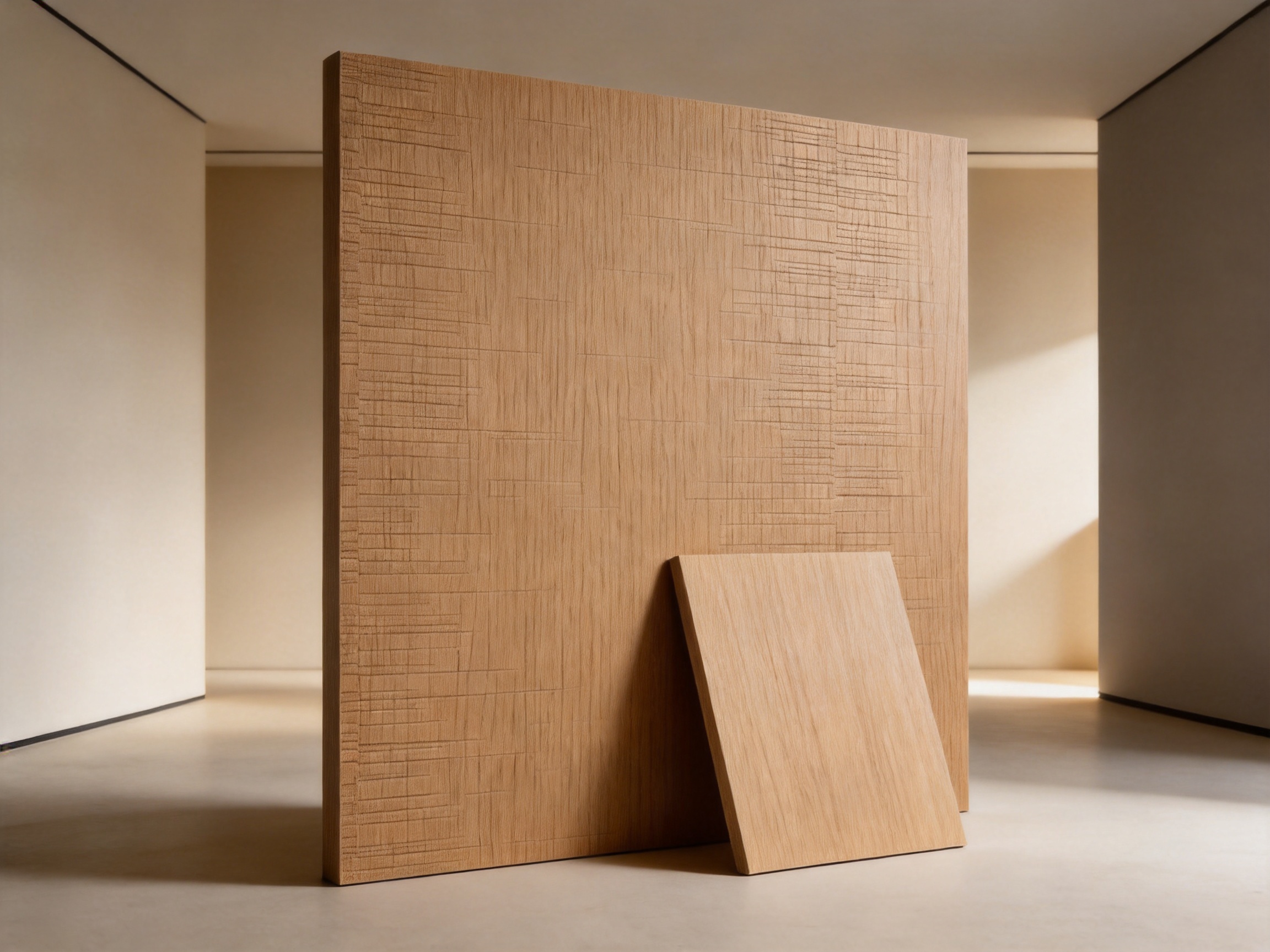
Unlike a conventional flat decorative board, a deep-embossed melamine wood panel can create stronger visual depth, more noticeable texture, and a closer connection with natural wood-inspired surfaces. The result is a material that can be used not only as a practical covering but also as an important architectural feature. It may support feature walls, furniture fronts, cabinet components, partitions, hospitality interiors, offices, retail displays, and other applications where texture and durability must work together.
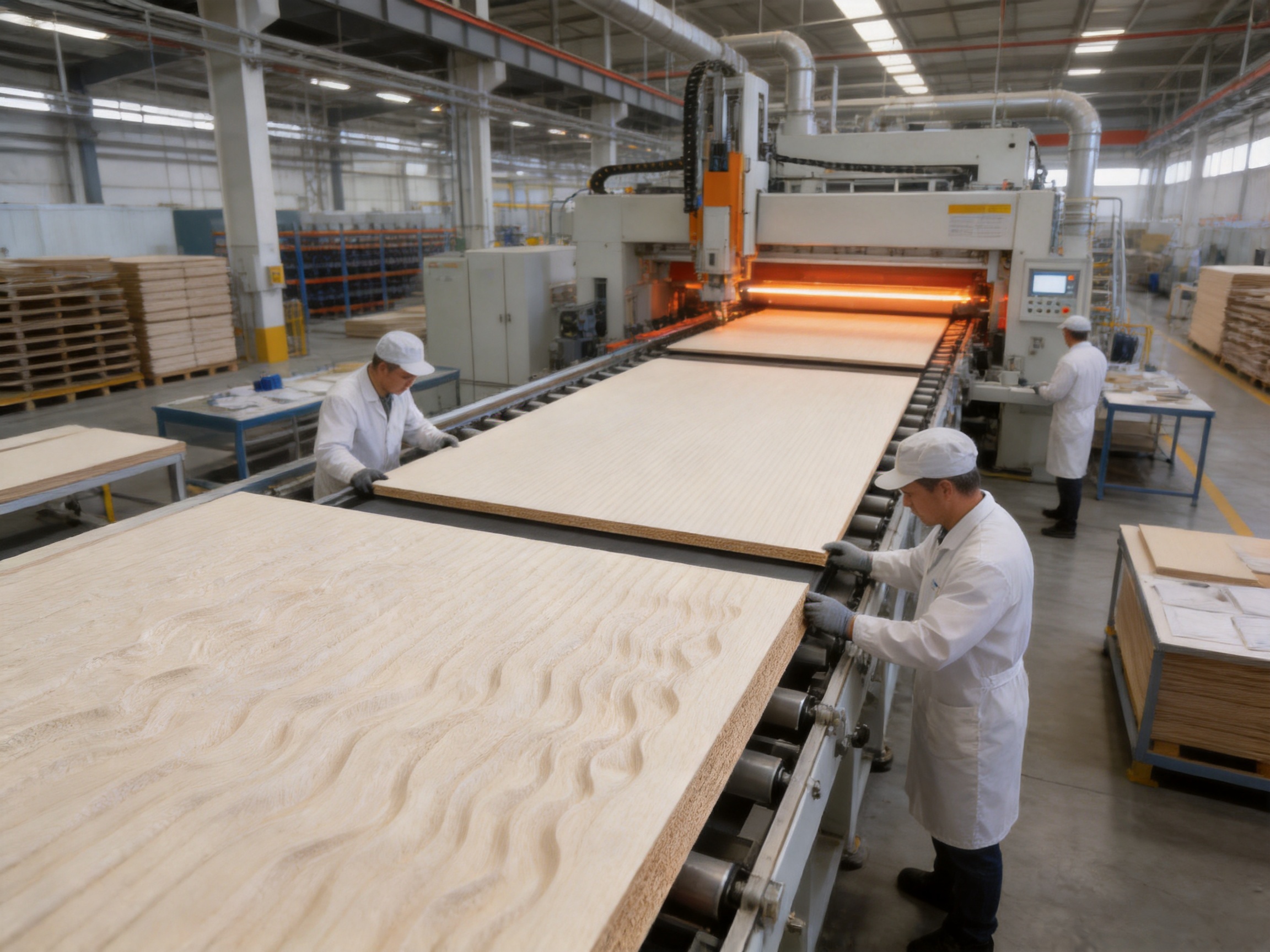
YAKCO New Materials (Jiangsu) Co., Ltd. has developed its production capabilities around decorative panel technology, with particular attention to three-dimensional surface effects and stable manufacturing processes. The company was established in 2007 and operates a modern production site covering approximately 50 acres, including more than 30,000 square meters of standard factory buildings. Its experience, specialized processes, and focus on material improvement provide a foundation for producing melamine panels that are suitable for demanding interior projects.
Understanding the LSB Panel Concept
The LSB Panel - Yakco/Lekco is positioned as a melamine board substrate. In practical terms, this means the product serves as a prepared panel material with a decorative melamine surface and a wood-based structural core. The substrate provides the body, rigidity, and dimensional foundation of the panel, while the decorative surface contributes the visible appearance, tactile quality, and resistance required in interior use.
The term LSB is commonly associated with a wood-based panel structure made from oriented strands or similar engineered wood elements. The exact composition, thickness range, surface selection, edge treatment, and performance values should be confirmed with the manufacturer for each project. However, the central benefit of an engineered substrate is consistency. Compared with irregular natural boards, a manufactured substrate can be produced with more uniform thickness, predictable panel dimensions, and controlled surface preparation.
Melamine decorative technology adds another layer of value. A printed or designed decorative paper is impregnated with resin and bonded under controlled heat and pressure to the board surface. When this process is combined with three-dimensional pressing, the panel can reproduce the visual rhythm of wood grain, textile effects, stone-like movement, or other decorative patterns with greater depth and tactile definition.
This construction makes the panel suitable for projects where a designer wants the appearance of a premium finish without relying on solid timber, natural veneer, or multiple separate finishing operations. The panel arrives as a ready-to-use decorative material, helping reduce the amount of coating, laminating, or surface treatment required after installation.
Why Three-Dimensional Deep Embossing Matters
Flat printed surfaces can provide color and pattern, but they often lack the tactile dimension associated with natural materials. A wood image printed on a completely smooth board may look attractive from a distance, yet its artificial character can become apparent under close inspection or strong lighting. Deep embossing addresses this limitation by introducing physical relief into the decorative surface.
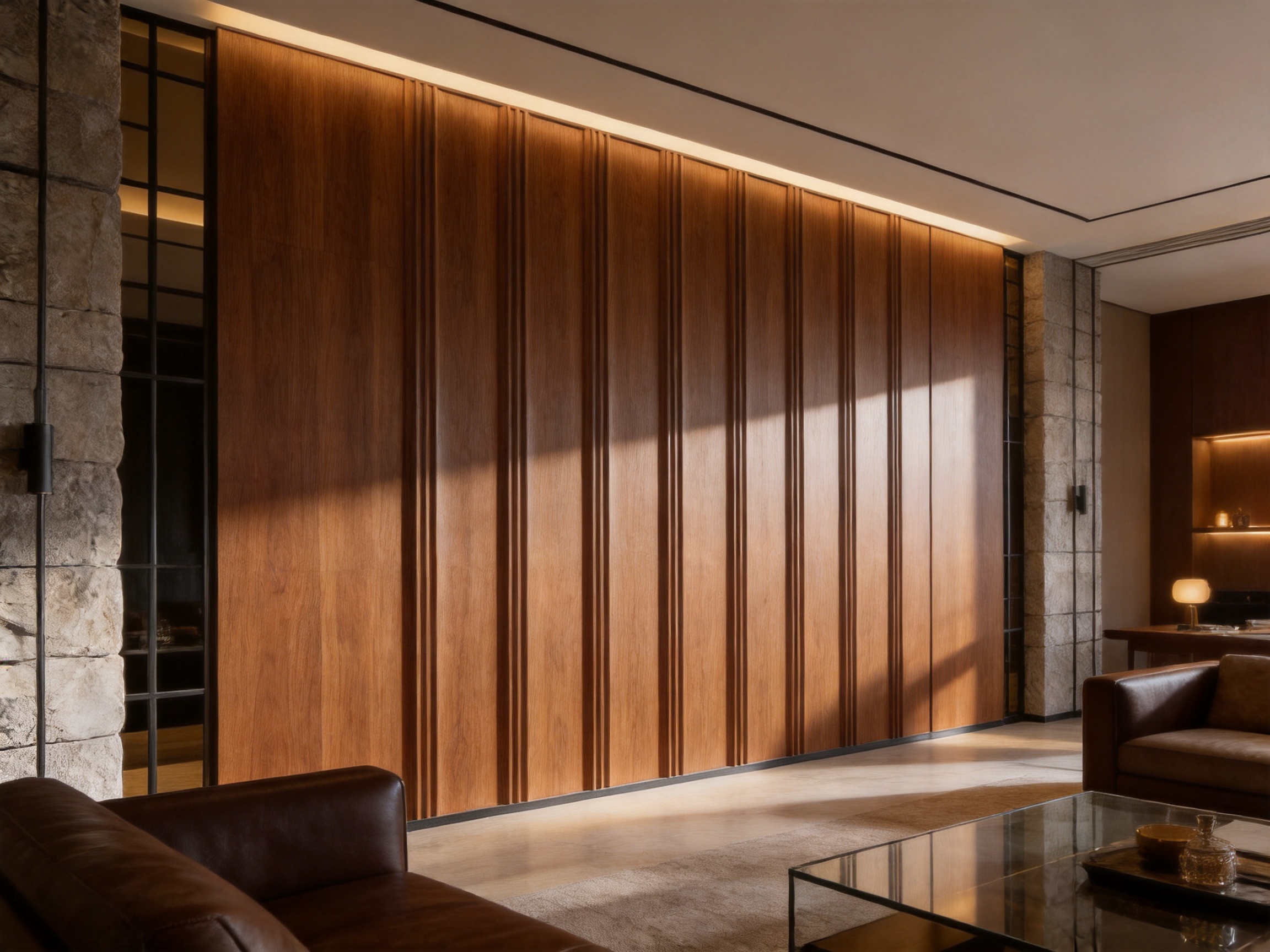
Three-dimensional deep embossing creates valleys, ridges, pores, and directional texture that interact with light. As daylight or artificial lighting moves across the panel, the surface produces subtle highlights and shadows. This changing visual effect can make a wall appear more layered and dynamic than a flat laminate or painted finish.
The process is especially valuable for wood-inspired designs. Natural timber has irregular grain, open-pore impressions, and variations in depth. A carefully developed embossing pattern can imitate these qualities more convincingly than a two-dimensional print alone. It can also be coordinated with the printed decorative pattern so that the physical texture follows the visible grain instead of appearing randomly placed.
Deep embossing can support both subtle and expressive design directions. A fine-grain surface may be appropriate for office furniture, bedrooms, and minimalist interiors. A more pronounced relief can create a dramatic feature wall in a hotel lobby, restaurant, retail environment, or entertainment space. The same general panel category can therefore support a wide range of design languages.
The tactile quality also influences how users experience an interior. People often interpret natural-looking texture as warm, substantial, and carefully crafted. A three-dimensional surface can make a large wall feel less monotonous and can help define zones within open-plan spaces. It may also provide a stronger visual connection between furniture, wall cladding, doors, and other interior elements.

LSB Panel - Yakco/Lekco
Key Product Advantages
Enhanced Visual Depth
The most noticeable advantage of the LSB Panel - Yakco/Lekko is its ability to deliver a deeper and more layered appearance than ordinary flat melamine board. The embossing process gives the surface a physical structure, allowing the panel to respond to changing light and viewing angles. This can help designers create interiors with greater richness without adding multiple layers of decorative materials.
A deep-embossed surface can also make repeated panels appear more coordinated. When grain direction, texture, and color are carefully selected, several boards can be arranged to form a continuous or rhythmically repeated wall treatment. This is particularly useful in commercial projects where large areas must be covered while maintaining a coherent design concept.
Natural-Looking Texture
Wood-inspired decorative panels are popular because they bring warmth and organic character to modern interiors. However, the success of a wood design depends on more than the printed color. Texture plays a major role in whether the material feels convincing. The product’s three-dimensional deep-pressing technology supports a more realistic relationship between visual grain and tactile grain.
The resulting surface can provide a closer approximation of natural wood than a standard smooth melamine board. At the same time, it allows greater design consistency than many natural materials, which may contain knots, color differences, mineral streaks, or other variations that are difficult to control across a large installation.
Stable Engineered Substrate
The wood-based substrate is manufactured for panel applications rather than cut from a single natural log. This engineered approach can offer more predictable dimensions and more consistent panel behavior. For cabinetmakers, furniture producers, and interior contractors, predictable material performance can simplify cutting, assembly, and installation planning.
Natural solid wood can respond significantly to fluctuations in moisture and temperature. A controlled engineered panel is not completely immune to environmental conditions, and appropriate storage and installation remain important, but its manufactured structure is intended to provide improved consistency for interior applications. The company describes its products as offering stability and resistance to deformation, subject to correct use and project conditions.
Efficient Fabrication
Ready-finished melamine panels can reduce the number of production stages required after the board arrives at a workshop. Instead of applying paint, stain, or a separate decorative laminate, a fabricator can focus on panel sizing, edge treatment, drilling, joining, and installation. This can support more efficient production schedules and help reduce the labor associated with wet finishing operations.
The company also emphasizes easy cutting as one of the product benefits. Fabrication should still be performed with suitable tools, correct blade selection, proper feed rates, and appropriate dust control. When these conditions are followed, an engineered decorative panel can be integrated into standard woodworking workflows.
Surface Consistency
For commercial interiors, consistency is often as important as appearance. A project may require dozens or hundreds of panels that must maintain a similar color, texture, and level of finish. Manufactured melamine surfaces are designed to provide repeatable decorative results, helping reduce the variation that may occur when natural boards are sourced from different batches or suppliers.
Batch control remains important. Designers and contractors should confirm color references, production batches, grain direction, and sample approval before placing a large order. Nevertheless, the controlled decorative-panel process offers a practical advantage for projects that require a coordinated appearance over a substantial area.
Environmental and Indoor-Air Considerations
Indoor environmental quality is now an essential part of material selection. The company states that its products are designed to meet the international ENF formaldehyde standard. ENF is associated with a stringent formaldehyde-emission classification for wood-based panels. Actual compliance should always be verified through current technical documents, test reports, and the requirements of the destination market.
The use of MDI medical adhesive bonding is another point highlighted by the company. MDI-based bonding systems are used in engineered wood products and may support low-emission material development when formulated and controlled correctly. The precise adhesive system, emission performance, and applicable certifications should be confirmed for the specific product configuration.
These considerations make the panel relevant to projects where designers, developers, and building owners are paying closer attention to responsible material selection. Environmental performance should be evaluated together with sourcing, manufacturing energy, durability, service life, maintenance, and end-of-life considerations rather than judged by a single feature alone.
Advanced Manufacturing Capabilities
The performance of a decorative panel depends on more than the surface design. It is also shaped by substrate preparation, adhesive technology, pressing accuracy, curing control, quality inspection, and production consistency. YAKCO New Materials has focused its manufacturing development on these connected stages rather than treating decoration as an isolated final step.
Research and Development in Decorative Panel Technology
The company specializes in researching and producing high-end decorative panels and wall panels for residential and commercial spaces. Its development direction centers on three-dimensional decorative panel technology. This specialization is significant because deep embossing requires coordination between design development and production engineering.
A successful 3D panel must balance several factors. The relief must be deep enough to create a meaningful tactile effect, but not so aggressive that it weakens the surface or creates installation difficulties. The printed pattern must align with the embossed structure. The substrate must receive pressure evenly. The adhesive layer must bond the decorative components without unwanted bubbling, delamination, or surface distortion.
Research and development work allows the company to refine these relationships. New decorative designs can be matched with different relief structures, while pressing parameters and material combinations can be adjusted to improve the final appearance. This approach supports a broader collection of wood designs, textile-inspired patterns, leather effects, art deco surfaces, rock-inspired finishes, and other decorative categories.
Six Core Production Processes
YAKCO describes its manufacturing system as including six core production processes. Although the exact sequence and technical details should be obtained from the company’s current product documentation, a coordinated multi-stage process generally includes substrate preparation, decorative-paper preparation, resin or adhesive treatment, alignment, hot pressing or deep pressing, and final inspection or finishing.
Each process contributes to the final performance of the board. Substrate preparation influences flatness and bonding quality. Decorative-paper preparation affects color stability and surface appearance. Adhesive control influences the connection between layers. Alignment determines whether the visual pattern and physical embossing correspond correctly. Pressing conditions affect depth, clarity, and durability. Final inspection helps identify defects before the panels are delivered to the customer.
The importance of a defined process system becomes more obvious as decorative relief becomes deeper and more complex. A simple flat surface may tolerate small deviations that would be visible on a three-dimensional pattern. By maintaining clear production stages and inspection points, a manufacturer can better control the uniformity of texture and appearance.
Deep-Pressing Technology
The company has developed innovative deep-pressing processes for 3D decorative surfaces. Deep pressing differs from a basic flat lamination operation because it must transfer a designed relief into the surface while maintaining pressure, heat, and alignment across the panel. A successful press cycle must support sufficient definition without causing cracks, excessive stress, or uneven appearance.
Tooling design is central to this process. Press plates or embossing structures must reproduce the intended pattern accurately. Their condition must also be monitored because wear can gradually influence texture definition. Temperature and pressure must be coordinated with the characteristics of the substrate, decorative layer, and bonding system.
The company’s investment in this area allows it to position its panels as more than printed boards. The deep-pressing process is intended to create a finished material with physical texture, visual depth, and a stronger decorative identity. For design professionals, this offers more opportunities to use the panel as a prominent architectural surface rather than only as a background material.
MDI Medical Adhesive Bonding
YAKCO also highlights MDI medical adhesive bonding within its manufacturing technology. Adhesive selection has a direct influence on the stability, emissions, and long-term integrity of an engineered panel. A bonding system must hold the layers securely through transportation, fabrication, installation, and normal interior service conditions.
MDI technology can be valuable in wood-based panel manufacturing because it is associated with strong bonding performance and the potential for reduced formaldehyde emissions compared with some traditional adhesive systems. The performance of any finished board depends on the complete formulation, production controls, and testing results. Therefore, project buyers should request product-specific documentation rather than relying solely on general adhesive terminology.
When combined with controlled pressing, MDI bonding can help support a panel structure that resists separation and maintains a stable surface. This is especially relevant for deep-embossed products because the decorative layer must remain securely connected to the shaped surface during cutting, handling, and use.
Integrated Factory Resources
The company’s approximately 50-acre site and more than 30,000 square meters of modern standard factory buildings provide a substantial manufacturing base. A dedicated facility can support organized material storage, specialized machinery, process separation, quality-control areas, and scalable production planning.
Factory scale alone does not guarantee product quality, but it can enable stronger process management when combined with technical expertise and disciplined inspection. For buyers, an established manufacturing location may also support more dependable communication, production scheduling, sampling, and after-sales coordination than an informal or highly fragmented supply chain.
Advantages Compared with Conventional Decorative Boards
Competitor comparisons should always be based on verified technical data, but several practical distinctions can be considered when comparing a deep-embossed melamine substrate with common alternatives.
| Evaluation Area | Deep-Embossed Melamine Substrate | Flat Melamine Board | Natural Veneer Panel | Painted or Coated Board |
|---|---|---|---|---|
| Surface depth | Physical relief can create pronounced texture and shadow | Usually smooth or lightly textured | Natural grain may provide visual depth | Usually dependent on coating technique |
| Appearance consistency | Controlled decorative pattern and repeatable embossing | Generally consistent printed appearance | Natural variation can be substantial | Can be consistent but may vary by application |
| Production efficiency | Ready-finished surface can reduce post-finishing work | Ready-finished surface with limited tactile effect | May require additional finishing and careful handling | Requires coating, drying, and quality control |
| Design flexibility | Supports wood, textile, leather, art deco, rock, and other effects | Broad printed design range but less physical relief | Primarily reflects the selected natural species or veneer | Broad color range, usually limited texture options |
| Dimensional predictability | Engineered substrate supports controlled panel production | Engineered substrate supports controlled panel production | More affected by natural material characteristics | Depends on the underlying board |
| Environmental documentation | Can be specified with ENF-related documentation and adhesive information | Depends on its substrate and adhesive system | Depends on substrate, finish, and forestry documentation | Depends on board and coating chemistry |
| Maintenance approach | Routine cleaning with suitable non-abrasive methods | Routine cleaning with suitable non-abrasive methods | May require more careful finish maintenance | May require touch-up if the coating is damaged |
Compared with flat melamine board, the major advantage is tactile and visual depth. A flat board may be efficient and attractive, but it cannot provide the same level of physical relief. For projects in which the wall or furniture surface is intended to become a design statement, the deep-embossed option can offer a stronger visual return.
Compared with natural veneer, the deep-embossed melamine panel can provide greater consistency and easier repeatability. Natural veneer remains valuable for projects that prioritize authentic timber character, but it may involve more careful selection, matching, finishing, and quality management. A decorative engineered panel can deliver a controlled wood-inspired effect at a more predictable production scale.
Compared with painted board, the melamine substrate can reduce the need for on-site or workshop coating operations. Painted surfaces can provide excellent color and specialized effects, but they may require multiple preparation and curing stages. A ready-finished panel can help shorten fabrication time and avoid some wet-finishing variables.
Compared with inexpensive decorative laminates, the deep-embossed panel can offer a more substantial tactile impression and a stronger relationship between pattern and texture. The best choice still depends on budget, project specifications, exposure conditions, and design intent. The product is most valuable when its dimensional surface effect is part of the project’s visual objective.
Applications in Residential Interiors
Feature Walls
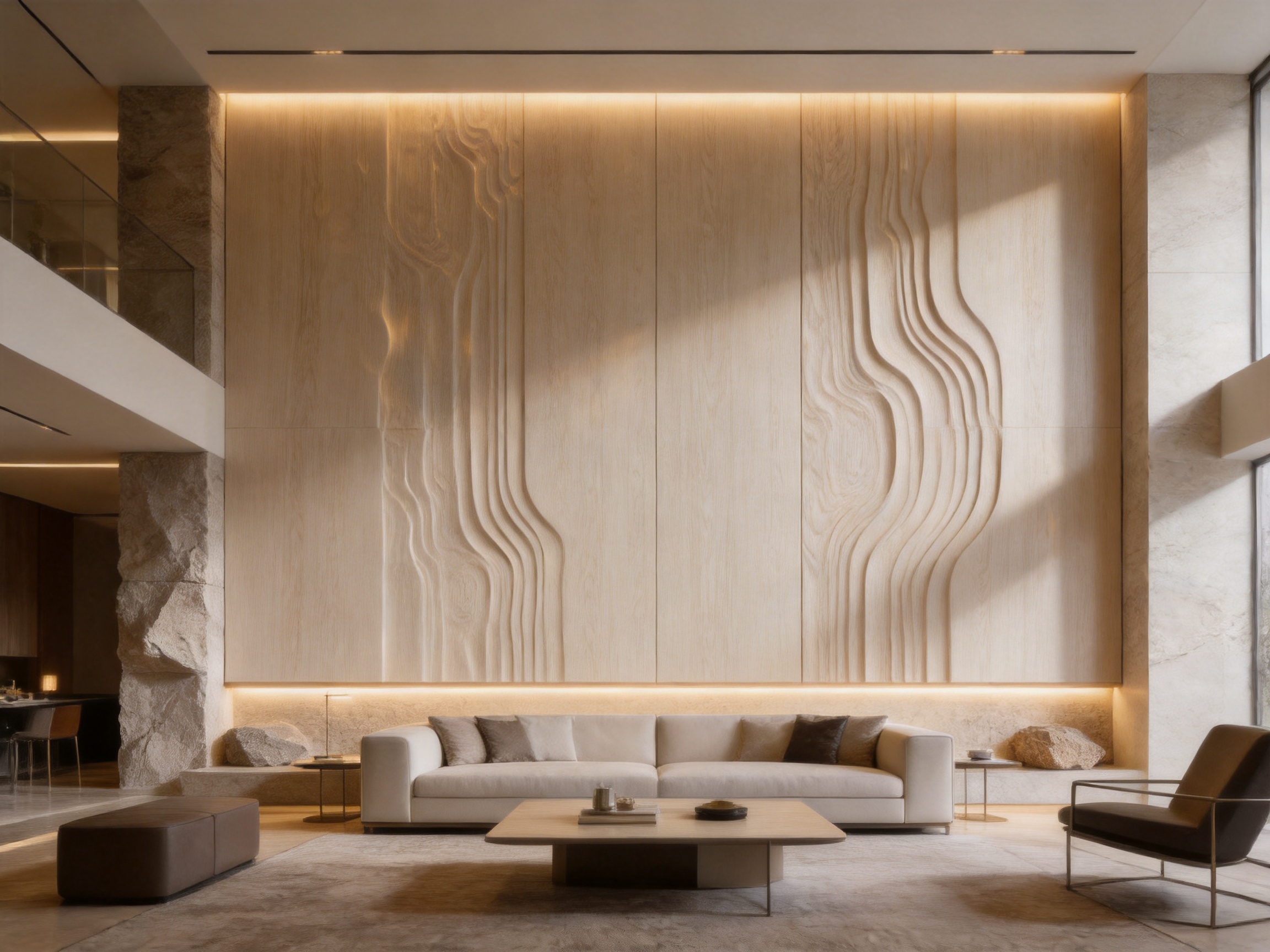
Residential feature walls are one of the most natural applications for a three-dimensional melamine panel. A textured wood design can provide warmth behind a television, bed, sofa, dining area, or entry zone. Because the panel already includes a decorative finish, installation can be more direct than building a feature wall from raw boards and applying a separate surface treatment.
Designers can use vertical grain to emphasize ceiling height or horizontal grain to make a wall appear wider. Large embossed patterns can provide a dramatic focal point, while fine textures can create a calm background for furniture and lighting. The panel can also be combined with recessed strips, indirect lighting, metal trims, stone, glass, or painted surfaces.
Cabinetry and Furniture
Melamine board substrates are widely relevant to cabinetry and furniture manufacturing. The LSB Panel may be considered for wardrobe doors, cabinet sides, shelving components, media units, reception furniture, and decorative storage systems, provided the selected thickness and construction are suitable for the intended use.
Deep texture can add distinction to otherwise simple furniture forms. A plain cabinet may become a strong design element when its doors use a coordinated wood grain and relief. The panel can also be used selectively, such as on door fronts or visible end panels, while a more economical matching board is used for concealed components.
Partitions and Room Dividers
Open-plan residences often require visual separation without completely blocking light or movement. Decorative panels can be integrated into partial-height partitions, sliding screens, framed dividers, or built-in room separators. A textured surface provides visual interest from both sides when the construction is designed appropriately.
Where the panel is used in a partition, the project team should evaluate edge finishing, support spacing, impact exposure, and fixing methods. The substrate is intended for interior design applications, but it should not be treated as a substitute for a specialized structural or fire-rated partition unless the complete tested assembly meets those requirements.
Applications in Commercial and Hospitality Spaces
Commercial interiors often require materials that create a memorable impression while supporting efficient construction. Hotels, restaurants, offices, retail stores, clinics, educational facilities, and showrooms may all use decorative panels to establish a recognizable atmosphere.
Hotels and Restaurants
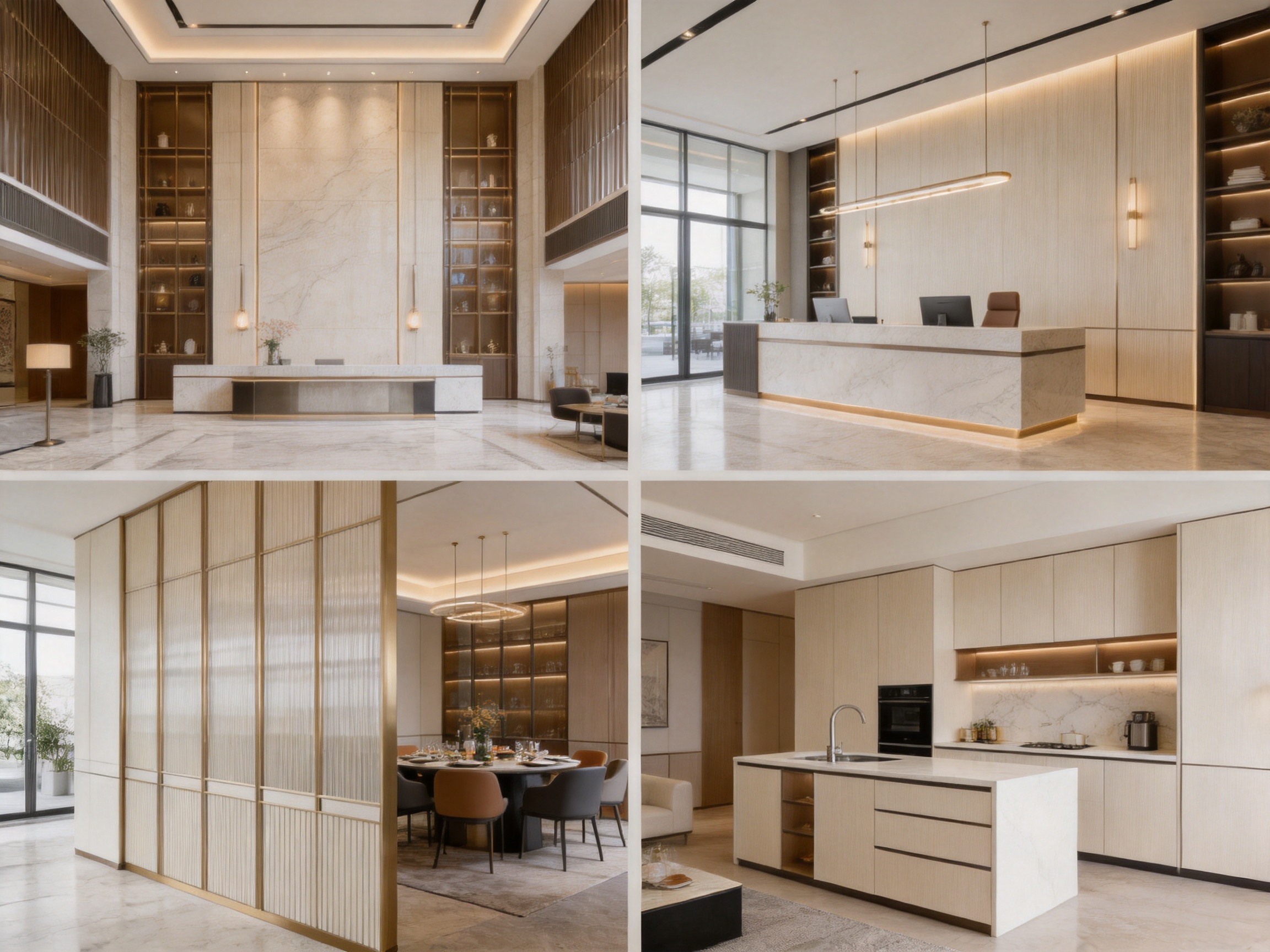
Hospitality spaces benefit from surfaces that communicate warmth, quality, and identity. A deep-embossed wood or leather-inspired panel can be used behind reception desks, in corridors, around elevators, in guest-room headboards, or within dining areas. Textile and art deco designs may be used to create a more distinctive visual language.
In restaurants, textured panels can help define private dining areas, bar fronts, host stands, or ceiling features. Designers should select the surface according to cleaning requirements and exposure conditions. Areas subject to grease, moisture, heavy contact, or repeated impact may require additional protection or an alternative material specified for those conditions.
Offices and Corporate Interiors
Corporate interiors increasingly seek a balance between professionalism and comfort. Wood-inspired surfaces can soften meeting rooms, executive offices, reception areas, and breakout spaces. A deep-embossed panel can add a premium appearance without making the room feel excessively formal.
In open offices, panels can serve as visual anchors within acoustic or spatial planning systems. The product itself should not automatically be described as an acoustic panel, but it may be incorporated into a larger wall or furniture assembly designed by the project team. Any acoustic, fire, or impact performance must be evaluated for the complete assembly rather than inferred from the decorative surface alone.
Retail and Showroom Design
Retail environments depend on material presentation. Textured surfaces can draw attention to product displays and help establish a brand atmosphere. Wood-inspired panels may support a natural, lifestyle-oriented identity, while rock, leather, or art deco effects may suit luxury, fashion, technology, or hospitality concepts.
Because commercial displays are frequently updated, the ability to cut and fabricate the board efficiently is an important practical consideration. Panels can be used for display backdrops, counter fronts, shelving surrounds, wall niches, and branded interior elements. Designers should plan grain direction and joint placement carefully so the finished installation looks intentional.
Design Planning and Installation Considerations
Good results depend on correct planning before the panels reach the installation site. The project team should confirm panel dimensions, thickness, decorative direction, surface code, edge details, quantity, and applicable performance documentation. A physical sample is strongly recommended because screen images cannot fully communicate embossing depth, color variation, gloss level, or tactile quality.
Storage and Handling
Panels should be transported and stored in a clean, dry, and protected environment. They should be kept flat on suitable supports and protected from direct water exposure, excessive humidity, and uncontrolled temperature changes. Decorative surfaces should not be dragged across rough floors or stacked in a way that places excessive pressure on corners and edges.
Allowing the material to acclimatize to the installation environment may be appropriate, depending on the panel construction and local installation practice. The manufacturer’s instructions should take priority. Proper acclimatization and careful handling can reduce the risk of dimensional movement or surface damage after installation.
Cutting and Machining
Cutting should be performed with sharp, suitable tools and correctly supported panels. The decorative face should be oriented according to the recommended cutting direction to reduce chipping. Fine-tooth blades, scoring systems, or other professional woodworking methods may be selected according to the equipment and the board construction.
Machining the panel may expose the substrate at cut edges. Exposed edges should be finished with a compatible edge band, trim, coating, or construction detail appropriate to the design. In moisture-sensitive locations, edge protection is particularly important because unprotected wood-based substrates may absorb moisture.
Fastening and Support
The fixing method should be selected according to the panel thickness, size, weight, substrate, and installation orientation. Mechanical fasteners, concealed systems, adhesives, battens, or framed assemblies may be suitable in different situations. Large wall panels should be supported adequately to prevent movement, bowing, or stress concentration.
Fixing points should be planned before cutting. Panels with strong directional textures require careful joint alignment, and irregularly placed fasteners can interrupt the intended visual effect. Expansion allowances and perimeter details should follow the manufacturer’s recommendations and local construction practice.
Cleaning and Maintenance
Routine maintenance generally involves removing dust with a soft cloth or suitable vacuum attachment, followed by cleaning with a lightly dampened cloth when needed. Abrasive pads, aggressive solvents, excessive water, and harsh chemicals should be avoided unless specifically approved for the product surface.
Deep embossing can collect dust in recessed areas, so regular gentle cleaning is preferable to occasional aggressive scrubbing. In commercial settings, a written maintenance procedure can help staff preserve the surface and prevent unsuitable cleaning products from being used.
Quality Control and Project Documentation
Quality control should cover both appearance and construction performance. Visual inspection may include color consistency, embossing definition, surface cleanliness, edge condition, alignment between printed grain and physical texture, and the absence of visible defects. Dimensional checks may include panel thickness, length, width, squareness, and flatness.
For larger projects, sample approval should be documented. The approved sample can serve as a reference for later deliveries, although reasonable batch variation may still occur. The buyer should clarify acceptable tolerances, replacement procedures, packaging requirements, and inspection responsibilities before production begins.
Environmental and technical documentation is equally important. Depending on the project, the purchaser may request formaldehyde-emission test results, substrate information, adhesive details, fire-related documents, surface maintenance guidance, and statements regarding applicable standards. The claim that the products meet the ENF formaldehyde standard should be supported by current product-specific evidence for the relevant market and panel configuration.
Commercial projects may also require documentation for green-building assessment. A decorative panel can contribute to a responsible materials strategy, but credits or compliance outcomes depend on the complete building program, chain of custody, emissions data, sourcing information, and local certification rules. Buyers should work with the manufacturer and project consultants to determine which documents are applicable.
Why Manufacturer Experience Matters
Decorative panel quality is closely connected to manufacturing experience. Producing a basic printed board and producing a stable, accurately embossed, high-end decorative panel are different technical tasks. The latter requires coordinated knowledge of substrate behavior, resin or adhesive systems, press tooling, decorative design, quality inspection, and packaging.
YAKCO New Materials has operated since 2007, giving it a long period of involvement in engineered decorative materials. The YAKCO brand was established in 2016, reflecting the company’s effort to develop a recognizable product identity in the decorative panel sector. Its specialization in high-end decorative panels and wall panels supports a focused approach rather than a purely general-purpose board offering.
The company’s stated strengths include three-dimensional decorative panel technology, innovative deep-pressing processes, six core production processes, MDI medical adhesive bonding, and a modern factory infrastructure. Together, these capabilities are intended to provide panels with improved depth, layering, texture, stability, cutting performance, deformation resistance, and environmental performance.
For international buyers, supplier capability also affects communication and customization. A manufacturer with dedicated research and production resources may be better positioned to discuss decorative patterns, sample development, surface matching, packaging, batch planning, and project-specific requirements. These service qualities can be as important as the board itself when a panel is being specified for a large or highly visible project.
Responsible Product Selection
A responsible specification process should consider the complete life cycle of the panel. The first step is to select a product that is technically suitable for the intended location. Interior wall cladding, cabinet doors, furniture components, and high-contact commercial areas may have different performance requirements. The product should not be used outside its intended scope without confirmation from the manufacturer or a qualified project professional.
The second step is to review environmental information. Formaldehyde emissions, adhesive chemistry, wood sourcing, manufacturing practices, service life, packaging, and disposal should all be considered. A durable decorative product that remains attractive for many years may reduce the need for frequent replacement, but durability depends on correct fabrication, installation, cleaning, and environmental exposure.
The third step is to minimize waste. Accurate measurement, coordinated panel layouts, reusable offcuts, and careful grain planning can reduce material loss. Because embossed wood designs often have a directional appearance, panel optimization should account for visual orientation as well as dimensions.
The fourth step is to maintain transparency in project communication. Designers, suppliers, fabricators, and installers should share the same information about approved samples, acceptable variation, fixing systems, edge details, and maintenance requirements. This reduces misunderstandings and helps ensure that the final installation reflects the intended design.
Recommended Selection Process for Buyers
Buyers considering the LSB Panel - Yakco/Lekco can follow a structured evaluation process. Begin by defining the application: wall panel, cabinet component, furniture surface, partition, display fixture, or another interior element. Note whether the material will be used vertically or horizontally, in a dry or humid environment, and in a residential or commercial setting.
Next, request the current product range and identify the desired decorative category. YAKCO’s broader decorative panel direction includes wood designs as well as fabric or textile effects, leather-inspired surfaces, art deco patterns, rock-inspired designs, grain cloth surfaces, frosted 3D finishes, and other melamine board options. The selected surface should support the project’s overall palette and lighting conditions.
Then request samples and technical information. Review color, gloss, texture depth, grain alignment, thickness, panel size, substrate construction, edge condition, cutting guidance, formaldehyde documentation, adhesive information, packaging, and delivery terms. If the panel will be used in a regulated commercial environment, request all documents required by the local authority or project consultant.
After sample approval, prepare a detailed cutting and installation plan. Determine where joints will occur, how grain direction will be maintained, how corners will be treated, and how exposed edges will be finished. For large orders, confirm production batch control and the procedure for addressing damage or variation upon delivery.
Finally, conduct an installation trial when the project is complex. A small mock-up can reveal issues with lighting, texture scale, joint visibility, edge details, fasteners, and cleaning. It is generally more economical to adjust the design during the mock-up stage than after full installation.
Frequently Asked Questions
What is the LSB Panel - Yakco/Lekco?
The LSB Panel - Yakco/Lekco is a melamine board substrate intended for decorative interior applications. It combines a wood-based engineered panel with a melamine decorative surface and is associated with three-dimensional deep-embossing technology for improved texture and visual depth.
What makes a deep-embossed panel different from a standard melamine board?
A standard melamine board may have a printed or lightly textured surface, while a deep-embossed panel includes more pronounced physical relief. The ridges and recessed areas create stronger tactile feedback and more visible interaction with light, making the surface appear more layered and natural.
Can the panel be used for furniture and cabinets?
It may be suitable for furniture, cabinetry, doors, shelving components, and decorative storage systems, depending on the selected thickness, panel construction, and design requirements. The project team should confirm the appropriate specification with the manufacturer before production.
Is the surface suitable for wet areas?
The panel should not automatically be assumed to be waterproof or suitable for constant moisture exposure. Bathrooms, kitchens, utility areas, and other humid locations require careful evaluation of the complete installation, including edges, joints, ventilation, and sealing. Manufacturer guidance should be followed.
Does the product meet environmental requirements?
The company states that its products are designed to meet the international ENF formaldehyde standard. Buyers should request current, product-specific test reports or declarations for the exact panel configuration and destination market before making a compliance claim.
What is the role of MDI adhesive bonding?
MDI adhesive bonding is part of the company’s stated manufacturing technology. It is intended to support strong layer bonding and may contribute to low-emission engineered wood products when properly formulated and controlled. The exact performance must be confirmed through technical documentation.
Can the panel be cut with standard woodworking equipment?
The company identifies easy cutting as one of the product benefits. Professional woodworking equipment, suitable blades, correct support, and proper cutting practices should be used. A trial cut is recommended before large-scale fabrication, especially when the surface has a deep or delicate embossed pattern.
How should the panel be cleaned?
Use a soft cloth or gentle vacuum attachment to remove dust. If necessary, use a lightly dampened cloth with a mild cleaning solution approved for decorative melamine surfaces. Avoid abrasive tools, excessive water, and strong solvents unless specifically approved by the manufacturer.
Can the panel be customized?
Customization depends on the manufacturer’s available designs, production technology, minimum order requirements, tooling options, color development capability, and project volume. Buyers should discuss custom decorative patterns, surface texture, dimensions, and technical requirements directly with YAKCO New Materials.
What should be checked before placing an order?
Confirm the surface design, color, embossing depth, panel thickness, dimensions, substrate, edge treatment, environmental documents, packaging, delivery schedule, quality tolerances, and installation recommendations. A physical sample and written technical confirmation are especially important for large or high-visibility projects.
Conclusion
The LSB Panel - Yakco/Lekco represents a modern approach to decorative wood-based panel design. Its value comes from the combination of an engineered melamine board substrate, controlled decorative production, and three-dimensional deep-pressing technology. This combination can provide stronger texture, more convincing wood-inspired character, predictable panel behavior, efficient fabrication, and a wide range of interior design possibilities.
Compared with flat decorative boards, the panel offers greater visual depth and tactile expression. Compared with natural veneer, it can provide more consistent appearance and repeatable production. Compared with painted or separately laminated boards, it may reduce finishing steps and simplify fabrication. These advantages are particularly relevant when the panel itself is intended to become a visible design feature.
Behind the product is a manufacturer with experience dating back to 2007, a substantial modern production facility, dedicated decorative panel research, innovative deep-pressing processes, six core production processes, and MDI adhesive bonding technology. The company’s focus on stability, easy cutting, resistance to deformation, layered texture, and ENF-related environmental performance supports its position in the high-end decorative panel market.
For the best result, buyers should evaluate the panel through approved samples, current technical documents, installation trials, and project-specific performance requirements. When properly selected, fabricated, installed, and maintained, a deep-embossed melamine wood panel can help transform ordinary interior surfaces into durable, expressive, and carefully coordinated architectural elements.
References
YAKCO New Materials (Jiangsu) Co., Ltd. Company information and manufacturing overview. Product and corporate materials supplied for this article.
YAKCO New Materials (Jiangsu) Co., Ltd. LSB Panel - Yakco/Lekco product information. Melamine Board Substrate category materials supplied for this article.
International wood-based panel emission classification practices. General reference for formaldehyde-emission evaluation and low-emission panel selection.
Engineered wood panel manufacturing principles. General reference for substrate preparation, adhesive bonding, pressing, machining, and quality control.
Interior decorative panel specification practices. General reference for sampling, storage, installation, maintenance, and project documentation.
Responsible materials selection for residential and commercial interiors. General reference for life-cycle considerations, indoor environmental quality, durability, and construction waste reduction.
Product: LSB Panel - Yakco/Lekco