中文简体



Previous Post
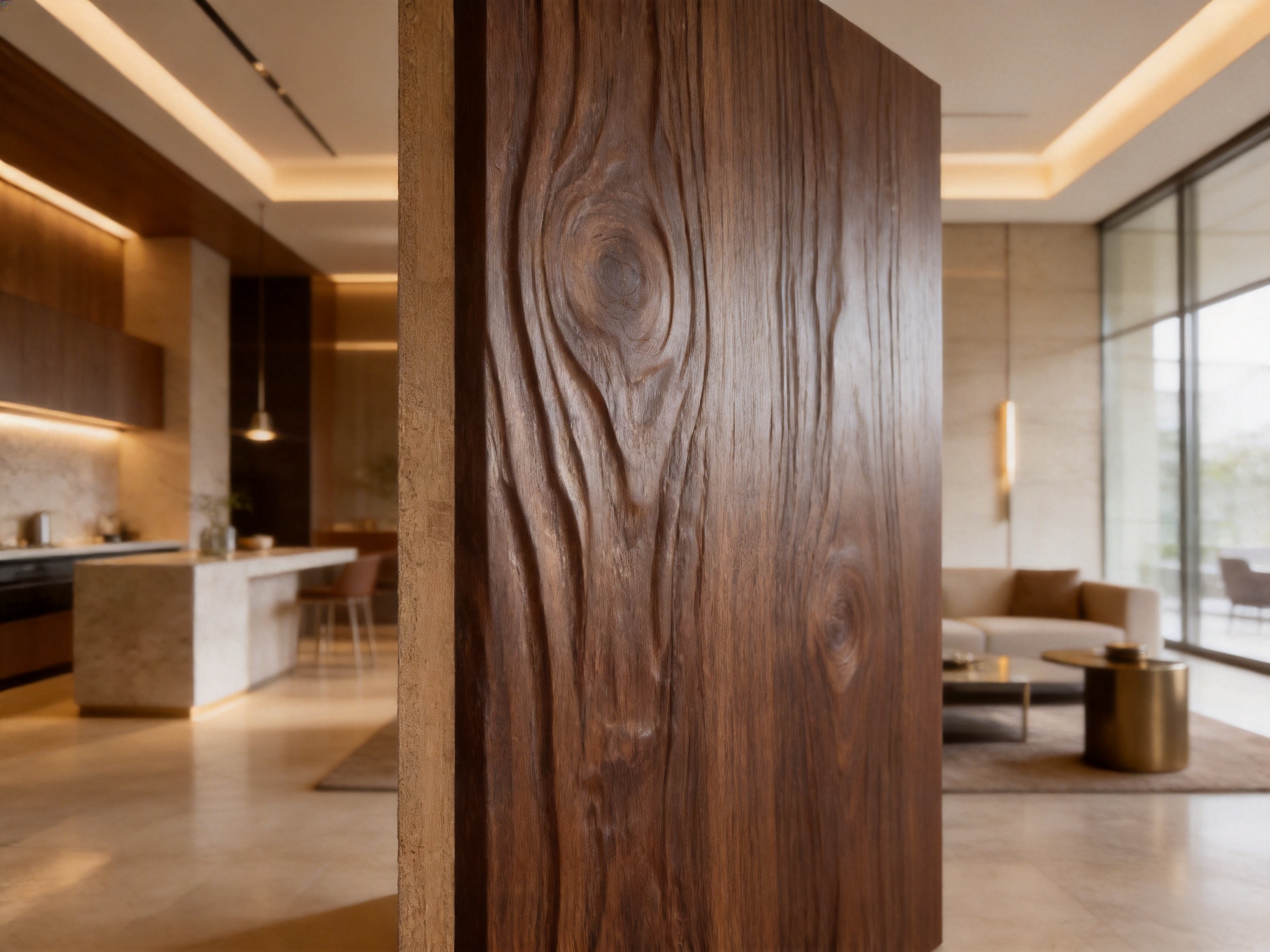
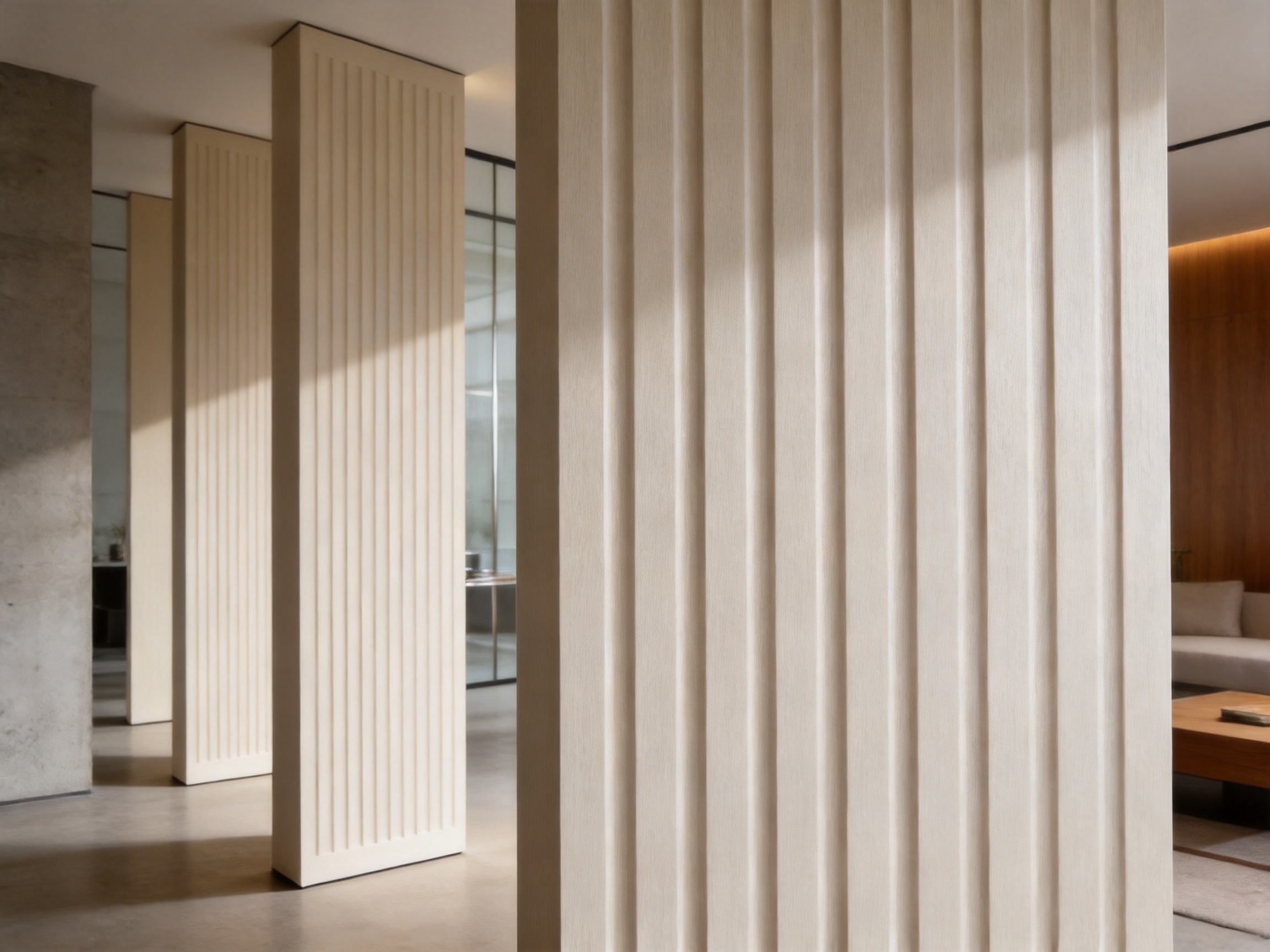
Interior design is increasingly moving toward materials that combine expressive appearance, dependable performance, and practical maintenance. Designers, furniture manufacturers, contractors, and property developers are looking for surfaces that can create a premium atmosphere without the cost, care requirements, or environmental limitations associated with some traditional decorative materials. The PZ02 Lychee Leather 3D Wall Panel responds to this demand through a carefully developed combination of three-dimensional embossing, leather-inspired surface design, melamine finishing, and stable board substrates.
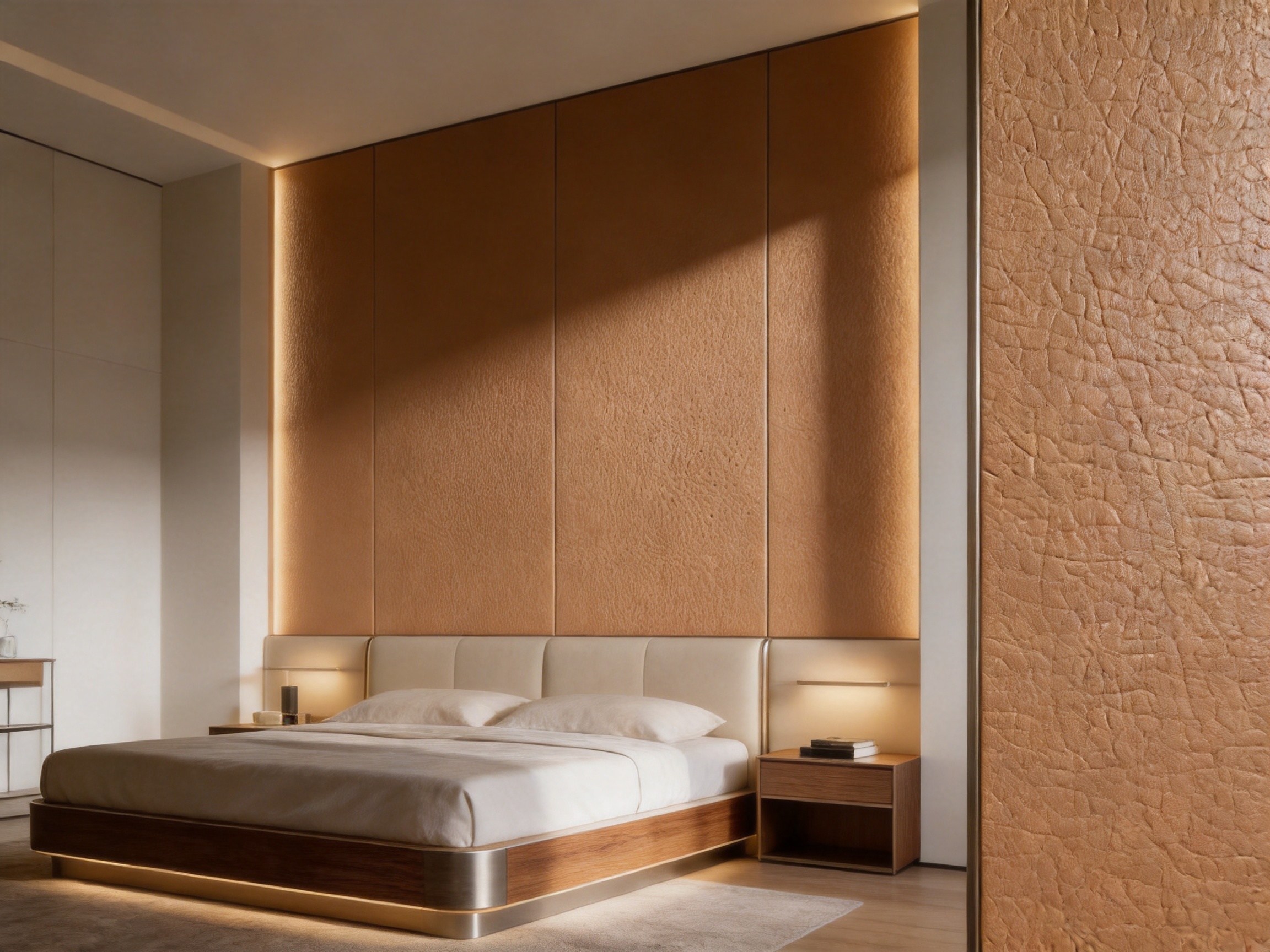
The panel is designed to reproduce the distinctive visual character of lychee leather. Its surface includes fine grain, subtle irregularity, tactile depth, and a refined decorative appearance. Rather than presenting a flat printed image, the product uses an embossed surface to create a more convincing relationship between light, shadow, and texture. This gives walls, furniture components, headboards, and other interior elements a richer visual presence.
At the same time, the panel is intended to be easier to maintain and more economical than natural leather applications. It can provide a warm, sophisticated, and comfortable atmosphere in residential and commercial interiors while avoiding many of the challenges associated with genuine leather, including sensitivity to moisture, demanding cleaning routines, color variation, and higher material costs.
Produced by YAKCO New Materials (Jiangsu) Co., Ltd., the PZ02 panel forms part of a broader range of decorative melamine boards, three-dimensional wall panels, wood design panels, textile-effect panels, and other architectural surface products. The company combines deep-pressing technology, multiple production processes, modern factory facilities, and engineered bonding systems to support the panel’s appearance, dimensional stability, and environmental performance.
Understanding the PZ02 Lychee Leather Surface
The term “lychee leather” refers to a leather-like grain with a characteristic arrangement of small textural features. These details may resemble pores, fine creases, grain variations, and softly raised areas. On the PZ02 panel, the effect is translated into a decorative surface suitable for architectural and furniture applications.
The design is not intended to imitate one single piece of natural leather exactly. Instead, it extracts the visual qualities associated with high-grade leather and adapts them to a manufactured board format. This allows the surface to remain consistent across panels while retaining enough textural variation to avoid an artificial or visually flat appearance.
Three-dimensional embossing is central to the product’s character. In a conventional decorative board, the pattern may be created primarily through printing or a shallow surface finish. In a deep-embossed product, the decorative structure is physically formed into the surface. As lighting changes throughout the day, raised and recessed areas reflect or absorb light differently. The result is a surface with greater depth and a stronger tactile impression.
The finish can support both modern and classic interior schemes. In a contemporary bedroom, it may be used as a feature wall behind a bed. In a luxury hotel, it can contribute to a calm and refined lobby or guestroom setting. In furniture manufacturing, it can be applied to headboards, cabinet components, upholstered-look wall elements, and decorative panels that require a softer visual language than ordinary wood grain.
Why Leather-Effect Panels Are Increasingly Popular
Natural leather has long been associated with luxury, comfort, and craftsmanship. However, real leather is not always the most suitable choice for large wall areas or fixed architectural surfaces. It can be expensive, may require careful installation, and often needs regular conditioning or specialized cleaning. Natural hide also varies in grain, color, thickness, and surface quality, which can make large-scale design coordination more complicated.
A leather-effect melamine panel provides a more controlled alternative. Its appearance can be reproduced with a high degree of consistency, making it easier to coordinate multiple panels in one project. The board format also makes it suitable for construction and furniture workflows that are already familiar with MDF, particleboard, or OSB-based components.
Compared with a soft upholstered wall covering, a rigid embossed panel can offer a cleaner architectural edge and a more structured installation. It does not require the same framework, padding depth, or fabric-stretching process as many upholstered systems. Depending on the project design, it can also be easier to cut, align, and integrate with other board materials.
Compared with a flat decorative laminate, the PZ02 design offers more visual depth. This is important because surfaces that look attractive in a sample may appear ordinary when installed over a large area. The embossed texture helps create movement across the surface as daylight, spotlights, and ambient lighting interact with the pattern.
Core Design Advantages
Realistic tactile appearance
The most immediate advantage of the PZ02 panel is its realistic leather-inspired appearance. Fine grain features and surface relief provide a tactile quality that is difficult to achieve with a purely printed finish. The result is a surface that communicates softness and luxury visually, even though the panel itself is a rigid engineered board.
This distinction is valuable in commercial interiors. A restaurant, hotel, club, showroom, or office reception area often needs to create a strong first impression. A three-dimensional decorative wall can provide a memorable background without relying on excessive ornamentation. The leather pattern contributes visual richness while maintaining a relatively controlled and professional design language.
Strong interaction with lighting
Embossed surfaces respond to lighting in a more complex way than smooth panels. Recesses create delicate shadows, while raised areas catch highlights. Under warm lighting, the surface can appear intimate and inviting. Under cooler architectural lighting, the fine grain may appear sharper and more contemporary.
Lighting designers can use this quality to emphasize feature walls, vertical divisions, reception counters, bed back panels, or display backgrounds. The product is especially suitable for applications where the wall is viewed from different angles, because the texture changes subtly as the observer moves through the space.
Consistent decorative effect
Natural leather can contain irregularities that are attractive in some applications but difficult to coordinate in others. The manufactured texture of a melamine board offers greater repeatability. Designers can specify a consistent pattern across a group of panels, simplifying the visual planning process.
Consistency is particularly important for hospitality projects, retail interiors, and multi-unit residential developments. A stable design language can be carried from one room or zone to another while reducing the risk of unexpected differences in texture or color.
Warm and luxurious atmosphere
Leather-inspired surfaces are often associated with comfort, sophistication, and high-end furniture. When used on walls or furniture elements, the PZ02 panel can make a space feel warmer and more layered. It may be combined with wood grain panels, metal trims, stone-effect surfaces, glass, or textiles to create contrast.
The panel can also soften the visual character of a room dominated by hard architectural materials. Concrete, glass, ceramic, and metal can sometimes produce a cool or overly technical atmosphere. A leather grain surface introduces a more tactile and residential quality without requiring a fabric installation.

PZ02 Lychee leather 3D Wall Panel
Advanced Three-Dimensional Embossing Technology
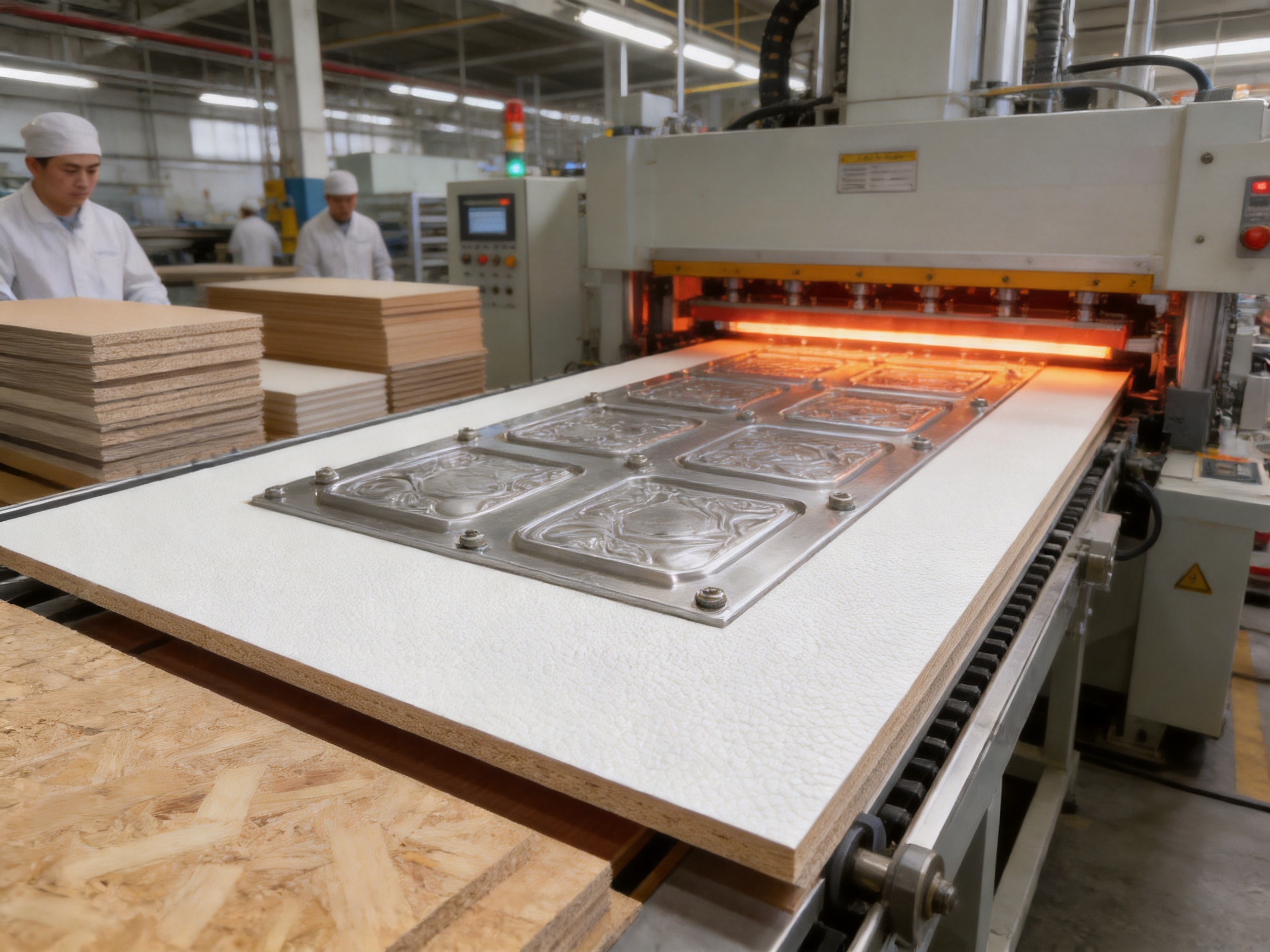
The production of a realistic leather-effect panel begins with the development of a suitable surface structure. The desired grain is studied, interpreted, and transferred into a high-precision forming tool or embossing mold. The mold determines the distribution, depth, direction, and fine details of the final pattern.
High-precision tooling is important because a leather-inspired texture must balance detail with usability. If the grain is too shallow, the surface may appear flat after finishing. If it is too deep or sharply defined, the panel may look artificial or become more difficult to clean. The embossing structure therefore needs to be designed for both visual authenticity and practical performance.
During the deep-pressing process, heat and pressure work together to shape the board and decorative surface. Temperature helps soften or activate the relevant material layers, while pressure transfers the mold pattern into the panel. The pressing time must be controlled carefully so that the pattern is formed consistently without causing unnecessary stress, warping, or surface damage.
Different substrate types respond differently during pressing. MDF, particleboard, and OSB-based materials have different fiber structures, densities, moisture contents, and mechanical behaviors. A reliable manufacturer must adjust the pressing parameters according to the selected substrate, thickness, surface material, and desired embossing depth.
The final result depends on more than pressure alone. Temperature uniformity, mold condition, board flatness, resin behavior, adhesive performance, cooling, and handling procedures all influence the quality of the finished product. Stable production requires these variables to be monitored as part of an integrated process rather than treated as isolated steps.
Surface pattern development
Leather patterns are naturally complex. They may include pores, shallow valleys, folds, grain direction, and irregular transitions. Reproducing these qualities on a board requires design interpretation. The goal is to preserve the visual cues that make the material attractive while creating a repeatable industrial surface.
Pattern development may involve digital design, sample preparation, mold refinement, and repeated comparison under different lighting conditions. A pattern that looks convincing in a close-up sample may appear too repetitive across a full wall. For this reason, the relationship between pattern scale and panel dimensions is important.
The PZ02 design uses a textured leather effect that can support both close-range tactile interest and broader wall-scale visual continuity. This balance allows the product to work in applications where people may view the material from only a short distance, as well as in larger architectural spaces.
Controlled hot pressing
Hot pressing is one of the key manufacturing stages. The board, decorative surface, and related layers are subjected to carefully selected temperature, pressure, and time conditions. These parameters help establish the final texture and support bonding between the layers.
Excessive heat may affect the color, resin, adhesive, or dimensional stability of the panel. Insufficient heat may result in incomplete pattern transfer or weaker bonding. Similarly, excessive pressure can damage the board or create undesirable deformation, while insufficient pressure may produce a shallow or uneven texture.
Time is also essential. The panel must remain under the required conditions long enough for the forming and bonding reactions to stabilize. After pressing, appropriate cooling and handling procedures help reduce internal stress and maintain flatness.
Product Structure and Substrate Options
The PZ02 panel can be manufactured using different engineered board substrates, including OSB, MDF, and particleboard. Each substrate offers different characteristics, and the most appropriate selection depends on the project’s structural, aesthetic, machining, and budget requirements.
| Substrate | General characteristics | Potential application considerations |
|---|---|---|
| MDF | Uniform fiber structure, smooth surface, and suitable machining properties | Furniture components, decorative wall panels, routed details, and applications requiring a consistent board surface |
| Particleboard | Efficient engineered wood construction and broad availability | Interior furniture and wall applications where cost efficiency and stable panel dimensions are important |
| OSB | Oriented wood strand structure and distinctive engineered-board strength characteristics | Projects that require a robust wood-based substrate or a particular construction specification |
The product structure may include a base board, reinforcement or bonding layer, decorative surface layer, and protective finish. The exact layer arrangement can vary according to the selected substrate and production specification. High-quality adhesives help maintain strong connections between the layers and support long-term surface integrity.
A multi-layer construction provides the manufacturer with greater control over performance. The base board contributes stiffness and dimensional support. Intermediate layers can assist with adhesion and reinforcement. The surface layer establishes the decorative appearance and tactile effect. A finishing treatment may help protect the surface from ordinary interior use, cleaning, and handling.
When selecting a substrate, buyers should consider the panel’s intended use, installation method, edge treatment, cutting requirements, environmental conditions, and local building standards. A wall-mounted decorative panel may have different requirements from a furniture component or a large headboard assembly.
Available Thicknesses and Panel Dimensions
The standard listed panel size is 2745 × 1220 millimeters. This format provides a substantial surface area for wall decoration and furniture production while remaining compatible with common panel-processing workflows. The product is offered in several thicknesses to accommodate different design and construction needs.
| Panel size | Listed reference price | Typical selection considerations |
|---|---|---|
| 2745 × 1220 × 9 mm | USD 36.50 | Lightweight decorative applications and projects where reduced thickness is preferred |
| 2745 × 1220 × 12 mm | USD 40.00 | General decorative uses requiring a balance of weight and rigidity |
| 2745 × 1220 × 18 mm | USD 46.00 | Furniture, wall features, and applications requiring a more substantial board |
| 2745 × 1220 × 22 mm | USD 51.60 | Projects requiring additional thickness and a stronger visual or structural presence |
| 2745 × 1220 × 25 mm | USD 56.00 | Heavier-duty decorative components and installations where a thick panel is specified |
The listed prices are reference values and may vary according to order volume, substrate selection, packaging, shipping, project requirements, and commercial terms. Buyers should confirm the current price, production lead time, minimum order quantity, and technical specification before placing an order.
Thickness selection affects more than cost. A thinner board can reduce weight and may be easier to handle during installation. A thicker board may provide increased rigidity, deeper visual framing, or a more substantial furniture construction. The correct choice should be based on the installation system and the desired finished appearance.
For large feature walls, designers should also consider panel orientation, joint placement, edge details, and the alignment of the embossed grain. Careful planning can reduce visible transitions and create a more coherent finished surface.
Environmental and Emission Considerations
The listed environmental grades for the product are P2 and F4. These classifications relate to the performance and emission requirements of engineered wood products and should be interpreted according to the applicable testing standards and market regulations.
For architects and contractors, environmental documentation is an important part of material selection. Product certification, test reports, formaldehyde emission data, substrate details, and adhesive information may be required for specific projects. The appropriate documents should be requested from the supplier before approval.
YAKCO states that its products are designed to meet the international ENF formaldehyde standard and that the company uses MDI medical adhesive bonding in its production systems. These manufacturing choices are intended to support lower-emission performance, stable bonding, and improved environmental quality. Nevertheless, project teams should verify the precise grade and test documentation for the specific order and substrate.
Environmental performance is influenced by the entire product structure. The substrate, resin, adhesive, surface layer, production conditions, packaging, and installation materials all contribute to the final indoor-air-quality profile. Responsible specification therefore involves reviewing the complete assembly rather than evaluating the decorative surface alone.
The use of an engineered leather-effect panel may also reduce the need for natural leather in certain decorative applications. This can support material-efficiency goals when the design intent is to achieve a leather appearance rather than to use genuine hide. The panel can offer more predictable use of raw materials, consistent dimensions, and repeatable production across a project.
Advantages Compared with Competing Decorative Materials
Compared with natural leather
The PZ02 panel is generally more economical than large-scale natural leather applications. It is also easier to coordinate because the grain and dimensions are manufactured for consistency. Its rigid board construction can simplify installation on walls or furniture carcasses, while the melamine surface is designed for ordinary interior maintenance.
Natural leather remains valuable where authentic material character, softness, and traditional craftsmanship are essential. However, the PZ02 panel offers a practical alternative for projects that prioritize cost control, repeatability, fixed dimensions, and easier cleaning.
Compared with printed flat laminates
Flat printed laminates can reproduce color and a two-dimensional image, but they may not create the same tactile depth. The embossed structure of the PZ02 panel produces genuine highlights and shadows. This makes the material more visually engaging, particularly on feature walls illuminated from the side.
The surface relief also contributes to the perception of quality. In premium interiors, customers often respond not only to color but also to touch, light behavior, and material depth. A deep-embossed panel can therefore provide a stronger design statement than a flat decorative board.
Compared with fabric wall coverings
Fabric wall coverings can provide softness and acoustic benefits, but they may be vulnerable to staining, fraying, stretching, or difficult repairs. They also require different installation methods and may need a padded support structure to achieve a luxury appearance.
The PZ02 panel offers a more rigid and architectural surface. It can create a textile-like or leather-like visual effect while maintaining the dimensional stability of a board. Its suitability will depend on the project’s acoustic requirements, but for decorative impact and cleaning convenience, it can be an effective alternative.
Compared with ordinary wood panels
Wood grain panels provide a natural and familiar appearance, but they may not deliver the same sense of softness or luxury as a leather-inspired texture. The PZ02 panel can be used alone or in combination with wood design panels to create contrast between organic grain and refined leather texture.
This combination is particularly useful in hospitality, executive offices, bedrooms, lounges, and reception environments. Wood can provide warmth and continuity, while the leather-effect panel can define focal points and add a more tactile accent.
Manufacturing Strengths of the Producer
YAKCO New Materials (Jiangsu) Co., Ltd. was established in 2007 and operates on a site covering approximately 50 acres. The company reports a modern standard factory building of more than 30,000 square meters. This scale provides a foundation for organized production, equipment integration, quality management, storage, and order coordination.
The company specializes in high-end decorative panels and wall panels for residential and commercial environments. Its product development focuses on three-dimensional decorative panel technology, deep pressing, surface texture, and engineered bonding. The YAKCO brand was established in 2016, reflecting the company’s continuing development of decorative building-material solutions.
One of the company’s stated strengths is the development of innovative deep-pressing processes. Deep embossing requires more precise control than a simple decorative print because the surface profile must be transferred consistently across the board. It also requires attention to board moisture, mold condition, heat distribution, pressing pressure, and post-press stability.
The company describes six core production processes within its manufacturing approach. While the exact sequence may vary according to product type, a complete process may involve substrate preparation, decorative layer preparation, adhesive application, hot pressing, deep embossing, cooling, trimming, inspection, and packaging. The integration of these stages helps reduce variation between production batches.
MDI medical adhesive bonding is another stated manufacturing feature. Adhesive selection influences bonding strength, dimensional stability, emissions, and long-term surface durability. A controlled adhesive system can help reduce the risk of delamination or separation between the decorative layer and the substrate when the panel is used under normal interior conditions.
The company also emphasizes enhanced depth, layering, texture, stability, easy cutting, deformation resistance, and environmentally friendly performance. These characteristics are especially important for professional buyers because a decorative panel must perform during fabrication and installation, not merely look attractive in a showroom sample.
Quality Control from Raw Material to Finished Panel
Quality control begins with the selection and preparation of raw materials. Substrate boards should be checked for thickness, flatness, moisture condition, density, and surface quality. Decorative layers should be examined for color consistency, pattern accuracy, and compatibility with the forming process.
During production, key process parameters may include pressing temperature, pressure, duration, adhesive quantity, mold alignment, and cooling conditions. Monitoring these factors helps ensure that the embossed pattern is clear and that the panel remains stable after pressing.
Finished panels should be inspected for surface defects, incomplete embossing, edge damage, contamination, color variation, warping, and bonding problems. Dimensional checks are also important because panel size and thickness affect installation planning and cutting optimization.
For commercial projects, buyers may request sample approval before bulk production. A signed sample can establish the expected appearance, texture depth, color, edge quality, and substrate specification. This process is useful when the panels will be installed across multiple rooms or buildings.
Packaging is another important part of quality preservation. Large decorative panels must be protected against impact, moisture exposure, abrasion, and edge damage during storage and transportation. Packaging requirements may vary according to shipping distance, container loading, climate, and handling conditions.
Interior Applications
Bedroom feature walls and headboards
The bedroom is one of the most suitable applications for the lychee leather texture. The surface can create a calm, warm, and comfortable atmosphere behind a bed or across a selected feature wall. It may be coordinated with upholstered furniture, timber flooring, soft lighting, and neutral textiles.
When used as a headboard panel, the material can provide a structured alternative to fabric upholstery. Designers may frame it with metal, wood, or painted trim. Integrated lighting can emphasize the embossed pattern and create a soft background effect.
Living rooms and lounges
In living rooms, the panel can be used behind a television, sofa, fireplace surround, display niche, or shelving system, subject to the relevant installation and heat-clearance requirements. It can add texture to a large wall without overwhelming the space.
The leather effect is also suitable for lounge areas in offices, clubs, private dining spaces, and high-end residences. It can be combined with dark wood, brushed metal, stone, or glass to create a sophisticated material palette.
Hotels and hospitality interiors
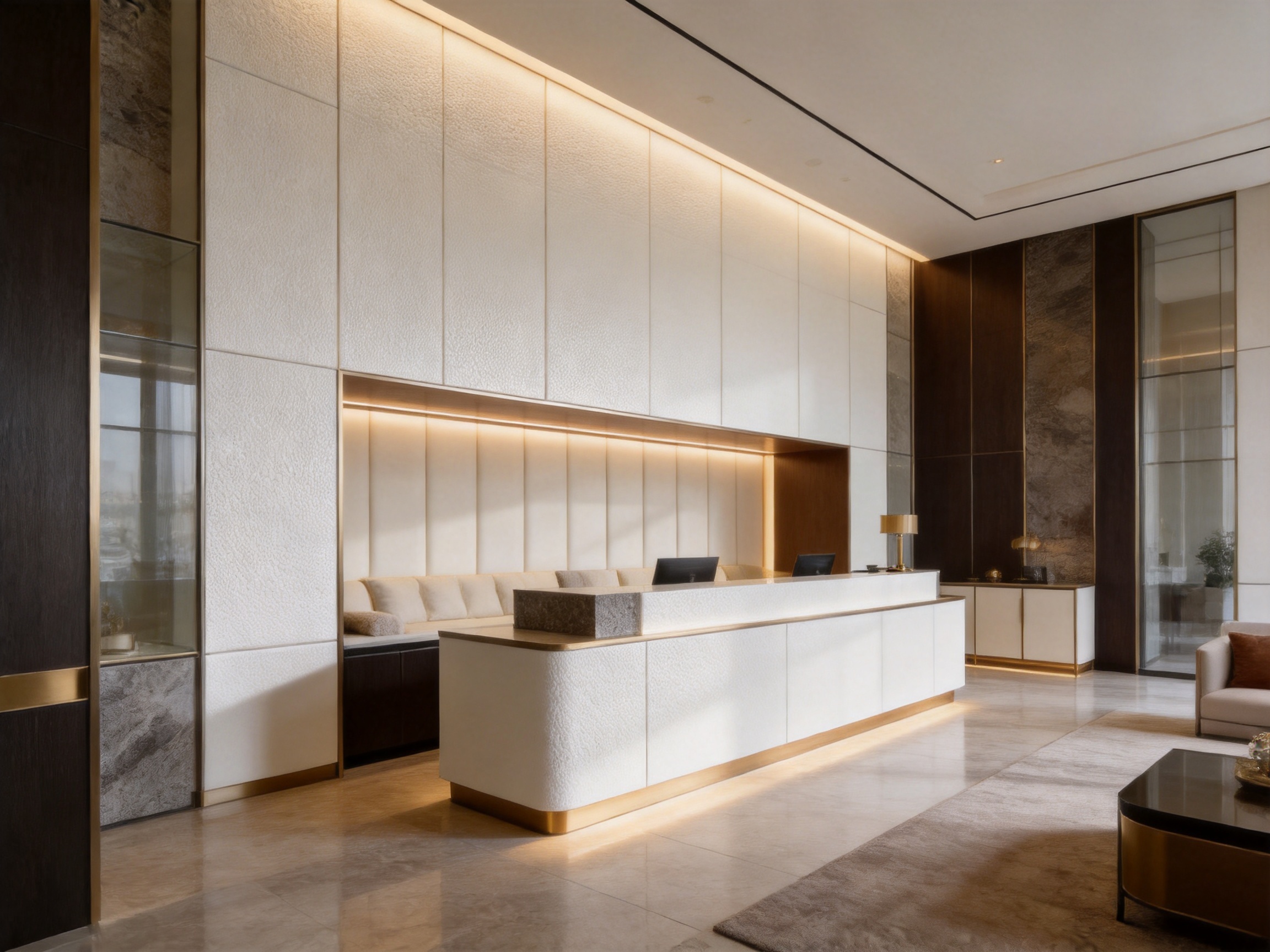
Hotels often require surfaces that create a premium impression while remaining practical for repeated use. PZ02 panels may be specified for guestroom headboards, corridor accents, reception backdrops, lounge walls, executive suites, and private dining areas.
The consistent panel format supports coordination across multiple rooms. The rigid construction can also be useful where the design requires clean lines, precise joints, and repeatable installation details.
Clubs and entertainment venues
Clubs, lounges, and entertainment venues frequently use dramatic textures to establish identity. A deep-embossed leather pattern can contribute to a refined, intimate, or theatrical environment depending on the chosen lighting and color scheme.
In these applications, the product should be evaluated for the project’s fire, acoustic, impact, and cleaning requirements. Additional treatments or installation systems may be needed depending on local regulations and occupancy conditions.
Commercial offices and executive spaces
Leather-inspired panels can be used in boardrooms, executive offices, reception zones, waiting areas, and meeting rooms. They help create a professional environment with more warmth than a plain painted wall and more textural interest than a standard laminate.
The panel may be incorporated into a full-height wall, a framed inset, a cabinet backing, or a reception desk facade. Combining it with wood panels can create a balanced design that communicates reliability, comfort, and quality.
Furniture manufacturing
The product can be used in furniture manufacturing for headboards, cabinet doors, side panels, wall-mounted storage systems, decorative backs, and custom interior components. Its engineered-board format is compatible with many standard furniture production methods, although tooling, cutting direction, edge treatment, and panel weight should be considered.
Furniture manufacturers should confirm the appropriate substrate for machining and fastening. MDF may be preferred for some routed or shaped components, while particleboard or OSB may be selected for other construction requirements. The panel’s decorative face should be protected during cutting, assembly, and transportation.
Installation and Handling Recommendations
Before installation, panels should be stored flat in a clean, dry, and ventilated area. They should be protected from direct rain, standing water, excessive humidity, and sudden temperature changes. Stacking should be arranged to avoid point loading or unsupported spans that could cause bending.
The installation surface should be clean, dry, flat, and structurally suitable. Uneven walls may require a framing system, leveling layer, or appropriate backing board. The selected fixing method should account for panel thickness, weight, substrate type, wall construction, and the requirements of the finished design.
Installers should plan panel layout before fixing. This includes checking grain direction, joint positions, corners, outlets, trims, doors, windows, and transitions to other materials. A dry layout can help identify potential alignment issues and reduce unnecessary cutting.
Cutting should be performed with suitable tools and blades. The decorative face should be supported and protected to reduce chipping or scratching. Cut edges may require matching edge treatment, trim, paint, sealant, or a concealed joint depending on the design.
Because the panel has a textured surface, installers should avoid dragging tools or abrasive materials across the face. Protective coverings can be used during construction, but they should not trap moisture against the panel for extended periods.
Specific installation methods should always be confirmed with the supplier, project engineer, or qualified installer. Decorative board systems may require different fixing details depending on the substrate, wall height, seismic conditions, fire regulations, and local building codes.
Cleaning and Maintenance
The PZ02 surface is designed to be easier to clean and maintain than natural leather in many interior applications. Routine dust can usually be removed with a soft, dry cloth or a gentle vacuum attachment. The textured surface should be cleaned without excessive pressure that might force dirt into recessed areas.
For ordinary marks, a slightly damp soft cloth may be appropriate. Cleaning products should be mild, non-abrasive, and compatible with melamine surfaces. Strong solvents, aggressive alkaline cleaners, scouring pads, steel wool, and excessive water should be avoided unless specifically approved by the supplier.
Spills should be addressed promptly. Although the surface is intended for interior use and routine maintenance, prolonged exposure to liquids may affect joints, edges, substrates, or unsealed cut areas. The panel should not be treated as a waterproof exterior product unless a separate specification confirms that use.
Regular inspection is recommended in high-traffic commercial environments. Damaged edges, loose trims, or impact marks should be repaired promptly to prevent further deterioration. With appropriate handling and cleaning, the embossed leather-effect appearance can remain attractive over an extended period.
How Designers Can Specify the Product Successfully
A successful specification should identify the product code, surface design, panel dimensions, thickness, substrate, environmental grade, color or finish, quantity, edge requirements, and intended application. It should also state whether the panels are for wall decoration, furniture, headboards, or another purpose.
Designers should obtain a physical sample whenever possible. Digital images may not fully communicate the depth of the embossed grain, surface sheen, color temperature, or tactile quality. Samples should be viewed under the lighting conditions expected in the final project.
Large projects may require a full-size mock-up. A mock-up can show how the texture repeats, how joints appear, how light interacts with the surface, and whether the selected thickness produces the desired visual weight. It also allows installers to test cutting, fixing, trims, and transitions.
Procurement teams should confirm production capacity, delivery schedules, packaging, replacement policy, technical documentation, and after-sales support. These factors are particularly important when panels are required for a phased hotel, retail, or residential development.
Because the company operates a large modern production facility and focuses on high-end decorative panels, it can support professional buyers seeking repeatable production and coordinated material supply. However, each project should still be assessed according to its specific technical and regulatory requirements.
Commercial Value for Buyers and Manufacturers
For wholesalers and distributors, the PZ02 panel offers a distinctive product category that sits between furniture material and architectural wall finish. Its leather-inspired appearance can appeal to customers seeking luxury design without the cost of genuine leather or custom upholstery.
For furniture manufacturers, the panel provides a ready-made decorative surface that may reduce the need for separate covering, laminating, or upholstery operations. This can simplify production planning, although manufacturers should verify machining and assembly procedures for the selected thickness.
For developers and contractors, consistent board dimensions and repeatable surface texture can support quantity planning and installation efficiency. The range of thicknesses allows the material to be matched to different details rather than forcing one board specification across every application.
For interior designers, the product expands the available material palette. It can be used as a focal texture, a secondary accent, or a coordinated surface across walls and furniture. Its ability to work with wood, stone, metal, fabric, and glass creates opportunities for layered interior compositions.
Frequently Asked Questions
What is the PZ02 Lychee Leather 3D Wall Panel?
It is a three-dimensional melamine decorative panel with a surface embossed to resemble lychee leather. The panel is designed for interior wall decoration, furniture manufacturing, headboards, feature walls, and related residential or commercial applications.
What makes the surface different from a printed leather pattern?
The PZ02 panel uses physical surface embossing to create raised and recessed texture. A printed pattern mainly changes color, while an embossed pattern also changes the surface profile. This allows the panel to interact with light and provide a more tactile appearance.
Which substrates are available?
The listed substrate options include OSB, MDF, and particleboard. The most appropriate substrate depends on the required thickness, machining method, structural needs, project budget, and installation system.
What are the standard panel dimensions?
The listed standard size is 2745 × 1220 millimeters. Available thicknesses include 9, 12, 18, 22, and 25 millimeters.
What environmental grades are listed?
The product information lists P2 and F4 environmental grades. Buyers should request current technical documents and confirm which grade applies to the exact substrate and order specification.
Is the panel suitable for bedrooms?
Yes. Bedrooms are one of the main suggested applications, particularly for feature walls, headboards, and decorative areas behind beds. The panel can create a warm and luxurious atmosphere when combined with suitable lighting and interior materials.
Can the panel be used in hotels and clubs?
Yes. It is intended for residential and commercial interiors, including hotels, clubs, lounges, reception areas, and other premium spaces. Project-specific fire, acoustic, impact, cleaning, and building-code requirements should be reviewed before installation.
Is the panel easier to maintain than real leather?
In many interior applications, it can be easier to maintain because it provides a rigid melamine surface rather than a natural hide requiring conditioning. Routine cleaning should still follow the supplier’s care recommendations, and abrasive or solvent-based products should be avoided.
Can the surface be cut for furniture production?
The product is designed as an engineered decorative board and can be suitable for furniture production. Cutting tools, edge protection, machining direction, and finishing details should be confirmed for the selected substrate and thickness.
How does hot pressing affect the product?
Hot pressing forms the three-dimensional grain and helps bond the relevant material layers. Temperature, pressure, and pressing time are controlled according to the substrate, decorative surface, and required texture depth.
What is the company’s manufacturing advantage?
YAKCO New Materials (Jiangsu) Co., Ltd. has operated since 2007 and reports a 50-acre facility with more than 30,000 square meters of modern factory buildings. Its stated strengths include three-dimensional panel technology, deep pressing, six core production processes, MDI adhesive bonding, and the development of decorative panels for residential and commercial spaces.
What should buyers confirm before ordering?
Buyers should confirm the substrate, thickness, dimensions, environmental grade, surface color, embossing specification, quantity, price, packaging, lead time, minimum order quantity, installation method, and technical documentation. A physical sample or approved mock-up is recommended for important projects.
Conclusion
The PZ02 Lychee Leather 3D Wall Panel offers a practical way to introduce leather-inspired luxury into interior architecture and furniture design. Its main distinction is the combination of a realistic embossed grain, engineered board construction, melamine surface technology, and a range of thickness options.
Compared with natural leather, it can provide improved cost control, dimensional consistency, and easier routine maintenance. Compared with flat printed laminates, it offers more convincing depth and stronger interaction with light. Compared with fabric wall coverings, it provides a rigid architectural surface that may be easier to coordinate with furniture and board-based construction systems.
The product’s value also depends on the manufacturing capabilities behind it. High-precision embossing, controlled hot pressing, suitable substrate selection, reliable adhesive bonding, quality inspection, and careful packaging all contribute to the final result. YAKCO’s experience in decorative panel production, deep-pressing technology, modern factory infrastructure, and stated focus on environmental performance support the product’s suitability for professional interior projects.
For designers and buyers, the panel provides broad creative flexibility. It can become a bedroom headboard, hotel feature wall, executive office backdrop, lounge accent, furniture component, or coordinated surface within a larger material palette. When specified with the correct substrate, thickness, installation system, and maintenance procedure, it can deliver a refined decorative effect with practical long-term value.
References
YAKCO New Materials (Jiangsu) Co., Ltd. Product information for PZ02 Lychee Leather 3D Wall Panel.
YAKCO New Materials (Jiangsu) Co., Ltd. Technical information concerning three-dimensional melamine boards, deep-pressing processes, substrates, and environmental grades.
Decorative Surface Engineering Principles: Embossing, Hot Pressing, and Laminated Board Production. Technical reference material for engineered interior panels.
Wood-Based Panel Manufacturing Practices: MDF, Particleboard, and OSB Substrate Selection. Industry reference for interior construction and furniture applications.
Interior Material Specification Guidelines: Surface Performance, Installation Planning, Cleaning, and Maintenance. Professional design and construction reference.
Environmental Considerations for Engineered Wood Products: Emissions, Adhesives, Product Documentation, and Indoor Applications. Technical reference for responsible material selection.
Product contact: YAKCO New Materials (Jiangsu) Co., Ltd., No. 17, Furong Road, Baimao, Guli Town, Changshu City, Jiangsu, China.