中文简体



Previous Post
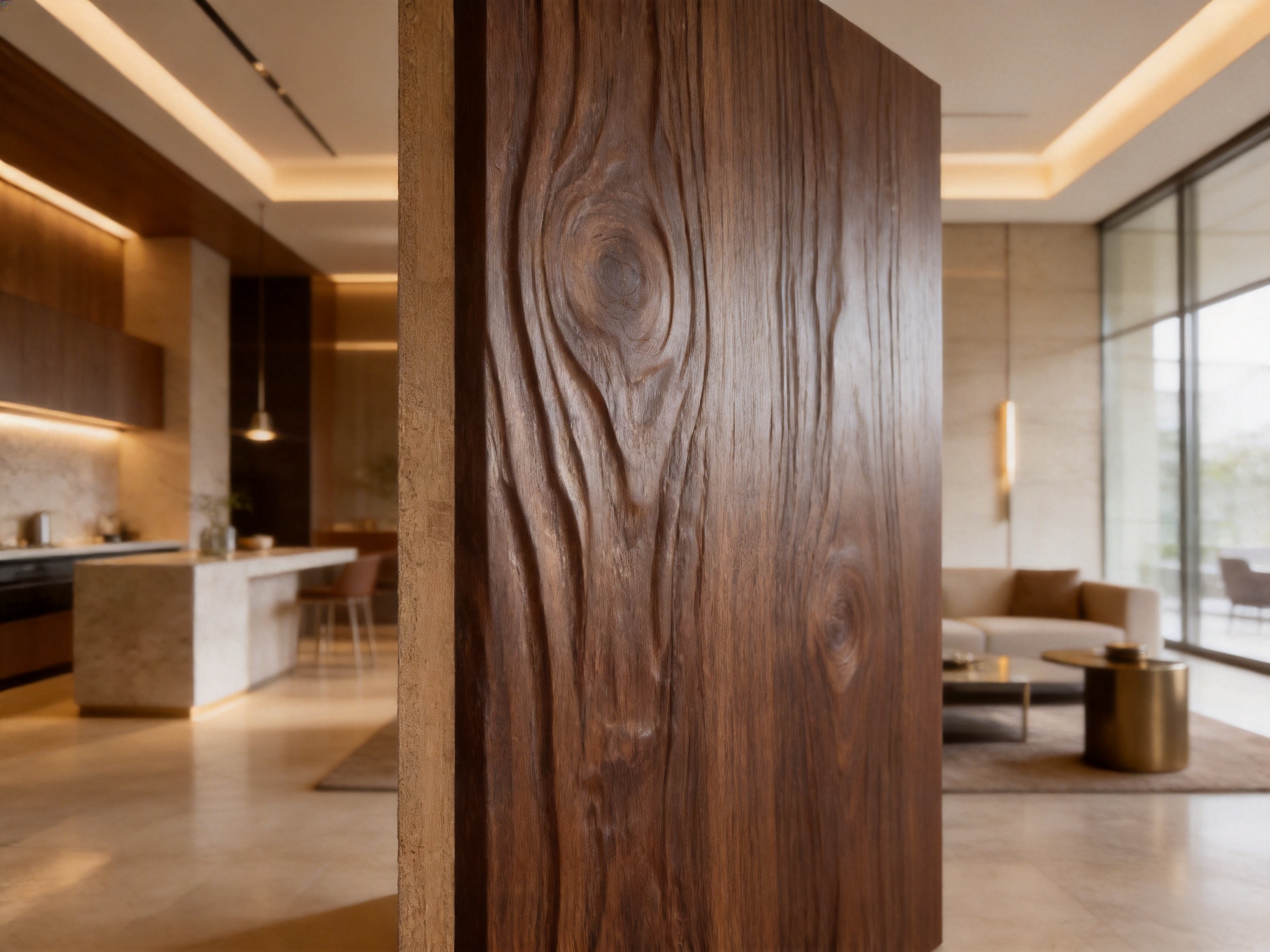
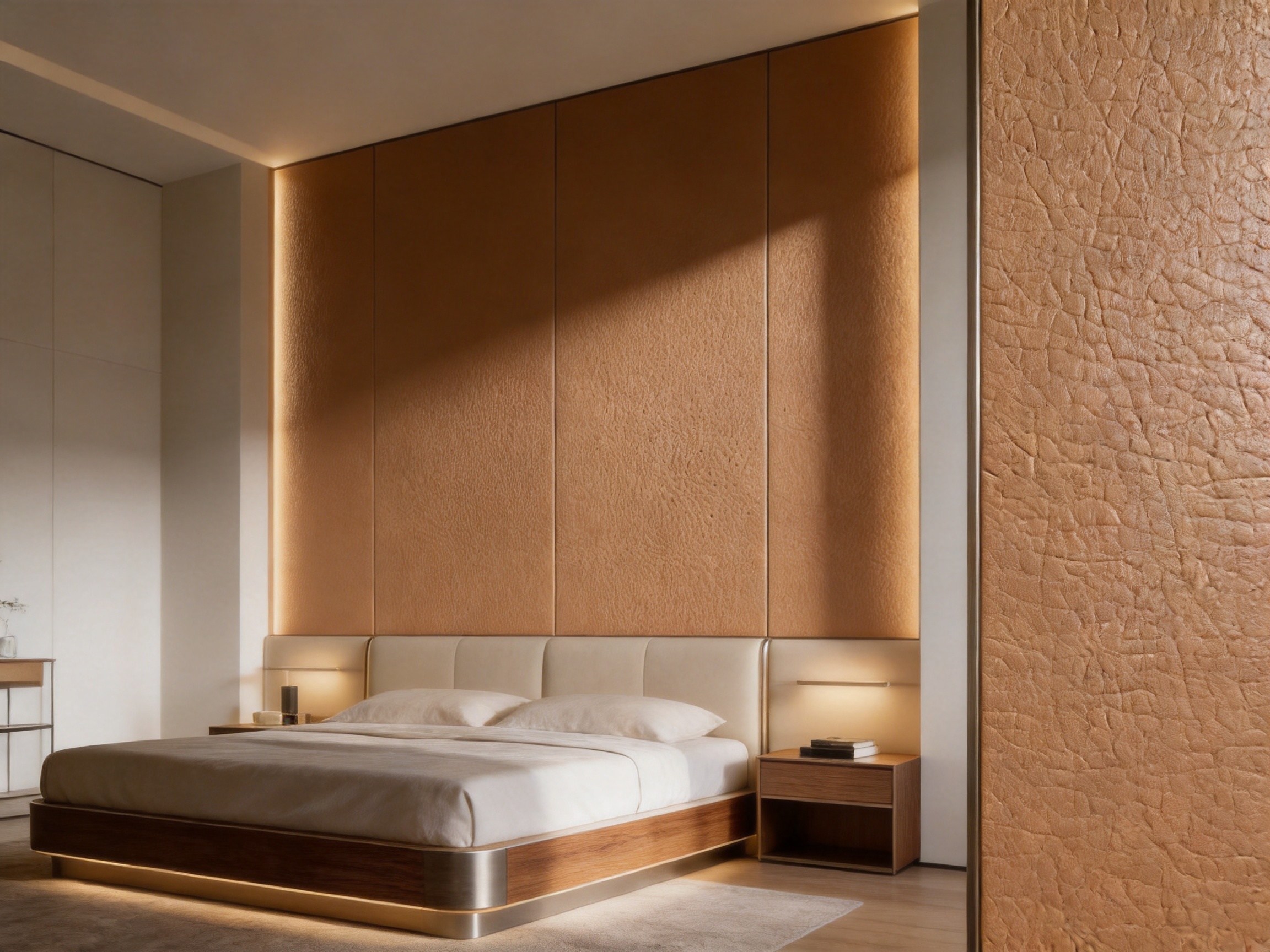
Wood-inspired surfaces remain one of the most enduring choices for interior architecture. They bring warmth, visual balance, and a natural sense of quality to residential, commercial, hospitality, office, retail, and public environments. However, conventional wood veneer and ordinary printed decorative boards do not always provide the combination of appearance, dimensional depth, durability, processing convenience, and environmental performance required by modern projects. A decorative panel may look attractive at first glance but still present problems such as a flat visual effect, inconsistent texture, weak surface bonding, difficult cutting, moisture-related deformation, or excessive formaldehyde emissions.
3D deep embossed wood veneer offers a more advanced approach. It combines a realistic wood-inspired appearance with a tactile surface structure that can be felt as well as seen. By using controlled deep-pressing technology, carefully selected decorative materials, engineered substrate construction, and high-quality adhesive bonding, the panel can create a more convincing interpretation of natural timber while offering the dimensional stability and installation efficiency expected from an industrially manufactured board.
This article examines the characteristics, production technology, performance advantages, design possibilities, application methods, and purchasing considerations associated with 3D deep embossed wood veneer. It also explains how YAKCO New Materials (Jiangsu) Co., Ltd. develops decorative panels and wall panels through specialized manufacturing processes, advanced production equipment, and a focus on high-end interior materials.
Understanding 3D Deep Embossed Wood Veneer
3D deep embossed wood veneer is a decorative panel material designed to reproduce the visual grain, tonal variation, and tactile irregularity of natural wood. Unlike a smooth printed melamine board, the surface is formed with a pronounced embossed structure. The raised and recessed areas follow the direction and rhythm of a wood grain pattern, giving the panel greater visual depth and a more authentic touch.
The term “deep embossed” refers to the depth and definition of the surface texture. A shallow texture can provide only a slight change in light reflection, while a deeper embossed structure creates clear highlights, shadows, and tactile transitions. When light moves across the panel, the grain appears more dynamic. When a person touches the surface, the pattern feels less artificial than a completely flat decorative finish.
In practical use, the product can function as a decorative wood veneer or as a decorative facing material applied to an engineered board substrate. It is suitable for interior wall panels, cabinet components, furniture surfaces, doors, partitions, display systems, feature walls, and other applications that require the appearance of wood with the consistency of industrial panel production.
The product belongs to the broader category of melamine board substrates and can be integrated into modern panel systems. Its value is not limited to visual decoration. The engineered construction is intended to provide reliable surface bonding, stable dimensions, efficient cutting, and resistance to common handling and installation challenges. This makes the material useful for manufacturers, contractors, designers, distributors, and project owners who need repeatable results across multiple panels.
Why Wood-Inspired Decorative Panels Continue to Grow in Demand
Natural wood has always been valued for its warmth and individuality, but the use of solid timber and traditional veneer can create several practical limitations. Timber varies from piece to piece, and matching grain direction or color across a large project can be difficult. Natural wood may also require additional finishing, sealing, sanding, and maintenance. In some applications, changes in humidity can lead to expansion, contraction, warping, or joint movement.
Manufactured decorative panels address many of these concerns. They can provide a more consistent appearance, standardized dimensions, and easier integration with modern furniture and interior construction systems. Decorative panel production also allows manufacturers to offer a wide range of wood tones, grain patterns, embossing depths, and surface effects without depending entirely on the availability of a particular species of timber.
At the same time, designers and end users increasingly expect surfaces to look and feel natural. A flat, repetitive pattern may not satisfy projects that emphasize material authenticity. This is where deep embossing creates a meaningful distinction. It helps the surface respond to changing light and viewing angles, making it more visually expressive while retaining the manufacturing consistency of a composite panel.
For commercial projects, the balance between aesthetics and efficiency is especially important. Hotels, offices, restaurants, retail stores, and public buildings often require large quantities of matching panels. A decorative product must support coordinated design, predictable fabrication, and efficient installation. A 3D wood-inspired panel can contribute to a premium appearance while reducing some of the variability associated with natural timber materials.
Key Structural Features of the Product
Deeply Defined Surface Texture
The most recognizable feature is the three-dimensional embossed surface. The texture is not merely printed onto the panel. It is formed through a controlled pressing process that creates relief across the decorative layer. This relief can emphasize long grain lines, natural pores, linear movement, and other visual characteristics associated with wood.
A deeper texture improves the interaction between the panel and ambient light. Recessed areas appear darker, while raised areas reflect more light. This contrast can make a feature wall feel more substantial and can provide furniture surfaces with a tactile quality that is difficult to achieve through ordinary flat printing.
Wood-Inspired Decorative Appearance
The design language of the panel is based on wood veneer. Depending on the selected pattern and color, the appearance can support minimalist, Scandinavian, contemporary, classic, rustic, luxury, or commercial interior styles. Warm oak-like tones may create a comfortable residential atmosphere, while darker walnut-like or smoked tones may support executive offices, hospitality interiors, or premium retail displays.
Because the product is manufactured rather than individually selected from natural timber, color coordination and pattern repetition can be managed more easily. This is valuable when a project requires a cohesive appearance across doors, wall panels, cabinetry, counters, shelving, and decorative partitions.
Engineered Melamine Board Substrate
The product is associated with a melamine board substrate, which provides a stable base for the decorative surface. An engineered substrate allows the panel to be supplied in consistent dimensions and can simplify cutting, edge treatment, and assembly. The substrate also supports the application of the embossed decorative layer and contributes to the overall rigidity of the finished board.
A suitable substrate is important because a high-quality surface finish cannot compensate for an unstable or poorly bonded core. If the board changes shape excessively, the decorative layer may experience stress, open at an edge, or lose alignment. For this reason, substrate preparation and bonding technology are central parts of the manufacturing process.
Suitable Tactile Performance
Touch is increasingly important in interior design. People evaluate surfaces not only through sight but also through physical contact with furniture, doors, wall coverings, counters, and handrails. A deep embossed wood veneer provides a more engaging surface experience than a smooth decorative sheet. The tactile pattern helps communicate quality and can make an interior feel more carefully designed.
Manufacturing Strengths Behind High-Quality Decorative Panels
YAKCO New Materials (Jiangsu) Co., Ltd. was established in 2007 and operates a production facility covering approximately 50 acres, with more than 30,000 square meters of modern standard factory buildings. This scale supports organized production, material storage, process management, quality inspection, and the development of decorative panel technologies.
The company specializes in high-end decorative panels and wall panels for residential and commercial environments. Its product development direction focuses on 3D decorative panel technology, including innovative deep-pressing processes and multiple core production stages. The objective is to create products with improved depth, visual layering, texture, stability, cutting performance, deformation resistance, and environmental characteristics.
The YAKCO brand was established in 2016, building on the company’s experience in decorative material production and development. Its manufacturing approach combines research, process control, and application-oriented product design. Rather than treating embossing as a simple surface effect, the company approaches the panel as a complete system in which the decorative layer, adhesive, substrate, pressing conditions, and finishing requirements must work together.
Process One: Material Selection and Preparation
The first stage involves selecting and preparing the materials used for the decorative face, substrate, and bonding system. Decorative materials must be suitable for deep pressing and must maintain visual clarity after forming. The grain pattern should remain recognizable, while the material must also respond consistently to pressure and temperature.
Substrate preparation is equally important. The board needs a sufficiently even and clean surface to support uniform bonding. Dust, irregularities, or uncontrolled moisture can affect the final appearance and may reduce the reliability of the finished panel. Professional production therefore includes inspection and preparation before the main pressing operation begins.
Process Two: Pattern Alignment
Wood grain is directional, so pattern alignment has a direct effect on the final design. During production, the decorative layer must be positioned in relation to the board and the intended embossing pattern. Correct alignment helps ensure that the physical relief follows the printed or visual grain rather than creating a disconnected texture.
Accurate alignment is particularly important for long wall panels, cabinet doors, wardrobes, partitions, and furniture components. Consistent direction allows installers and manufacturers to create a coordinated visual flow throughout the interior.
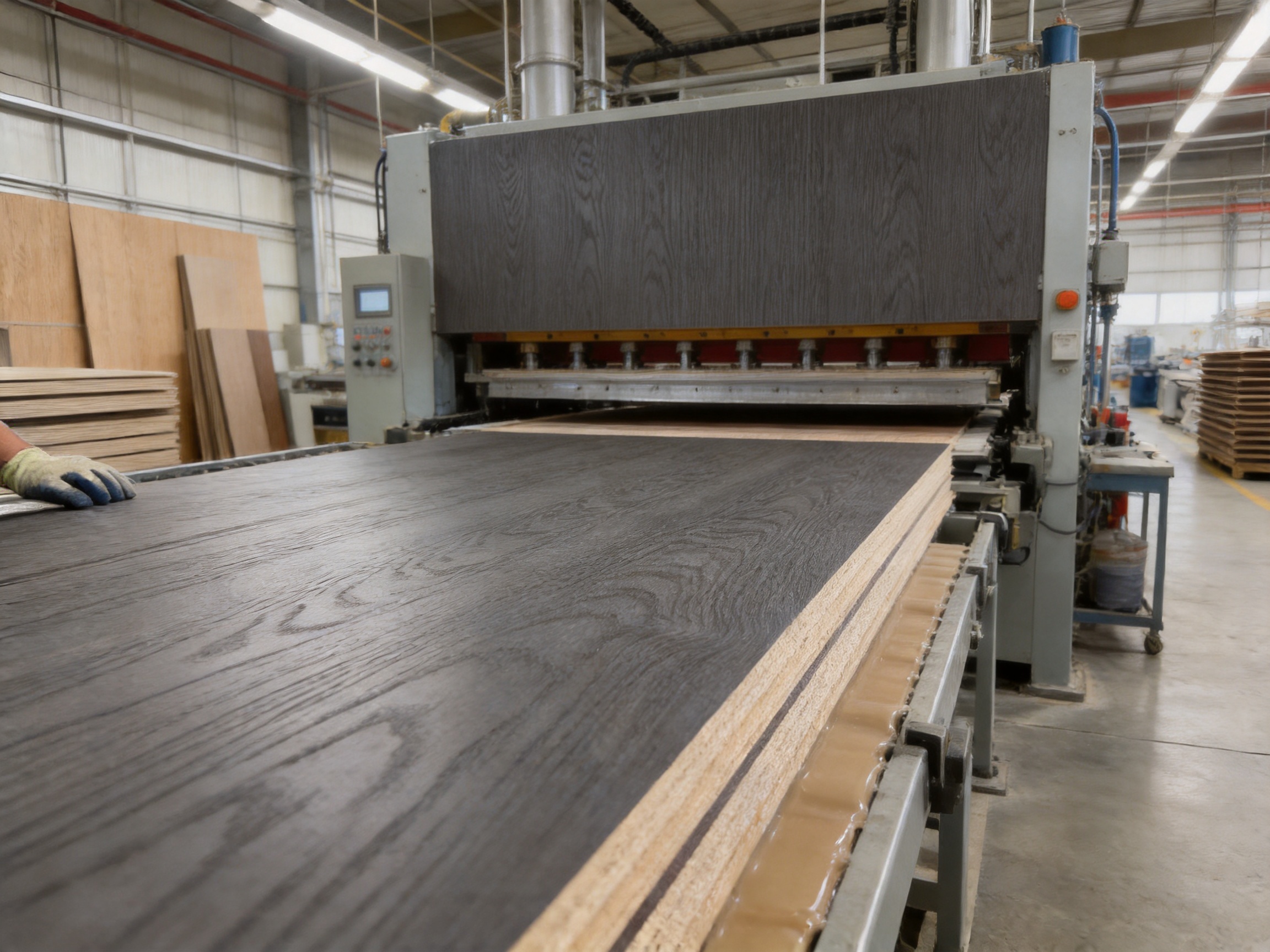
Process Three: Deep-Pressing Technology
Deep pressing is the defining production stage. Pressure is applied through a structured pressing surface that forms the three-dimensional relief. The process must be controlled carefully because excessive pressure may damage the decorative layer, while insufficient pressure may produce an indistinct texture.
The pressing conditions also influence the uniformity of the final product. Pressure distribution, pressing time, temperature, and material behavior must be coordinated to achieve a consistent depth from one area to another. A well-controlled process produces clear grain definition and reduces the risk of irregular or weakly formed areas.
Deep pressing can also help create a closer relationship between visual pattern and physical texture. When the grain image and embossed relief are properly coordinated, the panel appears more natural. When they are misaligned, the surface may look artificial. This is why process precision is a significant differentiator among decorative panel manufacturers.
Process Four: MDI Medical Adhesive Bonding
The company uses MDI medical adhesive bonding as part of its advanced panel production approach. MDI, or methylene diphenyl diisocyanate, is used in engineered wood and composite material production because it can provide strong bonding performance and support structural stability when properly formulated and processed.
The reference to medical adhesive bonding reflects a focus on high-quality bonding technology and controlled material performance. Strong and stable bonding is essential for a decorative panel because the face layer must remain securely attached to the substrate during cutting, transportation, installation, and long-term use.
A reliable adhesive system can help improve resistance to delamination and reduce the possibility of surface separation. It also contributes to the overall dimensional integrity of the board. In a product that depends on deep embossed relief, adhesive consistency is especially important because the embossed face may experience additional mechanical stress compared with a completely flat surface.
Process Five: Surface Conditioning and Finishing
After pressing and bonding, the panel may require conditioning, inspection, trimming, or finishing. The objective is to ensure that the decorative surface is suitable for subsequent fabrication and installation. Edges should be handled carefully because damage at the edge can affect the appearance of cabinets, doors, or wall panel joints.
Surface finishing may also influence the balance between visual richness and practical maintenance. A finish should preserve the clarity of the embossed pattern while helping the panel remain suitable for normal interior use. Depending on the product specification, designers may select surfaces with different gloss levels, tactile effects, or visual intensities.
Process Six: Quality Inspection and Packaging
Quality inspection is the final essential stage. Finished panels should be checked for appearance, texture continuity, bonding quality, dimensional accuracy, edge condition, and packaging protection. Inspection helps identify defects before the material reaches a distributor, fabricator, contractor, or project site.
Proper packaging is particularly important for embossed products. Raised textures can be vulnerable to impact, pressure marks, and abrasion during handling. Protective packaging and organized loading help preserve the surface from the factory to the installation location.
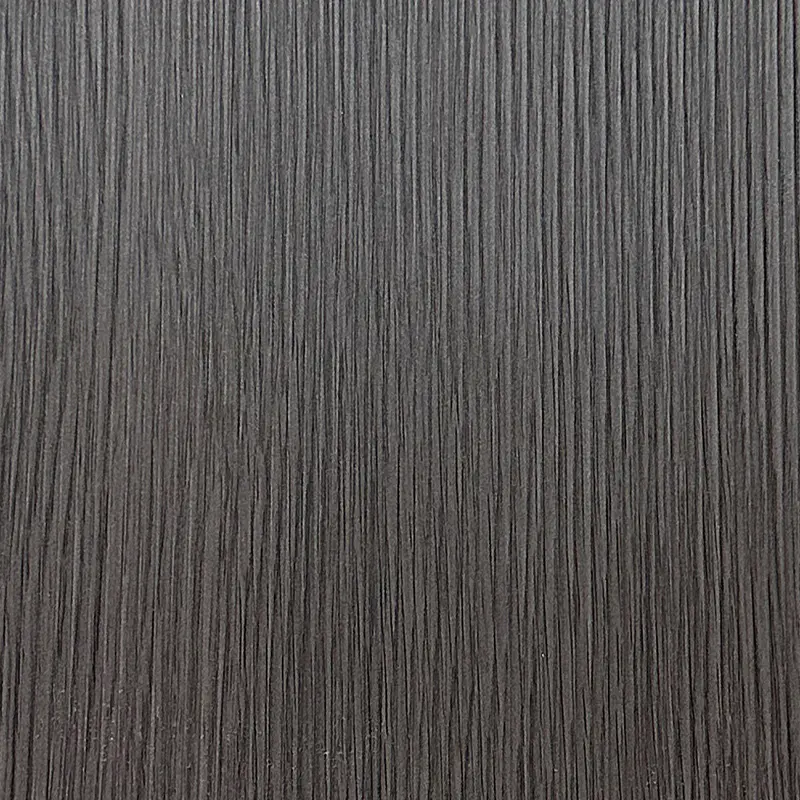
Wood veneer - Lekco
Advantages Compared with Conventional Decorative Materials
More Convincing Than Flat Printed Boards
The primary advantage over ordinary flat printed boards is the addition of physical depth. A flat surface can reproduce color and pattern, but it often depends entirely on the viewer’s visual interpretation. Deep embossing adds shadows, highlights, and touch, making the wood effect more convincing from multiple angles.
This difference is particularly visible under directional lighting. In hospitality spaces, showrooms, restaurants, and retail interiors, spotlights and linear lighting can emphasize the relief and create a stronger sense of material richness. The same effect can make a residential feature wall feel warmer and more dimensional.
More Consistent Than Many Natural Wood Options
Natural wood is beautiful partly because of its variation, but that variation can also make project coordination difficult. Boards may differ in grain direction, color, knots, density, and surface response. A large project may require extensive sorting to achieve an acceptable visual match.
Manufactured wood veneer panels can offer a more controlled appearance. Designers can select a consistent pattern family and coordinate multiple surfaces more efficiently. This does not eliminate all variation, nor should it make every panel look identical, but it provides a more manageable balance between natural character and production consistency.
More Efficient for Repetitive Fabrication
Furniture and interior manufacturers often work with standardized cutting lists. A stable decorative board can be processed into doors, drawer fronts, wall strips, shelving, partitions, and other components with predictable results. Consistent board dimensions and surface properties help reduce adjustment time during fabrication.
Efficient cutting is also important for large-scale commercial projects. When many panels must be processed in a short period, material behavior needs to be reliable. A panel that cuts cleanly and maintains surface integrity can contribute to improved production efficiency and reduced material waste.
Better Integration with Contemporary Panel Systems
Modern interiors frequently combine wall panels, cabinet systems, concealed doors, partitions, and built-in furniture. A wood veneer finish that can be used across several components helps designers create a unified visual language. The same or coordinated decorative pattern can continue from a wall to a cabinet face or from a reception counter to a display system.
This integration is harder to achieve when each element uses a different material or finishing method. A suitable melamine board substrate can support a broader interior system while maintaining a coherent wood-inspired appearance.
Potentially Improved Resistance to Deformation
Engineered decorative panels are designed to provide more predictable dimensional behavior than many solid wood components. YAKCO’s product development emphasizes deformation resistance and stability. These characteristics are valuable in interiors where panels may be exposed to temperature changes, humidity variation, repeated handling, or long-term service.
It is important to recognize that no wood-based panel is completely unaffected by environmental conditions. Storage, installation, ventilation, edge sealing, and building moisture control remain important. However, a properly manufactured and correctly installed panel can offer a practical level of stability for interior applications.
Environmental Performance
Environmental performance is a major consideration in contemporary building materials. The supplied company information states that the products are designed to meet the international ENF formaldehyde standard. ENF is associated with a low formaldehyde emission classification in engineered wood products, making this performance characteristic relevant to residential, educational, hospitality, office, and commercial interiors.
Low-emission materials can help support healthier indoor environments, although total indoor air quality also depends on ventilation, other materials, cleaning products, furnishings, and building operation. Buyers should request current technical documentation and applicable test reports for specific product batches or specifications.
Performance Benefits for Interior Applications
Visual Depth and Layering
Deep embossed grain creates a layered appearance that can make a surface feel more architectural. The panel does not simply cover a wall; it contributes rhythm and visual movement. Repeated vertical grain can emphasize ceiling height, while horizontal patterns can make a wall appear broader. Carefully chosen embossing can also support zoning, wayfinding, or focal-point design.
Stable Decorative Quality
For commercial projects, appearance must remain consistent across numerous panels. A controlled manufacturing system helps reduce unexpected differences in texture and color. This is particularly valuable when panels are installed next to one another or used in a continuous wall system.
Adaptability to Different Design Styles
The product can be specified in designs ranging from subtle and natural to dramatic and highly textured. A light wood tone with a fine grain may suit a calm residential interior. A deeper color with pronounced relief may create a strong background for a hotel lobby or luxury retail environment. The same core technology can therefore support different design directions.
Practical Fabrication
When used as a decorative board substrate, the panel can be incorporated into common interior fabrication workflows. Depending on the specific board construction and project requirements, fabricators may use panel saws, precision cutting equipment, CNC routers, edge-banding systems, drilling machines, and assembly tools. The cutting method should always be confirmed through product documentation and tested before production quantities are processed.
Resistance to Everyday Interior Conditions
Wall panels, furniture components, and cabinet surfaces are exposed to ordinary contact, cleaning, movement, and handling. The combination of a bonded decorative face and engineered substrate is intended to provide dependable performance in suitable interior environments. Correct maintenance remains essential, especially for preserving the embossed relief and avoiding contamination in recessed grain areas.
Applications in Residential Interiors
Feature Walls
A 3D wood veneer feature wall can become the visual center of a living room, bedroom, dining area, study, or entrance hall. The relief catches natural and artificial light, adding warmth without requiring solid timber construction. Designers can use the panel across an entire wall or combine it with painted surfaces, stone-inspired panels, textile effects, metal details, or lighting channels.
Cabinetry and Built-In Furniture
Kitchen cabinetry, wardrobes, storage walls, television units, and entryway furniture can benefit from a consistent wood-inspired finish. The panel supports coordinated design between vertical storage and surrounding walls. For cabinet doors and drawer fronts, grain direction and edge treatment should be considered carefully to preserve a refined appearance.
Bedroom and Headboard Systems
Wood textures are widely used in bedrooms because they create a calm and comfortable atmosphere. Deep embossed panels can be applied to headboards, bedside storage, wardrobe doors, or a complete background wall. Softer tones and moderate embossing depths are often suitable where the design goal is relaxation rather than strong visual contrast.
Home Offices and Study Areas
A wood-inspired finish can make a home office feel more organized and substantial. It can be used behind a desk, on storage doors, or as a backdrop for shelving. The tactile quality adds character while the manufactured format supports precise built-in furniture construction.
Applications in Commercial and Public Spaces
Hotels and Hospitality Interiors
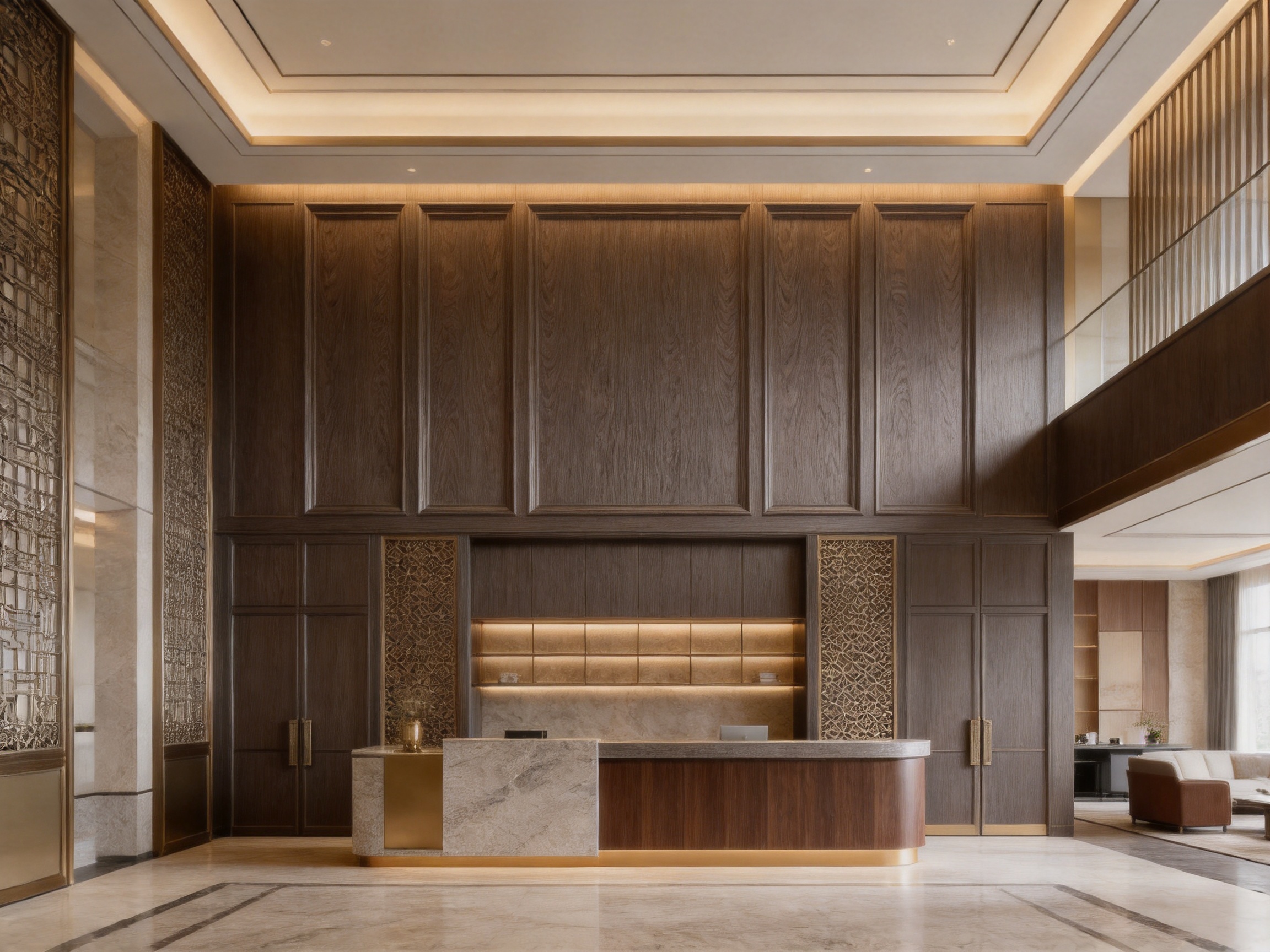
Hotels require materials that look premium, coordinate across large areas, and support efficient installation. Deep embossed wood veneer can be used in reception areas, guestroom headboards, corridors, restaurants, lounges, conference rooms, and executive suites. The surface can contribute to a welcoming atmosphere while offering a standardized product for repeated room layouts.
Offices and Corporate Environments
Corporate interiors often use wood surfaces to communicate trust, professionalism, and comfort. The panels can be applied to reception desks, meeting rooms, executive offices, acoustic wall systems, storage units, and collaborative work areas. Different colors and grain orientations can help define formal and informal zones.
Retail Stores and Showrooms
Retail design depends heavily on visual presentation. A textured wood-inspired background can provide contrast for merchandise and help establish a brand environment without overwhelming the products on display. The relief can also interact effectively with track lighting, display lighting, and illuminated signage.
Restaurants and Cafés
Restaurants often use wood effects to create warmth and identity. Embossed panels can be installed on walls, counters, booth seating backs, partitions, and decorative ceilings where appropriate. In food-service environments, cleaning procedures and local regulations should be considered when selecting the exact surface specification and installation location.
Educational and Institutional Buildings
Schools, libraries, healthcare-related administrative spaces, and community buildings may benefit from low-emission decorative materials with a comfortable appearance. Wood-inspired panels can reduce the institutional feel of large interiors and create more welcoming areas for study, waiting, or social interaction.
Design Planning and Specification Guidance
Selecting the Right Grain Direction
Grain direction influences how a room is perceived. Vertical grain can add height and create a sense of order. Horizontal grain can visually extend a wall. Diagonal or specially arranged applications may be used for feature areas, although they require more detailed cutting and installation planning.
Before ordering, designers should create a panel layout showing grain direction, joints, openings, doors, lighting, electrical outlets, and transitions to other materials. This reduces the risk of awkward interruptions or unwanted changes in pattern flow.
Coordinating Color and Lighting
Embossed surfaces respond strongly to lighting. Warm lighting often emphasizes golden, brown, and reddish wood tones, while cooler lighting may make the same panel appear more neutral or gray. Samples should therefore be evaluated under the approximate lighting conditions of the completed interior.
Designers should also inspect samples from different angles and distances. A texture that appears subtle in a small sample may become more pronounced across a large wall. Conversely, a dramatic sample may appear balanced when distributed over a larger area.
Managing Joints and Edges
Panel joints should be treated as part of the design rather than as an afterthought. Fine shadow gaps, aligned seams, reveal details, edge profiles, and transition strips can all influence the final result. Exposed edges may require matching edge treatment or a compatible finishing method.
For cabinetry, edge-banding or other edge solutions should be selected to coordinate with the face pattern. For wall systems, the support structure must maintain a level and plumb surface so that joints remain consistent.
Balancing Texture with Other Materials
Deep embossed wood veneer is visually active. It can be paired with smooth painted walls, glass, stone, concrete effects, metal, leather-inspired surfaces, textile panels, or plain melamine boards. The key is to create contrast without allowing too many strong textures to compete in the same area.
A common design strategy is to use the embossed wood panel as a focal material and surround it with quieter surfaces. Another approach is to use the same wood finish across several elements while limiting the number of additional colors and patterns.
Installation and Fabrication Considerations
Successful installation begins with proper storage. Panels should be kept flat, dry, clean, and protected from direct exposure to rain, condensation, and excessive heat. They should be acclimatized to the interior environment according to the recommendations of the supplier and the requirements of the specific board construction.
Before cutting, fabricators should inspect each panel for visible defects, verify dimensions, and confirm the direction of the wood grain. Cutting tools should be sharp and suitable for the board type. Poorly maintained tools can produce chipped edges, damaged relief, or unnecessary vibration.
During installation, the supporting wall or frame must be stable, clean, and sufficiently level. Uneven substrates can transfer stress to the panel and make joints appear inconsistent. Mechanical fixing, concealed fixing, adhesive installation, or a combination of methods may be suitable depending on the panel specification and application. The installer should follow the manufacturer’s technical guidance rather than relying on general assumptions.
Openings for electrical outlets, switches, lighting, and ventilation should be measured carefully. Deep embossed surfaces can make inaccurate cuts more visible, particularly when an opening interrupts a prominent grain line. Trial fitting and dry assembly are recommended for complex layouts.
Expansion and movement allowances should be considered where required by the panel system and building conditions. Even stable engineered materials need appropriate detailing at corners, floor lines, ceilings, and transitions. Good installation practice protects both appearance and long-term performance.
Maintenance and Service Life
Routine maintenance is generally based on gentle cleaning. Dust can be removed using a soft cloth, microfiber duster, or suitable vacuum attachment. For surface cleaning, use a lightly dampened cloth and a mild cleaning solution compatible with the product specification. Excess water should not be allowed to remain in recessed areas or along exposed edges.
Abrasive pads, aggressive solvents, strong acids, and unapproved polishing compounds should be avoided because they may change the appearance of the finish or damage the embossed surface. Cleaning personnel should be trained to follow the recommended procedures, especially in hotels, restaurants, offices, and public buildings where frequent cleaning is required.
Furniture surfaces should be protected from prolonged contact with standing water, excessive heat, sharp objects, and heavy impact. Proper use and regular inspection can help preserve the appearance of the panel. If damage occurs, repairs should be evaluated by a qualified fabricator or supplier because the three-dimensional surface may require specialized treatment.
Environmental and Health Considerations
Material selection increasingly includes indoor air quality, emissions, resource efficiency, and responsible manufacturing. According to the supplied company information, the products are developed to meet the international ENF formaldehyde standard. This low-emission positioning is relevant to projects where indoor environmental quality is a major requirement.
Architects, contractors, and purchasing departments should request current certificates, test reports, technical data sheets, and compliance documents for the exact product being specified. Standards and certification requirements can differ by country, building type, and project owner. Documentation should be reviewed before final approval.
Environmental performance also depends on the entire product life cycle. Efficient panel cutting can reduce waste, while durable surfaces may reduce the frequency of replacement. Standardized decorative panels can also help avoid the overuse of scarce or slow-growing timber species in applications where a wood appearance is desired but solid wood is not essential.
Responsible use requires careful planning. Designers should order accurate quantities, optimize cutting layouts, protect panels during transport, and separate or manage waste according to local regulations. At the end of service life, disposal and recycling options depend on the adhesive system, substrate, decorative layer, and local waste infrastructure.
Why Manufacturing Expertise Matters to Buyers
Decorative panel quality is not determined by the printed design alone. The reliability of the product depends on the interaction between raw materials, pressing equipment, adhesives, substrate preparation, production controls, inspection, packaging, and technical support. A supplier with experience in multiple panel processes is better positioned to identify and control these relationships.
YAKCO’s focus on 3D decorative panel technology and deep-pressing processes is important because the product requires more than ordinary surface lamination. The manufacturer’s stated six core production processes indicate a structured approach to material preparation, forming, bonding, finishing, inspection, and delivery. Its modern factory scale provides capacity for both product development and commercial supply.
The company’s location in Changshu City, Jiangsu, China, places its production operation within a major manufacturing region. Its stated address is No. 17, Furong Road, Baimao, Guli Town, Changshu City, Jiangsu, China. The company provides product and business communication through yakco@jsix.com and +86-13358024856.
For international buyers, direct communication with the manufacturer can help clarify panel dimensions, colors, embossing depth, substrate details, minimum order quantities, packaging, lead times, sample approval, and technical documentation. These factors should be confirmed before a large project order is placed.
Comparison of Decorative Surface Options
| Evaluation Factor | 3D Deep Embossed Wood Veneer | Flat Printed Decorative Board | Conventional Natural Wood Veneer | Solid Wood Panel |
|---|---|---|---|---|
| Visual depth | High, with coordinated relief and grain appearance | Limited, primarily dependent on printed image and lighting | Natural visual variation, usually with limited manufactured relief | Natural depth and material character |
| Appearance consistency | Controlled and suitable for coordinated projects | Generally consistent | Variable according to timber selection and finishing | Variable from board to board |
| Tactile experience | Pronounced embossed texture | Usually smooth or lightly textured | Depends on finishing and surface treatment | Natural tactile character |
| Fabrication efficiency | Suitable for standardized panel processing when correctly specified | Generally efficient | May require additional finishing and careful handling | May require more machining and finishing |
| Dimensional stability | Engineered for controlled interior performance | Depends on substrate and construction | Depends on veneer, substrate, adhesive, and environment | More affected by moisture and movement |
| Design flexibility | Wide range of wood-inspired colors, grains, and relief levels | Wide printed design selection | Based on available timber species and veneer cuts | Based on available timber species and board dimensions |
| Environmental specification | Can be selected with low-emission ENF-oriented performance, subject to documentation | Depends on the complete board system | Depends on adhesives, coatings, and substrate | Depends on species, finish, and sourcing |
This comparison is intended as a general guide. Actual performance depends on the construction, thickness, surface finish, substrate, installation method, and technical specification of each product. Buyers should compare certified data rather than relying solely on product category descriptions.
Purchasing Checklist for Projects
Before purchasing 3D deep embossed wood veneer, project teams should define the intended application. A wall panel, cabinet door, reception counter, wardrobe, ceiling feature, and display fixture may require different thicknesses, edge treatments, fire performance, moisture considerations, or installation systems.
Request a physical sample whenever possible. The sample should be reviewed for color, embossing depth, tactile quality, grain alignment, surface consistency, edge behavior, and compatibility with other materials. Digital images are useful for initial selection but cannot fully represent texture or color under real lighting.
Confirm the substrate construction and board dimensions. Ask whether the decorative layer is suitable for cutting, routing, drilling, edge-banding, and other planned fabrication methods. If the project involves curved components or special shapes, verify whether the product can meet those requirements.
Obtain information about formaldehyde emissions, applicable environmental standards, fire classification where relevant, cleaning resistance, surface maintenance, and warranty conditions. For public and commercial projects, documentation may need to be submitted during material approval.
Discuss production capacity and delivery planning. Large projects may require coordinated batches so that color and texture remain as consistent as possible. Packaging requirements, container loading, moisture protection, and inspection procedures should also be agreed in advance.
Quality Control Questions for Importers and Distributors
Importers and distributors should evaluate more than catalog appearance. They should ask how the manufacturer controls embossing depth across the panel, how decorative patterns are aligned, what adhesive system is used, how substrates are inspected, and what procedures are followed for finished product acceptance.
It is also useful to understand how samples relate to mass production. A sample made for presentation should represent the same materials and process used for commercial orders. Buyers can request batch references, production photographs, inspection records, packaging specifications, and pre-shipment inspection options where appropriate.
After arrival, panels should be checked before distribution or installation. Packaging damage, edge impact, moisture exposure, and surface contamination should be recorded. Early inspection allows problems to be addressed before the material is cut or installed.
Role of Product Development in Decorative Panel Innovation
Interior design trends change quickly, but product development should go beyond short-term appearance. A successful decorative panel must combine design relevance with manufacturing reliability. This requires research into embossing tools, decorative patterns, adhesives, substrate behavior, surface treatments, and installation requirements.
The development of 3D decorative panels reflects a broader movement toward tactile architecture. Designers increasingly seek surfaces that engage several senses and create stronger spatial identity. Deep-pressing technology allows a manufactured board to participate in this movement while retaining the repeatability required by modern construction.
YAKCO’s stated focus on innovative deep pressing, six core production processes, MDI adhesive bonding, stability, easy cutting, deformation resistance, and ENF formaldehyde performance demonstrates an attempt to address the complete needs of professional users. These priorities are valuable because a decorative product must perform after it leaves the showroom. Its real value is demonstrated during fabrication, installation, occupancy, cleaning, and long-term maintenance.
Future Potential of 3D Wood-Inspired Panels
The market for decorative panels is likely to continue moving toward more tactile, realistic, and multifunctional surfaces. Future products may offer even more precise alignment between printed grain and embossed relief, greater variation in surface depth, improved scratch and stain resistance, and more specialized low-emission or recyclable constructions.
Digital design and computer-controlled production may also support more customized panel layouts. Designers could specify grain directions, relief scales, modular patterns, and coordinated panel families for specific architectural concepts. At the same time, efficient production will remain important because commercial projects require predictable pricing, quality, and delivery.
Another important direction is the integration of decorative and functional performance. In the future, wood-inspired panels may be combined with acoustic backing, concealed lighting, fire-rated assemblies, moisture-resistant cores, or demountable wall systems. These developments would allow a single visual language to support more technical interior applications.
Q&A
What is 3D deep embossed wood veneer?
It is a decorative wood-inspired panel surface with a pronounced three-dimensional relief. The embossed structure follows or complements the appearance of wood grain, creating visual depth and a tactile experience. It may be applied to or manufactured with an engineered melamine board substrate for interior use.
How is it different from a normal melamine board?
A normal melamine board may have a printed decorative pattern with a smooth or lightly textured surface. A 3D deep embossed wood veneer adds a stronger physical relief, creating shadows, highlights, and tactile variation. This can make the surface appear more natural and premium.
Can the product be used for furniture?
Yes, it can be suitable for furniture components such as cabinet doors, wardrobes, drawer fronts, shelving, storage units, reception counters, and built-in systems, provided the selected specification is compatible with the intended fabrication and service conditions.
Can it be used on walls?
Yes. It is suitable for feature walls, decorative wall systems, headboards, office backgrounds, hotel interiors, retail displays, restaurant interiors, and other interior wall applications. The wall structure, fixing method, joints, and edge details should be planned according to the project requirements.
Does deep embossing affect cutting?
It can influence cutting because the surface is more dimensional than a flat board. However, the product is developed with attention to easy cutting and practical processing. Fabricators should use suitable tools, confirm the grain direction, support the panel properly, and test the cutting method before processing a large quantity.
Is the panel resistant to deformation?
The product is designed to provide improved stability and deformation resistance compared with less controlled decorative constructions. Nevertheless, all engineered wood panels should be stored and installed correctly. Excessive moisture, uneven support, high heat, and poor detailing can affect performance.
Is it environmentally friendly?
The supplied company information states that the products are designed to meet the international ENF formaldehyde standard. Buyers should request current test reports and compliance documents for the exact product specification. Environmental performance also depends on installation materials, building ventilation, maintenance, and end-of-life management.
What adhesive technology is used?
The manufacturing information identifies MDI medical adhesive bonding as part of the company’s production approach. The adhesive system supports strong bonding between the decorative layer and substrate and is intended to contribute to surface stability and resistance to separation.
Can it replace solid wood in every application?
No material replaces solid wood in every situation. Solid wood may be preferred where natural material authenticity, structural machining, or a particular timber specification is required. 3D deep embossed wood veneer is a practical alternative when a wood appearance, tactile texture, dimensional consistency, efficient fabrication, and engineered performance are priorities.
How should the surface be cleaned?
Use a soft cloth or suitable microfiber tool and, when necessary, a lightly dampened cloth with a mild compatible cleaning solution. Avoid abrasive materials, strong solvents, excess water, and unapproved chemicals. Cleaning instructions should be confirmed with the supplier for the specific finish.
What should be confirmed before placing a large order?
Confirm the decorative pattern, color, embossing depth, board dimensions, thickness, substrate, edge treatment, formaldehyde documentation, fire or moisture requirements, fabrication suitability, packaging, delivery schedule, inspection process, and warranty terms. A physical sample should be approved before mass production.
Who manufactures this type of product?
YAKCO New Materials (Jiangsu) Co., Ltd. specializes in high-end decorative panels and wall panels and has developed 3D decorative panel technology, deep-pressing processes, and engineered bonding systems. The company was established in 2007 and operates a large modern factory in Changshu City, Jiangsu, China.
Conclusion
3D deep embossed wood veneer represents a practical evolution of wood-inspired decorative panels. By combining a realistic grain appearance with physical relief, the product provides greater visual depth and a more engaging tactile experience than many flat printed alternatives. Its engineered melamine board substrate supports consistent fabrication, coordinated project design, and efficient use across furniture, wall systems, cabinetry, hospitality interiors, offices, retail spaces, and residential environments.
The main advantages come from the complete manufacturing system rather than from decoration alone. Deep-pressing technology creates the relief, substrate engineering supports stability, MDI adhesive bonding helps secure the layered construction, and structured quality control helps maintain consistency. The company’s stated focus on six core production processes, deformation resistance, easy cutting, and ENF formaldehyde performance addresses many of the practical concerns faced by professional buyers.
For designers and project owners, the material offers a way to achieve a warm, natural, and tactile interior appearance while retaining the repeatability of manufactured panels. For fabricators and distributors, it offers a product category that can support standardized processing and a broad range of design applications. As with any interior material, the best results depend on correct specification, sample approval, careful storage, appropriate installation, and regular maintenance.
When these requirements are managed properly, 3D deep embossed wood veneer can provide a durable and visually expressive solution for modern decorative panel projects. It offers the character associated with wood, the dimensional interest of three-dimensional texture, and the production advantages required by contemporary residential and commercial construction.
References
1. YAKCO New Materials (Jiangsu) Co., Ltd. Company information and product descriptions supplied for article preparation.
2. ENF formaldehyde emission classification information for engineered wood-based panels and interior decorative materials.
3. General technical principles for melamine-faced boards, decorative substrates, and engineered wood panel fabrication.
4. General manufacturing practices for deep pressing, decorative surface forming, adhesive bonding, panel inspection, and packaging.
5. General interior design and installation principles for decorative wall panels, furniture panels, cabinetry, and architectural surfaces.