中文简体



Previous Post
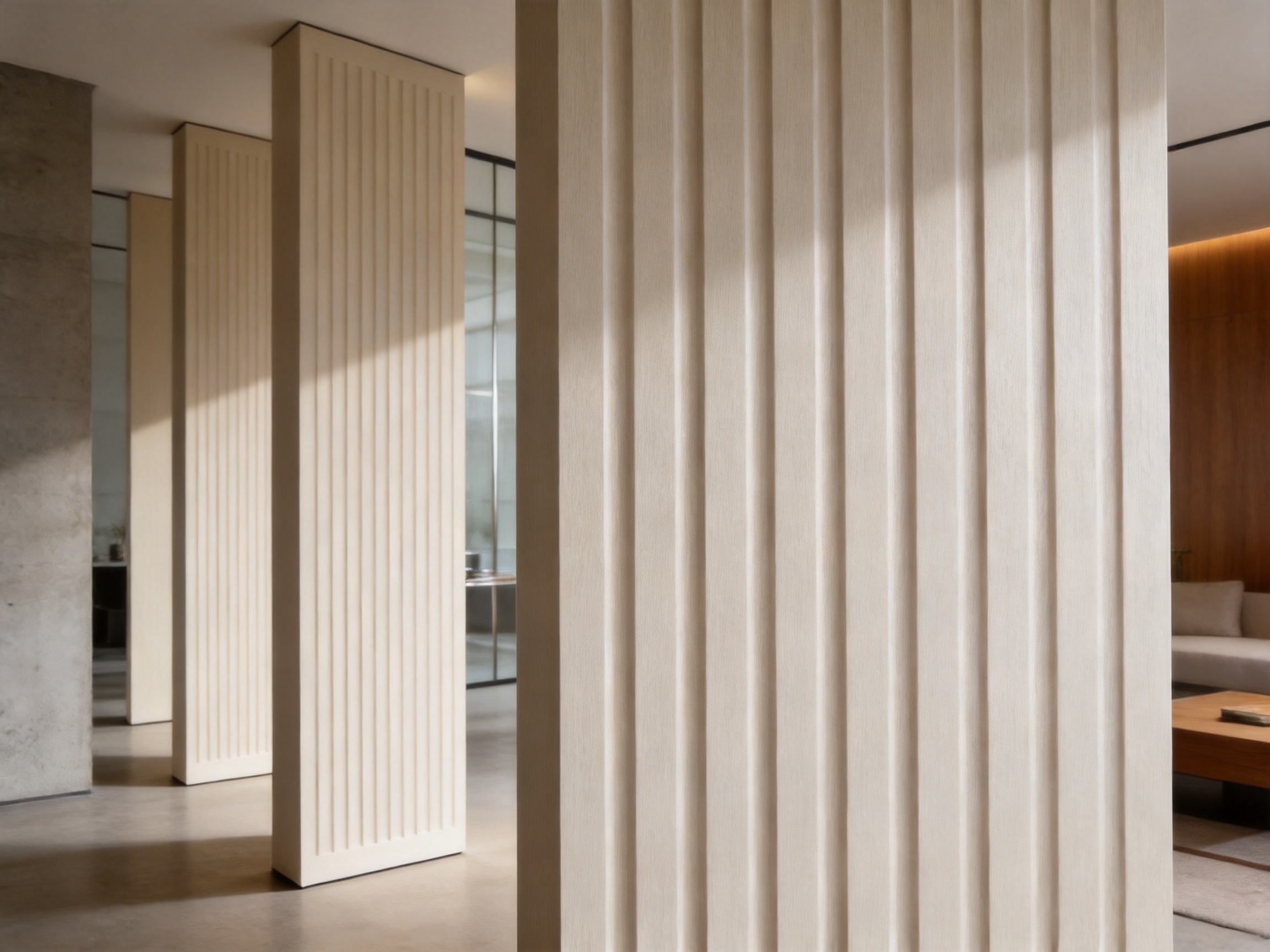
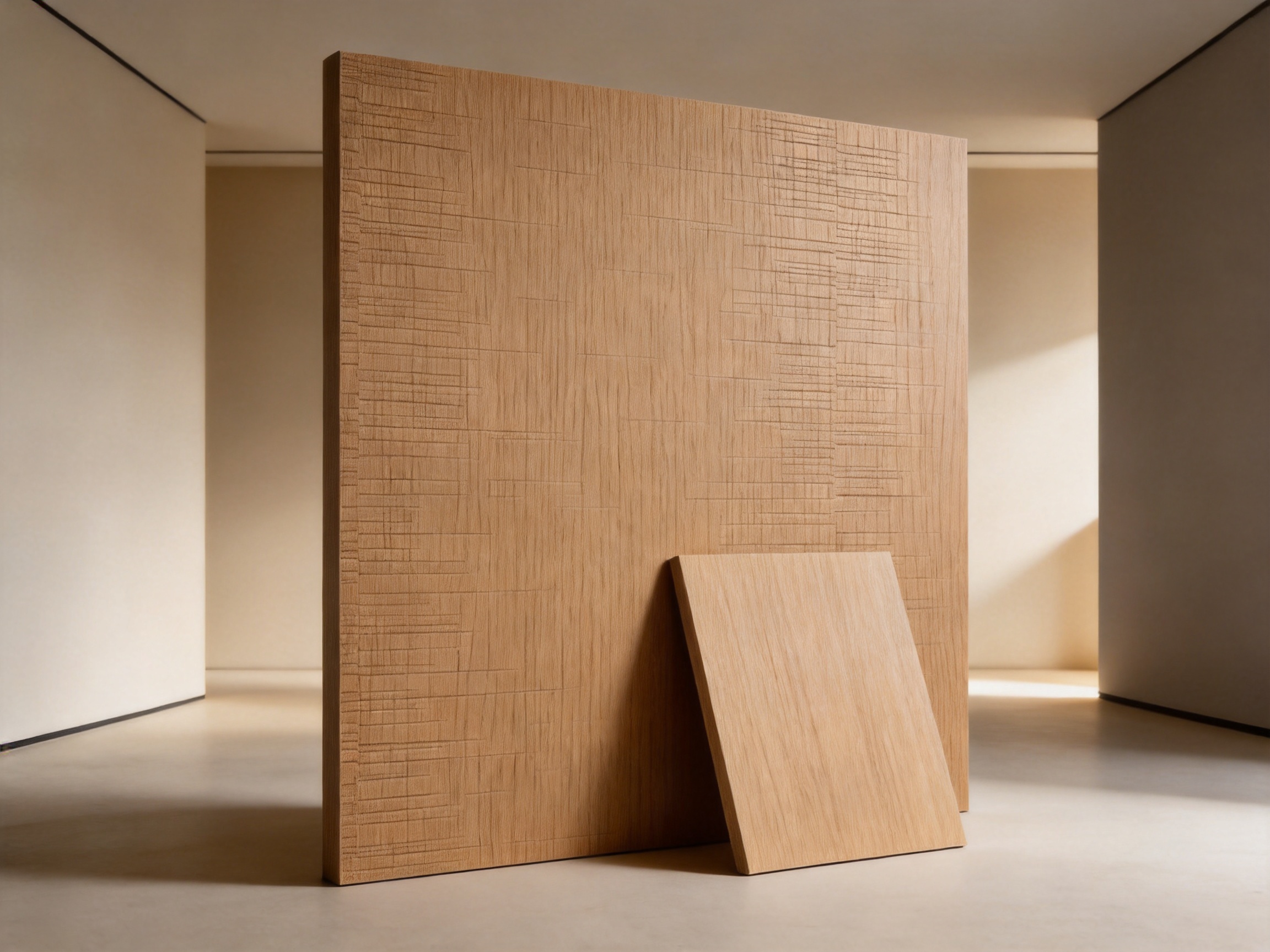
Interior design is increasingly moving beyond purely visual decoration. Modern spaces are expected to look elegant, feel comfortable, perform reliably, and remain practical throughout years of daily use. This shift has created demand for decorative panels that combine sophisticated appearance with tactile richness, structural stability, easy maintenance, and responsible environmental performance. The PZ01 Leather1 Texture Panel responds to this demand by bringing the warmth and subtle grain of fine leather to a melamine-faced panel system.
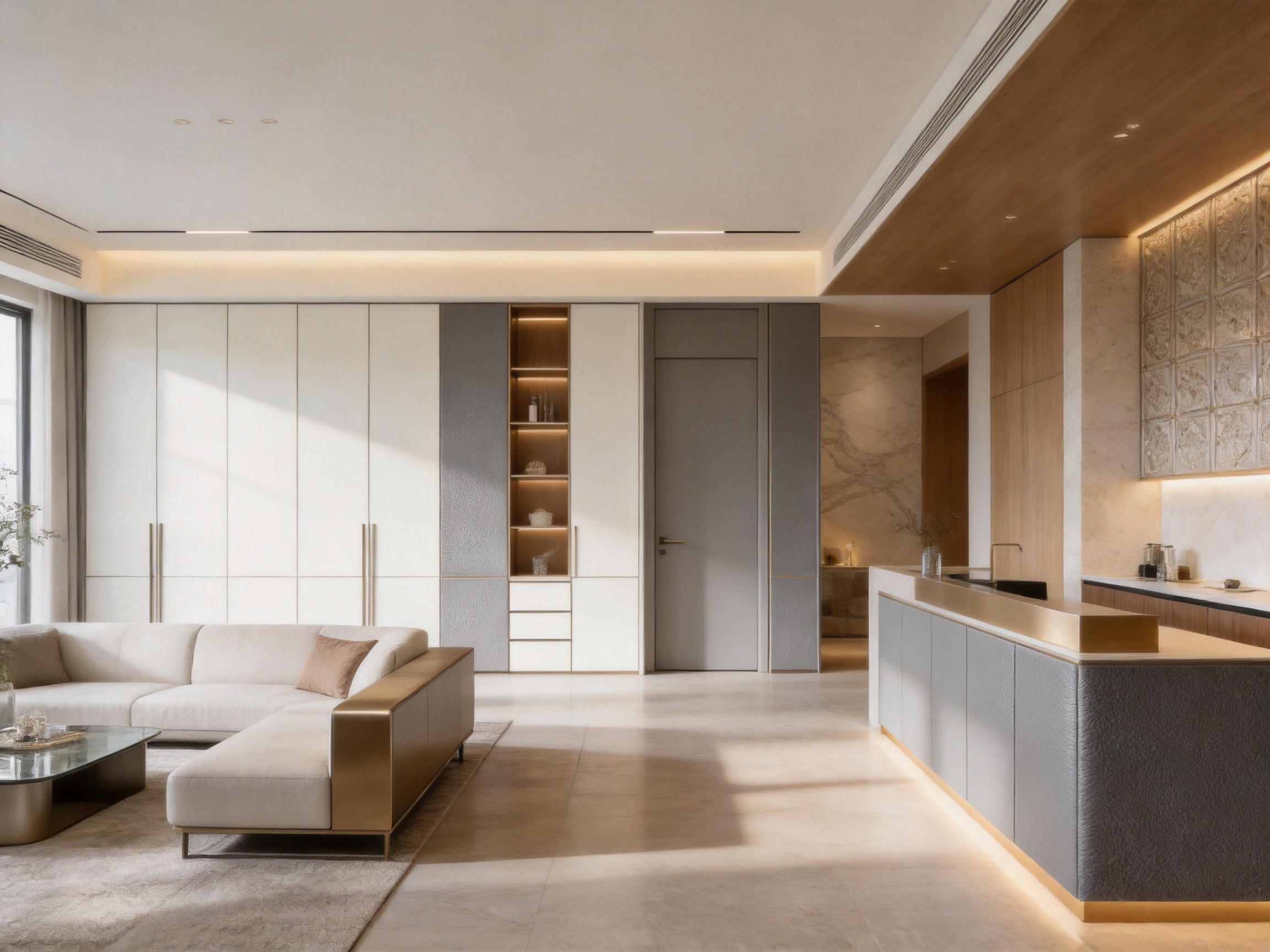
Designed for light-luxury interiors, the PZ01 panel uses a delicate leather-like surface rather than a dramatic decorative pattern. Its visual character is quiet, refined, and versatile. The panel can support residential, hospitality, retail, office, and commercial applications in which designers want a sense of quality without excessive ornamentation. It is suitable for feature walls, furniture fronts, wardrobes, cabinets, doors, reception areas, display systems, and other interior surfaces where touch and close-up appearance matter.
The product combines a light leather texture, melamine-impregnated decorative paper, precision deep embossing, and a selection of engineered wood substrates. It is available in several thicknesses and panel dimensions, allowing manufacturers, contractors, furniture producers, and interior designers to choose a configuration suited to their specific project. Its performance advantages include scratch resistance, wear resistance, stain resistance, cleanability, dimensional stability, and lower maintenance requirements than genuine leather finishes.
What Is the PZ01 Leather1 Texture Panel?
The PZ01 Leather1 Texture Panel is a melamine-faced decorative board featuring a fine-grain, leather-inspired surface. The design is based on the appearance and tactile qualities of premium leather, but it is manufactured as an industrial interior panel rather than as a natural hide finish. The result is a surface that communicates warmth and sophistication while retaining the predictable characteristics of an engineered board.
Natural leather can provide an attractive visual effect, but it may be costly, sensitive to environmental conditions, difficult to install over large areas, and demanding to maintain. Leather-look films and printed laminates can offer a lower-cost alternative, yet some products lack convincing texture or feel too artificial when viewed or touched at close range. PZ01 addresses this gap through the combination of decorative melamine paper and deep embossing technology.
The embossed surface creates a fine grain that can be seen under changing light and felt during ordinary contact. The texture is not intended to dominate a room. Instead, it provides a controlled layer of visual depth across an otherwise clean surface. This makes PZ01 particularly appropriate for contemporary interiors based on neutral tones, simple forms, balanced proportions, and carefully selected materials.
The product is identified with the Leather1 texture design and belongs to the Leather Design Melamine Board category. Its finish is described as a light leather texture. The available thicknesses include 1.5 millimeters, 9 millimeters, 12 millimeters, 18 millimeters, 22 millimeters, and 25 millimeters, with commercial size information specifically listing 9, 12, 18, 22, and 25 millimeter boards. Standard panel dimensions are 1220 × 2745 millimeters, with additional lengths of 2800, 3050, and 3300 millimeters available according to project requirements.
The Design Philosophy Behind Light Luxury
Light luxury is not defined by excessive decoration or conspicuous ornamentation. It is generally expressed through material quality, controlled color, refined details, and a sense of comfort. In this design language, a material should look attractive from a distance but reward closer observation as well. Surface texture, edge treatment, joinery, and touch become important parts of the overall experience.
PZ01 supports this approach through its restrained appearance. Rather than using a bold marble pattern, strong wood figure, or high-contrast graphic, it creates interest through a fine-grain surface. The panel can therefore be used as a background material, a furniture accent, or a repeated architectural element without overwhelming the surrounding interior.
Its leather-like grain introduces a subtle sense of softness to materials that are structurally firm. This contrast is valuable in modern interiors, where large areas of engineered wood, glass, metal, and stone may otherwise create a cold or excessively hard atmosphere. PZ01 adds tactile warmth while maintaining the clean geometry expected from contemporary furniture and architectural surfaces.
The panel is especially compatible with minimalist, modern, transitional, boutique, and contemporary commercial design schemes. It can be paired with brushed metal, painted surfaces, natural wood, stone-look panels, textiles, glass, and warm lighting. The neutral character of the texture also allows it to work as a long-term design solution rather than a short-lived trend statement.
Color Options and Visual Adaptability
The PZ01 design is associated with a restrained color palette including Cloud Gray, Pure White, and Cloud White Fine Leather Grain. These shades provide different interpretations of the same surface concept. Cloud Gray can create a calm, architectural appearance and may be appropriate for offices, hospitality interiors, wardrobes, or modern living areas. Pure White produces a bright and clean visual field, helping smaller spaces appear more open. Cloud White Fine Leather Grain offers a softer alternative to a flat white finish by introducing tactile depth without significantly increasing visual intensity.
Neutral colors are valuable in furniture and interior manufacturing because they can be coordinated with a broad range of hardware, flooring, upholstery, lighting, and wall treatments. They also allow designers to alter the atmosphere of a room through accessories and lighting rather than replacing the main surfaces. A textured neutral panel can therefore provide both immediate visual appeal and long-term flexibility.
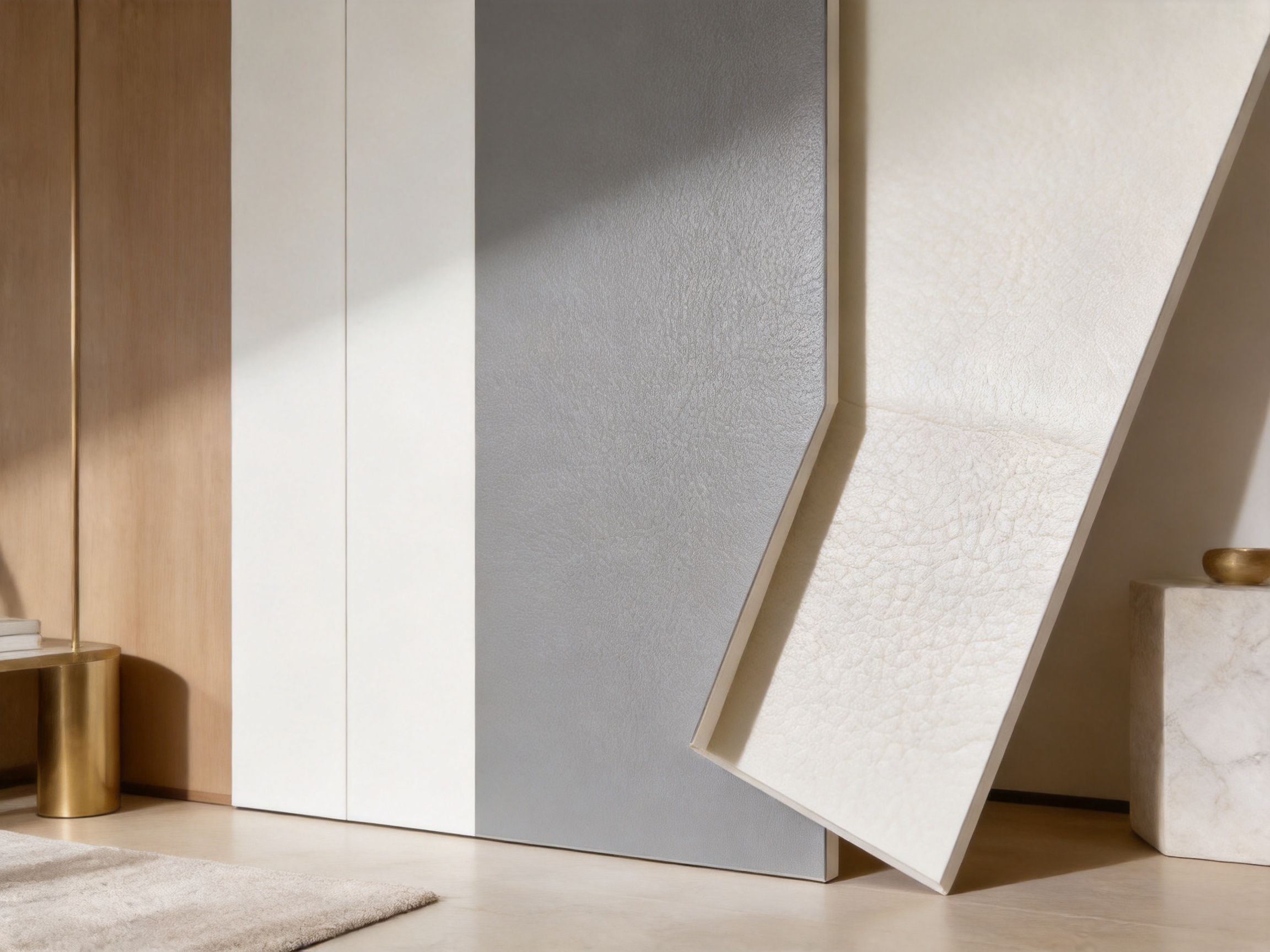
Lighting has an important effect on embossed decorative surfaces. Under diffuse light, PZ01 can appear smooth and understated. Under directional or grazing light, the fine grain becomes more visible and creates delicate shadow variation. This gives designers the opportunity to use the same panel in different ways depending on the position of luminaires, the angle of installation, and the scale of the application.
Because the texture is relatively fine, it can be used on broad surfaces without creating the repetitive visual disruption associated with large, highly directional patterns. It can also be applied to smaller cabinet doors, drawer fronts, wall niches, headboards, and reception counters where the tactile quality can be appreciated at close range.
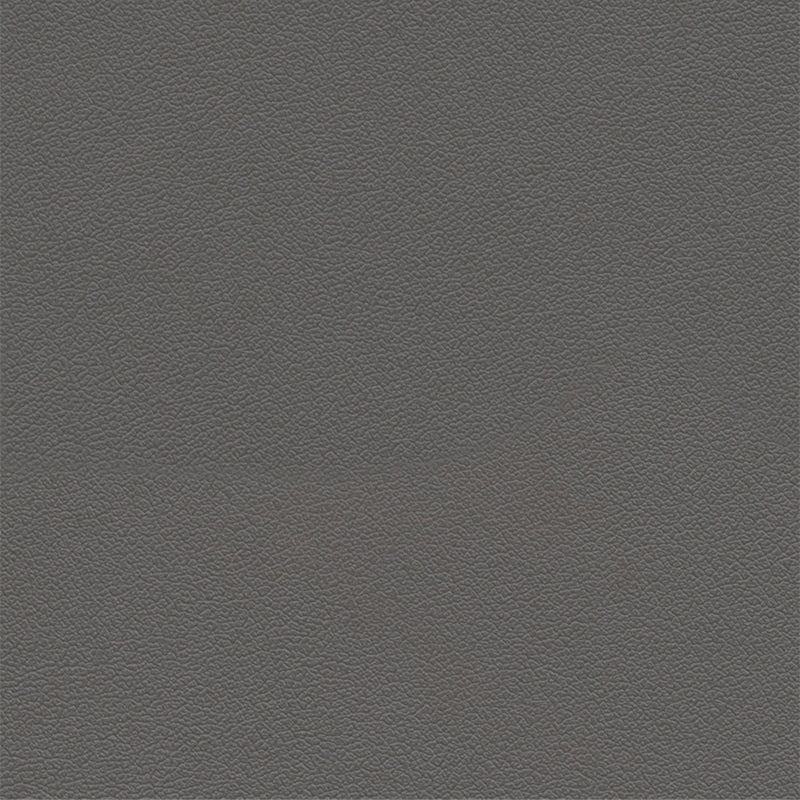
PZ01 Leather1 texture Panel-Light Luxury
Precision Deep Embossing and Surface Realism
The defining technical feature of PZ01 is its precision deep-embossed leather grain. Embossing changes the physical profile of the decorative surface rather than merely printing an image. This distinction is important because texture is perceived through both sight and touch. A printed leather image may communicate color and pattern, but it cannot reproduce the same degree of physical relief or tactile response.
Deep embossing requires accurate control of pressure, temperature, alignment, and surface materials. If the process is poorly controlled, the finished panel may exhibit uneven grain, crushed areas, excessive gloss variation, whitening, carbonization, or visible speckling. These defects are especially noticeable on light-colored products and in applications where the surface is viewed or handled at close range.
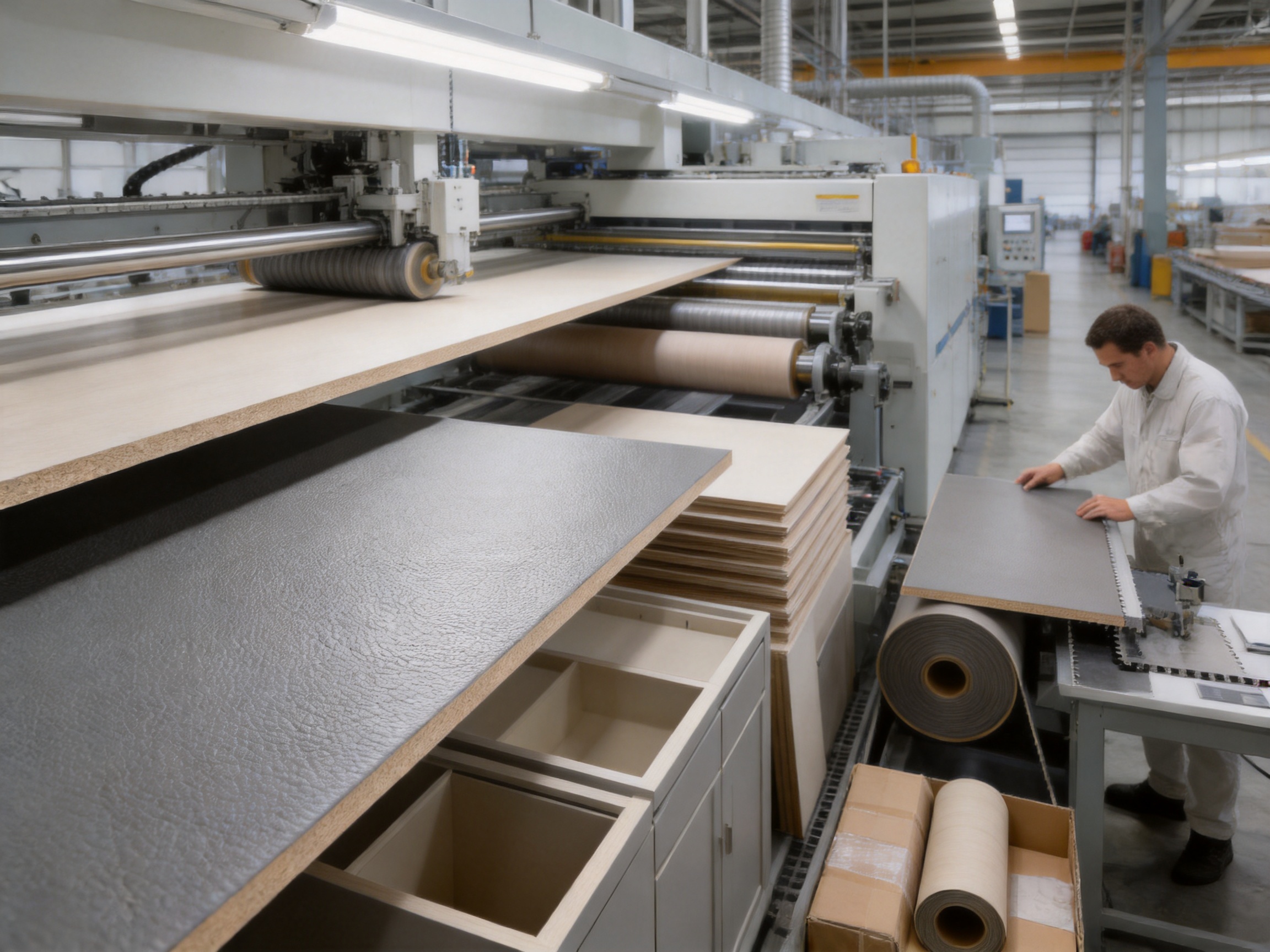
The manufacturing approach used for PZ01 is intended to preserve the fine leather grain throughout the panel surface. The production process emphasizes clean embossing and consistent appearance, helping the board maintain a premium impression from edge to edge. This is important for furniture producers and interior contractors because inconsistencies can become more visible after panels are cut, arranged side by side, or installed under strong lighting.
Deep embossing also creates a more convincing material experience than a flat decorative finish. When a user opens a cabinet, touches a wall panel, or handles a furniture front, the surface provides a subtle response that supports the design concept. The material feels less like a generic printed board and more like a deliberately selected finish.
The company’s focus on 3D decorative panel technology is central to this capability. Its manufacturing background includes innovative deep-pressing processes and multiple core production processes intended to improve depth, layering, texture, stability, cutting performance, and deformation resistance. These capabilities provide a foundation for producing decorative panels with more complex surface effects than standard flat melamine boards.
Skin-Like Surface Treatment
In addition to embossing, PZ01 incorporates a special skin-like coating treatment. This surface treatment is intended to create a soft and supple tactile impression similar to premium leather or a skin-like lacquer. The purpose is not to imitate every characteristic of natural leather, but to make the engineered panel feel warmer and more refined during use.
This tactile quality can be valuable in applications where people interact directly with the material. Cabinet doors, wardrobe fronts, desk panels, retail fixtures, hospitality furniture, and wall surfaces are frequently touched. A finish that feels carefully developed can influence the perceived quality of the entire interior.
The combination of physical grain and surface treatment is one of the product’s main distinctions. A flat coating may look smooth but lack depth. A deeply embossed surface may provide relief but feel excessively hard or industrial. PZ01 is designed to balance these qualities by combining visible grain, tactile softness, and the structural benefits of a board-based panel.
This balance also supports the broader light-luxury concept. Luxury is not only associated with rarity or high cost; it is also associated with consistency, comfort, and attention to detail. A surface that feels pleasant, remains visually stable, and can be maintained easily may provide a more practical form of luxury for everyday interiors.
Zero-Defect Manufacturing Standards
Fine decorative textures require a high level of process discipline. A small defect may be more obvious on a clean solid-color surface than on a busy wood or stone pattern. For this reason, the manufacturing quality of PZ01 is not limited to the design of the embossing roller or decorative paper. It also depends on substrate preparation, adhesive control, pressing conditions, surface inspection, trimming, and packaging.
The product information emphasizes a production objective of avoiding carbonization, whitening, and speckling during deep embossing. These issues can affect both appearance and customer confidence. Carbonization may create dark marks caused by excessive heat or process stress. Whitening may appear when a surface layer is compressed or stretched beyond its ideal condition. Speckling can interrupt the clean appearance of a solid-color design.
Consistent production is particularly important for projects requiring multiple panels. A commercial reception area, wardrobe program, hotel corridor, or retail installation may require dozens or hundreds of boards. If the shade, gloss, or texture varies from panel to panel, the completed project may appear uneven. Controlled production and inspection help reduce this risk.
For large orders, purchasers should still confirm batch-management procedures, color approval samples, texture direction, tolerance requirements, and packaging details before production. Even when a product is manufactured to a consistent standard, natural changes in lighting, substrate composition, and installation conditions can influence the final appearance. A physical approval sample remains a useful part of professional procurement.
Substrate Choices for Different Applications
PZ01 can be produced on several engineered and composite substrates. The listed options include LSB, SOSB, MDF, HMR MDF, particleboard, fire-resistant board, wood veneer, and plywood. The commercial information also identifies OSB, MDF, and particleboard as substrate options, with the source specification using a typographical form that appears as “0SB.” Buyers should confirm the exact substrate designation and construction before placing a final order.
Medium-density fiberboard, or MDF, is often selected where a smooth, uniform surface and precise machining are important. It is suitable for furniture fronts, cabinet doors, decorative wall panels, and shaped components. High-moisture-resistant MDF can provide additional protection in environments where humidity is elevated, provided that the full assembly is properly sealed and installed.
Particleboard may be chosen for cost-sensitive furniture and interior applications. It can provide an efficient balance of performance and economy when used in dry indoor environments. Edge sealing and correct hardware selection remain important, particularly where the board may be exposed to moisture or repeated mechanical stress.
Oriented strand board and related structural strand boards can provide a distinctive internal construction and may be selected for specific structural or design requirements. Plywood offers layered strength and can be useful where screw-holding, rigidity, or reduced weight is important. Fire-resistant board can support projects with additional fire-performance requirements, subject to the relevant product certification and local building regulations.
LSB and SOSB options may be considered where designers or manufacturers require particular structural, dimensional, or processing characteristics. Because substrate performance varies, the most suitable option should be selected according to span, fastening method, humidity, panel size, edge treatment, and intended use.
| Product feature | Available or specified option | Typical project value |
|---|---|---|
| Surface finish | Light leather texture with fine-grain embossing | Provides visual depth and a soft tactile impression |
| Decorative material | Melamine-impregnated paper | Supports consistent color, cleanability, and surface protection |
| Thicknesses | 1.5, 9, 12, 18, 22, and 25 millimeters | Allows selection for decorative skins, furniture, cabinetry, and thicker panels |
| Standard dimensions | 1220 × 2745 millimeters | Efficient format for furniture and architectural panel production |
| Additional dimensions | 1220 × 2800, 3050, and 3300 millimeters | Supports taller doors, wall elements, and larger installations |
| Substrate options | LSB, SOSB, MDF, HMR MDF, particleboard, fire-resistant board, wood veneer, and plywood | Enables specification according to strength, moisture, machining, and cost requirements |
| Matching edge banding | 1 × 26 millimeters and 1 × 56 millimeters | Helps create coordinated and finished exposed edges |
| Environmental grades | E0, E1, P2, and F4 references in the product information | Provides options for projects with formaldehyde-emission requirements; confirmation is recommended per order |
Performance Advantages in Everyday Use
Scratch and Wear Resistance
Decorative surfaces in homes, offices, hotels, and retail spaces are exposed to repeated contact. Cabinet doors are opened and closed, furniture fronts are handled, and wall panels may be brushed by clothing, bags, or equipment. PZ01 includes a wear-resistant surface treatment intended to withstand ordinary scratches and surface abrasion.
No decorative panel is completely immune to damage, and correct use remains important. Sharp tools, abrasive cleaners, dragging hardware, and severe impact can affect any finished surface. However, a melamine-faced panel with an engineered protective layer can provide a more practical level of day-to-day resistance than untreated natural leather or delicate decorative coatings.
Stain Resistance and Easy Cleaning
The high-density surface is designed to resist common fingerprints and stains. This is especially valuable for light-colored options such as Pure White and Cloud White Fine Leather Grain. A surface that can be cleaned with a soft cloth and an appropriate mild cleaning solution reduces maintenance time and helps preserve the visual consistency of the installation.
Easy cleaning is a major advantage in kitchens, hospitality areas, retail environments, healthcare-related interiors, offices, and family homes. In these settings, the material must not only look attractive when newly installed but also remain manageable during routine maintenance. The textured surface is intended to provide tactile interest without creating an excessively difficult cleaning profile.
Users should follow the manufacturer’s care guidance and avoid strong solvents, abrasive powders, excessive water, and aggressive scouring pads. Prompt removal of spills is recommended, especially for strongly colored liquids or substances containing oils and dyes.
Moisture and Dimensional Stability
PZ01 is designed to offer a stable engineered alternative to natural leather finishes. Depending on the selected substrate, it can provide resistance to ordinary changes in indoor humidity and a reduced tendency to warp compared with less stable materials. The substrate selection, edge sealing, storage conditions, and installation method all contribute to final performance.
Moisture resistance should not be confused with unrestricted outdoor or wet-area suitability. Unless a specific configuration has been tested and certified for such conditions, the panel should be used in appropriate interior environments. Bathrooms, utility rooms, kitchens, and other areas with elevated humidity require careful substrate selection and complete protection of exposed edges and joints.
Color and Surface Aging
Natural leather can change color, dry out, develop marks, or respond unpredictably to light and moisture. PZ01 is intended to provide a more stable decorative surface that does not age or fade as easily under normal indoor conditions. This makes it suitable for projects that require a consistent appearance over time.
Actual color stability depends on exposure, lighting intensity, cleaning practices, and environmental conditions. For commercial projects with strong daylight or specialized lighting, project teams should request the appropriate technical information and evaluate a physical sample under representative conditions.
Environmental and Indoor-Air Considerations
The product information references environmental grades including E0, E1, P2, and F4. The specification section also describes E0 and E1 options, while the commercial information lists P2/F4. Because environmental classifications may depend on the selected substrate, production batch, market, and certification system, buyers should confirm the exact emission grade for the ordered configuration.
The company states that its products are developed with environmentally responsible manufacturing in mind and that its processes can meet the international ENF formaldehyde standard. MDI medical adhesive bonding is also identified as part of the company’s technical capabilities. Formaldehyde emissions and environmental performance should always be verified through current documentation for the specific product and substrate.
For interior projects, low-emission materials can contribute to a more comfortable indoor environment, especially when used across large areas. Correct ventilation, storage, installation, and maintenance practices remain important parts of responsible material use.
Advantages Compared with Common Alternative Finishes
Compared with Genuine Leather
Genuine leather offers natural variation and a familiar premium image, but it can be expensive when applied across large architectural surfaces. It may also require specialized installation, careful conditioning, and protection from moisture, abrasion, and staining. Large leather-clad panels can be difficult to keep consistent in color and grain.
PZ01 provides a more standardized and scalable approach. Its decorative pattern, panel dimensions, thickness options, and edge-banding choices are suited to industrial production. It can deliver a leather-inspired appearance and tactile impression while retaining the cutting, machining, and installation characteristics of a board material.
The comparison is not intended to suggest that engineered panels replace every use of genuine leather. Natural leather remains valuable where its unique organic variation is specifically required. PZ01 is advantageous where designers want a controlled appearance, easier maintenance, lower material cost, and compatibility with furniture and panel-processing systems.
Compared with Flat Melamine Boards
Standard flat melamine panels are efficient and widely used, but they may provide limited tactile depth. Their appearance often depends primarily on color or printed pattern. PZ01 adds three-dimensional grain and a skin-like surface experience, giving designers another way to create visual interest without selecting a complex graphic design.
The embossed leather grain can make a simple solid color appear more layered and sophisticated. This can be especially useful in minimalist projects where decorative restraint is important but a completely flat surface would seem too plain.
Compared with Decorative Films
Decorative films can offer a wide range of patterns and may be applied to different substrates. However, film quality, adhesion, edge durability, and tactile authenticity can vary considerably. Some films imitate leather visually but feel plastic or lose their appearance at edges and high-contact locations.
A melamine-faced board is manufactured as an integrated decorative panel system. The decorative paper and surface treatment are pressed onto the selected board substrate, creating a more production-oriented solution for furniture and interior manufacturing. PZ01 also provides coordinated edge-banding options, which can help produce a more complete and consistent assembly.
Compared with Painted or Lacquered Panels
Painted and lacquered panels can deliver smooth, colorful surfaces, but they may reveal fingerprints, scratches, or application irregularities. High-gloss finishes can also require frequent cleaning and may show reflections that are unsuitable for certain interiors. PZ01 offers a more forgiving low-key visual effect through its fine-grain surface and controlled sheen.
Its leather-like texture can conceal minor visual interruptions more effectively than an extremely smooth, high-gloss finish. At the same time, the neutral color range supports a refined appearance without the need for multiple coating stages at the installation site.
Manufacturing Strengths of the Producer
YAKCO New Materials (Jiangsu) Co., Ltd. was established in 2007 and operates a modern manufacturing facility covering approximately 50 acres, with more than 30,000 square meters of standard factory buildings. The company specializes in high-end decorative panels and wall panels for residential and commercial interiors.
This scale provides an important foundation for product development and supply reliability. A modern production facility can support dedicated equipment, process testing, quality inspection, raw-material management, and organized packaging. These capabilities are especially relevant for textured panels, where production consistency directly affects the final visual result.
The company established the YAKCO brand in 2016 and has focused on 3D decorative panel technology. Its technical development includes innovative deep-pressing methods and six core production processes. These capabilities are positioned to improve depth, layering, texture definition, stability, ease of cutting, deformation resistance, and environmental performance.
MDI medical adhesive bonding is also identified among the company’s manufacturing technologies. Adhesive selection and bonding control are important because the quality of the bond influences surface durability, dimensional behavior, and long-term reliability. A stable bonding system can help the decorative layer and substrate function as a coordinated panel rather than as loosely connected components.
The company’s product strategy combines decorative design with engineered performance. Instead of treating texture as a purely visual feature, the manufacturing approach considers how the surface will be touched, cut, installed, cleaned, and used in an occupied space. This integrated perspective is valuable for project buyers who need decorative appeal without sacrificing production efficiency.
Its product range extends beyond leather designs to include rock designs, fabric and textile designs, art deco styles, wood designs, grain-cloth finishes, frosted 3D boards, melamine substrates, and other decorative panel categories. This broader portfolio can help designers coordinate several surface types within one project while working with a single panel supplier.
The company states that its products are intended to meet international ENF formaldehyde standards. Certification and test documentation should be requested for each specific configuration, but the stated emphasis demonstrates an awareness of the environmental requirements increasingly applied to interior materials and international building projects.
Applications for Residential Interiors
In residential projects, PZ01 can be used for wardrobe doors, bedroom storage, living-room cabinetry, entryway furniture, study areas, wall cladding, headboards, and decorative partitions. Its calm surface is suitable for spaces where residents want a comfortable appearance rather than a heavily patterned finish.
Cloud Gray can support contemporary furniture compositions with dark metal, warm wood, or stone-look surfaces. Pure White can create a clean, bright cabinet system, particularly when combined with concealed handles and simple profiles. Cloud White Fine Leather Grain can add a softer dimension to bedrooms, dressing areas, and quiet living spaces.
The panel can also be used selectively rather than across an entire room. For example, a designer may specify PZ01 on wardrobe fronts while using a wood-look surface on side panels and a stone-look surface on a vanity or worktop. This approach allows the leather-like texture to function as a controlled accent within a broader material palette.
Applications for Commercial and Hospitality Spaces
Commercial environments often require surfaces that look refined but can withstand repeated use. PZ01 may be suitable for hotel headboards, reception desks, guestroom furniture, retail display fixtures, office storage, meeting-room cabinetry, restaurant partitions, and boutique interiors.
In hospitality design, the tactile quality of the panel can contribute to a sense of comfort and exclusivity. A hotel reception area, for instance, can use a textured neutral panel to create a welcoming background without relying on elaborate ornament. In retail settings, the material can support a premium brand environment while remaining practical for repeated handling and cleaning.
Office interiors can benefit from the balance between professional simplicity and tactile warmth. PZ01 may be used on storage walls, executive furniture, acoustic feature zones, or reception furniture, subject to the project’s fire, impact, and maintenance requirements. Its neutral color range can coordinate with corporate palettes without competing with signage or technology.
Because commercial installations often involve substantial quantities, buyers should pay close attention to batch consistency, lead times, cutting plans, edge-banding availability, packaging, and replacement-panel procedures. These logistical factors are part of the overall value of a decorative board system.
Processing, Fabrication, and Installation Guidance
PZ01 can be processed using methods appropriate to its selected substrate, including panel saw cutting, CNC routing, drilling, edge treatment, and furniture assembly. The exact tooling and cutting parameters should be established through sample testing because the embossed surface, substrate density, and thickness can influence machining results.
Clean cutting is especially important when panels are used for visible cabinet fronts or wall installations. Dull tooling may produce chipped edges or excessive heat. Proper support, correct blade selection, and controlled feed speed can help preserve the decorative layer and reduce the risk of edge damage.
Matching edge banding is listed in dimensions of 1 × 26 millimeters and 1 × 56 millimeters. These options can help coordinate exposed edges with the panel face. Edge-banding procedures should be selected according to the substrate and production equipment. For high-contact furniture components, edge adhesion and corner finishing deserve particular attention.
Before installation, panels should be stored flat in a clean, dry, and ventilated indoor area. They should be protected from direct sunlight, water, excessive humidity, and sudden temperature changes. Panels should be allowed to acclimatize to the installation environment where appropriate. Incorrect storage can cause movement or damage even when the material itself has good dimensional stability.
When installing large wall elements, the supporting structure must be level, stable, and suitable for the panel weight and thickness. Expansion allowances, joint design, fastening systems, and ventilation behind the panel should be considered according to the project conditions. Exposed cut edges should be sealed or protected where moisture may be present.
For furniture production, designers should consider the direction of the leather grain and maintain a consistent orientation across adjacent doors or panels. A carefully planned cutting layout can improve the visual continuity of the finished project. Sample assembly is recommended before mass production, especially when the design includes miters, recessed handles, curved elements, or multiple substrate types.
Maintenance and Care
Routine maintenance for PZ01 is straightforward. Dust can generally be removed with a soft, dry cloth. Fingerprints and ordinary marks can be cleaned with a lightly dampened cloth and a mild, non-abrasive cleaning solution. The surface should then be wiped dry.
Harsh chemicals, strong solvents, abrasive cleaners, steel wool, and rough scouring pads should be avoided. These materials may damage the protective surface or change its gloss. Standing water should not be allowed to remain on joints, cut edges, or areas where the substrate is exposed.
Although the product is designed for everyday durability, it should not be used as a cutting surface or subjected to direct impact from heavy objects. Good maintenance practices preserve both the tactile quality and the visual uniformity of the panel.
Specification and Procurement Considerations
Project buyers should define the required substrate, thickness, dimensions, surface color, environmental grade, edge-banding requirements, and quantity before requesting a quotation. The listed commercial price information indicates different prices for 2745 × 1220 millimeter panels in 25, 22, 18, 12, and 9 millimeter thicknesses. The stated values are 56 USD, 51.6 USD, 46 USD, 40 USD, and 36.5 USD respectively. Final prices may vary according to substrate, order quantity, packaging, customization, shipping, certification, and market conditions.
The 1.5 millimeter specification may refer to a thinner decorative or panel configuration and should be clarified before ordering. Buyers should also confirm whether the requested dimensions are standard stock sizes or made-to-order formats. Larger lengths can be useful for tall doors and full-height wall applications, but they may require special transport and handling procedures.
Environmental designations should be verified for the exact ordered substrate. The supplied information refers to E0, E1, P2, F4, and ENF-related performance in different sections. These terms may belong to different testing or classification systems, so a professional purchaser should request current technical data sheets, test reports, and compliance certificates that apply to the destination market.
For export projects, packaging quality and container loading should also be discussed. Textured decorative panels need protection from corner damage, moisture, abrasion, and pressure marks during transit. Clearly labeled bundles and batch identification can simplify installation and future replacement.
Why PZ01 Offers Practical Value
The value of PZ01 comes from the combination of appearance, touch, processing compatibility, and performance. A product that only imitates leather visually may not satisfy a designer seeking tactile authenticity. A product that feels attractive but is difficult to process may create problems for furniture manufacturers. A durable panel without aesthetic distinction may fail to support a premium interior concept. PZ01 is developed to address these requirements together.
Its leather-inspired surface gives designers a material language that differs from conventional wood grain, stone patterns, flat colors, and glossy lacquers. The restrained palette makes it easy to coordinate, while the embossed structure prevents the panel from appearing visually empty. The melamine-faced construction supports scalable manufacturing, and the substrate options provide flexibility for different technical requirements.
Compared with natural leather, it offers greater dimensional consistency and easier integration into board-based production. Compared with flat melamine, it provides richer tactile information. Compared with many decorative films, it offers an integrated embossed panel surface. Compared with high-gloss lacquer, it presents a more understated and forgiving appearance.
The manufacturer’s factory scale, 3D panel expertise, deep-pressing technology, adhesive development, and broader product portfolio further strengthen the product’s position for professional projects. These capabilities may be particularly valuable to wholesalers, furniture factories, interior contractors, and distributors seeking repeatable supply rather than one-off decorative materials.
Quality Control Checklist for Buyers
Before approving PZ01 for a project, buyers should inspect a physical sample for color, grain definition, surface softness, gloss level, edge quality, and overall consistency. The sample should be viewed under the lighting conditions expected in the final interior.
The substrate should be identified clearly, including its thickness, density, moisture resistance, fire performance, and formaldehyde-emission classification. If the panel will be used in a high-humidity, high-traffic, or fire-regulated environment, the relevant performance documents should be obtained before production.
Buyers should also confirm the acceptable tolerance for panel dimensions, flatness, color variation, embossing alignment, and surface defects. For large projects, a signed production sample or approved color board can provide a useful reference for quality inspection.
Finally, the cutting and installation team should receive clear instructions regarding grain direction, edge treatment, cleaning, storage, and handling. A technically capable panel can still produce a poor result if it is stored, cut, or installed incorrectly.
Frequently Asked Questions
What does the Leather1 texture imitate?
The Leather1 texture imitates the fine grain and soft visual character of premium leather. It is an engineered melamine-faced panel rather than natural leather, so it provides a more standardized board format and easier integration with furniture and interior systems.
Is PZ01 a solid wood panel?
No. PZ01 is a decorative melamine-faced panel produced on engineered and composite substrates. Available substrate options include MDF, high-moisture-resistant MDF, particleboard, plywood, LSB, SOSB, fire-resistant board, and other listed constructions.
What colors are available?
The stated color range includes Cloud Gray, Pure White, and Cloud White Fine Leather Grain. Other colors or customized production options should be confirmed with the supplier for the intended order quantity.
What thicknesses can be ordered?
The product specification lists 1.5, 9, 12, 18, 22, and 25 millimeters. The commercial size and price information specifically lists 9, 12, 18, 22, and 25 millimeters. Buyers should confirm the availability and intended use of the 1.5 millimeter option.
What are the standard panel dimensions?
The standard dimension is 1220 × 2745 millimeters. Additional dimensions of 1220 × 2800, 1220 × 3050, and 1220 × 3300 millimeters are also listed. Availability may depend on substrate, thickness, and production requirements.
Can the panel be used for cabinets and wardrobes?
Yes. PZ01 is suitable for cabinet doors, wardrobe fronts, drawer fronts, storage units, and related furniture components when the selected substrate and thickness are appropriate for the design. Correct machining, edge treatment, and hardware installation are essential.
Is the surface easy to clean?
The surface is designed to resist ordinary fingerprints and stains and can generally be cleaned with a soft cloth and mild cleaning solution. Abrasive cleaners, strong solvents, and rough cleaning tools should be avoided.
Is PZ01 waterproof?
PZ01 is designed for stable indoor use and may be specified with moisture-resistant substrate options. It should not automatically be considered waterproof. The selected substrate, edge protection, joint design, and installation environment must be evaluated for areas exposed to humidity or water.
How does PZ01 compare with genuine leather?
PZ01 offers a controlled leather-inspired appearance and tactile effect in a board format. It is generally easier to process, more dimensionally consistent, and more suitable for large-scale furniture and interior production than genuine leather. Natural leather remains distinct because of its organic variation and authentic hide characteristics.
Can PZ01 be cut and machined?
Yes. It can be processed using suitable panel saws, CNC equipment, drills, and edge-banding systems. Tooling and feed settings should be tested on samples because performance depends on the selected substrate, thickness, and equipment.
What environmental grades are available?
The supplied information references E0, E1, P2, F4, and ENF-related requirements. Because classifications can vary by substrate and market, buyers should request current documentation for the exact product configuration and intended destination.
Does the company manufacture other decorative panels?
Yes. The company’s product categories include rock designs, fabric and textile designs, leather designs, art deco designs, wood designs, grain-cloth designs, frosted 3D finishes, melamine substrates, and other decorative panel products.
Who should consider this product?
PZ01 may be appropriate for furniture manufacturers, interior contractors, wholesalers, distributors, architects, designers, hospitality suppliers, retail fixture producers, and residential projects seeking a refined leather-like texture with the practical characteristics of a melamine-faced panel.
Conclusion
The PZ01 Leather1 Texture Panel offers a carefully balanced interpretation of light luxury. Its fine leather grain, skin-like surface treatment, restrained color palette, and clean solid-color appearance create a material that is visually elegant without being excessive. The product brings tactile richness to modern interiors while retaining the practical advantages of an engineered melamine-faced board.
Its performance profile includes scratch and wear resistance, stain resistance, easy cleaning, structural stability, flexible substrate selection, and environmental options that can be matched to project requirements. Its compatibility with furniture production and architectural panel applications makes it more versatile than many decorative alternatives.
The manufacturer strengthens this offering through large-scale production, 3D decorative panel expertise, deep-pressing technology, multiple core manufacturing processes, MDI adhesive bonding, and a broad range of decorative surface categories. These strengths support the consistent development and supply of textured panels for residential and commercial applications.
For designers, PZ01 provides a way to express warmth and sophistication through touch as well as appearance. For manufacturers, it offers a scalable board-based material that can be cut, edged, assembled, and installed using familiar production methods. For project owners, it provides an affordable alternative to genuine leather finishes while maintaining a premium visual and tactile impression.
When the correct substrate, thickness, environmental classification, installation method, and maintenance procedures are selected, PZ01 can serve as a durable and distinctive surface solution for contemporary interiors.
References
1. YAKCO New Materials (Jiangsu) Co., Ltd. Product specification information for the PZ01 Leather1 Texture Panel.
2. YAKCO New Materials (Jiangsu) Co., Ltd. Company information and manufacturing capability statement.
3. Product data concerning panel dimensions, thicknesses, substrate options, edge-banding sizes, and environmental classifications supplied for the PZ01 product.
4. General principles of melamine-faced panel manufacturing, decorative paper impregnation, deep embossing, engineered wood substrates, and furniture-panel processing.
5. General interior-material considerations concerning surface durability, cleanability, moisture management, formaldehyde emissions, storage, fabrication, and installation.