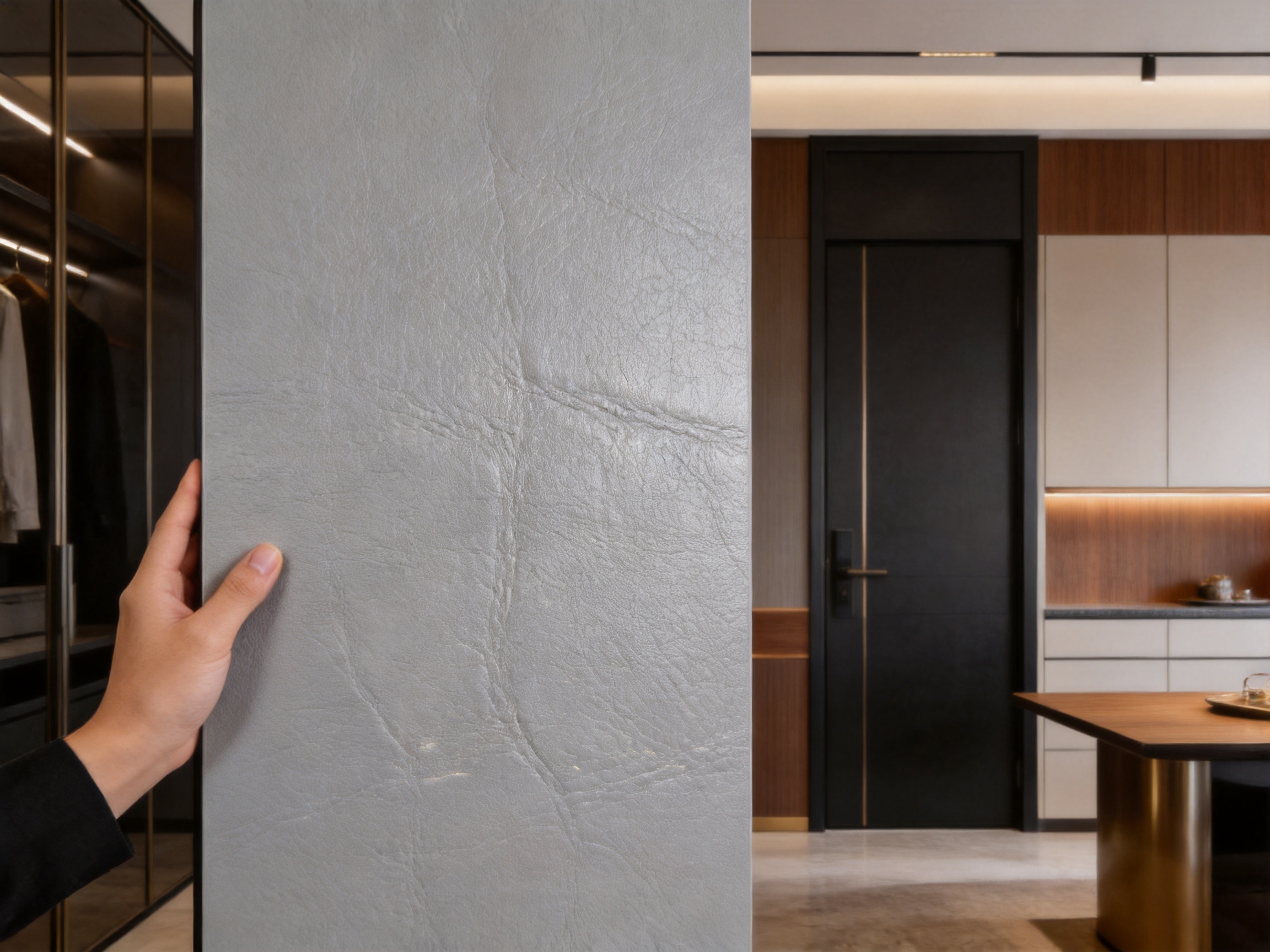
中文简体




Previous Post
Interior architecture increasingly depends on materials that do more than cover a wall. Designers, contractors, furniture manufacturers, and property developers are looking for decorative panels that provide visual identity, dimensional character, structural reliability, and practical installation performance in one coordinated product. The ZS02 Grid Pattern 3D Wall Panel answers this demand with a precise geometric surface, a stable engineered-board structure, and a manufacturing process designed to preserve pattern clarity and panel performance.
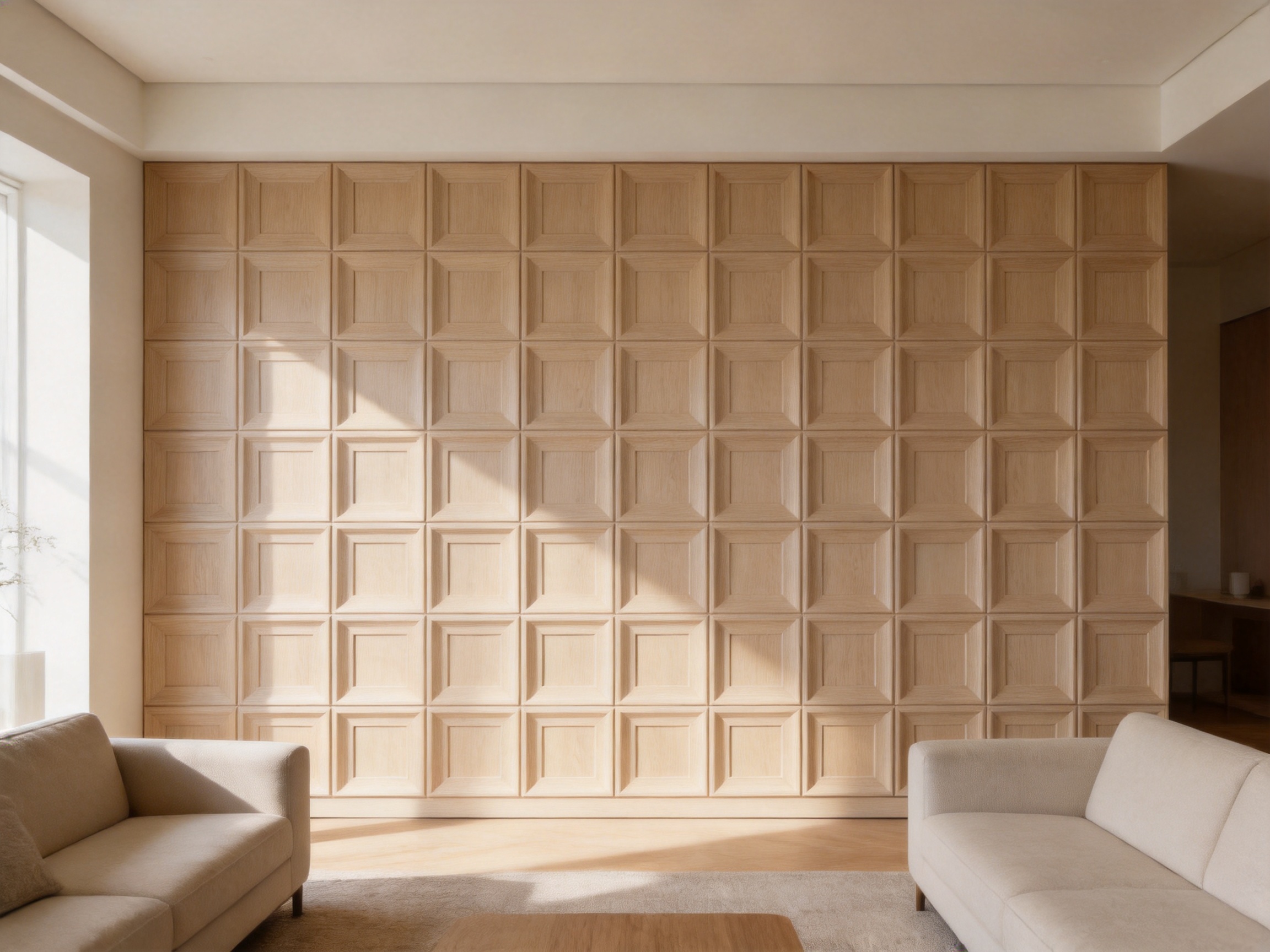
Featuring an orderly square-grid design, the ZS02 panel creates a strong sense of rhythm, balance, and architectural organization. Its surface is suitable for feature walls, ceilings, office interiors, retail spaces, residential rooms, furniture fronts, and other applications where a controlled three-dimensional effect is required. Compared with flat decorative boards or irregularly textured wall coverings, the grid pattern offers a more disciplined appearance that can support both minimalist and industrial design concepts.
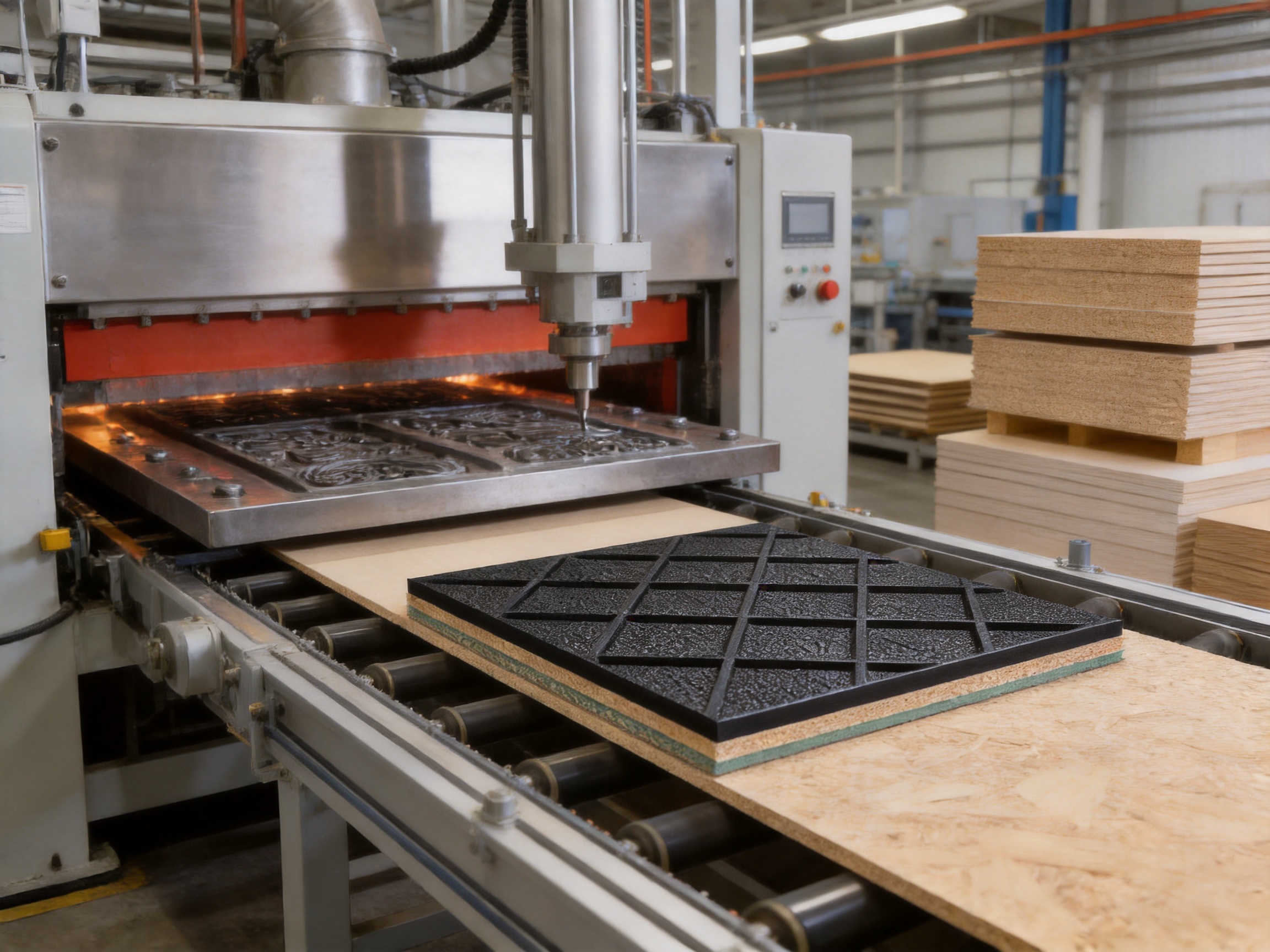
The panel is manufactured as a 3D melamine board using advanced printing, plate-making, moulding, embossing, and hot-pressing techniques. These processes allow the pattern to become an integral part of the surface rather than functioning only as a superficial printed image. The result is a decorative panel with visible depth, tactile texture, and a more substantial architectural presence.
Produced by YAKCO New Materials (Jiangsu) Co., Ltd., the ZS02 series reflects the company’s long-term focus on high-end decorative panels and wall-panel technology. The manufacturer combines engineered substrates, environmentally conscious adhesives, controlled pressing conditions, and specialized deep-pressing technology to create products for residential and commercial environments.
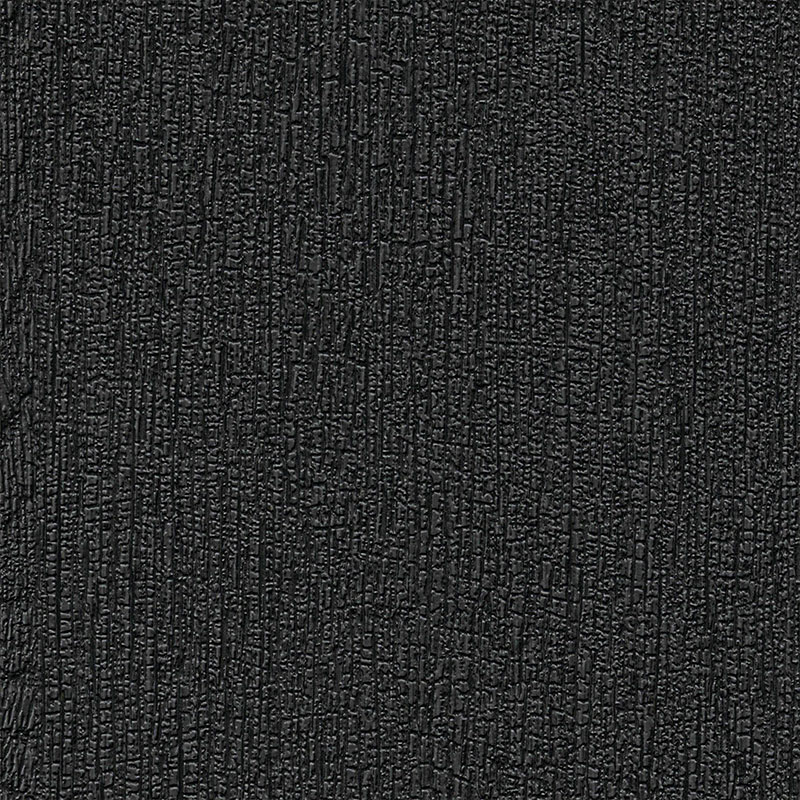
ZS02 Grid Pattern 3D Wall Panel
1. Product Overview
The ZS02 Grid Pattern 3D Wall Panel is a decorative architectural panel designed around a regular square-grid motif. Its surface is characterized by straight lines, consistent spacing, and clearly defined intersections. These elements form a repeated geometric structure that creates visual order across the entire panel.
The panel is categorized as a wood-design melamine board, although its design language is broader than a conventional wood-grain decorative sheet. It combines the practical benefits of an engineered wood-based panel with a three-dimensional surface treatment. This makes it suitable for projects that need the warmth and workability of a board product while also requiring a contemporary decorative effect.
The standard product size is 2745 x 1220 millimeters. Several thickness options are available, including 9, 12, 18, 22, and 25 millimeters. This range allows the panel to serve different design and construction requirements. Thinner versions may be considered for selected decorative applications, while thicker versions can provide a more substantial visual profile and greater panel presence.
The listed substrate options include OSB, MDF, and particleboard. The availability of multiple substrate types provides flexibility for specification. A project requiring a smooth and uniform machining surface may select MDF, while an application that prioritizes engineered board structure or a specific construction approach may use OSB or particleboard. Final substrate selection should be made according to the intended use, environmental conditions, fastening method, and project specifications.
The product is identified as a YAKCO 3D Melamine Board and is listed with P2/F4 environmental grades. These classifications indicate that environmental and emissions considerations are incorporated into the product offering. For any particular project, buyers should confirm the exact certification documentation, substrate composition, and compliance requirements before ordering.
2. The Design Logic of the Grid Pattern
The defining characteristic of the ZS02 panel is its grid pattern. Unlike random textures or highly decorative motifs, the grid is based on repetition, proportion, and alignment. Every line contributes to a larger visual system, creating a surface that appears organized even when applied across a large wall or ceiling.
Geometric patterns are often used in interior architecture because they communicate stability and structure. A regular grid can visually divide a broad surface into smaller fields without requiring physical partitions. This can make a large wall appear more intentional and can help organize the relationship between furniture, lighting, doors, windows, and architectural openings.
The intersections of the pattern form consistent nodes across the panel. These nodes produce a repeated rhythm that can be read from a distance and appreciated more closely at the tactile level. Because the pattern is neither excessively ornate nor completely plain, it can function as a background surface or as a strong feature element, depending on the lighting, color, panel orientation, and surrounding materials.
The design is also highly compatible with modern architectural styles. In minimalist interiors, the grid can introduce depth without overwhelming a restrained palette. In industrial environments, the regular pattern can reinforce the visual language of exposed structure, metal, concrete, and linear lighting. In commercial interiors, it can create a recognizable backdrop for reception areas, display zones, meeting rooms, and branded spaces.
Another advantage of a geometric surface is its coordination potential. The panel can be combined with plain melamine boards, wood-effect panels, stone-look materials, textiles, metals, glass, and painted surfaces. Its orderly pattern makes it easier to create transitions between materials, particularly when designers use the grid to align furniture elements, lighting tracks, shelving systems, or wall divisions.
3. Three-Dimensional Surface Character
A flat printed pattern can provide color and visual interest, but it does not necessarily provide a meaningful tactile experience. The ZS02 panel is developed as a 3D decorative board, allowing the grid pattern to acquire physical depth. The raised, recessed, or embossed elements interact with light and shadow, giving the surface a changing appearance throughout the day.
Three-dimensionality is particularly valuable in spaces where a wall needs to act as an architectural feature. Under direct lighting, the grid can produce defined highlights and shadows. Under grazing light, the depth of the texture becomes more visible. Under softer ambient lighting, the surface can appear calmer and more integrated with the surrounding interior.
The relationship between pattern depth and panel flatness is important. A decorative board must provide an expressive texture without losing dimensional stability. The ZS02 production approach therefore places emphasis on controlled moulding or embossing, even pressure distribution, and careful hot pressing. These factors help the decorative pattern remain clear while supporting the overall flatness and strength of the board.
Compared with conventional wall coverings, a 3D melamine board can offer a more solid and furniture-compatible solution. It may be used not only on walls but also on selected furniture surfaces, partitions, counters, display structures, and ceiling elements. Its board form allows it to be cut, positioned, and integrated into a broader joinery system.
4. Manufacturing Technology and Process Control
4.1 Plate Making and Pattern Preparation
The production of the grid-pattern series begins with the preparation of the decorative design and the forming or printing components required to reproduce it accurately. Sophisticated plate-making and printing techniques may be used to ensure that the lines are sharply defined and that the grid remains consistent across the panel surface.
Pattern preparation is especially important for geometric designs. Any variation in line width, spacing, or alignment can become noticeable when a pattern is repeated across multiple panels. A carefully prepared plate or printing system helps maintain the regularity that gives the ZS02 its architectural character.
For projects involving multiple panels, repeat consistency is essential. Panels must be able to work together as a continuous visual field or as coordinated individual elements. Accurate pattern preparation supports this requirement and helps reduce visible inconsistencies at panel joints.
4.2 Mould Embossing and Deep Pressing
Advanced mould embossing techniques are another important part of the production concept. Through moulding, the grid pattern can be formed directly into the surface, creating a physical texture rather than simply applying a visual image.
Deep-pressing technology can improve the distinction between raised and recessed areas. A well-controlled pressing operation helps the pattern remain legible, while also allowing the surface to retain a refined appearance. The depth must be carefully balanced: sufficient to create a clear three-dimensional effect, but controlled enough to avoid unnecessary stress, distortion, or loss of flatness.
The manufacturer states that it has developed innovative deep-pressing processes as part of its decorative-panel technology. This specialization is relevant because three-dimensional boards require more than ordinary surface printing. The pressing equipment, mould design, adhesive system, temperature profile, and cooling process must work together to achieve repeatable results.
4.3 Hot Pressing
Hot pressing is used to consolidate the decorative structure and bond the surface components to the engineered substrate. During this stage, temperature and pressure are strictly controlled so that the material is heated and compressed evenly.
Uniform heating supports consistent bonding across the panel. Uniform pressure helps the pattern transfer evenly and reduces the risk of weak areas, incomplete embossing, or inconsistent surface definition. The hot-pressing process also contributes to the panel’s flatness, dimensional stability, and mechanical integrity.
In a geometric decorative board, pressing accuracy has a direct influence on visual quality. If pressure is uneven, some portions of the grid may appear sharper than others. If the temperature is not properly managed, the surface or adhesive system may not perform as intended. Process control is therefore not only a technical concern but also a design-quality requirement.
4.4 Adhesive Bonding
The product structure may use a multi-layer composite configuration. Such a structure can improve stability and durability by combining a decorative surface layer with a suitable engineered substrate and bonding system.
YAKCO identifies MDI medical adhesive bonding as one of its core production technologies. MDI-based bonding systems are associated with engineered wood products that require reliable internal adhesion and controlled emissions performance. The suitability of any adhesive system depends on the complete product formulation, substrate, pressing conditions, and applicable standards, but the use of specialized bonding technology demonstrates the manufacturer’s focus on technical development.
Strong and stable bonding is particularly important for panels with an embossed surface. The decorative layer must remain securely attached while the board is cut, handled, installed, and exposed to ordinary interior temperature changes. A properly engineered bond supports long-term surface integrity and reduces the likelihood of delamination.
4.5 Quality and Dimensional Control
Quality control for a product such as the ZS02 panel involves more than checking color or appearance. Important considerations include panel thickness, overall dimensions, surface uniformity, pattern definition, flatness, edge quality, bonding performance, and substrate consistency.
The large standard format of 2745 x 1220 millimeters makes dimensional accuracy especially valuable. Large panels can cover more area with fewer joints, but they also require reliable manufacturing control to ensure that they can be transported, cut, aligned, and installed efficiently.
Pattern alignment should also be considered during inspection. If the panel is intended for a continuous feature wall, the relationship between pattern edges and panel dimensions can affect the final appearance. Consistent manufacturing supports smoother planning for installers and reduces the need for excessive on-site adjustment.
5. Substrate Options and Structural Performance
The ZS02 series can be produced on OSB, MDF, or particleboard substrates. Each substrate type has different characteristics, and the right choice depends on the intended application.
MDF is widely used where a smooth, homogeneous surface and predictable machining behavior are important. Its uniform internal structure can support clean cutting and detailed edge treatment. MDF may be suitable for furniture components, wall cladding, and interior joinery where the panel will be cut or fitted with precision.
Particleboard is commonly selected for cost-efficient interior construction and furniture applications. It provides an engineered board base for decorative surfaces and can be specified when the design requires a practical balance between material performance and budget.
OSB has a visibly engineered strand structure and is valued in many applications for its board construction and structural characteristics. When used as a substrate, it may support design concepts that combine a decorative outer surface with a more construction-oriented internal board identity.
The product’s multi-layer construction can contribute to overall stability. The decorative surface, bonding layer, and substrate must work together so that the panel remains functional under normal interior use. For demanding applications, designers and contractors should review the complete technical data, including density, moisture behavior, fastening recommendations, edge treatment, and applicable fire or acoustic requirements.
The range of available thicknesses also supports different design intentions. A 9-millimeter panel may be used where a lighter decorative layer is preferred, while 12- and 18-millimeter options can provide a more substantial board profile. The 22- and 25-millimeter options may be considered where deeper visual mass, greater edge presence, or a heavier architectural expression is desired.
6. Product Specifications
| Item | Specification | Design or Project Relevance |
|---|---|---|
| Product | ZS02 Grid Pattern 3D Wall Panel | Three-dimensional decorative panel with a regular square-grid surface |
| Product category | Wood Design Melamine Board | Suitable for contemporary interior wall, ceiling, and furniture applications |
| Standard size | 2745 x 1220 mm | Large format for efficient surface coverage and reduced joint frequency |
| Available thicknesses | 9, 12, 18, 22, and 25 mm | Allows specification according to visual, structural, and installation requirements |
| Substrate options | OSB, MDF, and particleboard | Provides flexibility for different machining, construction, and budget needs |
| Manufacturing process | 3D melamine board production with printing, embossing, and hot pressing | Supports surface definition, bonding, dimensional stability, and repeatability |
| Environmental grades | P2/F4 | Indicates attention to emissions and environmental performance requirements |
| Pattern style | Regular geometric grid | Creates order, rhythm, visual division, and compatibility with modern interiors |
The above specifications provide a general basis for product selection. Final technical suitability should be confirmed against the project’s local building regulations, installation conditions, fire requirements, moisture exposure, and performance documentation.
7. Advantages Compared with Conventional Decorative Panels
7.1 Greater Visual Depth Than Flat Boards
One of the main advantages of the ZS02 panel is its three-dimensional character. Flat melamine boards can provide attractive colors and printed finishes, but they generally do not create the same interaction of light and shadow. The embossed grid makes the surface more dynamic and can give an otherwise plain interior a stronger architectural identity.
7.2 More Organized Than Irregular Textured Surfaces
Some textured wall products rely on random relief, roughness, or free-form patterns. These finishes can be effective, but they may be more difficult to coordinate with furniture, partitions, and architectural lines. The ZS02 grid is predictable and orderly, making it easier to align with rectilinear interiors and modular layouts.
7.3 More Versatile Than Highly Specialized Decorative Motifs
A highly thematic pattern may be appropriate for a particular project but difficult to reuse in other settings. The ZS02 design is comparatively neutral. Its geometric language can work in an office, retail store, residence, hospitality space, educational interior, or showroom. This versatility can simplify material selection for projects that require a consistent product across multiple rooms or property types.
7.4 Board-Based Performance and Workability
Unlike some wallpaper, fabric, or flexible wall-covering systems, the ZS02 is supplied as an engineered board. This gives designers and fabricators a material that can be cut, installed, and integrated with joinery. It may also be used for furniture surfaces and other applications where a rigid panel is preferred.
7.5 Multiple Thickness Options
The availability of five thickness choices is another practical advantage. Designers do not need to use a single standard thickness for every project. They can select a thinner board for lightweight decorative work or a thicker board for a more substantial application, subject to the relevant technical requirements.
7.6 Suitable for Material Coordination
The regular grid can be combined with wood-look surfaces, solid colors, textile-inspired boards, leather-look finishes, stone patterns, metal trims, and glass. This coordination potential gives designers more freedom to create layered interiors without allowing the feature wall to become visually chaotic.
8. Advantages of the Manufacturer
YAKCO New Materials (Jiangsu) Co., Ltd. was established in 2007 and occupies approximately 50 acres, with a modern standard factory building of more than 30,000 square meters. This scale provides a substantial base for the development and production of decorative panels and wall-panel products.
The company specializes in high-end decorative panels and wall panels for residential and commercial spaces. Its product focus is not limited to standard flat boards. The company emphasizes 3D decorative-panel technology, deep pressing, composite construction, and surface texture development.
YAKCO has developed six core production processes and identifies MDI adhesive bonding as part of its technical capability. A defined group of core processes can help establish repeatable production standards across different decorative series. For buyers, this may be particularly relevant when consistent quality is required for large projects, export orders, or repeated product programs.
The YAKCO brand was established in 2016, building on the company’s earlier manufacturing experience. Its stated development direction centers on improved depth, layering, texture, stability, cutting performance, deformation resistance, and environmental performance.
These priorities align closely with the practical requirements of contemporary decorative panels. A product must look distinctive, but it must also be manageable for fabricators, stable after installation, and appropriate for indoor environments. The combination of appearance and manufacturability is one of the key factors that distinguishes a professional decorative-panel supplier from a company offering only surface graphics.
The company also states that its products are designed to meet the international ENF formaldehyde standard. Since product compliance can vary by model, substrate, production batch, and destination market, purchasers should request current test reports and conformity documents for the exact ZS02 configuration being ordered.
9. Interior Applications
9.1 Office Interiors
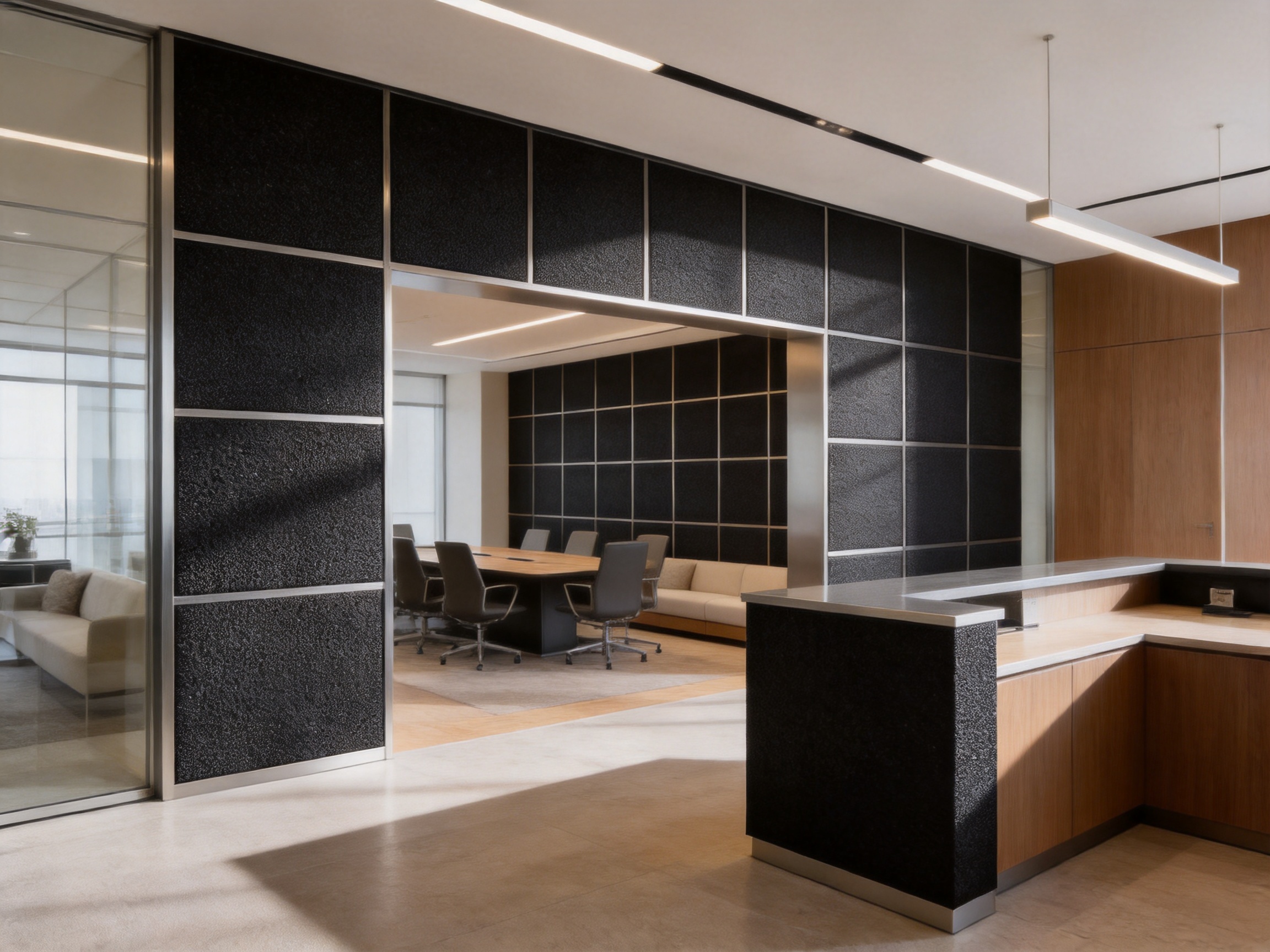
In offices, the ZS02 panel can be used behind reception desks, in meeting rooms, along corridor walls, or as a feature surface in collaborative areas. The grid pattern conveys organization and precision, qualities that can complement professional work environments.
It can also help visually define zones without constructing a full-height partition. For example, a textured grid wall may distinguish a waiting area from a circulation zone or provide a backdrop for a company reception point. When combined with linear lighting, the pattern can create a clear but understated focal point.
9.2 Retail and Commercial Spaces
Retail environments often need surfaces that attract attention without competing with products. The ZS02 panel can serve as a structured background behind merchandise, a display wall, or a feature element near the entrance. Its repeated pattern may also support modular shelving and display systems.
In commercial interiors, the panel can be specified in multiple locations to create continuity. A consistent grid treatment across reception counters, wall sections, and display fixtures can make a space feel more coordinated and carefully designed.
9.3 Residential Interiors
In homes, the product may be used on living-room feature walls, television backgrounds, study walls, bedroom headboards, dining areas, and selected ceiling sections. The grid can introduce texture while maintaining a clean and contemporary appearance.
Because the design is regular, it can be paired with restrained furniture forms and neutral color palettes. It may also contrast effectively with softer materials such as textiles, curtains, upholstered furniture, and rugs. In residential settings, the product should be installed according to appropriate interior-use recommendations, particularly around areas exposed to moisture or heat.
9.4 Hospitality Projects
Hotels, restaurants, cafés, and clubs often use decorative wall materials to establish a memorable atmosphere. The ZS02 panel can support modern, industrial, urban, or minimalist themes. Its three-dimensional surface may be particularly effective in entrance zones, lounge backgrounds, dining areas, and corridors.
Hospitality projects should evaluate cleaning requirements, impact exposure, fire performance, and maintenance procedures. The selected surface finish, edge detail, and protective treatment can influence long-term performance in busy environments.
9.5 Furniture and Joinery
The panel can also be used as a furniture surface. Potential applications include cabinet doors, reception counters, wardrobes, shelving back panels, storage fronts, and decorative inserts. The grid pattern can make a large furniture element appear more articulated and can connect furniture design with the surrounding wall treatment.
For furniture fabrication, cutting direction, edge finishing, corner details, and pattern alignment should be planned before production. A sample should be tested to confirm that the selected thickness and substrate are appropriate for the intended construction method.
9.6 Ceilings and Feature Structures
Although wall decoration is the primary application, the panel may also be considered for selected ceiling or overhead feature areas. The grid can visually organize a ceiling and contribute to a layered lighting concept. Any overhead installation must account for weight, fastening, access, fire regulations, and structural support.
10. Installation and Design Considerations
Successful installation begins with correct site preparation. The supporting wall or frame should be sufficiently flat, dry, clean, and capable of receiving the specified fixing system. Uneven substrates may affect panel alignment and can reduce the visual continuity of the grid.
Panel orientation should be established before cutting. A regular pattern can be installed horizontally, vertically, or in a coordinated modular arrangement. The chosen direction can influence the perceived proportions of a room. Vertical alignment may emphasize height, while horizontal alignment may make a wall appear broader.
Joint planning is critical for large-format decorative panels. Installers should determine how the grid will continue across adjacent boards and how the pattern will meet corners, doors, windows, outlets, and other interruptions. Where a seamless continuation is required, accurate measurement and careful cutting are essential.
Lighting should be considered during the design phase. Grazing light can emphasize the depth of the embossed grid, while diffuse light can create a softer appearance. The position of spotlights, linear fixtures, and wall washers may change how the surface is perceived.
Edges can be treated in several ways depending on the design. They may be concealed with trims, recessed into a frame, joined with a shadow gap, or finished as part of a furniture construction. A coordinated edge solution helps the panel appear intentional rather than simply applied to the wall.
Before large-scale installation, a sample panel or mock-up is recommended. The mock-up can be used to assess color, pattern scale, lighting, joint treatment, substrate behavior, and relationship with adjacent materials. It also allows the installer to test cutting and fastening methods.
11. Maintenance and Long-Term Use
Like other interior decorative boards, the ZS02 panel should be protected from excessive moisture, prolonged water contact, and unsuitable cleaning chemicals unless the specific product documentation states otherwise. Routine maintenance generally begins with removing dust using a soft, dry or lightly damp cloth.
Strong abrasive cleaners may damage the surface appearance or reduce the consistency of the finish. Cleaning procedures should be tested in an inconspicuous area before being applied across the full installation. In commercial environments, maintenance teams should receive clear instructions regarding suitable cleaning materials.
Furniture and equipment should be positioned to avoid repeated impact against the embossed surface. While the engineered panel is designed for practical interior use, severe impact can damage raised details or exposed edges. Protective measures are particularly valuable in high-traffic corridors, public areas, and retail environments.
Long-term performance also depends on the building environment. Excessive changes in humidity, poor ventilation, or installation over a damp wall can affect engineered wood products. Proper building preparation and indoor climate management are therefore part of responsible product use.
12. Sustainability and Environmental Considerations
Environmental performance is an increasingly important part of material selection. The ZS02 product is listed with P2/F4 environmental grades, and the manufacturer states that its products are developed to meet the international ENF formaldehyde standard. These statements indicate an emphasis on controlled emissions and more responsible interior-material performance.
However, sustainability should be evaluated across the full product life cycle. Buyers should consider the substrate source, adhesive system, manufacturing efficiency, packaging, transportation, expected service life, repairability, and disposal options. A durable panel that remains attractive and functional for many years can reduce the frequency of replacement.
Requesting current environmental declarations, emissions test results, and certification documents is recommended for projects with formal green-building requirements. Documentation should correspond to the exact product, substrate, thickness, and production specification rather than to a general product family.
The company’s focus on deformation resistance and stability may also contribute to longer service life when the panel is correctly specified and installed. A panel that retains its appearance and remains firmly bonded can reduce waste associated with premature replacement.
13. Selection Guidance for Buyers and Specifiers
When selecting the ZS02 panel, the first consideration should be the intended application. Wall cladding, furniture manufacturing, ceiling decoration, and display construction may require different thicknesses, substrates, edge treatments, and fixing systems.
The second consideration is the visual scale of the grid. Designers should evaluate the pattern in relation to room size, viewing distance, lighting, and adjacent materials. A small sample may not fully represent how the pattern will appear across a large wall, so a larger mock-up can be valuable for important projects.
The third consideration is substrate selection. MDF, particleboard, and OSB offer different characteristics. The decision should be based on machining requirements, load expectations, environmental conditions, edge details, and cost targets.
The fourth consideration is documentation. Buyers should request technical data for the selected version, including dimensions, thickness tolerance, substrate details, environmental grade, surface-care guidance, packing information, and installation recommendations.
The fifth consideration is logistics. The standard panel size is large, so transportation routes, storage conditions, lifting methods, and site access should be planned in advance. Panels should be stored flat and protected from moisture and excessive environmental fluctuations before installation.
Finally, buyers should confirm pricing based on thickness and order conditions. The supplied information lists indicative prices of 36.5 USD for 9 millimeters, 40 USD for 12 millimeters, 46 USD for 18 millimeters, 51.6 USD for 22 millimeters, and 56 USD for 25 millimeters. These figures should be treated as product references rather than final quotations, since freight, packaging, order quantity, customization, taxes, and market conditions may affect the final cost.
14. Why the ZS02 Panel Is a Competitive Choice
The ZS02 Grid Pattern 3D Wall Panel combines several qualities that are often purchased separately: a recognizable design, tactile depth, engineered-board workability, multiple thickness choices, and a manufacturing process focused on consistency.
Its regular grid provides a practical alternative to both plain boards and overly decorative textures. It can define space, add hierarchy, and improve the visual identity of an interior without relying on complicated ornament. This makes it a useful specification for designers who want a contemporary surface with broad application potential.
The product also benefits from the manufacturer’s specialization in 3D decorative panels. Deep pressing, mould embossing, hot pressing, composite construction, and MDI adhesive bonding all address technical challenges associated with dimensional surfaces. The stated factory scale, production experience, and focus on environmental performance further support the product’s position as a professional architectural-material option.
Compared with lower-cost decorative sheets that provide only a printed appearance, the ZS02 offers a more substantial three-dimensional expression. Compared with highly specialized wall systems, its board-based form may provide greater flexibility for cutting, furniture integration, and coordinated joinery. Compared with irregular textures, its disciplined geometry makes design planning and material coordination easier.
15. Frequently Asked Questions
What is the ZS02 Grid Pattern 3D Wall Panel?
The ZS02 is a decorative 3D melamine board featuring a regular square-grid pattern. It is designed for interior walls, ceilings, furniture surfaces, feature structures, and other decorative applications.
What size is the panel?
The listed standard size is 2745 x 1220 millimeters. Buyers should confirm dimensional tolerances and packaging details with the manufacturer before placing an order.
Which thicknesses are available?
The available thickness options are 9, 12, 18, 22, and 25 millimeters. The appropriate thickness depends on the intended application, installation system, visual requirement, and substrate selection.
What substrates can be used?
The product information lists OSB, MDF, and particleboard substrates. Each option has different characteristics, so the final selection should be based on machining, stability, environmental, and construction requirements.
Is the pattern printed or embossed?
The production concept may involve sophisticated plate-making and printing techniques, advanced mould embossing techniques, or a combination of surface-forming processes. The 3D character is created through controlled surface treatment and pressing so that the grid has physical texture and visible depth.
Where can the panel be used?
Typical applications include offices, shopping malls, residential interiors, hospitality spaces, reception areas, meeting rooms, feature walls, ceilings, display structures, and furniture surfaces.
Can the panel be used with other materials?
Yes. The regular grid can be coordinated with plain boards, wood-look panels, textile surfaces, leather-look finishes, stone-effect materials, glass, metal, and painted surfaces. The final combination should be evaluated through samples and lighting tests.
What makes the product different from a flat melamine board?
The main difference is the three-dimensional surface. The embossed grid creates physical depth, shadow, and tactile interest, while a standard flat board primarily provides a printed or decorative color surface.
How does hot pressing benefit the product?
Controlled hot pressing helps bond the decorative surface to the substrate, transfer the pattern, support surface uniformity, and maintain the panel’s flatness and strength. Temperature and pressure control are important for consistent results.
What environmental information is available?
The product is listed with P2/F4 environmental grades, and the manufacturer states that its products are designed to meet the international ENF formaldehyde standard. Current certification and test documents should be requested for the exact product specification.
Can the panel be cut on site?
The panel is an engineered board product and may be suitable for cutting, but the correct tools, cutting direction, edge treatment, and protective procedures should be confirmed before installation. A sample test is recommended.
How should the panel be maintained?
Routine cleaning can generally be performed with a soft cloth and suitable mild cleaning method. Abrasive materials, excessive water, and unapproved chemicals should be avoided unless the product documentation specifically permits them.
What should be checked before ordering?
Buyers should confirm the substrate, thickness, dimensions, surface specification, environmental documentation, price, minimum order quantity, packaging, lead time, shipping conditions, and installation recommendations.
16. Conclusion
The ZS02 Grid Pattern 3D Wall Panel is a versatile architectural surface designed for interiors that require structure, depth, and visual consistency. Its square-grid pattern provides a controlled geometric language that can divide space, create rhythm, and strengthen the identity of residential, commercial, retail, office, and hospitality environments.
The product’s value comes from the combination of design and manufacturing. Plate-making, printing, mould embossing, deep pressing, hot pressing, composite construction, and specialized adhesive bonding all contribute to the panel’s appearance and performance. Multiple substrate options and thicknesses provide additional flexibility for designers, fabricators, and contractors.
YAKCO New Materials (Jiangsu) Co., Ltd. brings substantial manufacturing experience, a large modern production facility, and a specialized focus on decorative wall panels. Its development of 3D surface technology, deep-pressing processes, and environmental-performance goals supports the product’s positioning as a contemporary alternative to flat decorative boards and less structured textured finishes.
For best results, the ZS02 should be specified with attention to substrate, thickness, lighting, installation method, joint alignment, maintenance, and project-specific compliance requirements. When these factors are properly coordinated, the panel can deliver a durable and distinctive surface that combines geometric order with three-dimensional character.
References
1. Product information supplied for the ZS02 Grid Pattern 3D Wall Panel, including dimensions, substrate options, manufacturing process, environmental grades, and applications.
2. Manufacturer information supplied for YAKCO New Materials (Jiangsu) Co., Ltd., including company history, factory scale, production capabilities, and decorative-panel technology.
3. General principles of engineered wood-based panel manufacturing, including MDF, OSB, particleboard, hot pressing, adhesive bonding, and dimensional stability.
4. General interior architecture practices concerning three-dimensional wall surfaces, lighting interaction, panel alignment, installation planning, and material coordination.
5. General environmental considerations for decorative interior panels, including formaldehyde emissions, product documentation, service life, and responsible material specification.