中文简体



Previous Post
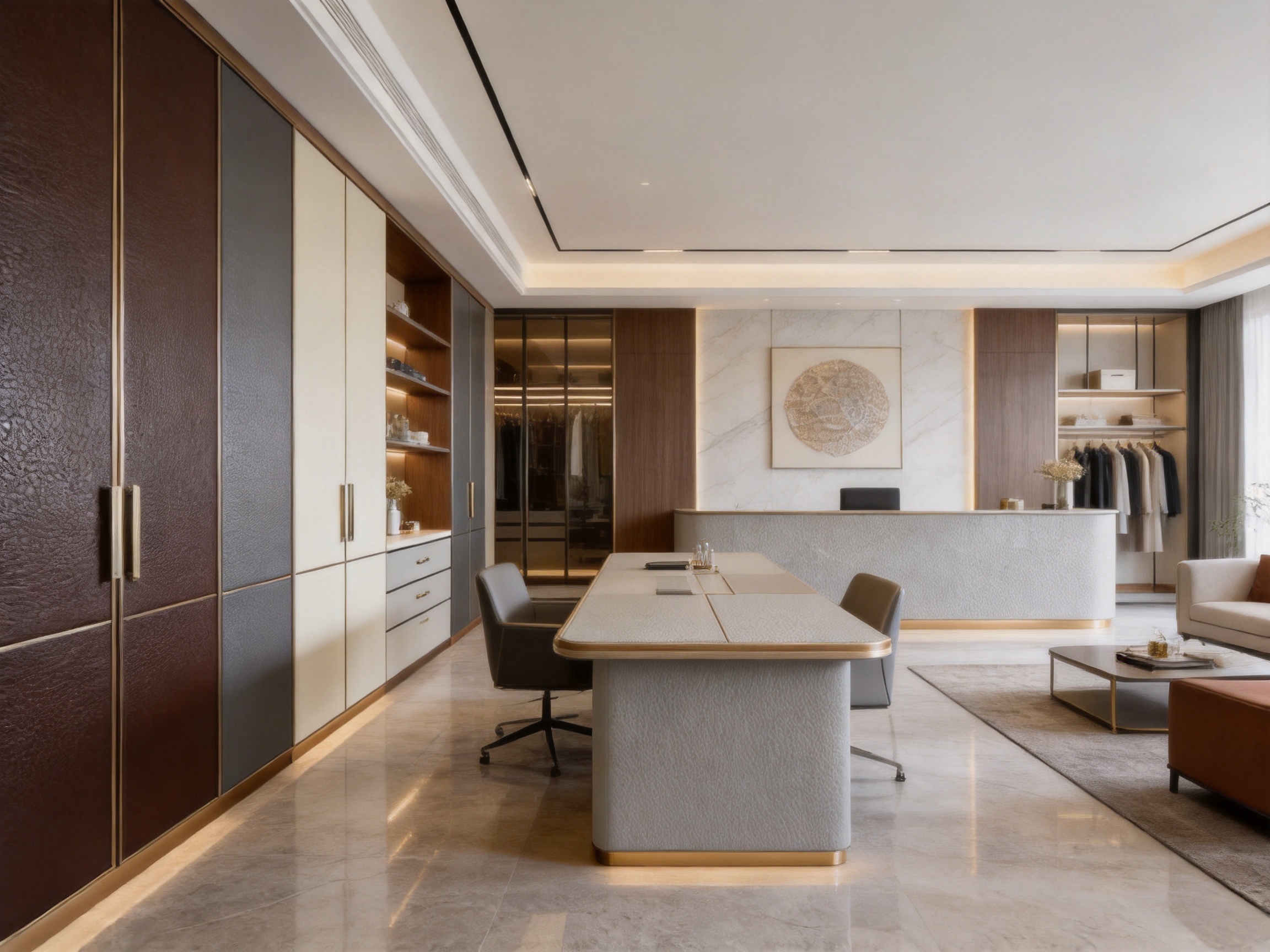
Interior design is increasingly shaped by the demand for materials that combine visual refinement, tactile quality, durability, production efficiency, and environmental responsibility. Designers and manufacturers are no longer choosing decorative panels only for their appearance. They also consider how a panel feels when touched, how reliably it performs in demanding environments, how easily it can be processed, and whether it can support consistent large-scale production.
Leather-look surfaces have traditionally been associated with luxury furniture, executive interiors, boutique retail spaces, hospitality projects, and custom residential design. However, natural leather and conventional leather coverings can present several practical limitations. They may require complicated installation, careful maintenance, specialized upholstery work, and additional surface protection. Over time, natural leather can also experience aging, cracking, fading, deformation, or damage from heat and moisture.
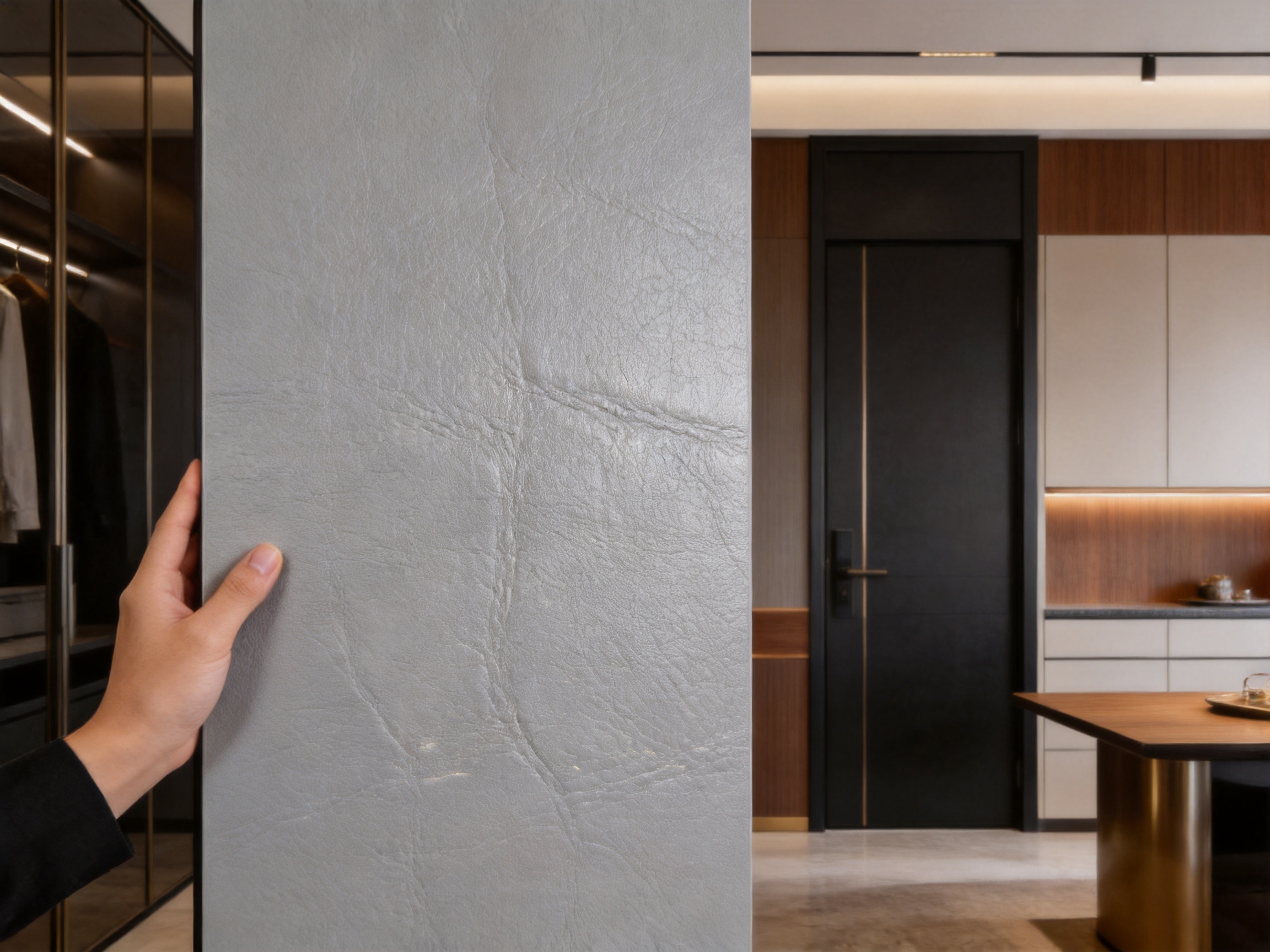
Leather Super Tech texture panels offer an alternative approach. These decorative melamine panels are engineered to reproduce the fine grain, wrinkles, depth, and softness associated with natural leather while retaining the stability and processing advantages of a manufactured wood-based panel. Through high-precision steel plate embossing and a biomimetic silicone surface layer, the product creates a deep, three-dimensional finish with a softer and more delicate tactile effect than many traditional leather-grain boards.
The result is a surface material designed for premium furniture and interior applications where appearance and performance must work together. It can be used on wardrobe doors, cabinet fronts, tabletops, drawer bottoms, wall decoration, commercial fixtures, hotel furniture, office interiors, and other architectural surfaces. It is especially suitable for projects that require a balance between luxury, cost control, efficient fabrication, and long-term maintenance.
What Are Leather Super Tech Texture Panels?
Leather Super Tech texture panels are decorative melamine boards developed to provide a realistic leather-like surface without requiring natural leather to be bonded or upholstered onto a substrate. The appearance is created during the panel manufacturing process rather than through the later application of a separate leather covering.
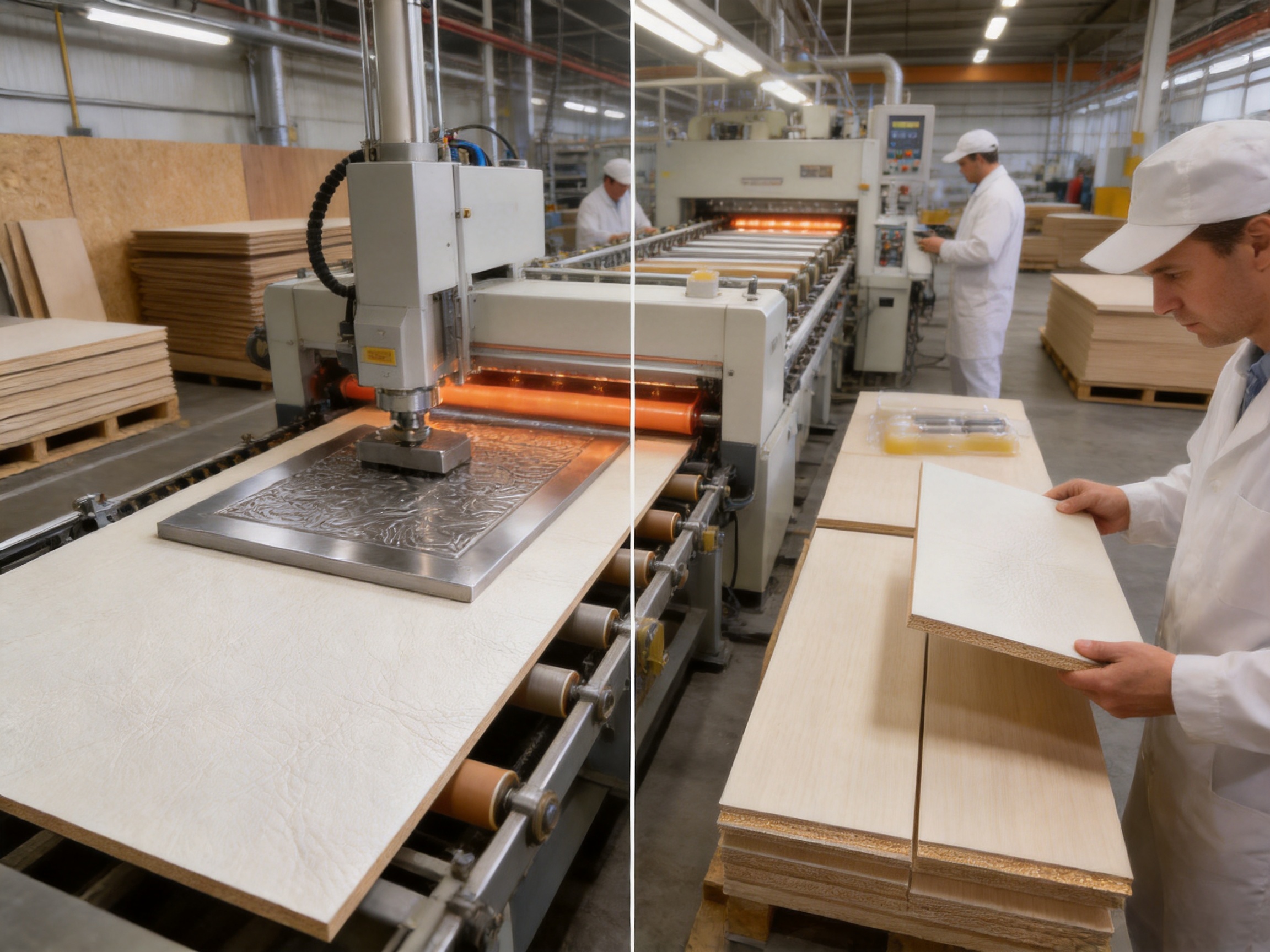
The facing material is melamine-impregnated paper, which is formed and textured using a high-precision steel plate embossing process. A biomimetic silicone layer is incorporated into the surface treatment to improve softness, elasticity, tactile quality, and functional resistance. This combination gives the panel a distinctive surface that is visually rich and pleasant to touch.
Unlike a flat printed decorative board, the panel is designed to provide a synchronized texture. The visual pattern and the physical embossing work together to create greater depth and authenticity. Fine grain details, natural-looking wrinkles, and subtle variations in the surface help the material resemble genuine leather more closely than a simple printed imitation.
The word “Super Tech” refers to the surface treatment technology rather than a particular color or pattern. It describes a technical approach that combines precision embossing, biomimetic material engineering, and high-performance decorative panel production. This allows manufacturers, designers, and furniture producers to use a leather-like finish in a more standardized and scalable way.
Designing a More Authentic Leather-Like Experience
Many conventional leather-effect panels focus primarily on visual imitation. Their printed surface may show a leather pattern, but the board remains flat and may feel hard, plastic-like, or disconnected from the appearance. Leather Super Tech panels address this issue through three-dimensional embossing and a softer surface layer.
The steel embossing plate creates controlled depth across the decorative surface. The texture can reproduce the fine grain and irregular visual rhythm associated with leather, while the biomimetic silicone layer contributes a more flexible and comfortable tactile response. When the surface is touched, the material feels more refined and substantial than a basic printed melamine finish.
This tactile performance is valuable in furniture and interior applications because many surfaces are experienced through direct contact. Users touch cabinet doors, drawer fronts, table edges, counters, arm-height wall panels, and office furniture throughout the day. A surface that looks and feels premium can influence the perceived value of an entire room or product collection.
The panel also supports a consistent appearance across production batches. Natural leather has inherent variations in color, grain, thickness, and texture. These variations may be desirable in some handcrafted applications, but they can make large furniture projects more difficult to standardize. An engineered leather-texture panel offers a more controlled result while maintaining the visual character associated with natural material.
Core Technical Specifications
Leather Super Tech panels are available in a range of thicknesses and can be supplied with different substrate options according to the requirements of a project. The surface finish is synchronized texture, and the facing material is melamine-impregnated paper treated with the Super Tech surface process.
| Specification | Available Information |
|---|---|
| Surface finish | Synchronized texture |
| Facing material | Melamine-impregnated paper |
| Available thicknesses | 1.5 mm, 9 mm, 12 mm, 18 mm, 22 mm, and 25 mm |
| Standard dimension | 1220 × 2745 mm |
| Additional dimensions | 1220 × 2800 mm, 1220 × 3050 mm, and 1220 × 3300 mm |
| Substrate options | LSB, SOSB, MDF, HMR MDF, fireproof MDF, particleboard, fireproof board, veneer, and plywood |
| Matched edgebanding | 1 × 26 mm and 1 × 56 mm |
| Environmental ratings | E0, E1, and P2 options according to the selected specification |
The range of substrates makes the product adaptable to different manufacturing strategies. MDF can be selected when a smooth, stable surface and precise machining are required. High-moisture-resistant MDF may be suitable for locations where humidity resistance is an important consideration. Particleboard can support economical furniture production, while plywood may be preferred for applications requiring a particular structural or screw-holding performance.
The range of thicknesses also supports multiple uses. Thin material can be considered for specific facing or decorative applications, while thicker boards are suitable for cabinet components, doors, partitions, furniture panels, and architectural features. Final thickness selection should be based on structural requirements, hardware, span, edge treatment, and the intended installation method.
Large panel dimensions can help reduce the number of joints in furniture and wall applications. This may create a cleaner appearance and improve production efficiency, particularly when fabricating oversized cabinet doors, feature walls, conference tables, or commercial display panels.
How the Manufacturing Technology Creates the Surface
The performance of a decorative panel depends not only on the raw materials but also on the manufacturing process used to combine them. YAKCO New Materials has focused on decorative panel development since its establishment in 2007. Its manufacturing capabilities are centered on high-end decorative panels, wall panels, three-dimensional textures, deep-pressing technologies, and engineered bonding systems.
The Leather Super Tech surface is based on a controlled sequence of material preparation, pattern alignment, pressing, heat treatment, bonding, curing, and quality inspection. Each stage contributes to the final appearance and performance of the panel.
Precision steel plate embossing
High-precision steel plate embossing is used to create the physical leather grain. The embossing plate must maintain accurate dimensions and consistent surface detail so that the pattern is transferred uniformly across the panel. The depth, spacing, curvature, and transition of the texture influence both appearance and touch.
Deep embossing provides a stronger three-dimensional effect than shallow decorative printing. It allows light to interact with the surface from different angles, creating shadows and highlights that enhance the sense of depth. This is especially important in large furniture pieces and wall applications, where a flat printed effect may appear less convincing.
Biomimetic silicone surface treatment
The biomimetic silicone layer is designed to imitate selected tactile qualities of natural leather. It provides a softer, more elastic surface and contributes to the premium hand-feel of the finished panel. Because the layer is engineered for interior panel production, it can be integrated with the melamine decorative surface and the selected substrate.
The material is described as non-toxic and odorless when produced according to the specified system. It is also designed to withstand elevated temperatures during production and everyday use. This makes the surface suitable for applications where furniture may encounter warm objects, sunlight, or processing conditions involving heat and pressure.
Deep-pressing and synchronized texture control
Deep-pressing technology helps align the visible pattern with the physical texture. This synchronization is essential for creating a convincing material effect. When the grain seen by the eye corresponds with the relief felt by the hand, the panel appears more authentic and carefully engineered.
YAKCO’s broader manufacturing platform includes innovative deep-pressing processes and six core production processes. These capabilities support the production of decorative panels with enhanced depth, layering, stability, texture, machinability, and visual consistency.
MDI adhesive bonding
The company also uses MDI medical adhesive bonding technology in its panel production. MDI-based adhesive systems can contribute to strong and stable bonding between the panel layers and substrate. A reliable bonding system is important because decorative panels are exposed to mechanical stress during cutting, edging, drilling, transportation, installation, and everyday use.
Stable bonding helps reduce the risk of delamination, surface separation, and deformation when the panel is processed and installed correctly. It also supports the product’s ability to maintain a clean decorative surface across different furniture components.
Controlled production and quality management
YAKCO New Materials operates a modern manufacturing facility covering approximately 50 acres, with more than 30,000 square meters of standard factory buildings. This production scale supports organized material handling, process control, equipment management, product development, and quality inspection.
The company’s experience in decorative boards and wall panels enables it to approach the leather-texture product as an integrated system rather than as a simple decorative film. The surface, substrate, bonding method, pressing conditions, dimensional stability, and fabrication requirements are considered together.
For buyers, this integrated approach can be important. A visually attractive surface is not enough if the substrate is unstable, the texture is inconsistent, or the panel is difficult to process. The manufacturing objective is to deliver a decorative board that can move efficiently from factory production to furniture fabrication and final installation.

Leather - Super tech
Advantages Compared with Traditional Leather Coverings
More efficient production
Traditional leather upholstery or leather wrapping often requires several additional steps. The leather must be selected, cut, positioned, stretched, glued, folded, stapled, or sewn depending on the application. Corners and edges require particular attention, and the final result can depend heavily on the skill of the installer.
Leather Super Tech panels simplify the process by integrating the appearance into the board surface. Furniture manufacturers can cut, edge, drill, and assemble the panel using methods similar to those used for other decorative boards. This can reduce the number of separate covering operations and make production easier to organize.
Greater consistency across a project
Natural leather varies from hide to hide. Grain, color, thickness, and softness may differ even within the same order. These variations can contribute to a handcrafted appearance, but they may be inconvenient for projects requiring consistent cabinet fronts, retail fixtures, hotel furniture, or office interiors.
An engineered panel provides more predictable dimensions and a more controlled surface effect. Consistency can help designers maintain a unified appearance across multiple rooms, furniture batches, or project locations.
Improved structural stability
A leather covering depends on the structural quality of the base panel beneath it. If the substrate moves, warps, or absorbs moisture unevenly, the leather surface may show wrinkles, looseness, or separation. Leather Super Tech panels use stable wood-based substrates selected according to the application.
The integrated board structure supports more reliable performance in doors, cabinet components, tables, partitions, and wall panels. Proper substrate selection and installation remain essential, but the system avoids some of the complications associated with applying a flexible natural material to a rigid board.
Lower maintenance requirements
Natural leather may require conditioning, careful cleaning, and protection from certain chemicals, liquids, sharp objects, direct heat, and prolonged sunlight. Depending on its finishing system, leather can become dry, cracked, stained, or discolored over time.
The Super Tech surface is designed to resist stains and oxidation and to simplify routine cleaning. Its engineered finish is suitable for furniture and commercial settings where surfaces may be touched frequently or exposed to everyday dirt and spills. Cleaning procedures should still follow the supplier’s recommendations, and abrasive tools or aggressive chemicals should be avoided unless specifically approved.
Animal-free decorative alternative
Some projects seek the appearance of leather while avoiding animal-derived materials. A biomimetic leather-texture panel can provide a premium visual and tactile effect without using natural animal hide as the decorative covering. This supports design concepts focused on material efficiency, cruelty-free sourcing, and modern environmental expectations.
Better scalability for commercial projects
Large commercial projects often require hundreds or thousands of matching components. Using natural leather for every furniture surface can increase material procurement complexity, labor requirements, waste, and quality variation. Manufactured leather-texture panels are easier to specify as a standardized product category.
They can be produced in consistent board dimensions, matched with compatible edgebanding, and processed using established woodworking equipment. This makes them suitable for hotels, offices, retail stores, restaurants, showrooms, and other projects that prioritize repeatability.
Functional Performance of the Super Tech Surface
Stain resistance and easy cleaning
Furniture in residential and commercial spaces is exposed to fingerprints, dust, food residue, beverages, cosmetics, and general handling. A surface that is difficult to clean can quickly lose its premium appearance. The Super Tech finish is designed with strong stain resistance, allowing routine marks to be removed more easily than from many untreated or highly absorbent materials.
For regular maintenance, a soft cloth and a mild cleaning solution are generally appropriate. The exact cleaning method should be confirmed for the selected finish and project specification. Harsh solvents, abrasive powders, metal scrapers, and excessive pressure may damage any decorative surface and should be avoided unless the manufacturer has approved them.
Heat resistance
The biomimetic silicone layer is engineered to be heat-resistant. This characteristic supports applications such as tabletops, side tables, counters, and other furniture surfaces that may encounter warm objects during daily use.
The product information indicates that the surface is resistant to cigarette burns and can tolerate the placement of hot tea without damage under the stated conditions. Actual performance depends on the temperature, contact time, object type, and surface specification. For professional projects, heat-resistance testing and use requirements should be reviewed before approval.
Scratch resistance and elastic recovery
The silicone surface has a degree of elasticity. When scratched by a hard object, the surface may show a self-healing or recovery effect depending on the severity and depth of the mark. This does not mean that the panel is completely immune to cutting, gouging, or impact damage. However, the elastic response can help reduce the visibility of minor surface marks encountered during everyday use.
This feature is valuable in high-contact environments such as retail counters, office furniture, hotel rooms, reception desks, and family homes. It can contribute to a longer-lasting visual appearance and reduce the frequency of replacement caused by minor cosmetic damage.
Anti-slip properties
The soft and slightly elastic texture can increase friction between the surface and objects placed on it. This makes the product suitable for applications where anti-slip behavior is useful, including slanted tabletops, drawer bottoms, storage platforms, and selected display surfaces.
Anti-slip performance is not intended to replace mechanical fixing or safety hardware where those systems are required. Instead, it is an additional surface benefit that may help prevent everyday movement of objects.
Resistance to oxidation and aging
Natural leather may gradually change through exposure to air, light, heat, moisture, and repeated handling. Oxidation can affect color and surface flexibility. The Super Tech finish is designed to provide stronger resistance to oxidation and common aging problems such as cracking and drying.
Long-term performance still depends on indoor conditions, cleaning practices, installation quality, and exposure to ultraviolet light. Nevertheless, the engineered surface provides a more controlled and predictable aging profile than many untreated natural materials.
Environmental and Health Considerations
Modern interior projects increasingly require materials that support healthy indoor environments. The product specifications include E0, E1, and P2 environmental rating options, depending on the selected substrate and manufacturing configuration. YAKCO also develops products intended to meet international ENF formaldehyde requirements.
The biomimetic silicone layer is described as non-toxic and odorless. This supports its use in indoor furniture, residential interiors, offices, hospitality spaces, and commercial environments. Environmental performance should always be verified through the technical documentation for the exact product configuration, because substrate type, adhesive system, thickness, and production standard may affect the final rating.
Using an engineered leather-look board can also reduce reliance on natural leather coverings and may lower material waste associated with hide cutting. Standardized board production allows furniture manufacturers to plan cutting layouts more efficiently, while matched edgebanding can help reduce the need for separate finishing materials.
Environmental responsibility involves more than one product feature. Responsible material selection should also consider formaldehyde emissions, adhesive composition, production energy, packaging, transportation, service life, repairability, and end-of-life handling. A durable product that remains attractive and functional for a longer period can reduce replacement frequency and support more efficient use of resources.
Applications in Residential Furniture
Wardrobe and closet doors
Large wardrobe doors are highly visible elements in bedrooms, dressing rooms, and luxury residences. A leather-texture panel can add warmth and depth to a room without the visual heaviness of solid leather upholstery. The synchronized grain creates an understated luxury effect, while the panel structure supports accurate cutting and hardware installation.
For wardrobe applications, designers can combine leather-look door fronts with woodgrain, stone-effect, metal, glass, or plain-color panels. The contrast between textures can help create a layered and contemporary interior palette.
Cabinet fronts and storage furniture
Kitchen-adjacent storage, living room cabinets, entrance consoles, and bedroom furniture can all benefit from a tactile surface. Leather-like cabinet fronts introduce a softer visual character than high-gloss boards while remaining more structured and easier to standardize than upholstered fronts.
When used in areas exposed to moisture, the substrate should be selected carefully. HMR MDF, suitable plywood, or another moisture-conscious construction may be considered according to the environment and the supplier’s recommendations.
Drawer bottoms and internal furniture surfaces
The anti-slip quality of the surface can be helpful on drawer bottoms, trays, and storage compartments. The soft tactile effect also gives users a more refined experience when opening drawers or handling stored objects.
In high-end furniture, internal surfaces are increasingly designed with the same attention given to visible exteriors. A leather-texture drawer bottom can make the entire product feel more complete and carefully considered.
Tabletops and desks
Leather-inspired tabletops can provide a distinctive alternative to wood, stone, glass, or plain decorative boards. The surface offers a visually soft appearance while maintaining the rigid structure of a panel. It can be used for desks, side tables, bedside tables, occasional tables, and selected dining or hospitality furniture.
Designers should evaluate the intended load, span, edge profile, heat exposure, cleaning requirements, and hardware before selecting the appropriate thickness and substrate.
Applications in Commercial and Hospitality Interiors
Luxury retail and brand showrooms
Retail environments depend on material details to communicate brand positioning. Leather-texture panels can be used for display counters, shelving, cashier stations, wall features, product plinths, and fitting-room furniture. The surface helps create a premium setting while supporting efficient fabrication for repeated fixtures.
Because the texture is standardized, the same visual language can be carried across several stores or showroom locations. This consistency can strengthen the visual identity of a retail concept.
Hotels and private clubs
Hospitality interiors often use leather, wood, stone, fabric, and metal to create a sense of comfort and exclusivity. Super Tech panels can contribute a leather-like element to guestroom furniture, headboards, bedside tables, reception counters, lounge walls, club furniture, and meeting spaces.
The stain-resistant and easy-clean characteristics are particularly relevant in hospitality settings, where furniture may receive continuous use and maintenance teams need efficient cleaning routines.
Corporate offices and executive spaces
Leather has long been associated with executive desks, boardrooms, private offices, and reception areas. Leather-texture panels can bring a similar visual message to contemporary office environments while allowing greater flexibility in panel fabrication.
They can be used on desk modesty panels, conference tables, storage cabinets, wall cladding, reception counters, and acoustic or decorative features when combined with suitable construction systems.
Restaurants and public interiors
In selected restaurant and public-space applications, the material can add texture to counters, host stands, partitions, and furniture. The final specification should consider local fire regulations, cleaning chemicals, impact requirements, and public-use standards. Where fire performance is required, a suitable fireproof substrate or certified construction should be selected.
Design Style Compatibility
Leather Super Tech texture panels are particularly compatible with interior styles that emphasize tactile detail, controlled luxury, and refined material combinations.
Light luxury
In light luxury interiors, the leather-like surface can be combined with brushed metal, warm wood, stone patterns, smoked glass, and soft neutral colors. The texture adds richness without requiring excessive decoration.
Modern minimalism
Minimalist interiors benefit from materials that provide interest through subtle variation rather than complex ornament. A single leather-texture wall or cabinet front can become a quiet focal point while maintaining a clean overall composition.
Executive style
Deep brown, charcoal, black, and muted gray leather-look panels are suitable for executive offices, boardrooms, libraries, and private studies. They create a professional atmosphere and can be paired with dark wood, metal hardware, and architectural lighting.
Neo-classical interiors
In neo-classical spaces, the panel can be integrated into framed doors, decorative wall sections, furniture inserts, and elegant storage units. The tactile pattern gives traditional forms a more contemporary material expression.
Processing and Installation Guidance
As with all decorative wood-based panels, successful results depend on correct handling and fabrication. Panels should be transported flat or according to the supplier’s instructions, protected from excessive moisture, and stored in a clean, dry environment. Sudden changes in temperature and humidity should be avoided where possible.
Before full production, fabricators should conduct a trial cut using the intended saw blade, router, drill, and edging equipment. The surface texture and silicone layer may require attention to cutting speed, tool sharpness, feed rate, and support conditions. Clean tools and proper dust extraction can help maintain edge quality.
Matched edgebanding options of 1 × 26 mm and 1 × 56 mm can support coordinated edge treatment. Edgebanding should be applied using equipment and temperatures suitable for the selected board construction. Fabricators should verify compatibility before beginning a large production run.
When installing doors or large panels, adequate support and correct hardware adjustment are important. Even a stable panel may experience stress if hinges are incorrectly positioned, fixing points are insufficient, or the panel is forced into an uneven structure.
Cut edges should be sealed or treated according to the application. In areas where moisture may be present, edge protection is particularly important. Open edges can allow moisture penetration into the substrate even when the decorative face has strong resistance.
Designers should also account for grain direction and pattern continuity. The visual effect is strongest when adjoining components are planned as part of a complete layout. Panel orientation, door alignment, joint position, and edge treatment should be reviewed before cutting.
Why Integrated Manufacturing Matters to Buyers
When purchasing premium decorative panels, buyers are not only purchasing a surface image. They are purchasing a combination of substrate technology, surface treatment, pressing accuracy, bonding performance, dimensional control, and supply capability.
A supplier with experience in multiple decorative panel categories can often provide more practical support during product selection. YAKCO’s product range includes rock designs, fabric and textile designs, leather designs, art deco surfaces, wood designs, grain cloth panels, frosted three-dimensional boards, melamine substrates, and wood panels. This broader portfolio allows designers to coordinate different textures within one project or product collection.
The company’s history, factory infrastructure, research focus, and manufacturing processes support the development of specialized surfaces rather than simple commodity boards. Its focus on three-dimensional decorative panel technology is especially relevant to the Super Tech product, where depth and tactile quality are central to the design concept.
For furniture manufacturers, an experienced supplier can also help address practical questions about substrate selection, thickness, dimensions, edgebanding, environmental ratings, and application suitability. This reduces the risk of choosing a surface based only on appearance without considering fabrication and service conditions.
Product Advantages at a Glance
| Requirement | Leather Super Tech Panel Response |
|---|---|
| Premium appearance | Three-dimensional leather grain, wrinkles, and synchronized texture |
| Soft tactile experience | Biomimetic silicone layer provides a more flexible and leather-like feel |
| Production efficiency | Leather-like appearance is integrated into a board that can be processed like a panel |
| Surface maintenance | Stain-resistant finish designed for easier routine cleaning |
| Heat exposure | Heat-resistant surface suitable for selected tabletop and furniture applications |
| Minor scratch response | Elastic surface may provide recovery from certain light scratches |
| Anti-slip behavior | Soft textured surface increases friction with objects |
| Structural stability | Multiple substrate choices support furniture and architectural applications |
| Environmental options | E0, E1, P2, and ENF-oriented product configurations |
| Commercial scalability | Standardized dimensions and repeatable surface treatment support large projects |
Quality, Safety, and Specification Considerations
Although the product is designed for demanding interior applications, every project should be evaluated according to its specific operating conditions. Important factors include humidity, temperature, ultraviolet exposure, impact frequency, cleaning chemicals, fire requirements, load, span, and fixing method.
For commercial or public projects, buyers should request the relevant technical data, environmental documentation, surface test information, and substrate specifications. If the panel will be used in a high-temperature, wet, exterior, or heavily abrasive environment, additional testing may be required.
Fire performance should not be assumed solely from the decorative surface. The substrate, adhesive, thickness, construction method, and installation system all affect the final result. Where fire resistance or flame-spread classification is required, the correct fireproof board or certified assembly should be specified.
Similarly, heat resistance does not mean unlimited resistance to direct flame, prolonged extreme temperatures, or uncontrolled thermal shock. The product is intended for suitable indoor applications under normal and reasonably foreseeable conditions.
Value for Furniture Manufacturers and Interior Contractors
For furniture manufacturers, the main value of Leather Super Tech panels lies in the combination of luxury appearance and industrial practicality. The product can help reduce reliance on separate upholstery operations, improve consistency across batches, and simplify the coordination of furniture components.
Manufacturers can also develop product collections around the material. For example, a furniture series might combine leather-look doors, woodgrain side panels, stone-effect tabletops, and matching edge details. This creates a coherent collection while allowing different material expressions within one design language.
Interior contractors benefit from a board that can be cut and installed with familiar woodworking methods. The panel can be specified early in the design process, coordinated with cabinet drawings, and incorporated into standard production schedules. This may reduce uncertainty compared with site-applied leather coverings, where installation time and finish quality can vary.
For project owners, the material offers a way to create a premium environment with more predictable maintenance and replacement planning. If a damaged component must be replaced, a standardized panel may be easier to reproduce than a natural leather finish with an exact matching hide.
Q&A
What is a Leather Super Tech texture panel?
It is a decorative melamine panel with a three-dimensional leather-like surface created through precision steel plate embossing and a biomimetic silicone surface treatment. It is designed to imitate the appearance and tactile character of natural leather while retaining the structural and manufacturing advantages of a wood-based panel.
Is the surface made from natural leather?
No. The decorative face uses melamine-impregnated paper combined with a biomimetic silicone treatment. The product provides a leather-inspired appearance and feel without requiring natural animal hide as a surface covering.
How is it different from a printed leather-grain board?
A printed board may reproduce the visual pattern of leather but remain relatively flat and hard to the touch. The Super Tech panel combines synchronized visual texture, deep embossing, and a softer surface layer to provide greater physical depth and a more authentic tactile experience.
Can the panel be used for furniture doors?
Yes. It is suitable for wardrobe doors, cabinet fronts, drawer components, tables, desks, and other furniture surfaces when the appropriate thickness, substrate, hardware, and installation method are selected.
Can it replace upholstered leather?
It can replace traditional leather covering in many rigid furniture and interior applications. It is especially useful where the appearance of leather is desired but efficient panel processing, consistent dimensions, and easier maintenance are more important than the flexibility of upholstery.
Is the panel easy to clean?
The surface is designed to be stain-resistant and suitable for routine cleaning. A soft cloth and mild cleaning solution are generally recommended, while abrasive materials and aggressive chemicals should be avoided unless approved for the specific finish.
Is it resistant to heat?
The biomimetic silicone layer is heat-resistant and is intended to tolerate selected hot-object contact, including hot tea under suitable conditions. The product should not be exposed to open flame, uncontrolled extreme heat, or prolonged high temperatures without technical confirmation.
Does it resist scratches?
The elastic silicone surface provides a degree of scratch resistance and may recover from some minor scratches. Deep cuts, gouges, sharp impacts, and intentional damage can still affect the surface.
Does the surface provide anti-slip performance?
Yes. The softer and more elastic texture can increase friction between the panel and objects placed on it. This is useful for selected slanted tabletops, drawer bottoms, trays, and storage surfaces, although it does not replace mechanical safety systems.
What substrates are available?
Available substrate options include LSB, SOSB, MDF, HMR MDF, fireproof MDF, particleboard, fireproof board, veneer, and plywood. The best choice depends on structural requirements, humidity, fire performance, machining, and project standards.
What thicknesses are available?
The listed thicknesses are 1.5 mm, 9 mm, 12 mm, 18 mm, 22 mm, and 25 mm. Availability may depend on the substrate, production configuration, order quantity, and project requirements.
What panel sizes are available?
The standard size is 1220 × 2745 mm. Other listed sizes include 1220 × 2800 mm, 1220 × 3050 mm, and 1220 × 3300 mm.
Can the panels be used in commercial projects?
Yes. They are suitable for luxury retail, showrooms, offices, hotels, private clubs, reception areas, and other commercial interiors. Commercial projects should confirm cleaning, fire, impact, environmental, and installation requirements before final specification.
Are environmental ratings available?
The listed environmental options include E0, E1, and P2. The company also develops products intended to meet the international ENF formaldehyde standard. The exact rating should be confirmed for the selected substrate and product configuration.
How should the panels be stored?
They should generally be stored flat in a clean, dry, protected environment and handled according to the supplier’s technical instructions. Excessive moisture, direct weather exposure, and sudden environmental changes should be avoided.
Who manufactures the product?
The product is manufactured by YAKCO New Materials (Jiangsu) Co., Ltd., a Chinese decorative panel manufacturer established in 2007. The company operates a modern factory in Changshu, Jiangsu, and specializes in high-end decorative panels and wall panels.
Conclusion
Leather Super Tech texture panels provide a practical way to bring the visual richness and tactile appeal of leather into modern furniture and interior design. Through precision steel plate embossing, synchronized texture, and a biomimetic silicone surface layer, the product goes beyond simple printed imitation.
Its principal advantages include a more authentic leather-like feel, efficient panel-based processing, improved surface maintenance, heat resistance, stain resistance, anti-slip behavior, scratch recovery, structural stability, and compatibility with different substrates. These qualities make it suitable for both residential furniture and demanding commercial interiors.
The product also reflects the importance of integrated manufacturing. YAKCO New Materials combines decorative panel research, deep-pressing technology, MDI adhesive bonding, multiple substrate options, and large-scale factory infrastructure to support consistent production. Its focus on three-dimensional surface engineering allows designers and manufacturers to achieve a premium material effect in a standardized and scalable form.
For projects seeking the balance between luxury appearance, production efficiency, durability, and cost control, leather-texture melamine panels can be more than a substitute for natural leather. They can serve as a high-performance design material in their own right, offering a distinct combination of tactile quality, technical performance, and industrial practicality.
References
1. YAKCO New Materials (Jiangsu) Co., Ltd., product information for Leather Super Tech Texture Panels.
2. YAKCO New Materials (Jiangsu) Co., Ltd., technical information on deep-pressing decorative panel processes and substrate options.
3. YAKCO New Materials (Jiangsu) Co., Ltd., company profile and manufacturing capability information.
4. General principles of melamine-impregnated decorative board production and furniture panel fabrication.
5. General interior design and furniture specification practices for surface durability, maintenance, environmental performance, and material selection.